


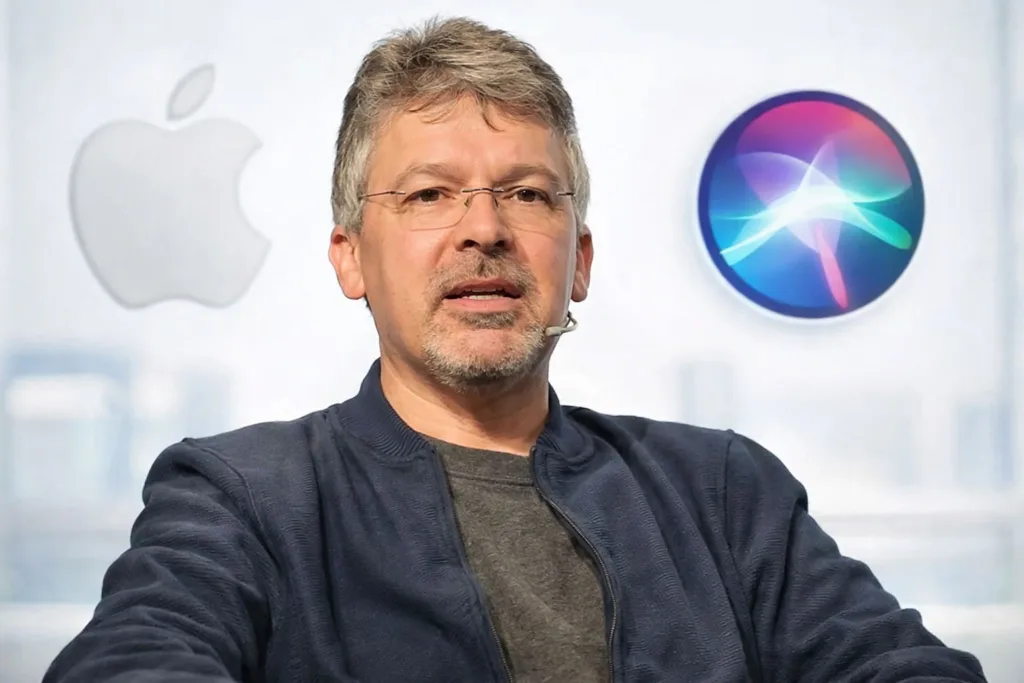
You wake up to the news. John Giannandrea, Apple’s venerable head of AI and Machine Learning Strategy, has decided to leave the company. This isn’t just another executive shuffle; it’s a seismic event for Cupertino, one that reverberates through the very core of your engagement with Apple products. You’ve grown accustomed to a certain narrative of innovation, a promise of intelligent technology seamlessly integrated into your daily life. Now, you’re left wondering what this departure signifies for that narrative, particularly concerning Siri and the nebulous concept of Apple Intelligence.
You observe the company’s official statements, carefully worded and offering little in the way of true insight. Giannandrea, a figure revered within the AI community and brought in from Google with considerable fanfare, was positioned as the individual who would finally steer Apple’s AI efforts into a new, more competitive era. His departure creates a strategic void, a leadership vacuum at a critical juncture for the company’s long-term vision.
A Look Back at Giannandrea’s Tenure
You recall the anticipation surrounding his arrival. Apple’s AI, particularly Siri, had been lagging its competitors, a fact you’ve undoubtedly experienced firsthand. Giannandrea was supposed to be the remedy. You remember the subtle shifts, the iterative improvements to Siri, the increasing presence of on-device machine learning powering features you might take for granted, like advanced photo search or predictive text. These advancements, while not always headline-grabbing, represented a concerted effort to enhance the intelligence of your devices.
The Unfulfilled Promise of Siri’s Resurgence
You reflect on the persistent criticism of Siri. Despite Giannandrea’s leadership, the digital assistant has often felt like an afterthought, a functional but ultimately limited utility compared to its counterparts from Google and Amazon. You’ve likely experienced the frustration of Siri misunderstanding simple commands or failing to integrate with third-party applications as seamlessly as you’d prefer. His departure intensifies the question: was Siri’s stagnation a failure of leadership, an intractable technical challenge, or a deeply ingrained cultural issue within Apple?
The Broader AI Landscape
You consider the competitive landscape. Google continues to push the boundaries of large language models and multimodal AI. Microsoft is integrating sophisticated AI into its productivity suite. OpenAI is democratizing advanced AI across numerous applications. Apple, under Giannandrea, was steadily building its foundation, but this departure introduces uncertainty at a time when rapid progress is paramount. You recognize that catching up, let alone surpassing, these competitors requires consistent, audacious vision.
The recent news of Apple’s AI Chief John Giannandrea exiting the company after eight years has left many wondering about the future of Siri and Apple’s broader intelligence initiatives. His departure raises questions about the direction of Apple’s AI strategy and the potential impact on its voice assistant capabilities. For those interested in the evolving landscape of technology and how on-demand services are shaping user experiences, a related article can provide valuable insights. You can read more about the tech behind instant service in the article titled “The Rise of On-Demand Apps” at this link.
Siri’s Uncertain Future: A Crossroads Awaits
You realize that Siri, more than any other product, embodies the public perception of Apple’s AI capabilities. Its ongoing development, or lack thereof, directly impacts your daily interactions with your iPhone, iPad, and HomePod. Giannandrea’s exit throws Siri’s trajectory into disarray.
The Legacy of On-Device Processing
You appreciate Apple’s commitment to privacy, a core tenet that has significantly influenced its AI strategy. Giannandrea championed on-device processing, aiming to bring sophisticated AI capabilities directly to your device, minimizing data exposure to the cloud. This approach has tangible benefits for security and responsiveness. However, you also recognize the inherent limitations of on-device models compared to the vast computational resources available for cloud-based AI.
The Challenge of Large Language Models
You are aware that the current revolution in AI is largely driven by large language models (LLMs). These models require immense datasets and computational power, often best delivered through cloud infrastructure. Apple’s privacy-centric approach to AI, while commendable, presents a significant hurdle in integrating cutting-edge LLMs directly into Siri without compromising user data. You wonder how Apple will navigate this dilemma in a post-Giannandrea era. Will they compromise on privacy to remain competitive, or will they find a novel way to deliver powerful LLMs on-device?
Integration Deficiencies and Ecosystem Lock-in
You’ve likely observed Siri’s struggles with deep integration beyond Apple’s own ecosystem. While Apple has made strides with App Intents, enabling some third-party app functionality, it still lags behind what you experience with Google Assistant. Giannandrea’s departure raises questions about the future of this integration. Will Apple double down on its closed ecosystem, or will it embrace a more open approach to allow Siri to truly act as a universal assistant for all your digital needs? Your ability to seamlessly control smart home devices or interact with productivity apps often feels constrained by Siri’s limitations.
Apple Intelligence: A Vision in Jeopardy?


You’ve heard the whispers, the subtle hints about “Apple Intelligence,” a more holistic and integrated approach to AI across the company’s product line. This concept, still largely undefined to the public, was widely believed to be a central pillar of Giannandrea’s long-term strategy. Now, its very existence, or at least its planned execution, feels uncertain.
The Promise of Seamless Integration
You envision a future where your Apple devices anticipate your needs, intelligently organize your information, and proactively assist you without explicit commands. This is the promise of Apple Intelligence: a pervasive, personalized layer of smart functionality that makes your digital life more efficient. Giannandrea was crucial to articulating and developing this vision. His absence means that someone else must now pick up the mantle and translate this abstract concept into tangible features.
The Difficulty of Execution
You recognize the immense technical and organizational challenges involved in building such a comprehensive AI system. It requires harmonizing disparate teams, developing robust data pipelines, and ensuring ethical considerations are addressed at every stage. This is a monumental undertaking, and Giannandrea’s experience and leadership were considered indispensable. You ponder who possesses the institutional knowledge and strategic clout to shepherd this ambitious project forward.
The Competition’s Head Start
You acknowledge that other companies are already delivering aspects of what Apple Intelligence might entail. Google’s ambient computing vision, Microsoft’s Copilot initiatives, and Amazon’s ubiquitous smart assistant infrastructure all offer glimpses into a future where AI is deeply embedded in your daily routine. Apple, even with Giannandrea, was playing catch-up in certain areas. His departure risks widening that gap further.
The Implications for Apple’s Innovation Cycle

You understand that leadership changes at this level can disrupt established development cycles and alter strategic priorities. Apple is known for its meticulous attention to detail and its long-term vision, but even within that framework, executive shifts can have significant ripple effects.
Potential for Delays and Rework
You know that new leadership often brings new perspectives, which can be both a blessing and a curse. While a fresh approach might inject new energy, it can also lead to re-evaluation of existing roadmaps, potentially causing delays in product releases and feature rollouts. You anticipate that any successor to Giannandrea will need time to assess the current state of affairs and stamp their own authority on the AI strategy.
Shifting Priorities and Strategic Direction
You consider the possibility that a new AI chief might choose a different path entirely. Perhaps they will accelerate cloud-based AI development, or lean more heavily into partnerships, or even de-emphasize certain aspects of Apple Intelligence that were central to Giannandrea’s vision. This strategic shift could impact the future features and capabilities you experience across your Apple devices.
Talent Retention Challenges
You are aware that high-profile departures can sometimes trigger a ripple effect, leading to other key personnel following suit. Giannandrea’s team consisted of highly skilled AI researchers and engineers. You wonder if his exit will prompt other talented individuals to explore opportunities elsewhere, further exacerbating the leadership void and potentially slowing down critical development efforts.
The recent news about Apple’s AI Chief John Giannandrea exiting after eight years has left many wondering about the future of Siri and Apple’s intelligence initiatives. His departure raises questions about the direction Apple will take in the competitive landscape of artificial intelligence. For those interested in exploring more about the implications of leadership changes in tech companies, a related article can be found here, which discusses the impact of such transitions on innovation and product development.
What Happens Next: The Path Forward
| Metrics | Data |
|---|---|
| AI Chief | John Giannandrea |
| Years at Apple | 8 |
| Impact | Leaving Siri & Apple Intelligence in Limbo |
You are left with a sense of anticipation, or perhaps apprehension, regarding Apple’s next move. The company has a history of weathering leadership changes, but the current climate of rapid AI advancement demands a swift and decisive response.
The Search for a Successor
You expect Apple to conduct an exhaustive search for Giannandrea’s replacement. This will be a critical hire, potentially shaping the company’s AI trajectory for the next decade. The ideal candidate will need a deep understanding of AI, a proven track record of shipping innovative products, and the ability to navigate Apple’s unique corporate culture. You hope they prioritize open communication and robust development.
Reassurance and Transparency?
You hope that Apple will offer more transparency in the coming months regarding its AI strategy. While the company is notoriously secretive, the current AI landscape demands a clearer articulation of its vision, especially after such a significant leadership change. You want to understand how Apple plans to compete, innovate, and retain its relevance in a world increasingly dominated by intelligent technologies.
The Continued Evolution of Apple Silicon
You recognize that Apple Silicon, with its dedicated Neural Engine, remains a powerful foundation for on-device AI. Regardless of who leads the AI division, the hardware capabilities are there. The challenge lies in leveraging that hardware effectively with sophisticated software. You believe that continued investment in Apple Silicon’s AI capabilities will be crucial, offering a unique advantage Apple maintains.
In essence, you are experiencing a pivotal moment for Apple. Giannandrea’s departure is not merely a change in personnel; it signifies a potential inflection point for the company’s AI ambitions. The future of Siri, the realization of Apple Intelligence, and indeed, Apple’s competitive standing in the broader technology landscape, now hang in the balance, awaiting the next chapter in Cupertino’s intelligent journey. You will be watching closely.
FAQs
1. Who is John Giannandrea and what was his role at Apple?
John Giannandrea was the Chief of Artificial Intelligence (AI) at Apple. He joined Apple in 2018 and was responsible for overseeing the development of AI technology, including Siri and Apple’s broader intelligence efforts.
2. Why is John Giannandrea leaving Apple?
John Giannandrea is leaving Apple after 8 years to pursue other opportunities. His departure comes at a time when Apple is facing challenges in the AI space, particularly with Siri’s performance compared to competitors like Google Assistant and Amazon’s Alexa.
3. What impact will John Giannandrea’s departure have on Siri and Apple’s AI efforts?
Giannandrea’s departure has raised concerns about the future of Siri and Apple’s AI initiatives. His leadership was instrumental in shaping Apple’s AI strategy, and his exit leaves a void that Apple will need to fill to continue advancing its AI technology.
4. What are the implications of John Giannandrea’s exit for Apple’s competitiveness in the AI market?
Giannandrea’s departure could potentially impact Apple’s competitiveness in the AI market. With rivals like Google and Amazon making significant strides in AI and voice assistant technology, Apple will need to ensure a smooth transition and continued innovation to remain competitive.
5. What are Apple’s plans to address the departure of John Giannandrea and the future of Siri and AI at the company?
Apple has not yet announced specific plans to address Giannandrea’s departure and the future of Siri and AI at the company. However, it is likely that Apple will seek a replacement for Giannandrea and continue investing in AI research and development to maintain its position in the market.