


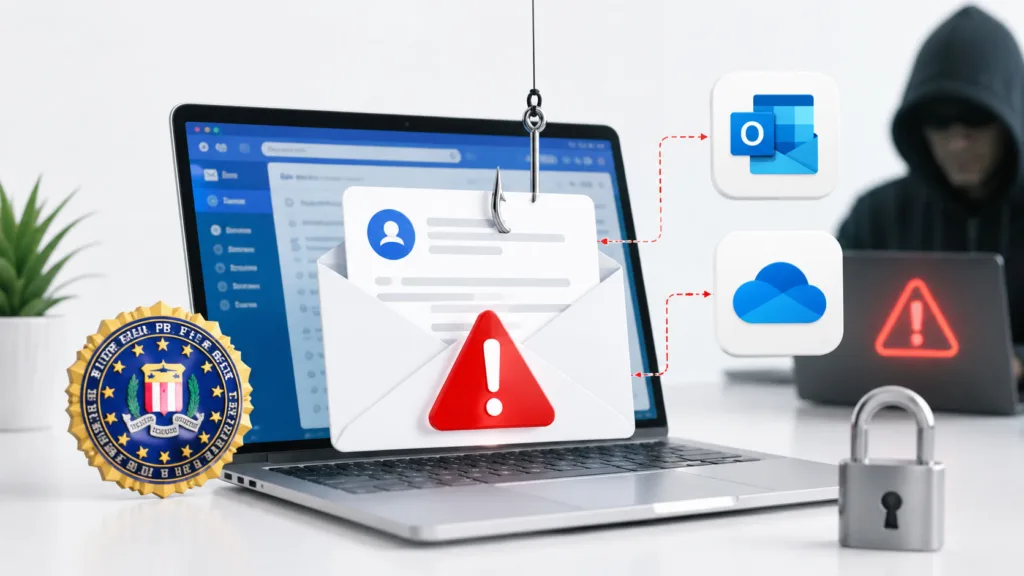
- The email’s subject line is generic, maybe something like “Important Account Notification” or “Security Alert.” It looks official, possibly even mimicking the familiar Microsoft logo or corporate branding. You’ve received countless emails like this, so at first glance, it doesn’t raise any red flags. You’re busy, juggling multiple projects, and a quick scan is all you give it. But this time, that quick scan is exactly what they are counting on. It’s a phishing scam, and the FBI is sounding the alarm bells, specifically for users of Microsoft Outlook, OneDrive, and Teams. Your digital life, often seamlessly integrated through these services, has become a prime target.
The FBI’s Public Service Announcement isn’t just a routine warning; it’s a targeted alert about a specific strain of phishing that has become increasingly sophisticated and prevalent. They’ve identified patterns and tactics that malicious actors are employing with alarming success, leveraging the very tools you rely on for communication and collaboration. This isn’t a generic “don’t click on suspicious links” warning; it’s about understanding the subtle – and not-so-subtle – ways these attackers are trying to infiltrate your accounts and steal your sensitive information.
The Phishing Playbook: Tactics Used by Threat Actors
Imagine a seasoned con artist, but instead of a shady alley, their stage is your inbox, and their props are your familiar digital services. Threat actors are employing a range of tactics, finely tuned to exploit human psychology and the trusted nature of Microsoft’s platforms. They understand that you’re more likely to trust something that appears to come from a legitimate source, especially when it relates to your work or personal accounts.
1. The Illusion of Authority and Urgency
A key strategy is crafting messages that imply official urgency. This could be a supposed violation of terms of service, a critical security update that requires immediate action, or a notification about suspicious activity on your account. The goal is to bypass your critical thinking by triggering an emotional response – fear of account suspension, anxiety about compromised data, or the pressure to act quickly. They want you to feel like you must click the link or download the attachment right now, before you have a chance to stop and think.
2. Mimicking Trusted Brands and Logos
Never underestimate the power of visual persuasion. Cybercriminals are meticulously recreating the look and feel of legitimate Microsoft communications. This includes using similar fonts, color schemes, and even the official Microsoft logo. They might even spoof the sender’s email address, making it appear as though the email originated from a genuine Microsoft domain. This visual mimicry is designed to build a false sense of security, making the fraudulent message seem undeniably authentic.
3. Exploiting Specific Service Features
These scams are often tailored to the specific services you use. For Outlook users, this might involve fake calendar invites or notifications about new emails that require urgent attention. For OneDrive, it could be a fake document sharing notification or a warning about storage limits. For Teams, the bait might be an alert about a new team request, an urgent message from a colleague, or a shared file that requires your immediate review. By referencing features you regularly interact with, the attackers make the scam feel hyper-relevant and therefore more convincing.
Why Outlook, OneDrive, and Teams are Prime Targets
Microsoft’s suite of productivity tools is ubiquitous in both the professional and personal spheres. Billions of people rely on Outlook for email, OneDrive for cloud storage and file sharing, and Teams for real-time communication and collaboration. This widespread adoption, while a testament to their utility, also makes them incredibly attractive targets for cybercriminals.
1. The Centrality of Data
Your Outlook inbox often contains sensitive personal and professional correspondence. OneDrive houses your important documents, photos, and other files. Teams conversations can reveal strategic plans, confidential client information, and proprietary data. By gaining access to these services, attackers can gain access to a treasure trove of valuable information that can be used for identity theft, financial fraud, corporate espionage, or even blackmail.
2. Network Effects and Lateral Movement
If an attacker compromises one account, especially in an organization, they can exploit the interconnectedness of these services to move laterally. For example, a compromised Outlook account could be used to send further phishing emails to colleagues within the same organization. A compromised OneDrive account could be used to spread malware via shared files. Teams, with its direct messaging and group chat features, provides a direct conduit for further social engineering and malicious content dissemination.
3. High Volume of Communications
These platforms facilitate a massive volume of daily communication. This high volume increases the probability that any given user will interact with a malicious email or message. In a sea of legitimate notifications, a well-crafted phishing attempt can easily slip through, especially when users are under pressure or not paying close attention.
In light of the recent FBI warning about a phishing scam targeting users of Outlook, OneDrive, and Teams, it is crucial for individuals and organizations to stay informed about cybersecurity threats. For those interested in understanding the broader implications of technology in personal security, a related article discusses the integration of IT in gene sequencing and personalized medicine, highlighting the importance of secure data management in various fields. You can read more about it here: Bio-Tech Integration in IT for Gene Sequencing and Personalized Medicine.
Recognizing the Warning Signs: How to Spot a Phishing Attempt
The FBI’s warning is a call to action, urging you to sharpen your awareness and actively look for the tell-tale signs of a phishing scam. While these attacks are becoming more sophisticated, they are not infallible. Developing a keen eye for detail can be your strongest defense.
Deconstructing the Suspicious Email or Message
Don’t just glance; dissect. Take a moment to examine the components of any message that feels even slightly off. It’s the small inconsistencies that often give the game away.
1. Generic or Misspelled Greetings
Legitimate organizations, especially those you have an account with, will typically address you by your name. A greeting like “Dear User,” “Valued Customer,” or simply no greeting at all is a major red flag. Similarly, look for poor grammar and spelling. While professional organizations strive for error-free communication, phishing emails are often hastily constructed and may contain numerous grammatical errors or awkward phrasing.
2. Suspicious Sender Address and Domain
As mentioned, attackers will spoof sender addresses. Carefully examine the domain name after the “@” symbol. For example, an email claiming to be from Microsoft might have a sender address like “support@microsoft-security.com” or “account-update@microsft.net.” The legitimate domain would be something like “@microsoft.com” or “@teams.microsoft.com.” Hovering your mouse over the sender’s name (without clicking!) can often reveal the actual email address.
3. Urgent Calls to Action and Threats
Phishing emails often employ a sense of urgency to pressure you into acting without thinking. Warnings of immediate account closure, suspension, or claims of suspicious activity should be treated with extreme caution. Legitimate companies usually provide a grace period or alternative, secure methods of communication for serious issues.
4. Unexpected Attachments or Links
This is perhaps the most straightforward warning sign. If you receive an email with an unexpected attachment, especially an executable file (.exe) or a zipped file (.zip) that you weren’t anticipating, do not open it. Similarly, be wary of links in emails. Instead of clicking directly, hover your mouse over the link to see the actual URL it points to. If the URL looks different from where it claims to go, it’s a strong indicator of a phishing attempt.
The “Too Good to Be True” Phenomenon
While the FBI’s warning focuses on security threats, it’s also important to remember that many phishing scams leverage enticing offers to lure victims.
1. Unsolicited Promises of Rewards or Prizes
If an email claims you’ve won a lottery you never entered, been awarded a grant you didn’t apply for, or are eligible for a refund you don’t expect, it’s almost certainly a scam. These “too good to be true” offers are designed to make you eager to provide personal information or click on a link to claim your prize.
2. Requests for Personal or Financial Information
Legitimate organizations, including Microsoft, will never ask you to provide sensitive information like your password, social security number, credit card details, or bank account information via email or a non-secure link. If an email requests this type of data, consider it a major red flag.
Protecting Yourself: Proactive Measures You Can Take


The best defense is a strong offense. By implementing a few key practices, you can significantly reduce your vulnerability to these phishing attacks.
Fortifying Your Digital Defenses
Think of these as your personal cybersecurity habits. They are simple, but incredibly effective when consistently applied.
1. Enable Multi-Factor Authentication (MFA)
This is arguably the most critical step you can take. MFA adds an extra layer of security by requiring more than just a password to log in. This could be a code sent to your phone, a fingerprint scan, or a confirmation from an authenticator app. Even if attackers get your password, they won’t be able to access your account without this second factor. Ensure MFA is enabled for all your Microsoft accounts.
2. Keep Your Software Updated
Microsoft regularly releases security patches and updates to address vulnerabilities in their software. Keeping your operating system, web browsers, and Microsoft applications up to date ensures you have the latest security defenses in place. Updates often patch flaws that phishing scams exploit.
3. Be Skeptical of Unsolicited Communications
Develop a habit of being inherently skeptical of any unsolicited email or message, especially those that demand immediate action or ask for personal information. It’s better to be overly cautious and verify independently than to fall victim to a scam.
Verifying Information Independently
Don’t take emails or messages at face value, even if they appear official. Always verify critical information through secure, direct channels.
1. Navigate Directly to Official Websites
If an email prompts you to log in or access something related to your account, resist the urge to click on the link provided. Instead, open a new browser window, manually type in the correct web address for the service (e.g., outlook.com, onedrive.com, teams.microsoft.com), and log in directly. This ensures you are interacting with the genuine website.
2. Contact Support Through Official Channels
If you receive a suspicious communication regarding your account, and you are unsure if it’s legitimate, do not reply to the email or use any contact information provided in it. Instead, find the official customer support contact information for Microsoft (via their website) and reach out to them directly to inquire about the communication.
What to Do If You Suspect a Phishing Attempt


Even with the best defenses, it’s possible to be targeted. Knowing what to do if you encounter a phishing attempt can mitigate the damage.
Immediate Actions to Take
Time is of the essence when dealing with potential security breaches. Swift action can make a significant difference.
1. Do Not Click, Download, or Respond
This is the golden rule. If you suspect an email or message is phishing, your first and most important action is to do nothing directly with the suspicious content. Avoid clicking any links, downloading any attachments, or replying to the sender.
2. Report the Phishing Attempt
In Outlook, there’s often a “Report Phishing” or “Report Junk Email” option. Utilize these features. They help Microsoft identify and block malicious campaigns. Similarly, if you encounter a phishing attempt within Teams, use the reporting tools available within the platform. This also helps educate the platform on ongoing threats.
3. Delete the Suspicious Message
After reporting it (if the option is available), it’s best to delete the suspicious message from your inbox and your deleted items folder to prevent accidental future interactions.
Responding to a Potential Compromise
If you believe you may have fallen victim to a phishing scam, it’s crucial to act quickly to minimize the impact.
1. Change Your Password Immediately
If you clicked a link and entered your password on a fake website, change your password for that account immediately to something strong and unique. If you reuse passwords across multiple services, change them for those other services as well.
2. Review Your Account Activity
Log into your affected account (through the official website) and carefully review your recent activity. Look for any unauthorized logins, sent messages, file deletions, or changes to your settings.
3. Notify Microsoft Support and Your IT Department
If you are using these services for work, immediately inform your IT department about the suspected compromise. For personal accounts, reach out to Microsoft support for guidance specific to your situation. They can help you secure your account and provide further advice.
In light of the recent FBI warning about a phishing scam targeting users of Outlook, OneDrive, and Teams, it is crucial for individuals to stay informed about online security threats. A related article discusses the importance of understanding various web technologies and their implications for security, which can be found in this insightful piece on progressive web apps. By exploring the differences between traditional web applications and PWAs, users can better appreciate the security measures necessary to protect their data online. For more information, you can read the article here.
Staying Vigilant: The Ongoing Battle Against Cyber Threats
| Date | Target | Scam Type | Impact |
|---|---|---|---|
| June 2021 | Outlook, OneDrive, Teams users | Phishing | Data theft and compromise |
The FBI’s warning serves as a timely reminder that cybersecurity is not a one-time fix, but an ongoing process. Cybercriminals are constantly evolving their tactics, and so too must your vigilance.
Cultivating a Security-Conscious Mindset
Your attitude towards online safety is your first line of defense. Make cybersecurity a habit, not an afterthought.
1. Continuous Learning About Emerging Threats
Stay informed about the latest cybersecurity threats and phishing techniques. Reputable sources like government cybersecurity agencies (e.g., CISA in the US), cybersecurity blogs, and tech news outlets can provide valuable insights. The more you know about how attackers operate, the better you can recognize their attempts.
2. Practicing Digital Hygiene
This encompasses a range of good online habits, such as using strong, unique passwords for all your accounts, being mindful of what information you share online, and avoiding public Wi-Fi for sensitive transactions.
The Collective Responsibility of Cybersecurity
While individual vigilance is paramount, a more secure digital ecosystem relies on collective action.
1. Educating Others About Phishing Risks
Share your knowledge about phishing scams with friends, family, and colleagues. By raising awareness, you contribute to a more informed and resilient community. Many people are unaware of the sophisticated methods used by cybercriminals, and a simple explanation can prevent them from becoming victims.
2. Reporting Suspicious Activity to Authorities
Whenever possible, report phishing attempts not only to the platform but also to relevant authorities like the FBI’s Internet Crime Complaint Center (IC3). This helps law enforcement track and prosecute cybercriminals, making the internet a safer place for everyone.
The FBI’s warning about phishing scams targeting Outlook, OneDrive, and Teams users is a critical piece of information for anyone who relies on these Microsoft services. By understanding the threats, recognizing the warning signs, and implementing proactive protective measures, you can significantly safeguard your digital life from these persistent and evolving dangers. Remember, your awareness and vigilance are your most powerful tools in this ongoing battle for cybersecurity.
FAQs
What is the phishing scam targeting Outlook, OneDrive, and Teams users?
The phishing scam involves cybercriminals sending fake emails that appear to be from Microsoft, prompting users to click on a link that leads to a fake login page. Once users enter their credentials, the scammers can access their Outlook, OneDrive, and Teams accounts.
How does the phishing scam work?
The scam starts with users receiving an email that appears to be from Microsoft, informing them of a file shared via OneDrive or a missed voicemail on Teams. The email contains a link that leads to a fake login page designed to steal users’ credentials.
What are the potential risks of falling victim to this phishing scam?
If users fall victim to this phishing scam, the cybercriminals can gain unauthorized access to their Outlook, OneDrive, and Teams accounts. This can lead to the theft of sensitive information, unauthorized use of the accounts, and potential further exploitation of the compromised accounts.
How can users identify and avoid falling for this phishing scam?
Users can identify this phishing scam by carefully examining the sender’s email address, looking for grammatical errors or unusual language in the email, and hovering over links to check the actual URL before clicking. To avoid falling for the scam, users should never enter their login credentials on suspicious or unfamiliar websites.
What should users do if they believe they have been targeted by this phishing scam?
If users believe they have been targeted by this phishing scam, they should immediately change their passwords for their Outlook, OneDrive, and Teams accounts. Additionally, they should report the phishing attempt to their organization’s IT department and the appropriate authorities, such as the FBI’s Internet Crime Complaint Center (IC3).