


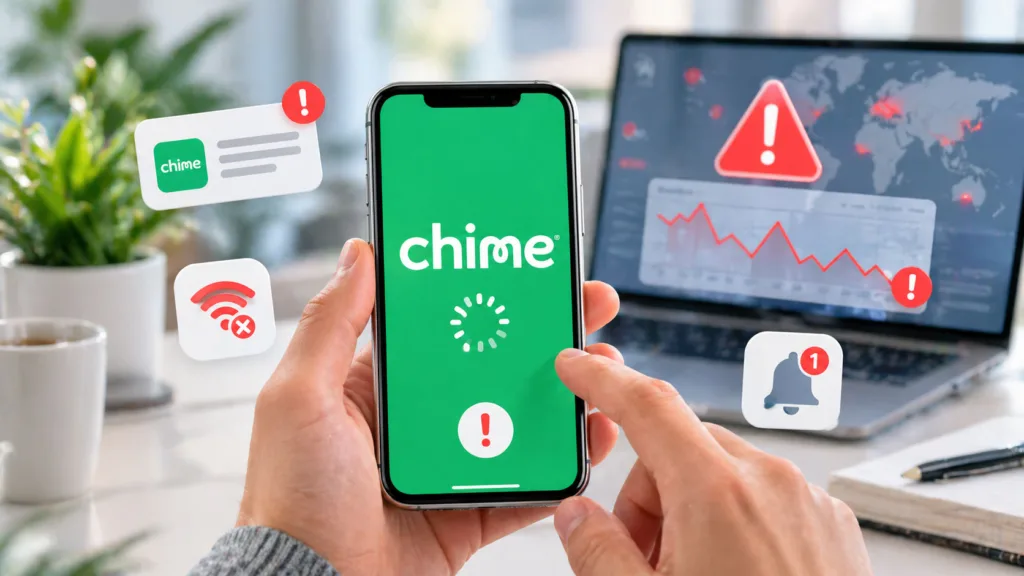
You’re scrolling through your phone, innocently trying to check your Chime balance or send a quick payment to a friend. Suddenly, the app freezes. You close it, reopen it, and nothing. A pit forms in your stomach as you realize what might be happening. A nationwide Chime outage.
You’re not alone. Thousands, if not hundreds of thousands, of Chime users across the United States experienced widespread disruptions recently, with reports flooding in on platforms like Downdetector. This isn’t just a minor inconvenience; for many, Chime is their primary banking institution, and its sudden unavailability can have significant financial repercussions. Imagine: you’re at the grocery store, your cart full, and your Chime card declines. Or you’re waiting for a crucial direct deposit that simply isn’t showing up. This isn’t just about accessing funds; it’s about financial control, security, and the peace of mind that comes with knowing your money is accessible.
The Immediate Aftermath: Panic and Frustration
When a service like Chime, which handles your most vital financial transactions, goes down, the initial reaction is often a mix of panic, frustration, and a desperate search for answers. You likely scramble to other banking apps, just to confirm it’s not a wider internet issue. Then you turn to social media, hoping to find others experiencing the same problem.
The Social Media Storm
Twitter, now X, and Reddit instantly become hubs of activity during such an event. You see users posting screenshots of error messages, venting their anger, and sharing anecdotal experiences. Hashtags like #ChimeDown or #ChimeOutage quickly trend, amplifying the sense of collective distress. It’s a digital cry for help, a way to confirm that your individual problem isn’t isolated.
Checking Downdetector: Your First Stop for Confirmation
For many, Downdetector is the go-to resource. You’ve probably visited it yourself, seeing the stark red peak on the graph illustrating the surge in reported problems. This independent platform, which monitors the status of various online services, serves as a crucial barometer for widespread outages. Its real-time data aggregation provides a quick and undeniable confirmation that your issues are part of a larger systemic problem. You might even upload your own report, adding to the mounting evidence.
This wasn’t just a momentary hiccup. The extent of the Chime outage was significant, impacting not only personal accounts but potentially broader financial interactions. When a FinTech giant like Chime experiences such a disruption, the ripple effects can be far-reaching.
Widespread Impact Across the Nation
Reports on Downdetector and social media indicated that the outage wasn’t localized to a specific region but was a national phenomenon. From California to New York, Florida to Washington, users across all time zones were reporting similar issues, suggesting a core infrastructure problem rather than a regional server overload.
Geographic Distribution of Reports
You could likely see on Downdetector’s heat map how broadly the outage was distributed. Major metropolitan areas often show a higher concentration of reports simply due to population density, but the scatter of red dots across the entire map truly underscored the national scope. This made it clear you weren’t dealing with a local anomaly but a systemic failure.
Services Affected: More Than Just the App
It wasn’t just the mobile app that was experiencing issues. You might have found that:
- Debit Card Transactions: Your Chime debit card was being declined at POS terminals, ATMs, and for online purchases. This is perhaps the most immediate and disruptive impact, as it directly prevents you from accessing your funds for everyday necessities.
- Direct Deposits: Crucial direct deposits, including paychecks, government benefits, or refunds, were either delayed or not appearing at all. For many, paycheck day is a fixed event, and its disruption can throw an entire week into disarray, leading to missed bill payments and other financial complications.
- Online Banking Portal: The web-based banking portal was inaccessible or unresponsive, making it impossible to manage your account from a desktop or laptop. This removes an alternative avenue for accessing account information or initiating transactions.
- ATM Withdrawals: Even attempting to withdraw cash from an ATM linked to your Chime account likely resulted in errors or transaction failures.
In light of the recent incident where Chime experienced significant downtime affecting thousands of users, it’s crucial to consider the broader implications of digital service reliability. An insightful article that delves into the evolving landscape of customer interactions is available at The Rise of Conversational Commerce: Marketing on Messaging Platforms. This piece explores how businesses can leverage messaging platforms to enhance customer engagement and service, highlighting the importance of maintaining reliable communication channels in today’s digital age.
Understanding the “Why”: Potential Causes of Outages
When you’re caught in the middle of an outage, your mind naturally races to “why.” While Chime itself rarely provides granular, real-time details during an active crisis for security and operational reasons, industry experts and past incidents offer insights into potential causes.
System Infrastructure Failure
At the heart of many widespread outages lies a failure within the underlying technological infrastructure. Think of Chime’s operations as a vast, interconnected network of servers, databases, and processing units. A fault in any critical component can lead to cascading failures.
Hardware Malfunctions
Sometimes, the simplest explanation is the right one. A server rack could have experienced a power surge, a critical network switch might have failed, or a storage array could have gone offline. These physical failures, while rare due to redundancy measures, can still occur and trigger widespread problems. You might even speculate about power grid issues in specific regions, though a national outage points to something more central.
Software Bugs and Corruptions
Another common culprit is a software bug – a flaw in the code that governs Chime’s systems. A new deployment of code, an attempted update, or even a pre-existing latent bug can manifest under certain conditions, leading to system crashes, data processing errors, or complete service unavailability. If a critical database becomes corrupted, it can bring down the entire system as integrity checks fail.
Network Connectivity Issues
While Chime relies on its own infrastructure, it also depends on external network providers to connect its services to the internet and ultimately to you. A major outage with one of these upstream providers could sever Chime’s connectivity, making their services unreachable even if their internal systems are fully operational.
Cybersecurity Incidents
You might’ve also considered a more sinister possibility: a cyberattack. In today’s digital landscape, financial institutions are constant targets for malicious actors.
DDoS Attacks
A Distributed Denial of Service (DDoS) attack involves overwhelming a service’s servers with a flood of traffic, making it impossible for legitimate users like yourself to access the service. While Chime would have robust defenses against such attacks, a particularly sophisticated or sustained assault could still disrupt services.
Data Breach Concerns
While an outage is distinct from a data breach, the two can sometimes be related. An attempt at a data breach could put immense strain on systems, or an organization might proactively take systems offline to contain a security incident or investigate suspicious activity. Your immediate concern would likely shift from accessing funds to securing your personal information.
In light of the recent issues faced by Chime, which left thousands of users unable to access their accounts, it is essential to consider the broader implications of digital banking outages. A related article discusses the future of online services and highlights the importance of optimizing voice and visual search, which could play a significant role in enhancing user experience and reliability in the digital landscape. For more insights on this topic, you can read the article on voice and visual search optimization.
Third-Party Service Dependencies
Modern FinTech platforms rarely operate in a complete vacuum. They integrate with numerous third-party services for various functionalities.
Payment Processors
For example, Chime relies on payment processors to handle debit card transactions through networks like Visa or Mastercard. An outage or issue with one of these key third-party processors could directly impact your ability to use your Chime card. This is often an invisible layer of complexity for you as the end-user, but it’s critical to the operation of your financial services.
Cloud Service Providers
Many companies, including financial institutions, host their infrastructure on cloud platforms like Amazon Web Services (AWS), Microsoft Azure, or Google Cloud. An outage at one of these major cloud providers could have ripple effects across countless services, including Chime. You might even check the status pages of these major cloud providers during a widespread outage, searching for a larger explanation.
The Human Impact: More Than Just Money


While an outage primarily affects your ability to access and manage your money, its implications extend far beyond mere financial inconvenience. For many Chime users, this is a crisis of trust, a disruption of daily life, and a source of significant stress.
Financial Distress and Anxiety
Imagine you’re living paycheck to paycheck, and your direct deposit, which was supposed to arrive at midnight, is nowhere to be seen. Or you’ve budgeted meticulously, only to find your card declines at the pharmacy. The immediate financial distress can be immense.
Missed Bill Payments
You might be worried about missing bill payments, potentially incurring late fees or damaging your credit score. Rent, utilities, car payments – these are often tied to specific dates, and a delayed direct deposit can throw everything off. You’re left scrambling, trying to figure out alternative payment methods or extending deadlines.
Inability to Purchase Essentials
The inability to purchase groceries, medicine, or even gas for your car can create immediate and critical problems. For those without backup funds or alternative banking options, this becomes an urgent matter of survival, not just convenience. You might feel a profound sense of helplessness when your primary means of payment fails.
Loss of Trust and Confidence
Each outage chips away at your trust in the institution. You rely on your bank to be reliable, secure, and accessible 24/7. When that trust is broken, even temporarily, it raises questions about the long-term viability and dependability of the service. You might start considering diversifying your banking, looking for a more robust alternative.
Operational Challenges for Chime
From Chime’s perspective, an outage is an operational nightmare. It’s not just about fixing the technical problem; it’s about managing communication, restoring confidence, and mitigating long-term damage.
Resource Mobilization
Behind the scenes, teams of engineers, developers, and customer support staff are working tirelessly. Engineers are debugging, running diagnostics, and implementing fixes. Customer service teams are inundated with calls and messages, often with limited information to provide.
Communication Strategy
How Chime communicates during an outage is critical. A lack of transparent, timely updates can exacerbate user frustration. You’d expect to see updates on their official social media channels, their website, and perhaps even within the app itself once it’s partially restored. The challenge is balancing verified information with the urgent need for communication, avoiding speculation, and managing expectations. Often, you might feel the communication is insufficient, especially when you’re desperate for answers.
Reputational Damage
Each outage, especially a widespread one, inflicts reputational damage. It can deter potential new users and prompt existing users to seek alternatives. The FinTech industry thrives on trust and innovation, and reliability is a cornerstone of that trust. The optics of such an event can be harder to fix than the technical issue itself, as it takes a long time to rebuild credibility.
What You Can Do During an Outage & Moving Forward

When you find yourself in the midst of a Chime outage, immediate action can help manage the situation, and strategic long-term planning can prevent future stressors.
Immediate Steps to Take
While you can’t magically restore Chime’s services, there are practical steps you can take to mitigate the impact on your finances.
Check Official Channels for Updates
Your first port of call should be Chime’s official communication channels. Look for status updates on:
- Chime’s official Twitter/X account: Many companies use social media for real-time announcements.
- Chime’s status page (if available): Some services have dedicated status pages.
- Chime’s website: Look for banners or news alerts.
Avoid relying solely on unofficial sources or rumors, as these can be misleading or lead to unnecessary panic. Always try to verify information before acting on it.
Use Alternative Payment Methods
If you have backup funds or alternative banking options, now is the time to use them.
- Cash: If you have any physical cash on hand, it can be a lifesaver for small purchases.
- Another Debit/Credit Card: Use a debit card from a different bank or a credit card for essential purchases.
- Digital Wallets (if linked to other cards): If your Apple Pay or Google Pay is linked to a non-Chime card, you might still be able to make purchases.
This highlights the importance of not putting all your financial eggs in one basket, a lesson you might be learning the hard way.
Contact Chime Support (if possible and necessary)
During a major outage, customer support lines are often overwhelmed. You might face long wait times or find it difficult to get through. However, if you have a unique or urgent issue (e.g., a specific transaction error not related to general access), it might be worth attempting to contact them through their in-app chat (if it’s working), phone, or email. Be prepared for delays and understand that their ability to resolve widespread issues on an individual basis is limited.
Keep Records of Declined Transactions
If you attempt transactions that are declined, keep a record of these attempts. Note the time, date, merchant, and the amount. This documentation could be useful if you need to dispute charges, prove an attempt to pay, or discuss potential fees with Chime later on. While it might seem like a small detail, it provides leverage and clarity.
Long-Term Strategies for Financial Resilience
Beyond the immediate crisis, an outage like this serves as a stark reminder of the importance of financial preparedness and diversification.
Diversify Your Banking Relationships
Relying on a single financial institution, especially a digital-first one, carries inherent risks. Consider opening accounts with at least two different banks or credit unions.
- Traditional Bank Account: Having a checking or savings account with a traditional bank can provide a stable alternative, especially if you need physical branch access or reliable ATM networks.
- Second Online Bank: Even having a second online-only bank can offer redundancy, as it’s unlikely both would experience major outages simultaneously.
- Different Routing Numbers: Ensure your direct deposits can be routed to an alternative account if one becomes unavailable.
Maintain an Emergency Fund
This is arguably the most crucial lesson. An emergency fund, ideally 3-6 months of living expenses, provides a buffer against unexpected financial disruptions, including an inability to access your primary funds. Even a smaller “outage fund” of a few hundred dollars in an easily accessible, separate account can significantly reduce stress during such events.
Keep Some Cash on Hand
In an increasingly cashless society, it’s easy to forget the utility of physical currency. Maintaining a small amount of cash ($50-$200, depending on your needs) for emergencies can be invaluable when digital systems fail. This cash can cover essentials like food, transport, or small purchases when electronic payments are impossible.
Understand Your Financial Account Terms
Take the time to read the terms and conditions of your Chime account, as well as any other financial accounts you hold. Understand their policies regarding outages, funds availability, and dispute resolution. Knowing your rights and the bank’s responsibilities can be empowering.
Advocate for Improved Reliability
As a user, your voice matters. Provide feedback to Chime about your experience during the outage. If you believe the communication or resolution process was inadequate, let them know. Consumer pressure can drive financial institutions to invest more in robust infrastructure, disaster recovery plans, and transparent communication protocols.
The recent Chime outage, as reported by Downdetector and countless users like yourself, serves as a powerful reminder of the fragility of even the most robust digital systems. While Chime and other FinTech companies strive for 24/7 availability, such disruptions are an inevitable part of the technological landscape. Your ability to navigate these challenges, both in the immediate aftermath and through proactive planning, is key to maintaining your financial stability and peace of mind.
FAQs
1. What is Chime?
Chime is a financial technology company that provides mobile banking services, including a mobile app and a debit card.
2. What happened to Chime recently?
Chime experienced a service outage that affected thousands of its users, as reported by Downdetector.
3. How long did the outage last?
The duration of the outage is not specified in the article, but it is reported that thousands of users were affected.
4. How did Chime users react to the outage?
The article does not provide specific details about how Chime users reacted to the outage.
5. What is Downdetector?
Downdetector is a website that offers real-time status and outage information for various services and websites by collecting reports from users.