


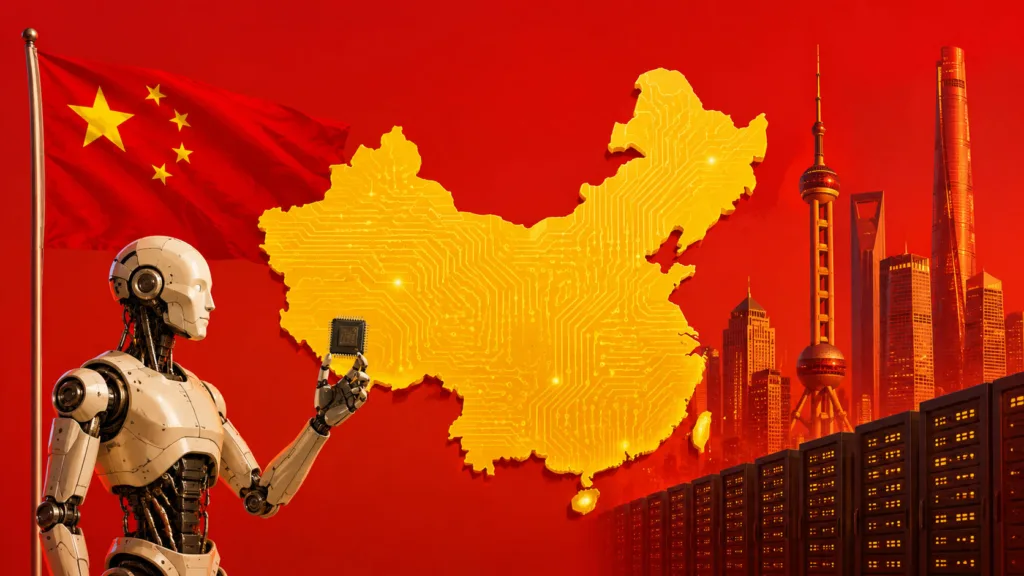
You’re likely feeling the pinch. That gnawing sensation in your wallet, the one that whispers about the escalating costs of artificial intelligence. NVIDIA’s GPUs are gold-plated now, aren’t they? And cloud AI services? A bottomless pit of expenditure. Yet, amidst this global AI sticker shock, China seems to be charting a different course. They’re not just spending; they’re building a system that looks suspiciously like a carefully crafted, cost-effective solution, and you, as someone navigating this AI landscape, should be paying close attention.
The narrative we’ve been fed is one of massive, concentrated private investment driving AI innovation. Venture capitalists throwing billions at startups, tech giants fiercely competing for talent and processing power. And for a while, it worked, or at least it seemed to. But the economics are becoming unsustainable for many. The training of large language models alone can cost millions, dwarfing the budgets of all but the largest corporations. This is where China’s approach offers a compelling alternative, one that prioritizes national strategic goals and a more diversified, perhaps even more sustainable, path to AI dominance.
The Open-Source Revolution (with a Twist)
While the West often celebrates open-source as a decentralized force, China has adopted a more pragmatic, top-down approach to leveraging its power. They are not just contributing to open-source projects; they are actively fostering their own robust ecosystems.
Cultivating Indigenous Open-Source Frameworks
You might be surprised to learn the extent to which China is pushing its own open-source AI frameworks. Projects like PaddlePaddle, developed by Baidu, are not just alternatives to TensorFlow or PyTorch; they are designed with specific Chinese hardware and infrastructure in mind. This means developers don’t have to rely solely on expensive, Western-designed chips.
Tailoring to Domestic Hardware
The beauty of a homegrown framework is its ability to be optimized for the processors and accelerators readily available within China. This reduces dependence on foreign suppliers and, critically, brings down the cost of entry for research and development. You can experiment and build without the immediate hurdle of sourcing prohibitively expensive hardware.
Building a Unified Development Environment
By promoting a common set of tools and libraries, China is creating a more cohesive development environment. This streamlines collaboration, reduces fragmentation, and allows for faster iteration and problem-solving across various AI initiatives. It’s about building a shared foundation that everyone can build upon, rather than a collection of disparate, often incompatible, tools.
In exploring China’s innovative approach to artificial intelligence and the associated costs, it’s interesting to consider how automation tools can help streamline processes and reduce expenses in various sectors. For instance, an article on automating repetitive tasks using Zapier provides valuable insights into enhancing productivity and efficiency. You can read more about it here: How to Use Zapier to Automate Your Most Repetitive Tasks. This resource complements the discussion on AI by highlighting practical solutions for businesses looking to leverage technology effectively.
The Strategic Deployment of Cloud AI
Cloud AI services are undeniably convenient, offering on-demand access to immense computing power. However, for extensive AI development and deployment, the recurring costs can be astronomical. China’s strategy here is multifaceted, focusing on leveraging both public and private cloud infrastructure in a way that maintains cost-efficiency.
The Rise of National Cloud Platforms
You’ve probably heard of Alibaba Cloud, Tencent Cloud, and Huawei Cloud. These are not just cloud providers; they are integral components of China’s national AI strategy. They offer competitive pricing and, crucially, are more aligned with national data sovereignty and security concerns.
Bundling AI Services with Infrastructure
Unlike some Western providers that offer AI as an add-on, Chinese cloud platforms often integrate AI capabilities directly into their core offerings. This can lead to more streamlined pricing and bundles that are attractive for businesses looking to adopt AI solutions without incurring separate, hefty fees for each component.
Encouraging Hybrid and Private Cloud Deployments
While public clouds are important, China also recognizes the value of control and cost predictability. They are actively encouraging the development and adoption of hybrid and private cloud solutions for AI workloads. This allows organizations to manage their most critical or computationally intensive AI tasks in-house, optimizing costs and ensuring data security.
Accelerating AI through Government-Backed Initiatives
The sheer scale of China’s AI ambitions would be impossible without a significant role for the government. This isn’t just about funding; it’s about strategic direction, infrastructure development, and creating an environment conducive to rapid advancement, all while keeping an eye on the bottom line.
The National AI Strategy as a Cost Management Tool
China’s various AI development plans are not just roadmaps to innovation; they are also implicit cost-management strategies. By setting clear priorities and directing resources towards specific research areas and industrial applications, they avoid the scattershot approach that can lead to wasted investment.
Targeted Funding for Key Sectors
Instead of broadly funding AI research, the Chinese government often directs significant resources towards sectors where AI can have a transformative impact, such as manufacturing, healthcare, and transportation. This focused investment ensures that the AI solutions being developed have clear commercial and societal value, leading to a better return on investment.
Building Shared Infrastructure and Data Resources
The government plays a crucial role in developing shared infrastructure, like high-speed data networks and specialized AI computing centers. These are then made available to a wider range of researchers and businesses, reducing the individual cost of accessing cutting-edge resources.
The Ingenious Utilization of Hardware
The cost of AI is inextricably linked to hardware. Chips are expensive, power consumption is high. China’s strategy involves a clever, multi-pronged approach to hardware that aims to circumvent the traditional bottlenecks and exorbitant costs.
Diversifying the Chip Landscape
The dominance of a few major chip manufacturers has created a precarious situation. China is actively working to break this monopoly by fostering its own semiconductor industry and exploring alternative chip architectures.
Investing in Domestic Chip Manufacturing
You’re seeing massive state-backed investments in domestic chip foundries and design capabilities. While catching up to the leading edge is a monumental task, the goal is to reduce reliance on foreign suppliers for AI-specific processors, thereby controlling costs and ensuring supply chain stability.
Exploring Specialized AI Accelerators
Beyond general-purpose GPUs, China is investing heavily in custom-designed AI accelerators. These chips are built from the ground up for specific AI tasks, offering greater efficiency and lower power consumption for those workloads. This specialized approach can lead to significant cost savings in the long run.
Optimizing for Existing Infrastructure
Not all AI needs the most bleeding-edge, power-hungry hardware. A significant portion of AI development and deployment can be done effectively on more conventional or repurposed hardware.
Leveraging Existing Computing Power
China’s approach often involves utilizing existing computing clusters and even repurposed infrastructure for certain AI tasks. This is particularly relevant for companies that may not have the budget for dedicated, state-of-the-art AI hardware.
Focusing on Algorithmic Efficiency
A key aspect of cost-effective AI is algorithmic innovation. Rather than simply throwing more computing power at a problem, China emphasizes developing more efficient algorithms that can achieve similar results with less processing. This reduces both hardware and energy costs.
In exploring the implications of China’s advancements in artificial intelligence, it is interesting to consider how decentralized technologies are shaping research and innovation. A related article discusses the role of blockchains in facilitating decentralized science, which could complement AI developments by enhancing transparency and collaboration in research. For more insights on this topic, you can read the article on decentralized science.
Building the Talent Pool Economically
Talent is often cited as another major cost driver in AI. The global demand for skilled AI professionals has driven salaries sky-high. China’s strategy for cultivating this talent is both broad and cost-conscious.
A National Emphasis on AI Education
You’ll find AI integrated into university curricula and vocational training programs across the country. This mass education approach aims to create a large pool of AI-competent individuals.
Affordable Higher Education and Research Opportunities
Compared to some Western countries, the cost of higher education and research opportunities in China can be significantly lower, both for domestic students and for international collaborations. This allows more aspiring individuals to pursue AI-related fields.
Fostering Industry-Academia Collaboration
Strong links between universities and industries mean that students gain practical experience and companies get access to fresh talent without the full cost of recruiting seasoned professionals on the open market. This creates a more efficient pipeline from education to application.
The Role of Government-Sponsored Training Programs
Beyond formal education, there are numerous government-sponsored initiatives focused on upskilling the workforce in AI. These programs often provide subsidized training and certifications.
Skill Development for Emerging Industries
These programs are often designed to equip individuals with the specific AI skills needed for burgeoning industries that China is prioritizing, further aligning talent development with national economic goals and ensuring that the investment in training yields tangible returns.
Accessible Online Learning Platforms
The proliferation of accessible online learning platforms, often supported by government initiatives, allows for widespread dissemination of AI knowledge at a fraction of the cost of traditional in-person training. This democratizes access to AI education.
The way China is approaching AI development, with its emphasis on indigenous open-source, strategic cloud deployment, government backing, hardware innovation, and a mass-market approach to talent development, presents a compelling alternative to the high-cost, often venture-capital-driven model seen elsewhere. It’s a strategy that prioritizes sustainability, national competitiveness, and ultimately, a more accessible and cost-effective path to harnessing the power of artificial intelligence. As you continue to navigate the evolving AI landscape, understanding these Chinese strategies will be crucial for understanding the future of this transformative technology. You might not be able to replicate their exact model, but the lessons in cost-efficiency, strategic planning, and diversified development are invaluable.
FAQs
What is China’s Answer to AI Sticker Shock?
China’s Answer to AI Sticker Shock is a government-led initiative to address the high costs associated with implementing artificial intelligence (AI) technologies in various industries.
What are the main goals of China’s Answer to AI Sticker Shock?
The main goals of China’s Answer to AI Sticker Shock are to reduce the financial burden of AI adoption for businesses, promote the development and application of AI technologies, and enhance China’s global competitiveness in the AI industry.
How does China’s Answer to AI Sticker Shock aim to achieve its goals?
China’s Answer to AI Sticker Shock aims to achieve its goals through various measures, including providing financial support and incentives for AI adoption, fostering collaboration between industry and research institutions, and promoting the development of AI talent.
What are some of the challenges that China’s Answer to AI Sticker Shock seeks to address?
Some of the challenges that China’s Answer to AI Sticker Shock seeks to address include the high costs of AI technology, the lack of skilled AI professionals, and the need for greater integration of AI in traditional industries.
How does China’s Answer to AI Sticker Shock impact the global AI industry?
China’s Answer to AI Sticker Shock is expected to have a significant impact on the global AI industry by driving innovation, increasing competition, and shaping the future development and application of AI technologies worldwide.