


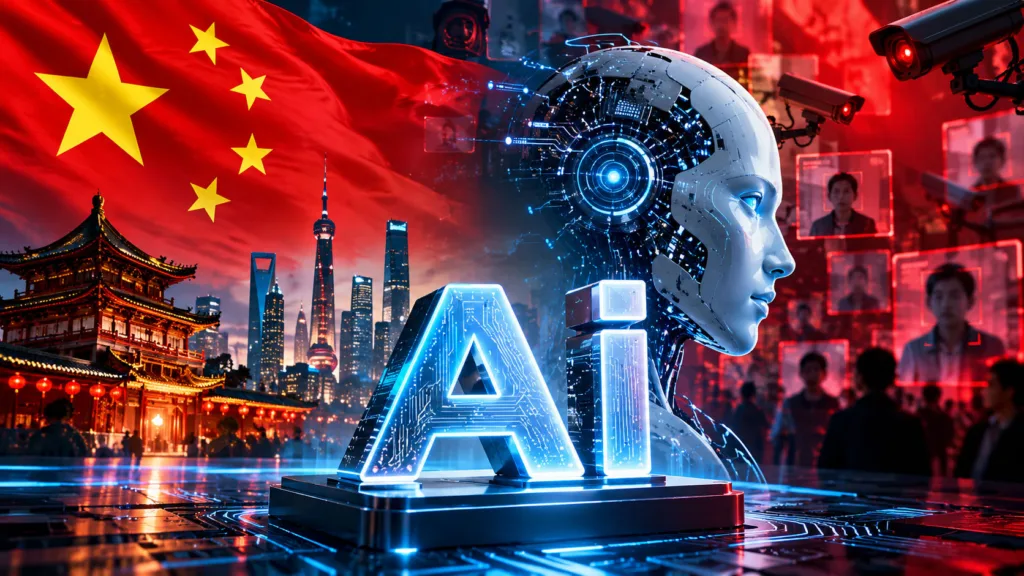
You’re an astute observer of global affairs, and you’ve likely noticed the ubiquitous discussions surrounding artificial intelligence. Every nation, it seems, is grappling with AI’s promise and peril. But as you delve deeper, you begin to discern a unique undercurrent in China’s engagement with this transformative technology – a fear, perhaps, unlike any other. It’s not just the fear of job displacement or existential threats, which are universal concerns. No, in China, you’ll uncover a more nuanced, deeply rooted apprehension that speaks to its history, its governance, and its societal fabric.
You understand the Chinese government’s relentless pursuit of stability and control. This isn’t a new phenomenon; it’s a foundational principle. When you consider AI through this lens, you begin to grasp why the technology, while eagerly embraced for its potential, also evokes a profound unease. You see how AI, in the hands of the state, transforms from a tool into a potentially absolute instrument of social engineering.
The Social Credit System: A Digital Dystopia?
You’re familiar with the Social Credit System, an initiative that has garnered international attention and often, alarm. Imagine a society where every single action you take – from your financial transactions to your online comments, from your driving habits to your choice of friends – is meticulously recorded and algorithmically assessed. This isn’t science fiction in China; it’s a rapidly expanding reality. You realize that AI is the engine powering this colossal system, processing unimaginable quantities of data to assign you a “social score.”
- Behavioral Surveillance: You recognize that the very essence of the Social Credit System is behavioral surveillance on an unprecedented scale. AI-powered facial recognition cameras are ubiquitous, monitoring public spaces, identifying individuals, and tracking their movements. You can’t help but wonder if your own society would ever tolerate such pervasive monitoring, even in the name of security.
- Algorithmic Punishment and Reward: You see how this score dictates your access to various aspects of life. A high score might grant you preferential treatment – faster internet, cheaper loans, even priority for coveted school admissions. Conversely, a low score could lead to severe penalties: travel bans, restrictions on employment, or even public shaming. You contemplate the psychological impact of living under such a constant, algorithmic gaze, knowing that a single misstep could have profound consequences for your life and your family’s.
- Erosion of Privacy and Autonomy: You realize that the fear isn’t just about the state’s ability to punish; it’s about the fundamental erosion of privacy and individual autonomy. When every action is scrutinized, and every choice can impact your social standing, where does personal freedom truly reside? You begin to understand why the very thought of AI being used in this manner instills a deep-seated fear among many, even if outwardly they express compliance.
Censorship and Narrative Control: The Great Firewall 2.0
You’re well aware of China’s sophisticated censorship apparatus, often referred to as the “Great Firewall.” Now, consider that firewall turbocharged by AI. You see how AI algorithms are not only blocking specific keywords but are also becoming increasingly adept at identifying nuanced meanings, sentiment, and even nascent dissident movements.
- Proactive Content Filtering: You observe that AI is moving beyond reactive censorship to proactive content filtering. It can analyze vast amounts of data, including social media posts, news articles, and online discussions, to identify and suppress information deemed undesirable before it gains traction. You ponder the implications for freedom of expression when an algorithm, rather than human censors, is making these judgments at an unimaginable scale and speed.
- Shaping Public Opinion: You understand that the fear isn’t just about what’s suppressed, but also about what’s promoted. AI can be used to amplify state-approved narratives, flooding online spaces with carefully curated information and counteracting dissenting voices. You recognize that this represents a potent tool for shaping public opinion and maintaining ideological uniformity, making it incredibly difficult for alternative perspectives to emerge.
- The Chilling Effect: You envision the chilling effect this has on individual expression. If you know that your online activities are constantly monitored, and that expressing certain views could lead to repercussions, you’re far less likely to speak your mind. This self-censorship, fueled by the omnipresent threat of AI surveillance, becomes a powerful mechanism of control.
In the context of understanding global perspectives on artificial intelligence, the article “China Is Scared of A.I. Just Not the Way We Are” provides valuable insights into the unique challenges and strategies that China faces regarding AI development. For those interested in exploring related technological advancements, the article on event-driven APIs and their role in real-time communication for distributed systems offers a fascinating look at how these technologies can enhance connectivity and responsiveness in various applications. You can read more about it here: Event-Driven APIs: Real-Time Communication for Distributed Systems.
The Ghost in the Machine: Unforeseen Consequences and Loss of Agency
You’re a pragmatist, and you know that even with the best intentions, complex systems can have unintended consequences. When you introduce AI into the equation, with its emergent properties and opaque decision-making processes, the potential for unforeseen outcomes becomes a significant source of anxiety. In China, this anxiety is amplified by the perceived loss of agency.
Algorithmic Bias and Discrimination: The Unfairness of the Code
You understand that AI systems are only as good as the data they’re trained on. If that data is biased, the AI will perpetuate and even amplify those biases. In a society with a history of social stratification and regional disparities, you realize that algorithmic bias is not just a theoretical concern; it’s a tangible threat.
- Reinforcing Existing Inequalities: You can see how AI systems, if not carefully designed and monitored, could inadvertently reinforce existing social and economic inequalities. For instance, a loan approval algorithm trained on historical data might disproportionately disadvantage certain demographics, making it harder for them to access credit, even if their individual financial standing is sound.
- Ethical Quandaries in Decision-Making: You ponder the ethical quandaries when AI is making critical decisions about people’s lives – who gets a job, who receives medical treatment, who is deemed a flight risk. If these decisions are based on biased algorithms, and the rationale is opaque, how can individuals appeal or challenge such judgments? You realize this introduces a profound sense of powerlessness.
- Lack of Transparency and Accountability: You recognize that the “black box” nature of many advanced AI models makes it incredibly difficult to understand why a particular decision was made. When you can’t interrogate the reasoning behind an algorithmic judgment, how can you hold anyone accountable for its potentially discriminatory outcomes? This lack of transparency fuels a deep-seated distrust and fear.
The AI Singularity and Human Obsolescence: A Philosophical Angst
You’re aware of the global discussion surrounding the “AI singularity” – the hypothetical point at which AI surpasses human intelligence. While this is often framed as a Western existential threat, you observe a unique twist in China’s philosophical anxieties. It’s not just about AI becoming more intelligent; it’s about what that means for humanity’s role in a society that values collective harmony and a clear hierarchy.
- Erosion of Human Value and Purpose: You contemplate a future where AI performs many tasks currently requiring human intellect and skill. What happens to the sense of purpose and value when humans are no longer indispensable in the same way? In a society that often emphasizes contribution to the collective, this potential obsolescence presents a significant philosophical challenge.
- Loss of Cultural Identity: You consider the potential for AI to influence and even reshape cultural norms and traditions. If AI is generating art, music, and literature, or even guiding social interactions, could it inadvertently dilute or alter the unique cultural identity that China so deeply cherishes? This concern isn’t about mere job loss; it’s about the very essence of what it means to be Chinese.
- The Uncontrollable Intellect: You grasp the fear of creating an intelligence that is ultimately beyond human comprehension and control. While this is a universal concern, in a system that prizes order and predictability, the idea of an uncontrollable, emergent intelligence presents a particularly potent threat to the established order.
The Economic Double-Edged Sword: Innovation vs. Instability


You’ve witnessed China’s meteoric economic rise, fueled by innovation and rapid technological adoption. AI is seen as critical to maintaining this trajectory. However, you also recognize that economic stability is paramount for the Chinese government. This creates a fascinating tension when considering the disruptive potential of AI.
Job Displacement and Social Unrest: The Fear of the Unemployed Masses
You understand that while AI promises increased efficiency and productivity, it also threatens to automate countless jobs. In a country with a vast population and a historical emphasis on full employment to maintain social harmony, the prospect of mass job displacement is a significant source of anxiety.
- The “Rice Bowl” and Social Stability: You know that the concept of the “rice bowl” – a secure job providing a livelihood – is deeply ingrained in Chinese society. The fear is that AI could shatter millions of these rice bowls, leading to widespread unemployment and, consequently, social unrest. You recognize that for the government, maintaining stability is always the primary objective.
- The Challenge of Retraining and Re-skilling: You realize that while some argue for retraining and re-skilling the workforce, the sheer scale of the potential displacement in China presents an enormous, perhaps insurmountable, challenge. How do you effectively re-skill hundreds of millions of workers in a rapidly evolving technological landscape?
- Impact on Migrant Workers and Rural Populations: You consider the particular vulnerability of migrant workers and rural populations, who often fill lower-skilled manufacturing and service jobs. These are precisely the roles most susceptible to automation, raising fears of massive internal displacement and further exacerbating existing urban-rural divides.
Global Economic Competition: The Race to the Top (and the Bottom)
You’re acutely aware of the fierce global competition in AI development. China views AI dominance as essential for its long-term economic prosperity and national security. This race, however, also breeds its own set of fears and pressures.
- Dependency on Foreign Technology: You’ve seen China’s historical push for technological self-reliance. The fear of being dependent on foreign AI technology, particularly from the West, is a potent driver of their domestic development efforts. This fear is amplified by concerns about data security and potential backdoors in foreign-made systems.
- The “AI Divide” and Regional Disparities: You realize that while major urban centers in China are at the forefront of AI adoption, there’s a growing concern about an “AI divide” within the country. Regions and industries that fail to adapt could fall further behind, exacerbating existing economic disparities and potentially leading to resentment.
- Maintaining Competitiveness and Innovation: You recognize the immense pressure on Chinese companies and researchers to constantly innovate and stay ahead in the global AI race. The fear of stagnation or falling behind, especially when rival nations are also heavily investing in AI, is a constant motivator and a source of strategic anxiety.
The Geopolitical Chessboard: AI as a Weapon


You understand that AI is not just an economic or social tool; it’s also a powerful geopolitical instrument. In China’s view, AI represents a new frontier in military and strategic competition, and this understanding fuels a distinct set of fears.
Autonomous Weapon Systems: The Ethics of Killer Robots
You’re familiar with the international debate surrounding autonomous weapon systems, often dubbed “killer robots.” While many nations are hesitant to fully embrace such technology due to ethical concerns, you observe a different calculus in China, driven by the imperative of national defense and technological superiority.
- The Dehumanization of Warfare: You contemplate the implications of AI-powered weapons making life-or-death decisions without human intervention. This raises profound ethical questions about accountability and the potential for a complete dehumanization of warfare. The fear is not just about these weapons falling into the wrong hands, but about their very existence.
- Escalation and Instability: You recognize that the proliferation of autonomous weapons could lead to an unprecedented arms race and increase the risk of accidental escalation. If decisions are made by algorithms at lightning speed, without human oversight, the chances of miscalculation and rapid escalation in conflicts become significantly higher.
- The Erosion of International Norms: You understand that the development and deployment of such systems could erode existing international norms and treaties governing warfare. The fear is that a new era of unpredictable and potentially uncontrollable conflict could emerge, driven by technological imperatives rather than human judgment.
Cyber Warfare and Surveillance: The Invisible Battlefield
You’re aware of the ongoing global cyber warfare landscape. When you add AI to this picture, you see a transformation of the battlefield into an invisible, hyper-efficient domain, raising fears about national security and sovereignty.
- Advanced Cyber Attacks: You realize that AI can power incredibly sophisticated cyberattacks, capable of identifying vulnerabilities, adapting to defenses, and operating at speeds beyond human comprehension. The fear of these AI-driven attacks targeting critical infrastructure, financial systems, or military networks is a very real and pressing concern.
- AI-Enhanced Surveillance and Espionage: You consider the use of AI to enhance intelligence gathering and espionage. AI can analyze vast amounts of intercepted data, identify patterns, and pinpoint targets with unprecedented accuracy. This raises fears about foreign powers using AI to compromise national secrets or gain a strategic advantage.
- The Race for Cyber Dominance: You understand that the perceived need to achieve and maintain cyber dominance is a significant driver of China’s AI development. The fear of falling behind in this invisible arms race compels massive investment and strategic planning, creating a constant state of alert.
In the discussion surrounding China’s apprehensions about artificial intelligence, it’s interesting to consider how different nations approach technological governance. A related article explores the complexities of managing risk in decentralized app development, emphasizing the importance of low-code and no-code governance frameworks. This perspective can shed light on how various countries, including China, might navigate the challenges posed by AI advancements. For more insights on this topic, you can read the article on managing risk in decentralized app development here.
The Cultural and Philosophical Undercurrents: Harmony and Hierarchy
| Metric | Details |
|---|---|
| AI Investment Growth | China’s AI investment has grown by over 40% annually in recent years. |
| Government AI Strategy | China’s 2017 AI Development Plan aims to become the world leader in AI by 2030. |
| AI Talent Pool | China produces over 100,000 AI graduates annually, second only to the US. |
| AI Research Publications | China leads globally in the number of AI research papers published. |
| AI Surveillance Deployment | Extensive use of AI-powered surveillance systems across major cities. |
| Public Perception of AI | Mixed feelings: excitement for economic benefits, concern over privacy and control. |
| AI Regulation Approach | Focus on controlling AI to maintain social stability rather than limiting innovation. |
Beyond the immediate practical concerns, you sense a deeper, more philosophical fear embedded in China’s unique cultural fabric. This relates to core tenets of Chinese thought: harmony, hierarchy, and the delicate balance between order and individual expression.
The Threat to Social Harmony: AI as a Disruptor
You appreciate the paramount importance of social harmony (和谐 – héxié) in Chinese society. This isn’t just an ideal; it’s a deeply ingrained cultural value and a cornerstone of stable governance. AI, with its transformative power, can be seen as a potential disruptor of this harmony.
- Widening Social Divides: You envision how AI could exacerbate existing social divides. If access to AI-powered education, healthcare, or economic opportunities is uneven, it could lead to increased resentment and social fragmentation, directly challenging the ideal of harmony.
- The Unpredictability of Progress: You understand that rapid technological change, while often celebrated, can also be inherently destabilizing. The fear is that the pace of AI innovation might outstrip society’s ability to adapt, leading to unforeseen consequences that disrupt the carefully maintained social order.
- Loss of Traditional Community Bonds: You reflect on how technology can sometimes isolate individuals, weakening traditional community bonds. If AI-mediated interactions become dominant, could it erode the direct human connections that are vital for maintaining social cohesion and harmony?
The Challenge to Human Agency and the Mandate of Heaven: A Deeper Angst
You’re aware of the historical concept of the “Mandate of Heaven” (天命 – tiānmìng), which has historically legitimized rule in China. While this is a complex and evolving concept, you can see how the rise of AI could subtly challenge foundational ideas about human agency and the role of leadership.
- Who Controls the Future? You ponder the question of who ultimately controls the future when AI becomes increasingly powerful and autonomous. If algorithms begin to make decisions that profoundly impact society, does it subtly shift the “mandate” away from human leaders and towards the machines? This isn’t a direct challenge to the Party, but a philosophical one to the very idea of human governance.
- The Role of the Individual in a System: You recall that Chinese philosophy often emphasizes the individual’s role within a larger collective and a defined social hierarchy. If AI begins to automate human decision-making and even creative tasks, what becomes of the individual’s unique contribution and place within this established order?
- The Quest for Perfection vs. Human Imperfection: You observe a drive for efficiency and a kind of societal “perfection” that AI promises to deliver. Yet, you also know that human societies are inherently imperfect, messy, and driven by emotion. The fear is that in the pursuit of algorithmic perfection, something fundamentally human might be lost or devalued.
As you reflect on these various fears, you realize that China’s relationship with AI is far more complex than a simple narrative of technological advancement or totalitarian control. It’s a nuanced interplay of ambition and anxiety, driven by historical context, political imperatives, and deep-seated cultural values. The unique fears you’ve identified are not mere obstacles to progress, but fundamental considerations that will continue to shape China’s AI strategy for years to come.
FAQs
What is China’s stance on A.I. technology?
China is actively investing in and developing artificial intelligence (A.I.) technology, viewing it as a strategic priority for economic and national security reasons.
How does China differ in its approach to A.I. compared to Western countries?
China’s approach to A.I. is more focused on practical applications and economic growth, while Western countries often prioritize ethical considerations and regulation of A.I. development.
What are some concerns that China has regarding A.I. technology?
China is concerned about the potential risks and challenges posed by A.I. technology, such as job displacement, data privacy issues, and the potential for misuse of A.I. for surveillance and control.
How is China using A.I. technology in various sectors?
China is using A.I. technology in various sectors such as healthcare, finance, transportation, and agriculture to improve efficiency, productivity, and innovation.
What are some examples of China’s advancements in A.I. technology?
China has made significant advancements in A.I. technology, including developing cutting-edge facial recognition systems, autonomous vehicles, and natural language processing algorithms.