


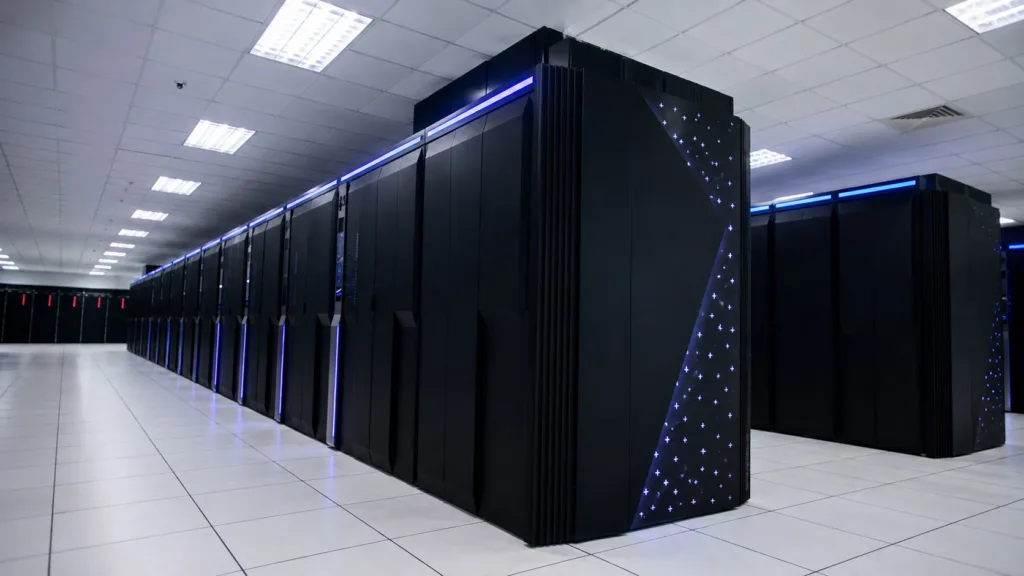
You’ve probably heard the whispers, seen the headlines, and maybe even felt a pang of unease. The world of high-performance computing, once dominated by the titans of the West, has a new king, and its banner flies the colors of the dragon. China’s supercomputing prowess has reached an echelon previously unimaginable, culminating in the undisputed ascension of its machines as the fastest on Earth. This isn’t just a technological leap; it’s a geopolitical tremor, a signal that the landscape of innovation, scientific discovery, and even national security is being redrawn. You’re about to delve into the story behind this monumental shift, understanding not just that it happened, but how and why it’s so significant for you, for your nation, and for the future of technology.
Hitting the Wall: The Limits of Past Dominance
For years, the headlines about supercomputing have echoed with familiar names from the United States and its allies. These were the machines that crunched the most complex problems, pushed the boundaries of scientific research, and held the keys to future breakthroughs. You likely envisioned these colossal contraptions housed in sterile, climate-controlled bunkers, powering everything from weather forecasting to the intricate simulations needed for drug discovery. This perception, while partly accurate, was also becoming a relic of a bygone era. The established order, while impressive, was beginning to show its age, and the seeds of its eventual dethroning were being sown.
The Slowdown in Innovation Cycles
You’ve likely experienced the feeling of stagnation in various fields, where progress feels incremental rather than revolutionary. The same held true, to some extent, for the supercomputing race. While improvements were constantly being made, the “next big leap” seemed elusive for a time. The technological paradigms that had fueled decades of growth were encountering inherent physical and economic limitations. You might have wondered if we were approaching a plateau in what was possible.
The Challenge of Moore’s Law
You’re familiar with Moore’s Law, the observation that the number of transistors on a microchip doubles approximately every two years, leading to increased computing power and decreased cost. However, as transistors have shrunk to near-atomic scales, the physical challenges of further miniaturization have become immense. You can imagine the difficulties in manufacturing and managing such intricate components, leading to increased costs and diminishing returns on investment. This was a substantial hurdle.
Energy Consumption and Heat Dissipation
Imagine trying to power entire cities with the energy demands of these supercomputers. The sheer power required to operate them is staggering, and the heat generated is a colossal problem. You can appreciate the engineering nightmares involved in keeping these machines cool enough to function reliably. The energy costs alone were becoming a significant factor, and the environmental impact was also a growing concern.
The Shifting Sands of Investment and Strategy


While the US and its traditional partners focused on refining existing architectures and gradually scaling up, other nations began to re-evaluate their strategies. You might have noticed how geopolitical priorities can influence technological development, and this was certainly the case here. The recognition of supercomputing’s strategic importance began to permeate national agendas in a more profound way.
The Rise of National Champion Ambitions
You might have observed how certain countries have prioritized specific technological sectors for national development. For China, supercomputing emerged as a prime candidate for this ambitious endeavor. The desire to achieve technological self-sufficiency and leadership in critical areas became a driving force behind substantial, focused investment.
The Importance of Application-Specific Design
Past approaches often involved building general-purpose supercomputers. However, you can understand how designing machines specifically optimized for certain tasks, like artificial intelligence or scientific simulations, could lead to greater efficiency and performance. This shift in thinking was crucial.
The recent advancements in Chinese supercomputing, which have allowed it to surpass the fastest machines in the United States, highlight a significant shift in global technological leadership. This development is not only a testament to the rapid progress in computational power but also raises questions about the future of data analytics and decision-making processes. For a deeper understanding of how these technological shifts are influencing analytics, you can read the article on the evolution of analytics and decision intelligence at The End of Dashboards: The Shift to Agentic Analytics and Decision Intelligence.
The Ascendant Dragon: Unveiling China’s New Champions
Then came the announcements that sent ripples through the technological world. Names that were once on the fringes of the supercomputing community, or entirely unknown to the wider public, began to dominate the TOP500 list, the authoritative ranking of the world’s fastest supercomputers. It was no longer a matter of debate; China had arrived, and it had arrived with unprecedented speed and power.
Meet the New Titans: Dawning and Sunway
The arrival of machines like the “Sunway TaihuLight” and later iterations of their successors marked a significant departure from the norm. These weren’t just incremental upgrades; they represented a fundamental re-architecting of what a supercomputer could be, built upon entirely domestic technologies. You might have felt a sense of awe, coupled with a healthy dose of curiosity.
The “Made in China” Revolution in HPC
You’ve likely witnessed China’s transformation from a manufacturing hub to an innovation powerhouse. This technological leap in supercomputing is a testament to that evolution. The emphasis on indigenous design and manufacturing meant that the nation was not reliant on foreign components or intellectual property, giving them greater control over their technological destiny.
Breaking the x86 Monopoly
For decades, the x86 architecture, largely an Intel and AMD dominion, formed the backbone of most high-performance computing. The emergence of Chinese-designed processors, like those in the Sunway series, challenged this hegemony. You can imagine the seismic shift this represented, forcing the established players to acknowledge a formidable new competitor.
Architectural Innovations and Design Philosophy
It wasn’t just about brute force; the Chinese approach demonstrated a keen understanding of architectural design. They opted for architectures that prioritized specific performance characteristics, rather than trying to be a jack-of-all-trades. This focused strategy proved remarkably effective.
Many-Core Processors and Massive Parallelism
You might be aware that modern computing relies heavily on parallel processing – breaking down complex tasks into smaller pieces that can be worked on simultaneously. Chinese supercomputers pushed this concept to an extreme, utilizing processors with significantly more cores than their Western counterparts, and orchestrating them in unprecedentedly parallel configurations.
Memory and Interconnect Strategies
Beyond the processors themselves, the way data is accessed and moved between them is critical. You can infer that significant innovation occurred in memory technologies and the high-speed interconnects that allow thousands of processors to communicate seamlessly. These often-overlooked components are crucial for overall performance.
The Engine of Discovery: What These Machines Enable
The question now is: what does this newfound speed actually mean? It’s easy to get caught up in the raw numbers, the exaflops and petaflops. But behind those figures lies the power to unlock secrets, solve grand challenges, and fundamentally reshape our understanding of the universe and ourselves. You’re standing on the precipice of a new era of scientific and technological exploration, powered by these digital behemoths.
Accelerating Scientific Breakthroughs
Imagine the ability to simulate complex biological systems with unprecedented detail, or to model the formation of galaxies with greater accuracy. This is the promise of exascale computing, and China’s machines are now at its forefront. You can anticipate a surge in discoveries across numerous scientific fields.
Genomics and Drug Discovery
You likely understand the importance of understanding our genetic code and developing new treatments for diseases. Supercomputers can accelerate the analysis of vast genomic datasets and simulate the interactions of potential drug compounds, drastically shortening the time it takes to bring new therapies to market.
Climate Modeling and Environmental Science
The challenges of climate change are immense and require sophisticated modeling. You can see how faster and more powerful supercomputers can create more accurate and granular climate models, enabling better predictions and informing more effective mitigation strategies.
Materials Science and Nanotechnology
The creation of new materials with unique properties is crucial for innovation in countless industries. You can appreciate how these machines can simulate atomic-level interactions, guiding the design of novel materials with applications ranging from advanced electronics to sustainable energy solutions.
Fueling the AI Revolution
Artificial Intelligence is no longer science fiction; it’s a rapidly evolving reality. The training of sophisticated AI models requires immense computational power, and China’s supercomputers are perfectly poised to lead this charge. You’re witnessing the very engines that will drive the next generation of intelligent systems.
Deep Learning and Neural Network Training
You’ve likely heard about deep learning and its remarkable capabilities. Training these complex neural networks requires processing vast amounts of data. You can understand how supercomputers can dramatically reduce the training time for these models, leading to more powerful and capable AI.
Natural Language Processing and Computer Vision
The ability for computers to understand human language and interpret visual information is rapidly advancing. You can anticipate faster progress in these areas, leading to more sophisticated chatbots, advanced surveillance systems, and enhanced human-computer interaction.
The Geopolitical Implications: A New Global Order?
The dominance of any nation in a critical technological domain inevitably carries significant geopolitical weight. When that domain is as fundamental as high-performance computing, the implications are profound. You’re witnessing a shift in global power dynamics, where technological leadership translates directly into influence and capability.
The Strategic Advantage of Supercomputing Power
You can recognize that supercomputing is not just about academic research; it’s about national security, economic competitiveness, and the ability to solve complex societal problems. The nation that possesses the fastest machines holds a significant advantage in these critical areas.
Defense and National Security Applications
Imagine the ability to run advanced simulations for weapons systems, analyze vast intelligence datasets, or develop sophisticated cyber warfare capabilities. You can see how supercomputing is an indispensable tool for modern defense strategies.
Economic Competitiveness and Industrial Advancement
You might observe how nations with leading supercomputing capabilities are better positioned to drive innovation in their industries, attract talent, and maintain a competitive edge in the global marketplace.
The Shifting Landscape of Research Collaboration
Historically, global scientific research has been a collaborative effort. However, as national capabilities diverge, so too might the patterns of collaboration. You’re potentially witnessing a future where research ecosystems are more fragmented, with nations leveraging their own powerful resources.
Access and Intellectual Property Concerns
You can understand the concerns that might arise regarding access to cutting-edge research and the potential implications for intellectual property when certain nations lead in a crucial technological area.
The Future of Global Scientific Exchange
Will the rise of national champions lead to a more insular approach to scientific discovery, or will it foster new forms of competition and specialization that ultimately benefit humanity? You are in the midst of witnessing this debate unfold.
The recent advancements in supercomputing have sparked significant interest, particularly as a Chinese supercomputer has leapfrogged the best US machines to claim the title of the world’s fastest. This development highlights the growing competition in the field of high-performance computing and raises questions about the future of technology leadership. For those looking to enhance their productivity in this rapidly evolving landscape, creating a distraction-free workspace can be crucial. You can find useful tips on this topic in a related article that discusses ways to optimize both physical and digital environments for maximum efficiency. To explore these strategies, visit this guide.
The Road Ahead: What This Means for You
The technological advancements made by China in supercomputing are not just abstract news items; they have tangible implications for your life, your nation, and the future of the world. Understanding these developments is crucial for navigating the evolving technological landscape.
The Imperative of Innovation and Investment
You can learn from this shift that sustained innovation and strategic investment are paramount. For any nation to remain competitive, it must prioritize research and development in critical areas like high-performance computing. You might see increased urgency in your own nation’s technological strategies.
Fostering a Culture of STEM Education
You understand that a skilled workforce is essential for technological advancement. This achievement underscores the importance of robust STEM education and fostering a pipeline of talent capable of driving future innovation.
Encouraging Public-Private Partnerships
You can also recognize the role of collaboration between government and industry. Successful supercomputing programs often benefit from substantial public investment coupled with the agility and ingenuity of the private sector.
The Ethical Considerations and Global Cooperation
As supercomputing power grows, so do the ethical considerations surrounding its use. You are part of a global society, and the responsible development and deployment of these technologies are a shared concern.
The Dual-Use Nature of Advanced Technologies
You might ponder the dual-use nature of many powerful technologies, meaning they can be used for both beneficial and potentially harmful purposes. You can see how a nation’s leadership in supercomputing necessitates careful consideration of these ethical dimensions.
The Need for International Dialogue and Standards
You can appreciate the value of international dialogue and the establishment of shared ethical frameworks and standards for the development and deployment of advanced computing technologies. Ensuring that these powerful tools are used for the benefit of all humanity is a critical challenge.
You stand at a fascinating juncture in technological history. The reign of the dragon in supercomputing is not merely a headline; it’s a harbinger of change, a testament to focused ambition, and a powerful catalyst for future discovery. You are invited to witness, to understand, and to participate in the unfolding narrative of this new technological era. The capabilities unleashed by these machines will undoubtedly shape the world you inhabit for decades to come.
FAQs
What is the title of the article?
The title of the article is “Chinese supercomputer leapfrogs best US machines to be ranked the world’s fastest.”
What is the main topic of the article?
The main topic of the article is the Chinese supercomputer that has surpassed the best US machines to become the world’s fastest.
What is the significance of this achievement?
This achievement is significant because it marks the first time in 25 years that the United States has not claimed the top spot in the world’s supercomputer rankings.
How fast is the Chinese supercomputer compared to the best US machines?
The Chinese supercomputer is capable of performing 93 quadrillion calculations per second, which is significantly faster than the best US machines.
What are the potential implications of this development?
The potential implications of this development include China’s growing technological prowess and its impact on global competition in the field of supercomputing.