


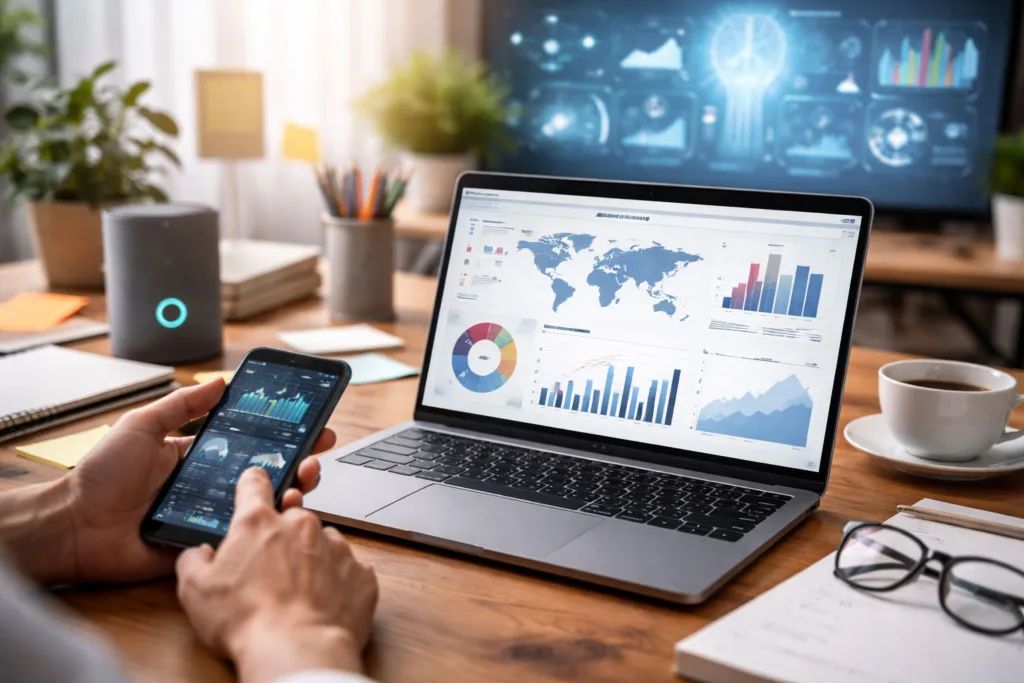
The year 2026 presents a landscape irrevocably altered by the accelerating confluence of data analytics and emerging technologies. As you navigate this evolving business environment, understanding these transformative forces is paramount for strategic planning and sustained growth. Your ability to leverage these tools will dictate your competitive edge, acting as a compass in a sea of increasingly complex market dynamics.
Businesses in 2026 operate on a bedrock of unprecedented data. The sheer volume and velocity of information generated daily serve as a rich, albeit often chaotic, resource. Your challenge is no longer simply collecting data, but effectively extracting actionable insights from this digital ocean.
Hyper-Personalization and Customer Centricity
The ability to segment customers with granular precision is no longer a luxury but a necessity. You are expected to anticipate customer needs, offer tailored products and services, and cultivate experiences that resonate on an individual level.
- Behavioral Economics in Action: Data analytics now allows you to model subtle shifts in consumer psychology, predicting purchasing patterns and brand loyalty with increasing accuracy. This moves beyond simple demographics to understanding the “why” behind customer choices.
- Predictive Customer Service: Machine learning algorithms analyze historical interactions and identify potential issues before they escalate, allowing you to proactively address customer concerns and improve satisfaction metrics. Imagine a digital assistant that intervenes before a customer even realizes they have a problem.
- Dynamic Pricing and Offer Generation: Real-time data feeds, encompassing competitor pricing, inventory levels, and demand fluctuations, enable dynamic pricing strategies. Your marketing efforts become highly individualized, delivering offers that are relevant and timely to each unique customer profile.
Operational Optimization Through Data-Driven Decisions
Beyond customer interactions, data analytics permeates internal operations, streamlining processes and enhancing efficiency. You are no longer relying solely on intuition; your decisions are increasingly informed by empirical evidence.
- Supply Chain Resilience: Sensor data from logistics networks, coupled with predictive analytics, allows you to anticipate disruptions, optimize routes, and manage inventory more effectively. This creates a supply chain that is not only efficient but also remarkably resilient to unforeseen events.
- Workforce Analytics and Talent Management: Data insights provide a comprehensive view of employee performance, engagement, and skill gaps. This enables you to make informed decisions regarding talent acquisition, professional development, and resource allocation, fostering a more productive and engaged workforce.
- Risk Management and Fraud Detection: Advanced analytical models are crucial for identifying anomalies and mitigating risks. From financial transactions to cybersecurity threats, these systems act as an early warning system, safeguarding your assets and reputation.
As businesses continue to adapt to the rapidly evolving landscape of data analytics and emerging technology trends, understanding the competitive frameworks that will dominate in the coming years is crucial. For a deeper insight into this topic, you can explore the article titled “The 2026 Cross-Platform Battle: Which Framework Dominates?” which discusses the various frameworks that are set to shape the technological environment in 2026. This article provides valuable perspectives on how these frameworks will influence data analytics and overall business strategies. You can read it here: The 2026 Cross-Platform Battle: Which Framework Dominates?.
Artificial Intelligence and Machine Learning: The Brains Behind the Operation
AI and ML are not merely tools; they are becoming integral components of your business’s cognitive infrastructure. They represent the intelligence that sifts through the data deluge, uncovering patterns and making predictions that would be impossible for human analysis alone. This empowers you to augment human capabilities, not replace them entirely.
Augmented Intelligence and Decision Support
The integration of AI into decision-making processes means you are no longer making choices in a vacuum. You are supported by intelligent systems that analyze vast datasets and present optimized solutions.
- Strategic Planning with AI: AI models can simulate various market scenarios, assess potential outcomes, and recommend optimal strategic pathways. This allows for more robust and data-backed long-term planning, acting as a sophisticated simulation engine for your business’s future.
- Automated Content Creation and Curation: AI algorithms generate marketing copy, reports, and even news summaries with increasing sophistication. This frees up human resources for more creative and strategic tasks, allowing you to scale your content output while maintaining quality.
- Personalized Learning and Development: AI-powered platforms can identify individual learning styles and knowledge gaps within your workforce, delivering tailored training modules. This fosters continuous skill enhancement, ensuring your team remains relevant in a rapidly evolving technological landscape.
Operational Automation and Efficiency Gains
The ability of AI to automate repetitive, data-intensive tasks is fundamentally reshaping operational workflows. You can reallocate human talent to areas requiring critical thinking, creativity, and complex problem-solving.
- Robotic Process Automation (RPA) Evolution: RPA has evolved beyond simple task automation. It now incorporates AI to handle more complex, unstructured data, adapting to changing processes and making intelligent decisions within its defined parameters.
- Predictive Maintenance in Manufacturing: AI analyzes sensor data from machinery to predict equipment failures before they occur, scheduling maintenance proactively and minimizing downtime. This translates directly to increased production efficiency and reduced operational costs.
- Intelligent Automation of Customer Interactions: AI-powered chatbots and virtual assistants handle a significant portion of customer inquiries, providing instant support and freeing up human agents for more complex issues. This creates a scalable and efficient customer support infrastructure.
Edge Computing: Bringing Computation Closer to the Source


The proliferation of IoT devices and the demand for real-time insights are driving the adoption of edge computing. In 2026, you will find processing power distributed closer to where data is generated, rather than relying solely on centralized cloud infrastructure. This is like moving parts of your brain closer to your fingertips, allowing for quicker reactions.
Real-time Data Processing and Action
The latency associated with sending all data to a central cloud for processing is becoming unacceptable for many critical applications. Edge computing addresses this by performing computations at the network’s periphery.
- Autonomous Systems and IoT: Self-driving vehicles, smart manufacturing robots, and intelligent city infrastructure rely on immediate data analysis and decision-making at the edge. Delay in processing could have catastrophic consequences in these environments.
- Optimized Resource Utilization: Processing data at the edge reduces the bandwidth required to transmit information to the cloud, leading to cost savings and more efficient network usage. You’re no longer sending every raw ingredient to the central factory; some initial processing happens locally.
- Enhanced Security and Privacy: Sensitive data can be processed and analyzed locally, reducing the risk of exposure during transmission to the cloud. This provides an additional layer of security for critical business information.
Decentralized Intelligence and Network Resilience
Edge computing fosters a more resilient and distributed intelligence network. Should central cloud services experience disruption, local operations can continue to function.
- Offline Operation Capabilities: Devices at the edge can continue to operate and collect data even without a constant connection to the cloud, ensuring business continuity in remote or disconnected environments.
- Local Data Context and Personalization: Edge intelligence can leverage local context to provide more relevant and personalized experiences. For example, a smart retail display can adapt its content based on real-time foot traffic and customer demographics in its immediate vicinity.
- Scalability of IoT Deployments: Edge computing facilitates the scaling of large IoT deployments by distributing processing loads and reducing reliance on a single, centralized point of failure.
Blockchain Technology: A Ledger of Trust and Transparency


While often associated with cryptocurrencies, blockchain’s core innovation—a distributed, immutable ledger—is finding significant applications in business. In 2026, you will encounter its transformative power in building trust, enhancing transparency, and streamlining complex transactions. Think of it as a shared, unalterable historical record that everyone can agree upon.
Supply Chain Traceability and Integrity
One of the most prominent applications of blockchain is in creating transparent and tamper-proof supply chains. This addresses consumer demand for ethical sourcing and authentic products.
- Origin Verification: Blockchain can record the entire journey of a product from raw material to consumer, providing irrefutable proof of its origin and production methods. This is particularly valuable for industries like food, pharmaceuticals, and luxury goods.
- Counterfeit Prevention: By authenticating products at each stage of the supply chain, blockchain makes it significantly harder for counterfeit goods to enter the market, protecting your brand reputation and consumer trust.
- Ethical Sourcing Assurance: Consumers are increasingly demanding ethically sourced products. Blockchain provides a verifiable record of labor practices, environmental compliance, and fair trade, allowing you to demonstrate your commitment to responsible business practices.
Enhanced Security and Data Integrity
Blockchain’s inherent cryptographic security and distributed nature offer robust protection against data manipulation and breaches.
- Immutable Record Keeping: Once a transaction or data point is added to the blockchain, it cannot be altered or deleted. This ensures data integrity and provides a trusted audit trail for all business activities.
- Secure Data Sharing: Blockchain enables secure and controlled sharing of sensitive information between multiple parties without the need for a central intermediary. This fosters collaboration while maintaining data privacy.
- Decentralized Identity Management: Blockchain-based identity solutions allow individuals and organizations to control their digital identities, reducing reliance on centralized authorities and enhancing privacy.
As businesses continue to evolve in response to technological advancements, the integration of data analytics and emerging technology trends is becoming increasingly crucial for success in 2026. Companies are leveraging these tools to enhance decision-making processes and improve operational efficiency. For instance, a recent article discusses essential AI tools that every solopreneur should consider for their success in 2025, highlighting the importance of staying ahead in a rapidly changing landscape. You can read more about these transformative tools in the article found here.
Quantum Computing and the Horizon of Possibility
| Technology Trend | Impact on Businesses |
|---|---|
| Big Data Analytics | Enables better decision-making and personalized customer experiences |
| Artificial Intelligence | Automates processes, improves efficiency, and enables predictive analytics |
| Internet of Things (IoT) | Facilitates real-time data collection and enables smart, connected products |
| Blockchain | Enhances security, transparency, and traceability in transactions |
| Augmented Reality (AR) and Virtual Reality (VR) | Transforms customer experiences, training, and product visualization |
While still in its nascent stages, quantum computing represents a paradigm shift in computational power. By 2026, you may not be directly deploying quantum computers, but you will certainly be witnessing the early impacts of their development on specialized analytical problems and cryptographic landscapes. It’s like seeing the very first flickering light of a new sun on the horizon.
Solving Intractable Problems
Quantum computers excel at solving complex problems that are beyond the capabilities of even the most powerful classical supercomputers. This opens up entirely new avenues for optimization and discovery.
- Drug Discovery and Material Science: Quantum simulations can model molecular interactions with unprecedented accuracy, accelerating the development of new drugs and advanced materials. This could revolutionize industries from healthcare to manufacturing.
- Financial Modeling and Optimization: Quantum algorithms can analyze vast financial datasets to optimize portfolios, predict market fluctuations, and manage risk with greater precision. This offers a significant competitive advantage in the financial sector.
- Complex Logistics Optimization: Quantum computing holds the potential to optimize incredibly complex logistical networks, such as global shipping routes or intricate supply chains, leading to massive efficiency gains.
Reshaping Cybersecurity and Cryptography
The advent of quantum computing poses both a threat and an opportunity for cybersecurity. Its ability to break current encryption standards necessitates the development of new, quantum-resistant cryptographic solutions.
- Post-Quantum Cryptography: Research and development in post-quantum cryptography (PQC) are accelerating. You will need to consider how to transition your secure communications and data storage to PQC standards to protect against future quantum attacks.
- Enhanced Cybersecurity Capabilities: Quantum computing may also offer new ways to detect and mitigate sophisticated cyber threats, potentially revolutionizing areas like anomaly detection and malware analysis.
- Secure Information Exchange: Once quantum-resistant protocols are established, quantum computing could pave the way for entirely new forms of ultra-secure information exchange, further enhancing the integrity of your critical data.
As you look towards 2026, the integration of data analytics with these emerging technologies is not an option but a strategic imperative. Your understanding and proactive adoption of these trends will define your business’s agility, competitive position, and ultimately, its capacity for innovation and growth in an increasingly data-driven world. The digital currents are strong; your ability to set your sails efficiently will determine your voyage.
FAQs
What is data analytics?
Data analytics is the process of examining large data sets to uncover hidden patterns, correlations, and other insights. It involves the use of various tools and techniques to analyze and interpret data in order to make informed business decisions.
What are some emerging technology trends reshaping businesses in 2026?
Some emerging technology trends reshaping businesses in 2026 include artificial intelligence, machine learning, Internet of Things (IoT), blockchain, and edge computing. These technologies are transforming the way businesses operate and are enabling them to gain a competitive edge in the market.
How is data analytics being used to drive business decisions?
Data analytics is being used to drive business decisions by providing valuable insights into customer behavior, market trends, and operational efficiency. By analyzing data, businesses can make informed decisions that lead to improved performance and competitive advantage.
What are the benefits of integrating data analytics with emerging technologies?
Integrating data analytics with emerging technologies allows businesses to leverage the power of advanced analytics and automation to gain deeper insights, improve decision-making, and streamline operations. This integration can lead to increased efficiency, cost savings, and innovation.
How can businesses prepare for the impact of data analytics and emerging technology trends?
Businesses can prepare for the impact of data analytics and emerging technology trends by investing in talent with data analytics and technology skills, adopting a data-driven culture, and staying updated on the latest technological advancements. Additionally, businesses should prioritize data security and privacy to ensure the responsible use of data and technology.