


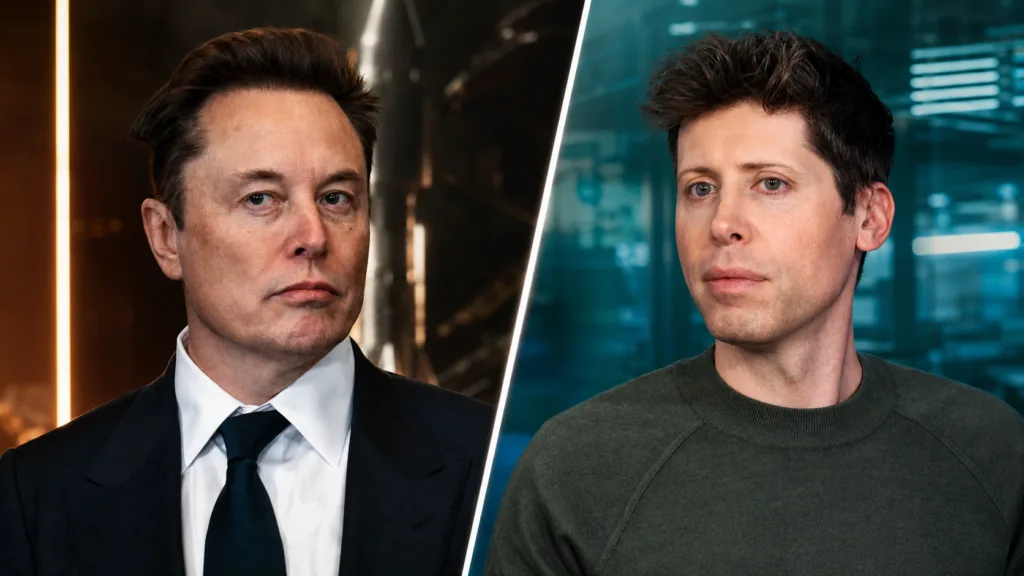
You wake up to the headline that feels like it’s ripped from a science fiction novel, but it’s very real: Elon Musk, the titan of industry, and Sam Altman, the wunderkind leading OpenAI, are locked in a legal battle. This isn’t just a spat between tech giants; it’s a clash over the very soul of artificial intelligence, a domain where the stakes are as high as they are uncertain. You’ll want to understand the nuances of this high-profile lawsuit, the accusations hurled, the defenses mounted, and the broader implications for the future of AI.
You might remember the early days of OpenAI. It was heralded as a beacon of altruism, a non-profit organization dedicated to ensuring that artificial intelligence benefits all of humanity. Elon Musk was one of its founding fathers, a visionary who believed that open research was the key to averting existential risks posed by superintelligent AI. He poured not only his capital but also his intellectual energy into the burgeoning field. You saw him as a champion of ethical AI development, a voice of caution in a rapidly advancing technological landscape.
The Founding Vision: A Non-Profit for the Greater Good
- The initial charter: You recall the stated mission of OpenAI, to develop AGI (Artificial General Intelligence) safely and beneficially for all humankind. This was a noble goal, a stark contrast to the commercially driven motivations of many other tech companies.
- Musk’s early involvement: As a co-founder, Musk was instrumental in shaping the early direction of the organization. His insights into potential risks and his advocacy for transparency were considered crucial by many. You may have even seen interviews or articles where he expounded on the dangers of unchecked AI development.
- The shift in public perception: Over time, as OpenAI grew, so did its ambitions. The move towards a capped-profit structure, while arguably necessary for funding ambitious research, began to sow seeds of doubt for some, including Musk.
The Departure and Growing Discontent
- Musk’s exit: You know that Musk eventually departed from OpenAI’s board in 2018. The official reasons were cited as a potential conflict of interest with his work at Tesla, which was also exploring AI. However, it’s clear now that this was the beginning of a more profound disagreement. He voiced concerns that the organization was drifting from its original non-profit principles.
- The rise of commercial interests: You’ve watched as OpenAI, under Altman’s leadership, embraced partnerships with major corporations, most notably Microsoft. While this brought significant financial resources and accelerated development, it also led to accusations of prioritizing profit over safety and the public good.
- Musk’s public pronouncements: You’ve likely seen Musk’s increasingly vocal criticisms of OpenAI on social media and in interviews. He’s accused the organization of becoming a de facto subsidiary of Microsoft, driven by commercial imperatives rather than its founding ideals. His warnings about AI safety have become more urgent, often tinged with frustration.
In a recent turn of events, Elon Musk and Sam Altman found themselves in a heated exchange on X following Apple’s decision to file a lawsuit against OpenAI. This bickering highlights the ongoing tensions in the tech industry regarding privacy and user data. For those interested in understanding the broader implications of privacy in technology, a related article discusses the importance of building user trust through end-to-end encryption and biometric logins. You can read more about it here: Privacy First by Design: Building User Trust with End-to-End Encryption and Biometric Logins.
The Core of the Lawsuit: Breach of Contract and Fiduciary Duty
The lawsuit itself, filed by Elon Musk, centers on fundamental accusations of breach of contract and a violation of fiduciary duty. You’re looking at a legal challenge that alleges OpenAI has reneged on its founding agreement and is now operating in a manner that actively harms the public interest it was created to serve. This is serious stuff, delving into the legal obligations and promises made at the organization’s inception.
The Allegation of Abandoning the Mission
- The “open” in OpenAI: Musk’s lawsuit argues that OpenAI has abandoned its commitment to being “open.” The development of powerful AI models is now largely proprietary, with access and insights tightly controlled. You might feel a sense of betrayal here, remembering the initial promise of shared knowledge.
- The shift from non-profit to profit-driven: The lawsuit emphasizes the transition from a non-profit entity to a structure that includes a capped-profit arm. Musk contends that this move has fundamentally altered the organization’s priorities, steering it towards maximizing returns for investors rather than focusing on the safety and benefit of humanity. He claims this is a violation of the original founding agreement.
- The “humanity’s benefit” clause: A key point of contention is the alleged violation of the covenant to develop AGI for the benefit of humanity. Musk asserts that by prioritizing profit and exclusive control, OpenAI is failing this core obligation.
The Fiduciary Duty Argument
- Duty to the public interest: Musk’s legal team is arguing that as a non-profit dedicated to the public good, OpenAI and its leadership have a fiduciary duty to act in the best interests of humanity, not just its commercial partners or shareholders. This is a robust legal claim that challenges the current operational model.
- Misappropriation of technology: The lawsuit also touches upon the accusation that OpenAI is essentially “renting” its technology to Microsoft, thereby prioritizing a single corporate partner over the broader public interest. You might question the fairness of this arrangement and whether it truly serves the founding mission.
- The “de facto subsidiary” claim: Musk’s legal filings repeatedly refer to OpenAI as a “de facto subsidiary” of Microsoft. This is a strategic legal assertion aimed at highlighting the level of control and influence Microsoft allegedly wields over OpenAI’s operations and direction.
OpenAI’s Defense: Innovation, Funding, and Misinterpretation


OpenAI, naturally, has a strong counter-narrative. You’ll find that their defense is built on the necessity of their current strategy for achieving their ambitious goals, the critical role of their commercial partnerships, and a differing interpretation of the founding principles. They believe they are still on the right track, albeit with a more pragmatic approach.
The Necessity of Capital for AGI Development
- The immense cost of AI research: Sam Altman and OpenAI will argue, and you can see the logic, that developing advanced AI, particularly AGI, requires astronomical sums of money. The cutting-edge hardware, the vast datasets, and the highly specialized talent all come with an enormous price tag.
- The capped-profit model: You’ll hear explanations that the capped-profit structure was designed to attract the necessary investment while still maintaining some oversight and alignment with the original mission. They weren’t aiming for unbound corporate greed, but for enough capital to compete and succeed.
- Microsoft’s vital role: The partnership with Microsoft is presented not as a betrayal, but as a lifesaver. Without it, they would likely not have the resources to pursue their groundbreaking research. You can envision them arguing that this collaboration is essential for achieving the very AGI that Musk himself once championed.
Reinterpreting the “Open” Principle
- Progress through iteration: OpenAI might argue that their interpretation of “open” has evolved. Instead of freely releasing all cutting-edge models, they believe in a more phased approach, allowing for safety testing and responsible deployment. This is a nuanced point that you’ll need to consider.
- The dangers of premature release: They could also contend that releasing highly powerful AI in an uncontrolled manner would be irresponsible and potentially dangerous, directly contradicting the founding principle of ensuring AI benefits humanity. You’re being asked to consider if “open” necessarily means “immediately and freely available to all.”
- Democratizing access: OpenAI might counter that their products, even if not the underlying foundational models, are becoming more accessible to a wider audience, enabling innovation and creativity. Think of all the tools and applications that are built upon their technology.
The Evolution of the AI Landscape
- The competitive environment: OpenAI will likely point to the rapidly evolving AI landscape. If they are not at the forefront of research and development, they risk being overtaken, thus failing to achieve their ultimate goal of beneficial AGI. You can imagine them saying that staying still is actually moving backward.
- Adaptability as a virtue: They might argue that the founding agreement, like any vision, needs to be adaptable to changing circumstances. The world of AI is moving at breakneck speed, and rigid adherence to an outdated interpretation of “open” could be detrimental.
The Stakes of the Battle: More Than Just a Lawsuit

This isn’t just a legal dispute between two individuals; it’s a seismic event that could reshape the future of AI. You’re witnessing a conflict that touches upon fundamental questions about control, access, ethics, and the very direction of humanity’s most powerful technological frontier.
The Future of AI Development
- Corporate versus public control: The outcome of this lawsuit could set a precedent for how AI development is governed. Will it be primarily driven by private interests, or will there be a stronger emphasis on public oversight and benefit? You’re watching this play out in real-time.
- Openness and transparency: The definition of “openness” in AI research is on trial. Will this case lead to a more transparent and collaborative AI ecosystem, or will it reinforce the trend towards proprietary development? You might feel a longing for the early days of shared knowledge.
- Safety and existential risk: Musk’s core concern about AI safety is a central theme. The lawsuit forces a conversation about whether current development practices are adequately addressing potential existential risks.
The Role of Regulation
- Government oversight: This high-profile clash could spur governments worldwide to accelerate their efforts in regulating AI. You might see this as a necessary step to ensure responsible development.
- Antitrust concerns: The close relationship between OpenAI and Microsoft could also attract antitrust scrutiny, leading to potential investigations and interventions by regulatory bodies. You’re watching to see if power is becoming too concentrated.
- International implications: The development of superintelligent AI has global implications, and this lawsuit could influence international discussions and agreements on AI governance.
The Public Perception of AI
- Trust and skepticism: The heated rhetoric and legal challenges can erode public trust in AI and the organizations developing it. You might feel a growing sense of wariness about the technology.
- Exaggeration versus valid concerns: It can be difficult for the public to discern between genuine concerns about AI safety and the strategic maneuvering of powerful individuals and corporations. You’re left to sift through the noise.
- Informed dialogue: Ideally, this lawsuit, despite its contentious nature, could foster a more informed and nuanced public dialogue about the promises and perils of AI.
In the ongoing drama surrounding the tech industry, Elon Musk and Sam Altman recently engaged in a heated exchange on X after Apple filed a lawsuit against OpenAI. This public bickering highlights the tensions between major players in the AI space and raises questions about the future of artificial intelligence development. For those interested in understanding how to maximize the value of AI beyond just cost reduction, a related article discusses strategies for measuring ROI effectively. You can read more about it here.
What Happens Next: Legal Battles and Shifting Alliances
| Topic | Elon Musk | Sam Altman |
|---|---|---|
| OpenAI Lawsuit | Expressed concerns | Defended OpenAI |
| Public Statements | Shared on Twitter | Expressed disagreement |
| Resolution | Not reached | Ongoing discussion |
You’re now in a period of intense legal maneuvering and public debate. The outcome of this lawsuit is far from certain, and its ramifications will likely unfold over months, if not years. You’re watching to see how this plays out and what it means for the technology that is rapidly becoming entwined with every aspect of your life.
The Legal Process
- Discovery and evidence: You can anticipate a lengthy legal process involving the exchange of documents, depositions, and the presentation of evidence from both sides. This will likely reveal more details about the internal workings of OpenAI and the motivations of its key players.
- Court rulings and appeals: There will likely be multiple rulings by the court, and it’s highly probable that any decisions will be subject to appeals, further prolonging the legal battle.
- Settlement possibilities: While a public trial is a distinct possibility, there’s always the chance of a settlement being reached, though the terms of such an agreement would be highly scrutinized.
The Impact on OpenAI
- Leadership stability: The lawsuit undoubtedly puts pressure on Sam Altman’s leadership and the stability of OpenAI. You’ll be watching to see if this internal conflict weakens their ability to execute their ambitious plans.
- Talent retention: High-profile legal battles can make it challenging to attract and retain top talent, as potential employees may be wary of joining an organization embroiled in significant controversy.
- Strategic pivots: Depending on the legal outcomes, OpenAI might be forced to make significant strategic pivots, altering their approach to development, partnerships, or even their organizational structure.
The Broader Ecosystem
- Competitor reactions: Rival AI companies will be watching this closely, potentially seeing opportunities or risks depending on the lawsuit’s trajectory. You might see shifts in market dynamics as a result.
- Investor sentiment: The legal challenges could impact investor confidence in AI startups and the broader AI sector, influencing funding and investment decisions.
- Public discourse: The lawsuit will continue to fuel the public conversation about AI, its risks, and its potential. This ongoing dialogue is crucial for navigating the future of this transformative technology.
You are witnessing a pivotal moment in the history of artificial intelligence. The clash between Elon Musk and Sam Altman is more than just a legal squabble; it’s a struggle for the heart and soul of AI, a contest that will undoubtedly shape the trajectory of this powerful technology and its impact on all of humanity. You are an observer, and with each development, you are being given a deeper understanding of the stakes involved.
FAQs
1. What is the OpenAI lawsuit filed by Apple?
The OpenAI lawsuit filed by Apple is a legal action against the artificial intelligence research lab OpenAI, which was co-founded by Elon Musk and Sam Altman. Apple claims that OpenAI’s former employee, who is now working at Apple, violated a non-compete agreement and shared confidential information.
2. What is the bickering between Elon Musk and Sam Altman about?
The bickering between Elon Musk and Sam Altman is related to the OpenAI lawsuit filed by Apple. Musk criticized Altman for not handling the situation properly, while Altman defended OpenAI’s actions and accused Musk of not understanding the full context of the situation.
3. How is Elon Musk involved in OpenAI?
Elon Musk is one of the co-founders of OpenAI, an artificial intelligence research lab. He has been actively involved in the development and promotion of AI technologies through OpenAI.
4. Who is Sam Altman and what is his role in OpenAI?
Sam Altman is a prominent entrepreneur and investor who co-founded OpenAI with Elon Musk. He has been actively involved in the leadership and strategic direction of the organization.
5. What are the potential implications of the OpenAI lawsuit on the AI industry?
The OpenAI lawsuit filed by Apple has the potential to impact the AI industry by raising questions about non-compete agreements, confidentiality, and the movement of talent between companies. It could also influence the relationship between tech giants and AI research organizations.