


You’re probably familiar with Intel, the semiconductor giant that’s been literally powering the digital world for decades. You might even be reading this on a device with an Intel chip inside. But even titans of industry make mistakes, and sometimes those mistakes come back to haunt them with a vengeance. In Intel’s case, one particular decision, made seemingly ages ago, has blossomed into a multi-billion dollar regret that continues to impact its market position and future trajectory today.
Think back to the early 2010s. The smartphone revolution was in full swing, and everyone was scrambling to get a piece of the pie. Intel, a company built on the PC market, saw the writing on the wall. They knew they needed to adapt, to move beyond desktops and laptops, and into the burgeoning mobile space. But how? They weren’t just going to build phones, they were going to power them. This led them down a path that, in retrospect, was fraught with both opportunity and peril.
The Acquisition Spree: Building In-House Capabilities
You, as an observer of business strategy, would note that Intel’s initial approach was to build a comprehensive mobile platform. This wasn’t just about processors; it was about connectivity. To achieve this, they embarked on a significant acquisition spree.
- Infineon’s Wireless Business: The true heart of this tale begins in 2011, when Intel acquired Infineon Technologies AG’s wireless solutions business for a staggering $1.4 billion. At the time, this seemed like a perfectly logical move. Infineon was a leading supplier of modem chips for mobile devices, and this acquisition gave Intel a direct entry into the 3G market, with the aspiration of moving into 4G and beyond. You might have seen this as a bold, strategic play to compete with Qualcomm, the undisputed king of mobile modems.
- The Vision for Mobile Domination: Intel’s vision was grand. They wanted to offer a complete “Intel Inside” solution for smartphones, from the application processor to the modem. You’d imagine the internal presentations, showcasing a seamless integration, a powerful new ecosystem designed to unseat competitors. They saw the potential for lucrative licensing agreements and a commanding market share in a rapidly expanding industry.
Early Hurdles and Miscalculations
However, as you’ll soon discover, the path to mobile glory was anything but smooth. Intel encountered significant hurdles that ultimately undermined their aspirations.
- Power Efficiency Challenges: The PC architecture that Intel excelled at was notoriously power-hungry. Mobile devices, by their very nature, demand extreme power efficiency. You would quickly realize that adapting their processor designs for this new paradigm proved incredibly challenging. Their initial mobile processors struggled to compete with ARM-based chips in terms of battery life.
- Market Share Struggles: Despite considerable investment, Intel never managed to truly gain significant traction in the modem market. Qualcomm’s dominance was formidable, and breaking into that established ecosystem proved incredibly difficult. You’d observe how device manufacturers, accustomed to Qualcomm’s integrated solutions and reliable performance, were hesitant to switch to a newcomer, especially one that wasn’t delivering a superior product.
Intel’s recent struggles, highlighted in the article “Intel’s $9 Billion Regret: The Business Sale Haunting It Today,” shed light on the broader implications of corporate decisions in the tech industry. A related article that delves into the geopolitical aspects of technology is “The Geopolitics of Algorithms: Mapping the Rise of Sovereign AI,” which explores how nations are increasingly leveraging artificial intelligence to assert their power on the global stage. This connection underscores the importance of strategic decision-making in technology companies, as their choices can have far-reaching consequences not only for their own futures but also for the geopolitical landscape. For more insights, you can read the article here: The Geopolitics of Algorithms.
The Apple Opportunity: A Glimmer of Hope
Just when things looked bleakest, an unexpected opportunity arose. Apple, known for its meticulous control over its supply chain and a desire for multiple suppliers to foster competition and reduce reliance on a single vendor, approached Intel.
Becoming an iPhone Modem Supplier
You can imagine the excitement within Intel. This was the chance they had been waiting for.
- A Lucrative Deal: Apple began to incorporate Intel modems into some of its iPhones, starting with the iPhone 7. You would recognize this as a pivotal moment. The sheer volume of iPhones sold globally meant that even a partial modem supply deal represented a significant revenue stream and a massive validation of Intel’s cellular technology. For a time, it seemed like Intel’s persistence was about to pay off.
- Technological Advancement Under Pressure: The demanding specifications and rigorous testing required by Apple pushed Intel’s modem division to innovate at an accelerated pace. You’d expect that working with a client like Apple would force them to constantly improve, to refine their designs, and to address power consumption and performance issues head-on.
The Qualcomm Litigation Escalation
However, this newfound success came with a significant caveat: intense legal battles between Apple and Qualcomm. You might recall the highly publicized lawsuits where Apple accused Qualcomm of unfair licensing practices and patent infringement.
- Intel Caught in the Crossfire: As Apple diversified its modem supply, reducing its reliance on Qualcomm, Intel found itself increasingly embroiled in the legal fray. You would undoubtedly see this as a tricky position for Intel. While they were a beneficiary of Apple’s strategy, they also became a target of Qualcomm’s legal maneuvers.
- Performance Discrepancies: During this period, some reports emerged suggesting that Intel’s modems, while improving, might not have performed quite as well as Qualcomm’s in terms of network speeds and overall reliability in certain situations. You’d recognize that even a slight performance difference could be a significant issue for a premium device like the iPhone. These perceived discrepancies, whether entirely fair or not, fueled doubts within both Apple and the broader industry.
The Sudden Retreat: Selling the Modem Business to Apple

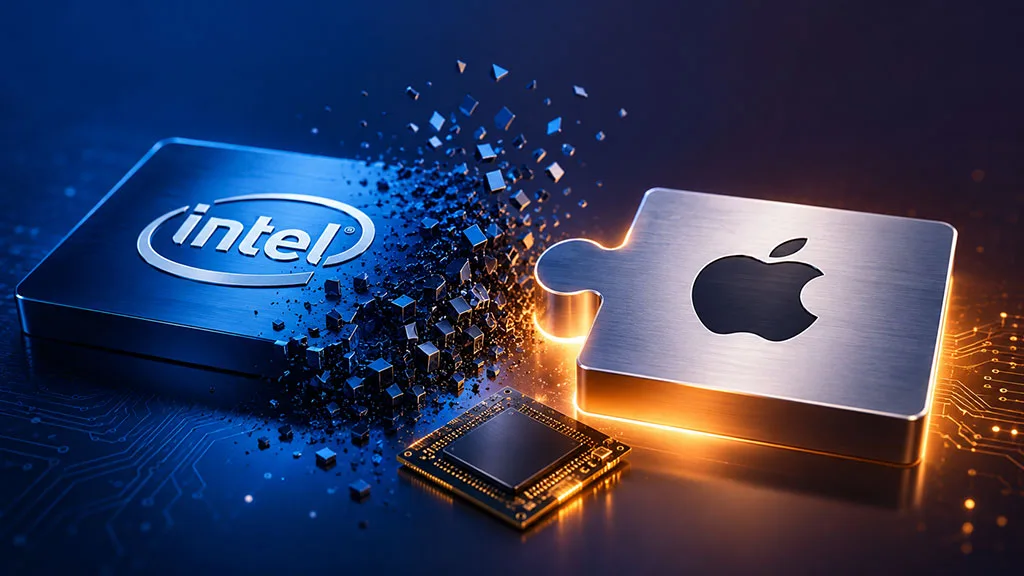
Then, the unthinkable happened. In 2019, seemingly out of nowhere, Intel announced it was selling its smartphone modem business to Apple. You, as an analyst, would have been stunned by the swiftness of this decision and the implications it carried.
The $1 Billion Sale
The deal was finalized for approximately $1 billion. You might initially think that $1 billion is a considerable sum, but let’s put it into context.
- A Fraction of Investment: Consider the $1.4 billion Intel paid for Infineon’s wireless business just eight years prior, not to mention the immense R&D costs and engineering talent poured into the division over nearly a decade. The sale price represented a significant loss on their initial investment, and a monumental write-down of their efforts. You’d recognize this as intel essentially recouping only a fraction of what they had sunk into the venture.
- Transfer of Patents and Talent: The deal included over 17,000 wireless technology patents and the transfer of approximately 2,200 Intel employees to Apple. You’d see this as Apple acquiring not just patents, but a ready-made team with deep expertise in cellular technology, accelerating their own in-house modem development efforts.
The Stated Reasons for the Sale
Intel’s official explanation for the sale centered on a shift in strategic focus.
- Focus on Core Businesses: Intel stated they wanted to concentrate on their core networking infrastructure, PC, and data center businesses, where they felt they had a stronger competitive advantage. You would understand the logic of streamlining operations and focusing on profitability, especially in areas where they were already market leaders.
- Lack of Profitability and Future Prospects: While not explicitly stated, it became clear that Intel’s modem business was not generating sufficient profits, and the road to achieving sustainable financial success in that highly competitive market was proving too long and too costly. You’d conclude that Intel, despite their size and resources, simply couldn’t make it work.
The Haunting Echoes: What Intel Lost
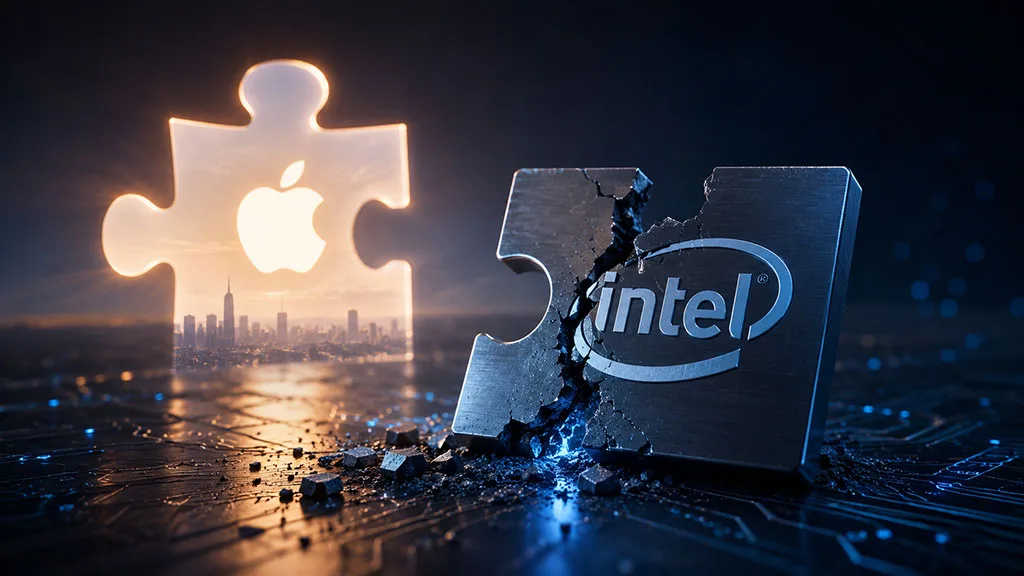
Now, years later, you can clearly see the profound impact of this decision. This $9 billion regret isn’t just about the initial investment and the paltry sale price; it’s about the broader strategic implications and the missed opportunities that continue to reverberate through Intel’s operations today.
The Missed 5G Revolution
This is arguably the biggest and most painful aspect of Intel’s regret. They effectively bowed out of the mobile modem game just as the world was on the cusp of the 5G revolution.
- The Forefront of Connectivity: 5G is not just about faster phone speeds; it’s the backbone of the next generation of connectivity for everything from autonomous vehicles to smart cities to the Industrial Internet of Things. You’d recognize that whoever controls the modem technology controls a significant piece of this future.
- Qualcomm’s Unrivaled Dominance: By exiting, Intel left Qualcomm virtually unchallenged in the premium 5G modem market. You’d see Qualcomm now reaping enormous profits and driving innovation in 5G, while Intel is left on the sidelines. Their early aspirations of powering the mobile world now feel like a distant dream.
The Continued Reliance on Qualcomm (and its Rivals)
Intel’s current business strategy, ironically, still involves buying components from competitors for certain segments.
- Networking and IoT: While Intel focuses on data center and edge computing, many of these solutions require robust wireless connectivity. You’d realize that for certain applications, Intel has to integrate modems from other manufacturers, including Qualcomm. This means they are indirectly contributing to their competitors’ revenues and are dependent on them for critical components.
- Loss of Strategic Control: Having an in-house modem capability would have given Intel far greater control over the integration, optimization, and indeed, the intellectual property surrounding connectivity. You’d understand that by outsourcing this, they lose a degree of strategic independence and potential revenue streams from licensing.
The Opportunity Cost of $9 Billion
Beyond the direct financial losses, there’s the immeasurable cost of what that capital and talent could have achieved elsewhere.
- Diversification into Other Growth Areas: Imagine if that $9 billion, and the years of engineering effort, had been directed towards other emerging technologies where Intel could have secured a stronger foothold. You’d think of investments in AI acceleration, specialized chips for autonomous vehicles, or advanced packaging technologies. These are areas where Intel is now playing catch-up, and that diverted investment could have given them a significant head start.
- Strengthening Core Competencies: Even within their core PC and server businesses, continuous innovation is key. That investment could have further solidified their lead in process technology or architectural advancements, perhaps preventing some of the market share erosion they’ve experienced more recently. You’d consider the potential for even stronger execution in their existing strongholds.
Intel’s recent struggles with its $9 billion regret highlight the complexities of business decisions that can haunt companies for years. This situation is reminiscent of the lessons discussed in a related article about content strategy, which emphasizes the importance of adapting and repurposing assets effectively. By examining how companies can transform their approaches, as outlined in the article on smart content repurposing, businesses like Intel can learn valuable insights to avoid similar pitfalls in the future. For more information, you can read the article here.
Lessons Learned (or Re-Learned)
| Metrics | Data |
|---|---|
| Year of Business Sale | 2010 |
| Amount of Business Sale | 1.4 billion |
| Estimated Loss | 9 billion |
| Reason for Regret | Missed opportunity in the smartphone market |
| Impact on Intel’s Business | Loss of potential revenue and market share |
For you, the astute observer of business and technology, Intel’s modem saga offers a treasure trove of lessons that transcend the semiconductor industry.
The Perils of Over-Competition in Mature Markets
Intel entered an already established and fiercely competitive mobile modem market, dominated by Qualcomm. You would recognize that breaking into such a market requires not just a good product, but a revolutionary one, or a willingness to sustain losses for a very long period.
- The Cost of Entry: The financial and operational strain of competing against an entrenched incumbent proved unsustainable for Intel, despite their vast resources. You’d understand that sometimes, even major players have to concede defeat when the cost of victory is too high or the odds too stacked.
- Focus on Differentiation: If you can’t be demonstrably better, or offer a unique value proposition, then competing solely on price or incremental improvement in an established market is often a losing game. You should always ask yourself, what is your unique selling proposition?
The Importance of Strategic Patience vs. Decisive Action
Intel demonstrated remarkable patience in trying to make its modem business work for nearly a decade. However, the decision to sell, while perhaps pragmatic at the time, lacked foresight regarding the imminent 5G boom.
- Timing is Everything: You’d learn that knowing when to cut your losses is crucial, but equally important is understanding the long-term trends and potential inflection points in a technology cycle. Intel pulled out just before the technology they had invested so heavily in was about to become universally critical.
- The Regret of “What If”: For Intel, this saga will forever be a “what if” scenario. What if they had continued to invest for just a few more years? What if they had anticipated the explosive growth of 5G? You’d understand that such questions can haunt a company for decades.
Apple’s Strategic Masterclass (from Intel’s Perspective)
From Intel’s loss came Apple’s gain, a perfect illustration of how one company’s withdrawal creates an opportunity for another.
- Acquiring Expertise and IP on the Cheap: Apple effectively acquired Intel’s years of modem R&D, its patents, and its engineering talent for a fraction of what Intel had invested. You’d recognize this as a brilliant strategic move by Apple, accelerating their journey towards self-sufficiency in silicon.
- Reduced Supplier Dependency: By bringing modem development in-house, Apple significantly reduces its reliance on Qualcomm, giving it greater control over design, cost, and intellectual property. You’d see this as a classic move by a dominant tech company to verticalize its operations and control its destiny.
In conclusion, when you look at Intel today, grappling with market share challenges, fierce competition from AMD, and a renewed focus on manufacturing innovation, you can’t help but revisit the sale of its modem business. That $9 billion regret isn’t just a historical footnote; it’s a living testament to the costly consequences of strategic missteps and missed opportunities in the fast-paced world of technology. It serves as a stark reminder that even the biggest players can stumble, and the echoes of past decisions can resonate for years, shaping the very trajectory of a corporate giant.
FAQs
1. What was the business sale that Intel regrets today?
Intel sold its smartphone modem business to Apple for $1 billion in 2019, a decision that the company now regrets due to the increasing demand for 5G technology.
2. How much did Intel sell the smartphone modem business for?
Intel sold its smartphone modem business to Apple for $1 billion in 2019.
3. Why does Intel regret the sale of its smartphone modem business?
Intel regrets the sale of its smartphone modem business because of the increasing demand for 5G technology, which has created a lucrative market for smartphone modems.
4. How much did Intel invest in its failed attempt to develop 5G smartphone modems?
Intel invested approximately $9 billion in its failed attempt to develop 5G smartphone modems, which ultimately led to the decision to sell the business to Apple.
5. What impact has the sale of the smartphone modem business had on Intel’s business today?
The sale of the smartphone modem business has left Intel without a presence in the 5G smartphone modem market, impacting its ability to compete in the rapidly growing 5G technology industry.