


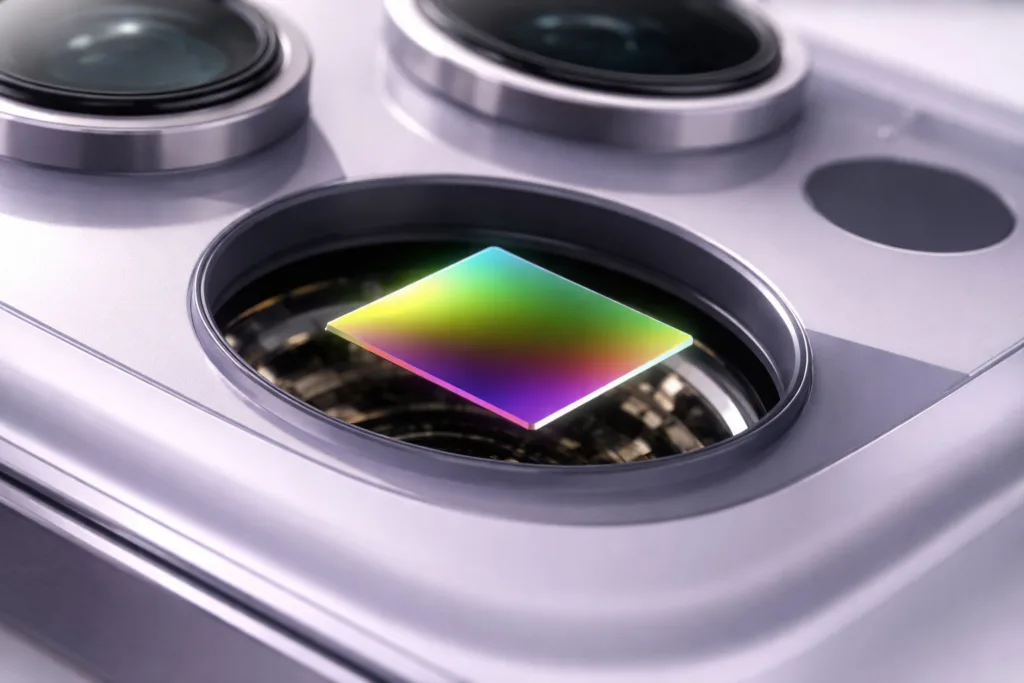
You’ve been following the whispers, the patent filings, and the supply chain leaks. Now, the murkiness is clearing, revealing more substantial data points regarding Apple’s latest advancements in smartphone camera technology. Specifically, your attention is drawn to the rigorous testing underway for new iPhone sensor sizes and the implications they hold for image stabilization. This isn’t about marketing hype; it’s about the technical underpinnings that suggest a significant, hardware-driven enhancement to how your next iPhone captures moving images or compensates for your own unsteady hands.
When you consider a camera, whether it’s a professional DSLR or the one in your pocket, the sensor is the most crucial component for image quality. For years, smartphone manufacturers were constrained by the physical limitations of device thickness, pushing for smaller sensors and relying heavily on computational photography to compensate. However, the current trend, and indeed what you’re observing in Apple’s testing, is a willingness to increase sensor size.
The Basic Physics of Light Collection
A larger sensor, colloquially, is better. It’s not a matter of opinion, but of fundamental physics. Imagine two buckets: one small, one large. If it starts to rain, which bucket collects more water over the same period? The larger one, of course. Similarly, a larger camera sensor has a greater surface area to collect photons – the fundamental particles of light. More photons mean more data.
Impact on Low-Light Performance
This increase in light collection directly translates to significantly improved low-light performance. When you’re trying to take a photo in dim restaurant lighting or during a sunset, your current iPhone often struggles, introducing noise and softening details. A larger sensor, by gathering more light inherently, can produce a cleaner, brighter image with less reliance on software algorithms to artificially boost exposure or reduce noise, processes which often compromise image fidelity. You’ll notice less graininess and a more natural rendition of shadowy areas.
Improved Dynamic Range
Beyond low-light, larger sensors also inherently offer better dynamic range. Dynamic range refers to the spread between the darkest and brightest areas an image can capture without losing detail. Think of a scene with bright highlights and deep shadows simultaneously. A smaller sensor might “clip” the highlights (making them pure white with no detail) or “crush” the shadows (making them pure black). With a larger sensor, the individual photosites (light-sensitive points on the sensor) are also typically larger, allowing them to capture a wider range of light intensities before being overwhelmed or unable to register any light. This results in photos that retain more information in both the brightest and darkest parts of your scene, providing more flexibility for editing and a more true-to-life representation.
Shallower Depth of Field
Another, often overlooked, benefit of a larger sensor in a smartphone is the potential for a shallower depth of field. While smartphone cameras have used computational methods like Portrait Mode to simulate this, a physically larger sensor inherently allows for a more natural, optical separation of your subject from the background. This is because, for the same field of view, you’re generally moving the camera further away from the subject, which, combined with the larger aperture typically associated with a larger sensor, creates a more pronounced background blur. This isn’t just an aesthetic feature; it allows you to draw the viewer’s eye more effectively to your primary subject without resorting to artificial software processing that can sometimes produce artifacts or unnatural-looking edges.
In light of the recent revelations regarding the new iPhone sensor size and the anticipated upgrades to the ultrawide-angle unit’s stabilization, it’s interesting to consider how advancements in technology can influence design principles across various fields. For instance, an insightful article on GraphQL schema design, titled “The Moist Principle for GraphQL Schema Design,” explores how effective design can enhance functionality and user experience. You can read more about it here: The Moist Principle for GraphQL Schema Design.
Sensor-Shift vs. Optical Image Stabilization: The Nuances
You’re familiar with Optical Image Stabilization (OIS), where the lens elements themselves move to compensate for hand jitters. This has been a staple in high-end smartphones for years. However, the more recent and arguably more effective advancement, especially for compensating for a wider range of motion, is sensor-shift image stabilization. This is where the entire camera sensor moves within the phone’s chassis.
How Sensor-Shift Operates
Imagine your camera’s sensor floating on tiny electromagnets. When your hand shakes, or the phone experiences external vibrations, gyroscopes and accelerometers detect this motion immediately. Micro-actuators then precisely shift the sensor in the opposite direction of the perceived movement, effectively canceling out the blur. This happens hundreds, if not thousands, of times per second. Unlike OIS which compensates for small angular movements, sensor-shift can compensate for both angular and translational movements (side-to-side, up-and-down).
Advantages of Sensor-Shift with Larger Sensors
The synergy between a larger sensor and sensor-shift stabilization is where the real potential lies. Historically, implementing sensor-shift with larger sensors was challenging due to the increased mass and the precision required to move it quickly and accurately within the tight confines of a smartphone. However, engineering advancements appear to have overcome these hurdles. A larger sensor, when stabilized effectively by sensor-shift, collects more light for longer periods without blur, even in challenging low-light conditions or when you’re shooting moving subjects. This is particularly crucial for video capture, where micro-jitters are amplified and can be highly distracting. Your video footage will appear significantly smoother and more professional, reducing the need for post-stabilization that often introduces a “jello” effect or cropping.
Why Apple Favors Sensor-Shift
Apple’s past adoption of sensor-shift stabilization in specific iPhone models indicates a clear preference for this technology. It offers superior performance compared to traditional OIS, especially in complex scenarios. The testing of larger sensors, therefore, goes hand-in-hand with an upgraded sensor-shift system. The benefit is not just in compensating for your hand shake, but also in allowing the shutter to remain open for slightly longer in low light without introducing motion blur. This means cleaner long exposures handheld, and a noticeable improvement in capturing fast-moving subjects where even a millisecond of instability can smear details.
Real-World Implications: What You’ll Experience

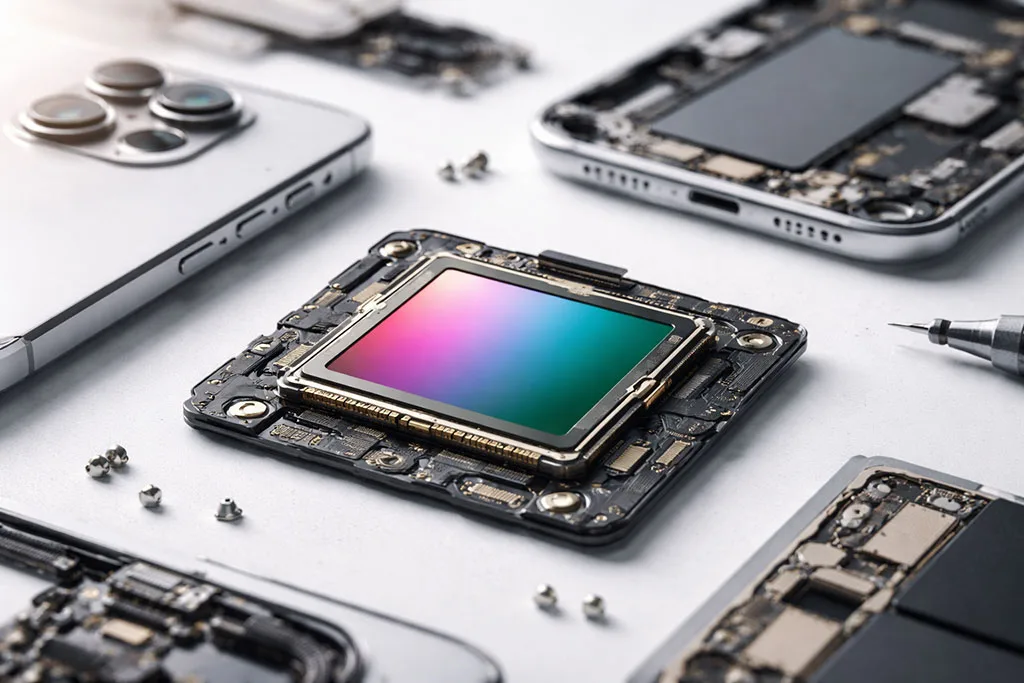
Let’s move beyond the technical specifications and consider what these advancements will actually mean for you in your daily use of the iPhone camera. This isn’t just about a slightly better spec sheet; it’s about a tangible improvement in the quality and versatility of your photos and videos.
Enhanced Low-Light Photography
This is perhaps the most immediate and noticeable improvement you’ll experience. When you’re out at night, celebrating a birthday in a dimly lit restaurant, or trying to capture the twilight hues, your photos will be dramatically cleaner and brighter. You’ll see less digital noise, more accurate colors, and finer details preserved in the shadows. The images will not feel artificially brightened, but rather genuinely better exposed due to the increased light gathering capabilities of the larger sensor working in concert with the improved stabilization allowing for longer exposure times without blur.
Sharper Action Shots and Videos
Whether you’re trying to capture your child’s soccer game, a pet running around, or a fleeting moment in a crowd, the combination of a larger sensor and advanced sensor-shift stabilization will drastically improve your chances of getting a sharp shot. The stabilization system will compensate for the camera’s movement, allowing the shutter to focus on freezing the subject’s motion. For video, this means your footage will be much smoother and more professional-looking, even if you’re walking or panning quickly. The notorious “micro-jitters” that plague handheld smartphone video will be significantly reduced, leading to a more pleasant viewing experience.
Improved Overall Image Quality and Detail Retention
Beyond specific scenarios, the general image quality will see a significant uplift. The larger sensor, by collecting more light and data, will produce images with finer detail, better textures, and a more natural rendition of colors. When you zoom in on your photos, you’ll notice less smudging and more distinct elements, especially in complex scenes like landscapes with intricate foliage or cityscapes with detailed architecture. This isn’t just about pixel count; it’s about the quality of the light information captured by each pixel.
Greater Creative Flexibility
The ability to shoot in challenging conditions with confidence, combined with the potential for more natural shallow depth of field, offers you greater creative freedom. You won’t be as constrained by lighting conditions or the need for perfectly steady hands. You can focus more on composition and storytelling, knowing that the hardware is robust enough to capture a high-quality image. This also extends to editing; with more data in each image, you’ll have more latitude to adjust exposure, colors, and shadows without introducing artifacts or degrading the image quality significantly.
Addressing the Engineering Challenges of Scaling
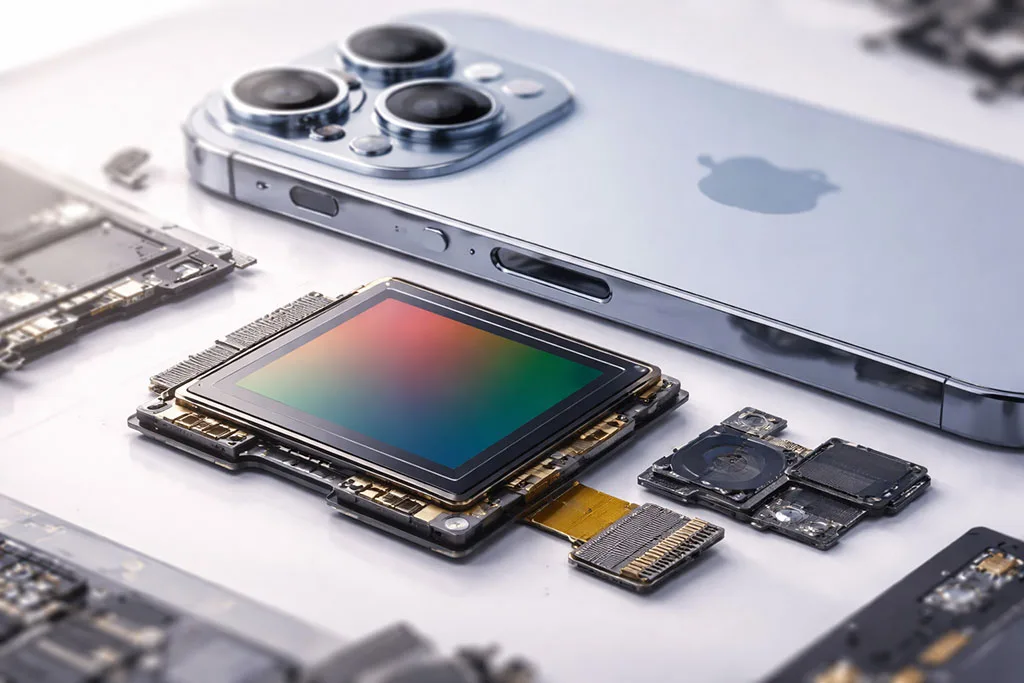
You might wonder why these advancements haven’t been universal across all smartphones if they’re so beneficial. The answer lies in the significant engineering hurdles involved, particularly when scaling these technologies within the compact form factor of a smartphone.
Space Constraints and Module Thickness
One of the primary challenges is the sheer physical size. A larger sensor inherently requires more space not just for the sensor itself, but also for the larger lens elements needed to project an image onto that sensor effectively. Smartphones are constantly battling for millimeters of thickness. Incorporating a larger sensor module, complete with a sophisticated sensor-shift mechanism, adds bulk that must be meticulously engineered to fit without making the phone excessively thick or creating an unsightly camera bump. Apple’s design philosophy often prioritizes sleekness, so any increase in thickness due to camera components is a carefully considered decision, indicating the perceived value of the improved camera performance.
Heat Dissipation
Larger, more powerful camera sensors and the associated image processing units generate more heat. Efficiently dissipating this heat within a sealed, thin smartphone chassis is a complex thermal management problem. Overheating can lead to performance throttling, reduced battery life, and even long-term damage to components. Engineers must meticulously design internal layouts and materials to ensure that heat is effectively drawn away from the sensor and processor, allowing sustained high-performance operation, especially during prolonged video recording or demanding computational photography tasks.
Power Consumption
Operating larger sensors and the sophisticated sensor-shift stabilization system also demands more power. This creates a delicate balance, as consumers also expect excellent battery life. Engineers must optimize every aspect of the camera system for power efficiency – from the sensor’s power draw to the efficiency of the stabilization actuators and the image signal processor (ISP). This often involves custom-designed components and software optimizations to minimize energy consumption without compromising performance.
Manufacturing Precision and Yield
Producing larger sensors with extremely tight tolerances, especially when combined with a delicate and precise sensor-shift mechanism, is a manufacturing challenge. The alignment of components, the calibration of movement, and the sheer scale of mass production while maintaining high quality all contribute to complexity and cost. Achieving high yield rates – the percentage of successfully manufactured units – is crucial for making these technologies economically viable for a mass-market product like the iPhone. Any minor deviation in the manufacturing process can lead to defects in stabilization or image quality.
Recent discussions surrounding the new iPhone have highlighted the potential changes in sensor size, as revealed by a tipster, with rumors also suggesting that Apple may enhance stabilization features for the ultrawide-angle camera. This development aligns with broader trends in smartphone technology, where manufacturers are increasingly focusing on camera capabilities to attract consumers. For those interested in strategic shifts within tech companies, a related article explores the intricacies of such transformations in the industry, which can be found here.
Looking Ahead: The Future of iPhone Photography
| Aspect | Details |
|---|---|
| Sensor Size | New iPhone sensor size in testing revealed by tipster |
| Stabilization | Apple rumored to bring upgraded stabilization to the ultrawide-angle unit |
Your observations of these sensor size and stabilization tests are more than just a snapshot of current developments; they offer a window into the long-term trajectory of iPhone photography. Apple isn’t simply adding features; they’re fundamentally enhancing the core imaging capabilities.
Reduced Reliance on Computational Photography for Basics
You’ve seen how much modern smartphones rely on computational photography – stacking multiple images, applying AI enhancements, and correcting lens distortions computationally. While these techniques will undoubtedly continue to evolve and remain crucial, the advancements in sensor size and stabilization suggest a shift. By capturing higher quality raw data at the source, the phone can rely less on heavy-handed computational corrections for basic image quality issues like noise reduction or dynamic range expansion. This means cleaner, more natural-looking images straight out of the camera, with computational photography being reserved for more advanced features like smart HDR, semantic segmentation, or complex multi-frame merges. The goal is to move towards a more “pure” capture, with computational techniques augmenting, rather than correcting, deficiencies in the optical path.
Enhanced Video Capabilities and Cinematic Modes
The improvements in stabilization, particularly with sensor-shift, are a massive boon for video. You can expect even more stable handheld video, especially in challenging situations like walking or shooting in motion. This will further enable features like improved Cinematic Mode, allowing for more believable depth-of-field effects in video that are less prone to artifacts. With cleaner low-light video from larger sensors, Apple can truly push the boundaries of what’s possible for mobile videography, bringing more professional-grade capabilities into your pocket. Imagine being able to shoot high-quality, stable video in conditions that currently produce a noisy, shaky mess.
Foundation for Future Innovations
These hardware advancements also lay the groundwork for entirely new photographic possibilities. A larger, more stable sensor acts as a superior canvas for whatever computational magic Apple develops next. Whether it’s more sophisticated algorithmic effects, improved AR applications that rely on precise camera data, or even advanced computational photography techniques that require high-fidelity input, these sensor and stabilization upgrades provide a robust foundation. You can anticipate features that leverage this enhanced image data in ways that are perhaps not yet fully realized, pushing the boundaries of what a smartphone camera can achieve beyond simple point-and-shoot functionality. It’s not just about incremental improvements, but about enabling a paradigm shift in mobile imaging.
FAQs
What is the new iPhone sensor size being tested?
The new iPhone sensor size being tested has been revealed by a tipster, although specific details have not been disclosed.
What rumors are circulating about Apple’s plans for upgraded stabilization?
Rumors suggest that Apple is planning to bring upgraded stabilization to the ultrawide-angle unit in the new iPhone.
When can we expect more information about the new iPhone sensor size and stabilization upgrades?
More information about the new iPhone sensor size and stabilization upgrades is expected to be revealed as the testing and development process progresses.
How might the new sensor size and stabilization upgrades impact iPhone photography?
The new sensor size and stabilization upgrades could potentially improve the quality of iPhone photography, particularly in low-light conditions and when capturing moving subjects.
Are there any other anticipated features or improvements for the new iPhone?
Aside from the new sensor size and stabilization upgrades, there are no specific details about other anticipated features or improvements for the new iPhone at this time.