


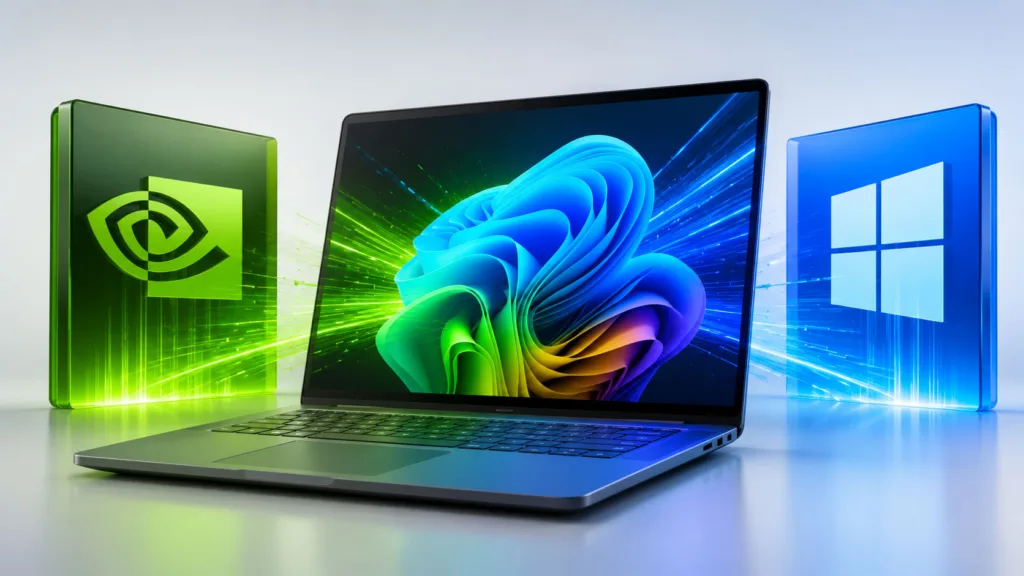
You stand on the precipice of something significant, a seismic shift in the way you interact with your personal computer. For years, Nvidia and Microsoft have been titans, each dominating their respective realms: Nvidia powering your visual experiences with its groundbreaking GPUs, and Microsoft defining your operating system and productivity suite. Now, these two giants are hinting at a future where their strengths fuse in ways you haven’t fully imagined, an era that promises to redefine what your PC is capable of. It’s not just about a faster game or a smoother spreadsheet; it’s about unlocking entirely new paradigms of computing. They’ve long been partners, but this feels different, more foundational, as if they’re jointly sketching out the blueprint for the next generation of personal computing.
The murmurings started subtly, like a faint tremor before the earthquake. It wasn’t a single, earth-shattering announcement, but rather a series of carefully orchestrated remarks, strategic partnerships, and the gradual unveiling of technologies that, when pieced together, paint a compelling picture of what’s to come. You’ve seen this dance before, where innovation is teased before it’s fully revealed, building anticipation and setting expectations. But this time, the implications feel deeper, touching upon the very core of your digital existence.
Signals from the Silicon Valley and Redmond
The initial hints weren’t loud pronouncements. Instead, they arrived in the form of subtle shifts in corporate announcements and technical deep dives. You might have noticed Nvidia’s increasing focus on AI workloads, extending beyond gaming into enterprise and research. Simultaneously, Microsoft has been aggressively pushing its AI initiatives, integrating Copilot into almost every facet of Windows and its productivity suite. The overlap is undeniable, begging the question: what happens when two such powerful forces with shared AI ambitions truly align?
Partnerships Evolving into Integration
Historically, Nvidia and Microsoft have collaborated on numerous fronts. Gamers have long benefited from Nvidia’s drivers and optimizations within Windows. Developers have utilized Nvidia’s CUDA platform to harness GPU power, often within Microsoft’s development environments. However, the current hints suggest a move beyond these established norms. We’re talking about a deeper, more intrinsic integration, where the hardware and software are designed in tandem to unlock synergistic benefits you haven’t experienced before.
In a recent development, Nvidia and Microsoft have joined forces to tease “a new era of PC,” signaling exciting advancements in computing technology. This collaboration hints at innovative integrations of AI and graphics capabilities that could redefine user experiences across various applications. For those interested in exploring how brands can effectively leverage AI in their marketing strategies, a related article can be found at this link.
Redefining PC Performance: Beyond Raw Speed
You’re accustomed to thinking about PC performance in terms of clock speeds, core counts, and graphical fidelity. While those metrics will undoubtedly continue to improve, the new era teased by Nvidia and Microsoft suggests a fundamental redefinition of what “performance” truly means. It’s not just about doing things faster; it’s about enabling entirely new capabilities and intelligent operations that were previously the domain of massive, specialized data centers.
The AI Engine Unleashed
The most prominent theme emerging from these teasings is the profound impact of AI. Nvidia’s advancements in specialized AI hardware, like Tensor Cores, have been transformative. Microsoft’s commitment to democratizing AI through its operating system and applications means that these powerful capabilities are no longer confined to niche applications. You can expect your PC to become an intelligent assistant, capable of understanding and generating content, automating complex tasks, and offering insights in real-time, all powered by a sophisticated interplay between Nvidia’s silicon and Microsoft’s software intelligence.
Intelligent Automation on Your Desktop
Imagine your PC proactively managing your workflow, anticipating your needs, and optimizing your tasks before you even think to ask. This isn’t science fiction; it’s the direction driven by the convergence of Nvidia and Microsoft. You’ll see AI assist in everything from drafting emails and generating reports to coding and creative design. The computational demands for these tasks are immense, and this partnership is poised to bring those demands down to your personal device.
Generative AI at Your Fingertips
The explosion of generative AI models has captivated the world. Now, with Nvidia and Microsoft working in concert, you can expect these powerful tools to become seamlessly integrated into your everyday PC experience. Creating stunning visuals, writing compelling text, or even composing music might become as simple as a spoken command or a text prompt, with your PC handling the heavy lifting thanks to optimized hardware and software.
Enhanced Productivity Through Intelligent Software
Microsoft’s vision for Windows has always been about empowering you to be productive. This new era amplifies that vision by infusing your software with intelligence. Think of applications that learn your habits, adapt to your preferences, and offer context-aware assistance. Nvidia’s hardware will be the engine that drives this pervasive intelligence, ensuring that these features are not just a novelty, but a practical enhancement to your daily grind.
Co-pilot Everywhere
Microsoft’s Copilot is already a significant step, and its future iterations, powered by deeper Nvidia integration, will likely be far more capable and ubiquitous. You could see Copilot not just in Office applications, but in your file explorer, your browser, and even system settings, acting as a knowledgeable guide and assistant for almost any operation.
Personalized Computing Experiences
Your PC will become more attuned to you. Through advanced AI, it will learn your unique patterns of use, your preferences, and even your emotional state (within ethical boundaries, of course). This will lead to a more personalized computing experience, with your system proactively adjusting settings, recommending content, and offering support tailored to your individual needs.
The Future of Gaming: Immersive Worlds and Unprecedented Realism

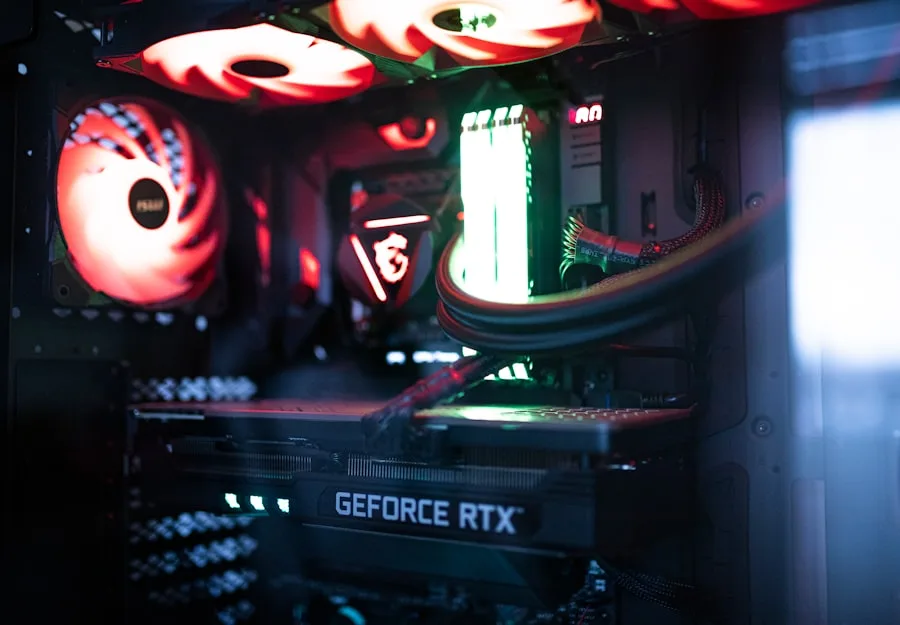
For many, Nvidia is synonymous with gaming prowess. The RTX series, with its ray tracing capabilities and DLSS upscaling, has already revolutionized graphical fidelity. Now, a closer collaboration with Microsoft, the steward of Xbox and PC gaming infrastructure, promises to push the boundaries of immersion even further.
Next-Generation Graphics and Ray Tracing Evolution
You’ve marveled at the realism of ray-traced shadows and reflections. The new era will see these technologies mature, becoming even more efficient and visually stunning. Nvidia’s ongoing architectural improvements, coupled with Microsoft’s DirectX advancements, will likely unlock new levels of dynamic lighting, atmospheric effects, and material rendering that will blur the lines between the virtual and the real.
Ray Tracing Reimagined
Expect ray tracing to become more complex and computationally less demanding, allowing for more intricate scenes with a higher number of light sources and more realistic light interactions. This means more lifelike environments that react dynamically to in-game events.
AI-Powered Upscaling and Frame Generation Advancements
DLSS and similar AI upscaling technologies have been a revelation, allowing for higher frame rates with minimal visual compromise. The future will bring even more sophisticated algorithms that not only reconstruct detail but also intelligently generate frames, leading to smoother, more responsive gameplay than ever before.
Bridging the Gap: PC and Console Synergy
Microsoft’s dual presence in PC and console gaming provides a unique opportunity for synergy. You might see closer integration between PC gaming experiences and Xbox ecosystems, with Nvidia’s hardware playing a key role in delivering consistent, high-quality performance across both platforms.
Cross-Platform Innovation
The potential for shared development tools and optimized hardware across PC and Xbox could lead to more ambitious cross-platform titles and a more consistent gaming experience for everyone, regardless of their preferred platform.
Cloud Gaming Integration
As cloud gaming evolves, the underlying hardware infrastructure – the very hardware powering your local PC – will become increasingly important. Nvidia and Microsoft are perfectly positioned to leverage their strengths in both areas, potentially leading to more seamless and high-fidelity cloud gaming experiences accessible from your PC.
Enabling New Forms of Creativity: Beyond Traditional Tools

The creative industries have always been at the forefront of technological adoption. From digital art to video editing and 3D modeling, the demand for powerful hardware and intuitive software is constant. Nvidia and Microsoft are poised to unleash a new wave of creative tools, making sophisticated content creation accessible to a wider audience.
AI-Assisted Design and Content Generation
Imagine an AI that can help you brainstorm design concepts, generate initial sketches, or even automatically fill in complex details in your artwork. This is the promise of AI integrated into creative software, powered by Nvidia’s processing muscle and guided by Microsoft’s user-centric design principles.
Generative Art and Design Tools
The integration of generative AI into tools like Photoshop or Procreate could revolutionize how you create. You could describe your desired outcome, and the AI, leveraging Nvidia’s tensor cores, could generate a multitude of variations for you to refine, dramatically speeding up the ideation process.
3D Modeling and Animation Unleashed
Creating detailed 3D models and complex animations requires immense computational power. With enhanced AI on your PC, tasks like procedural generation of assets, character rigging, and realistic physics simulations could become significantly more efficient and accessible, empowering more individuals to enter fields like game development and VFX.
Democratizing High-End Production
Historically, professional-grade content creation has been the domain of specialized studios with access to expensive hardware and software. The future may see these capabilities brought to your desktop, with your PC, powered by Nvidia and Microsoft’s innovations, becoming a potent tool for independent creators and small businesses.
Accessible VFX and Post-Production
Complex visual effects rendering and intricate video editing that once required render farms could become manageable on your high-end PC. This democratizes access to tools that were previously out of reach for many.
Real-Time Collaboration and Feedback Loops
With AI-powered tools and improved connectivity, you might find yourself collaborating more seamlessly with others on creative projects. Real-time feedback, AI-assisted review, and more efficient asset management could streamline the entire production pipeline.
Nvidia and Microsoft have recently teased what they describe as “a new era of PC,” promising groundbreaking advancements that could reshape the computing landscape. This exciting development has sparked interest across the tech community, as both companies are known for their innovative contributions. For those looking to dive deeper into the implications of this announcement, you can explore a related article that discusses the potential impact on gaming and productivity. Check it out here for more insights.
The Future of the Operating System: An Intelligent Companion
| Company | Announcement | Impact |
|---|---|---|
| Nvidia | Teasing “a new era of PC” | Anticipation in the tech community |
| Microsoft | Collaborating with Nvidia | Excitement for potential innovations |
Your operating system is the foundation of your digital life. With Windows at its core, and Nvidia’s hardware as its powerhouse, this partnership is set to transform your operating system from a passive interface into an active, intelligent companion.
A Proactive and Adaptive Operating System
Windows has always strived to be user-friendly. The future promises an OS that is not only easy to use but also anticipates your needs. This proactivity will be driven by AI algorithms that continuously learn from your behavior, optimizing performance, suggesting relevant actions, and even managing resources intelligently.
Resource Management and Optimization
Imagine your PC learning your typical usage patterns and proactively allocating resources to the applications you’ll need most, ensuring smooth performance without manual intervention.
Intelligent Notifications and Task Management
Notifications will become more contextual and actionable. Your OS might learn to group similar tasks, prioritize urgent items, and even suggest follow-up actions based on your ongoing conversations and activities.
Seamless Integration of Cloud and Local Computing
The lines between local computing and cloud computing are increasingly blurred. Nvidia and Microsoft are uniquely positioned to create a seamless experience, where your PC acts as a powerful local node, intelligently offloading tasks to the cloud when necessary, and vice-versa, all without you having to explicitly manage it.
Hybrid Computing Architectures
Your PC might act as a smart gateway, intelligently deciding whether to process a task locally utilizing its Nvidia hardware or sending it to a cloud-based AI service for more complex computations.
Enhanced Security Through AI
The evolving threat landscape demands more sophisticated security solutions. AI, powered by Nvidia’s processing capabilities, can be deployed to detect and respond to threats in real-time, providing a more robust and proactive defense for your data and privacy.
In conclusion, you are witnessing the gestation of a new era for the personal computer. Nvidia and Microsoft, through their intricate dance of innovation and strategic alignment, are not just offering incremental upgrades. They are sketching out a future where your PC is an extension of your own intelligence, a powerful co-pilot in your creative endeavors, an immersive gateway to virtual worlds, and a seamless bridge between your local experience and the vast possibilities of the cloud. The whispers are growing louder, and the implications for how you live, work, and play are profound. The age of the truly intelligent PC is dawning, and you are about to experience it firsthand.
FAQs
What is the collaboration between Nvidia and Microsoft about?
Nvidia and Microsoft have teased “a new era of PC” with a collaboration that aims to bring cutting-edge technology and innovation to the world of personal computing.
What can we expect from this collaboration?
While specific details are still under wraps, the collaboration between Nvidia and Microsoft is expected to bring advancements in graphics, processing power, and overall performance to PC users.
How will this collaboration impact the PC industry?
The collaboration between Nvidia and Microsoft is anticipated to have a significant impact on the PC industry, potentially setting new standards for performance and user experience.
When will more information about this collaboration be revealed?
Both Nvidia and Microsoft have not yet announced a specific timeline for when more information about their collaboration will be revealed, but it is expected to be a highly anticipated announcement in the tech industry.
What are the potential implications of this collaboration for PC users?
PC users can look forward to potential advancements in graphics, processing power, and overall performance as a result of the collaboration between Nvidia and Microsoft, potentially ushering in a new era of PC technology.