


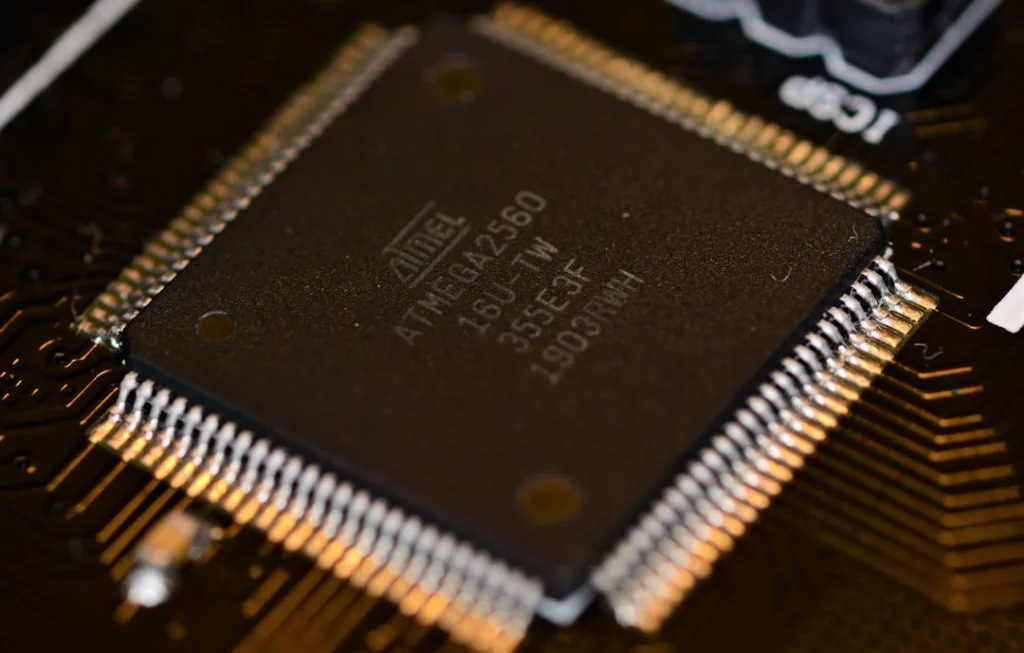
Quantum computing technology has made significant strides in recent years, transitioning from theoretical concepts to practical implementations. As of 2023, several companies and research institutions have developed quantum processors with varying qubit counts, showcasing the potential of quantum systems to perform calculations that are infeasible for classical computers. Notable players in the field, such as IBM, Google, and Rigetti Computing, have made their quantum processors accessible through cloud platforms, allowing researchers and developers to experiment with quantum algorithms and applications.
IBM’s Quantum Hummingbird, for instance, features 127 qubits and is part of a roadmap that aims to scale up to 1,121 qubits with the Eagle processor. This progression illustrates the rapid advancements in qubit coherence times and gate fidelities, which are critical for executing complex quantum algorithms. Despite these advancements, the field still grapples with significant challenges.
Quantum decoherence remains a major hurdle, as qubits are highly susceptible to environmental noise, which can lead to loss of information. Error rates in quantum gates are still higher than desired, necessitating the development of error correction techniques and fault-tolerant architectures. Moreover, the diversity of quantum computing models—ranging from superconducting qubits to trapped ions and topological qubits—adds complexity to the landscape.
Each technology has its own set of advantages and limitations, making it difficult to predict which will ultimately dominate the field. Nevertheless, the current state of quantum computing is marked by a growing ecosystem of hardware and software solutions that are beginning to demonstrate real-world applications.
Key Takeaways
- Quantum computing technology is still in its early stages, with limited practical applications and scalability.
- Potential applications of quantum computing include solving complex optimization problems, simulating molecular structures, and enhancing machine learning algorithms.
- Challenges in quantum computing include error correction, qubit stability, and the need for specialized hardware and software.
- Quantum computing has the potential to outperform classical computing in certain tasks, but it is not yet a replacement for traditional computers.
- Major industry players investing in quantum computing include IBM, Google, Microsoft, and Intel, with significant government and defense interest as well.
Potential Applications and Impacts of Quantum Computing
The potential applications of quantum computing span a wide array of fields, promising transformative impacts on industries such as pharmaceuticals, finance, logistics, and materials science. In drug discovery, for example, quantum computers can simulate molecular interactions at an unprecedented level of detail, enabling researchers to identify promising drug candidates more efficiently than classical methods allow. This capability could significantly reduce the time and cost associated with bringing new medications to market.
A notable example is the collaboration between D-Wave Systems and pharmaceutical companies to explore how quantum annealing can optimize molecular simulations. In finance, quantum computing holds the promise of revolutionizing risk analysis and portfolio optimization. Traditional financial models often struggle with the complexity of market dynamics and vast datasets.
Quantum algorithms like the Quantum Approximate Optimization Algorithm (QAOA) can potentially analyze multiple investment strategies simultaneously, leading to more informed decision-making. Furthermore, in logistics and supply chain management, quantum computing can optimize routing and scheduling problems that are computationally intensive for classical systems. Companies like Volkswagen have already begun exploring how quantum algorithms can enhance traffic flow in urban environments.
Overcoming the Challenges of Quantum Computing
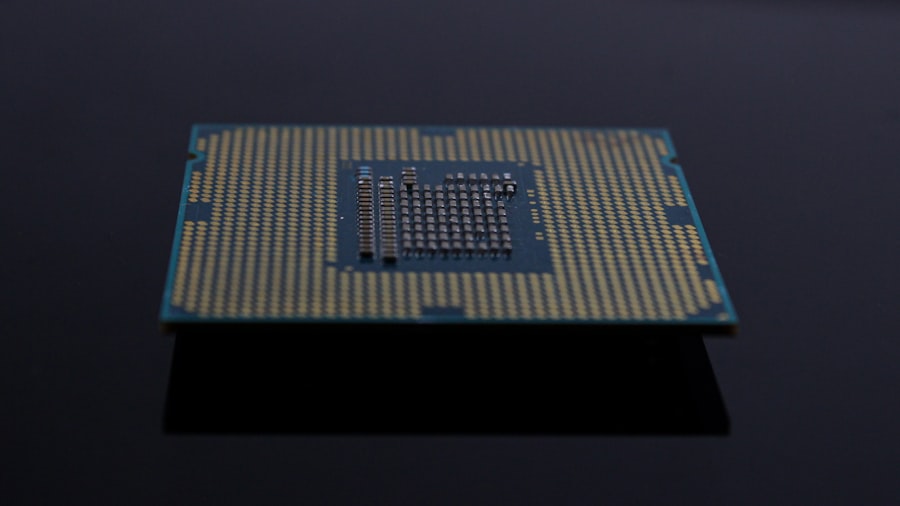

Addressing the challenges inherent in quantum computing is crucial for realizing its full potential. One of the primary obstacles is improving qubit coherence times and gate fidelity. Researchers are actively investigating various materials and architectures to enhance qubit performance.
For instance, superconducting qubits have shown promise due to their relatively long coherence times compared to other types. However, they still require extremely low temperatures to operate effectively. Innovations in cryogenic technology and materials science are essential for advancing this area.
Another significant challenge is the development of robust quantum error correction methods. Quantum information is fragile; thus, error correction codes must be implemented to protect against decoherence and operational errors. Techniques such as surface codes and cat codes are being explored to mitigate these issues.
Additionally, creating scalable quantum systems that can integrate thousands or millions of qubits remains a daunting task. Researchers are investigating modular architectures that allow for the interconnection of smaller quantum processors, which could lead to more manageable systems while maintaining computational power.
Quantum Computing in Comparison to Classical Computing
The fundamental differences between quantum computing and classical computing lie in their underlying principles of information processing. Classical computers operate on bits that represent either a 0 or a 1, while quantum computers utilize qubits that can exist in superpositions of states. This property allows quantum computers to perform multiple calculations simultaneously, providing an exponential speedup for certain problems.
For example, Shor’s algorithm demonstrates how a quantum computer can factor large integers exponentially faster than the best-known classical algorithms, posing significant implications for cryptography. However, not all problems will benefit from quantum computing’s unique capabilities. Many everyday tasks—such as word processing or web browsing—are inherently suited for classical systems due to their simplicity and efficiency.
The challenge lies in identifying specific applications where quantum computing can outperform classical methods significantly. Hybrid approaches that combine classical and quantum computing may emerge as a practical solution for leveraging the strengths of both paradigms. This integration could lead to enhanced computational capabilities across various domains while maintaining the reliability of classical systems.
Quantum Computing Investments and Industry Players
The investment landscape for quantum computing has seen exponential growth over the past few years as both private and public sectors recognize its potential. Venture capital firms are increasingly funding startups focused on developing quantum hardware, software, and applications. Notable investments include those made by companies like Google and Microsoft into their respective quantum initiatives—Google’s Quantum AI lab and Microsoft’s Azure Quantum platform—both aiming to create comprehensive ecosystems for quantum development.
In addition to established tech giants, numerous startups are emerging in the quantum space. Companies like IonQ and Xanadu are pioneering new approaches to quantum hardware and software development. Furthermore, governments around the world are investing heavily in quantum research as part of national strategies for technological leadership.
The European Union’s Quantum Flagship initiative and the United States’ National Quantum Initiative are examples of coordinated efforts aimed at fostering innovation in this field. These investments not only support research but also aim to cultivate a skilled workforce capable of driving advancements in quantum technologies.
Quantum Computing in Research and Academia
Research institutions play a pivotal role in advancing quantum computing technology through fundamental research and collaboration with industry partners. Universities such as MIT, Stanford, and Caltech have established dedicated quantum research centers that focus on various aspects of quantum information science—from theoretical foundations to experimental implementations. These institutions often collaborate with tech companies to bridge the gap between academic research and practical applications.
Moreover, academic research is crucial for developing new algorithms that leverage quantum computing’s unique capabilities. Researchers are exploring areas such as quantum machine learning, optimization problems, and cryptography to identify novel applications that could benefit from quantum speedup.
The interdisciplinary nature of quantum research encourages collaboration among physicists, computer scientists, mathematicians, and engineers, fostering an environment ripe for innovation.
As more universities incorporate quantum computing into their curricula, they are preparing the next generation of scientists and engineers to tackle the challenges ahead.
Quantum Computing in Government and Defense
Governments worldwide recognize the strategic importance of quantum computing technology for national security and economic competitiveness.
The potential applications in cryptography raise concerns about existing encryption methods becoming obsolete in the face of powerful quantum algorithms capable of breaking them.
As a result, many nations are investing in research initiatives aimed at developing post-quantum cryptography standards that can withstand attacks from quantum computers.
In defense sectors, quantum technologies are being explored for applications such as secure communications and advanced sensing capabilities. Quantum key distribution (QKD) offers a method for secure communication that leverages the principles of quantum mechanics to ensure that any eavesdropping attempts can be detected immediately. Countries like China have made significant advancements in QKD technology, deploying satellite-based systems that demonstrate its feasibility over long distances.
The race for dominance in quantum technologies has led to increased collaboration between government agencies and private sector companies focused on developing secure communication networks.
Quantum Computing and Cybersecurity
The intersection of quantum computing and cybersecurity presents both opportunities and challenges for information security professionals. On one hand, quantum computers have the potential to break widely used encryption schemes such as RSA and ECC through algorithms like Shor’s algorithm. This capability poses a significant threat to data security across various sectors, including finance, healthcare, and government communications.
On the other hand, the emergence of quantum-resistant cryptographic algorithms offers a pathway to secure data against future threats posed by quantum computing. Organizations are beginning to adopt post-quantum cryptography standards that can withstand attacks from both classical and quantum adversaries. The National Institute of Standards and Technology (NIST) has been actively working on standardizing post-quantum cryptographic algorithms through a rigorous evaluation process involving multiple rounds of public scrutiny.
As organizations prepare for a future where quantum computers may become prevalent, proactive measures must be taken to ensure data integrity and confidentiality.
Quantum Computing and the Future of Artificial Intelligence
The synergy between quantum computing and artificial intelligence (AI) holds immense promise for enhancing machine learning capabilities. Quantum machine learning algorithms have the potential to process vast datasets more efficiently than classical counterparts by leveraging superposition and entanglement properties inherent in qubits. For instance, algorithms like Quantum Support Vector Machines (QSVM) aim to improve classification tasks by utilizing quantum states to represent data points in high-dimensional spaces.
Moreover, as AI models become increasingly complex, training them on classical hardware can be computationally prohibitive. Quantum computing could provide solutions for optimizing neural networks or accelerating training processes through techniques such as variational quantum eigensolvers (VQE). Companies like Xanadu are exploring how photonic-based quantum processors can be integrated with machine learning frameworks to unlock new capabilities in AI applications ranging from natural language processing to image recognition.
Ethical and Societal Implications of Quantum Computing
The rapid advancement of quantum computing technology raises important ethical considerations that must be addressed as it becomes more integrated into society. One major concern revolves around privacy; as quantum computers become capable of breaking current encryption methods, individuals’ personal data may become vulnerable to exploitation by malicious actors or even state-sponsored entities. This potential breach of privacy necessitates a reevaluation of data protection laws and practices.
Additionally, there is a risk that unequal access to quantum technologies could exacerbate existing societal inequalities. As nations invest heavily in developing their quantum capabilities, disparities may arise between countries with advanced technological infrastructures and those without access to such resources. Ensuring equitable access to these transformative technologies will be crucial in preventing a widening digital divide that could hinder global progress.
Predictions for the Future of Quantum Computing
Looking ahead, predictions for the future of quantum computing suggest a trajectory marked by continued innovation and integration into various sectors. As hardware improvements lead to more stable qubits with longer coherence times, we can expect practical applications to emerge across industries within the next decade. The development of hybrid systems that combine classical and quantum computing will likely become commonplace as organizations seek ways to leverage both paradigms effectively.
Furthermore, advancements in software development will play a critical role in democratizing access to quantum technologies. User-friendly programming languages tailored for quantum computing will enable a broader range of developers to create applications without requiring deep expertise in quantum mechanics or linear algebra. As educational institutions ramp up their efforts to train future generations in this field, we may witness an influx of talent capable of driving further advancements.
In conclusion, while challenges remain on the path toward realizing the full potential of quantum computing technology, its implications across various domains are profound and far-reaching. The ongoing collaboration between academia, industry players, governments, and researchers will be essential in shaping a future where quantum computing becomes an integral part of our technological landscape.
In a recent article by Wasif Ahmad, “Quantum Computing’s Big Leap: How Qubits are Redefining the Future of Processing,” the author delves into the exciting advancements in quantum computing technology and how qubits are revolutionizing the field. This article provides valuable insights into the potential of quantum computing and its implications for various industries. For more information on the future of computing, check out this article.