



Group interviews have emerged as a popular method for assessing candidates in various fields, particularly in industries where teamwork and collaboration are paramount. Unlike traditional one-on-one interviews, group interviews involve multiple candidates being evaluated simultaneously, often in the presence of several interviewers. This format not only allows employers to observe how candidates interact with one another but also provides insights into their communication skills, problem-solving abilities, and overall fit within a team dynamic.
The group interview setting can simulate real-world scenarios where collaboration is essential, making it a valuable tool for employers seeking to build cohesive teams. The effectiveness of group interviews lies in their ability to reveal interpersonal dynamics that might not surface in individual interviews. Candidates are often placed in situations where they must work together to solve problems or discuss topics relevant to the role they are applying for.
This interaction can highlight leadership qualities, adaptability, and the ability to listen and respond constructively to others. Furthermore, group interviews can save time and resources for hiring managers, allowing them to assess multiple candidates at once while observing their behavior in a collaborative environment.
Key Takeaways
- Group interviews can be a valuable tool for assessing teamwork and collaboration skills in candidates.
- Select team members who bring diverse expertise and perspectives to the interview process.
- Choose a format that encourages open discussion and collaboration, such as a panel or roundtable setup.
- Thorough research and rehearsal are essential for a successful group interview.
- Highlight individual expertise by assigning specific topics or tasks to each team member.
Selecting the Right Team Members
Choosing the right team members for a group interview is crucial to its success. The composition of the group can significantly influence the dynamics of the interview and the quality of the interactions that take place. Ideally, the selected candidates should represent a diverse range of skills, experiences, and perspectives relevant to the position.
This diversity not only enriches the discussion but also allows interviewers to see how candidates navigate differences in opinion and approach. For instance, if hiring for a marketing team, including candidates with backgrounds in digital marketing, content creation, and analytics can lead to a more comprehensive evaluation of their collaborative potential. Moreover, it is essential to consider the number of participants in the group interview.
Too few candidates may not provide enough interaction for meaningful observations, while too many can lead to chaos and overshadow individual contributions. A balanced group size—typically between four to six candidates—allows for ample interaction while ensuring that each participant has the opportunity to showcase their skills and personality. Additionally, selecting candidates who are likely to engage positively with one another can foster a more productive atmosphere, leading to richer discussions and insights for the interviewers.
Setting the Stage: Choosing the Right Format
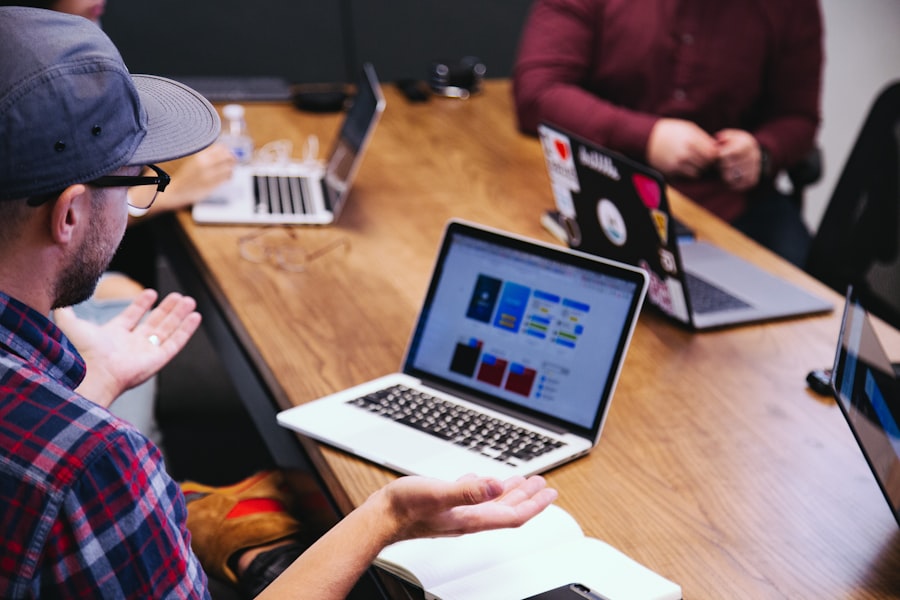

The format of a group interview can significantly impact its effectiveness. Various approaches can be employed, ranging from structured formats with specific questions and tasks to more open-ended discussions that allow candidates to steer the conversation. A structured format may involve presenting a case study or problem that candidates must solve collaboratively, providing clear criteria for evaluation.
This approach can help interviewers assess specific competencies and skills relevant to the role while maintaining focus on the objectives of the interview. Conversely, an unstructured format may encourage more organic interactions among candidates, allowing them to demonstrate their personalities and interpersonal skills more freely. This format can be particularly beneficial in creative fields where innovation and adaptability are valued.
However, it requires skilled facilitation to ensure that discussions remain productive and that all candidates have an opportunity to contribute. Ultimately, the choice of format should align with the goals of the interview and the nature of the position being filled, ensuring that it effectively showcases the candidates’ abilities.
Preparing for the Interview: Research and Rehearsal
Preparation is key to conducting successful group interviews. Interviewers should thoroughly research each candidate’s background, including their resumes, cover letters, and any relevant work samples. Understanding each candidate’s strengths and experiences allows interviewers to tailor their questions and prompts effectively, ensuring that they elicit meaningful responses during the interview.
Additionally, familiarizing themselves with the specific skills and competencies required for the role will enable interviewers to focus on what truly matters during the evaluation process. Rehearsing the interview format is equally important. Interviewers should practice facilitating discussions, managing time effectively, and navigating potential challenges that may arise during the interview.
Role-playing scenarios with colleagues can help interviewers refine their approach and develop strategies for encouraging participation from all candidates.
By anticipating possible dynamics and preparing for various outcomes, interviewers can create a more controlled environment that fosters productive interactions among candidates.
Highlighting Individual Expertise
While group interviews emphasize collaboration, it is essential to ensure that individual expertise is also recognized and valued. Each candidate brings unique skills and experiences to the table, and interviewers should create opportunities for individuals to showcase their strengths within the group context. This can be achieved by asking targeted questions that allow candidates to highlight their specific contributions or by assigning roles during group tasks that align with their expertise.
For example, if a candidate has a strong background in data analysis, they could be tasked with presenting data-driven insights during a group discussion on marketing strategies. This not only allows them to demonstrate their knowledge but also encourages other candidates to engage with their ideas critically. By fostering an environment where individual expertise is acknowledged, interviewers can gain a more comprehensive understanding of each candidate’s capabilities while still assessing their ability to work collaboratively.
Fostering Collaboration and Teamwork

Designing Collaborative Questions
To achieve this, interviewers should frame questions in a way that promotes discussion rather than competition among candidates. For example, instead of asking who has the best idea for a project, interviewers might ask how candidates would build on each other’s ideas to create a cohesive plan.
Incorporating Team-Building Exercises
Incorporating team-building exercises or collaborative tasks into the interview can help facilitate teamwork among candidates. These activities should be designed to require input from all participants, promoting active listening and cooperation.
Assessing Collaborative Skills
By observing how candidates navigate these tasks together, interviewers can gain valuable insights into their collaborative skills and ability to contribute positively to a team environment.
Managing Group Dynamics
Group dynamics play a crucial role in shaping the outcomes of group interviews. Interviewers must be attuned to the interactions among candidates and be prepared to intervene if necessary to maintain a balanced discussion. Some candidates may dominate conversations while others may struggle to find their voice; thus, it is essential for interviewers to facilitate equitable participation.
This can involve redirecting questions or prompting quieter candidates to share their thoughts. Understanding personality types within the group can also inform how interviewers manage dynamics. For instance, if one candidate tends to take charge while another is more reserved, interviewers might encourage collaboration by asking the dominant candidate how they would incorporate input from others into their ideas.
By actively managing group dynamics, interviewers can create an environment where all voices are heard and valued.
Crafting Engaging Questions
The questions posed during a group interview are pivotal in guiding discussions and eliciting meaningful responses from candidates. Crafting engaging questions requires careful consideration of both the role being filled and the dynamics of the group. Open-ended questions that encourage discussion are often more effective than those that can be answered with a simple “yes” or “no.” For example, instead of asking if a candidate has experience with project management software, an interviewer might ask how they would approach managing a project with tight deadlines using such tools.
Additionally, situational or behavioral questions can provide valuable insights into how candidates might handle real-world challenges they could face in the role. Asking candidates to describe past experiences where they successfully collaborated on a project or resolved conflicts within a team can reveal their problem-solving abilities and interpersonal skills. By carefully crafting questions that promote dialogue and reflection, interviewers can facilitate deeper discussions that yield richer insights into each candidate’s capabilities.
Ensuring Equal Participation
Ensuring equal participation among candidates is essential for obtaining a comprehensive understanding of each individual’s strengths and weaknesses during a group interview. Interviewers should actively monitor participation levels throughout the discussion and take steps to encourage quieter candidates to share their thoughts. This might involve directly inviting them into the conversation by asking specific questions or prompting them for their opinions on topics being discussed.
Moreover, establishing ground rules at the beginning of the interview can help set expectations for participation. For instance, interviewers might encourage candidates to practice active listening by allowing others to finish speaking before responding or by building on each other’s ideas rather than interrupting. By fostering an environment where all participants feel comfortable contributing, interviewers can ensure that they gather diverse perspectives while also promoting respectful dialogue among candidates.
Managing Time and Flow
Time management is critical in group interviews, as it ensures that all topics are covered while allowing sufficient time for meaningful interactions among candidates. Interviewers should establish a clear agenda at the outset of the interview, outlining key topics or activities that will be addressed during the session. This structure helps keep discussions focused while also providing a framework for evaluating candidate responses.
To maintain flow throughout the interview, facilitators should be prepared to adjust their approach as needed based on how discussions unfold. If certain topics generate more engagement than anticipated, interviewers may choose to allocate additional time for those discussions while ensuring that other areas are still addressed within the overall timeframe. Balancing structure with flexibility allows for dynamic conversations while still adhering to time constraints.
Post-Interview: Editing and Publishing the Final Product
After conducting a group interview, it is essential for hiring managers and interviewers to reflect on their observations and compile feedback on each candidate’s performance. This process often involves reviewing notes taken during the interview and discussing impressions with fellow interviewers to ensure a comprehensive evaluation of each participant’s strengths and weaknesses. Once feedback has been gathered, it may be beneficial to create a summary report or presentation that highlights key takeaways from the group interview process.
This document should include insights into individual contributions as well as overall group dynamics observed during discussions. Sharing this information with relevant stakeholders—such as hiring managers or team leaders—can facilitate informed decision-making regarding candidate selection. In some cases, organizations may choose to publish insights from group interviews as part of their recruitment marketing efforts or employer branding initiatives.
Highlighting positive aspects of collaboration observed during interviews can showcase company culture and attract potential candidates who value teamwork and collaboration in their work environments. By thoughtfully editing and presenting these insights, organizations can enhance their appeal as employers while also reinforcing their commitment to fostering collaborative teams.
If you enjoyed reading about how to feature your team’s expertise in a single post, you may also be interested in learning about essential lessons for tech entrepreneurs.
This article discusses key insights and strategies for success in the tech industry, providing valuable information for those looking to grow their businesses.
Check it out here.