


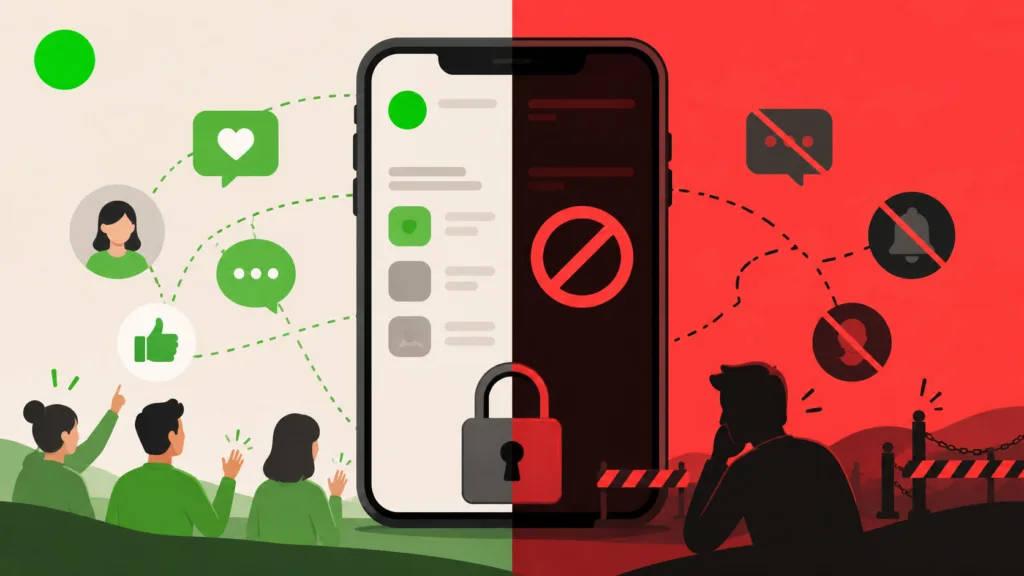
You’ve likely experienced it yourself, or perhaps you’ve witnessed the ripple effect in your community. That sudden, jarring silence where previously vibrant online interactions buzzed. The social media ban. It’s a concept that evokes a spectrum of reactions, from fear and frustration to, for some, an unexpected sense of liberation. You might be wondering, what does this actually mean for how you navigate the digital world? What happens when the platforms you’ve grown accustomed to, the tools you use for everything from connecting with loved ones to staying informed, are suddenly cordoned off? The impact of a social media ban on internet usage is far-reaching, altering not just your daily habits but also the broader digital ecosystem.
The immediate aftermath of a social media ban can feel disorienting. Your digital landscape, once filled with familiar icons and endless scrolls, suddenly feels emptier. You’ve invested time, energy, and perhaps even some emotional currency into these platforms. They’ve become extensions of your social lives, your professional networks, and your avenues for information. Their abrupt disappearance leaves a noticeable void, forcing you to recalibrate your understanding of “online.”
The Phantom Limb Syndrome: Missing the Daily Fix
You’ve probably felt it – that subconscious reach for your phone, the muscle memory that has you instinctively tapping an icon that no longer exists, or leads to a restricted page. It’s the digital equivalent of phantom limb syndrome. For years, your brain has been conditioned to seek out social media for validation, connection, or simply to pass the time. This urge doesn’t vanish overnight. You might find yourself checking your device repeatedly, a futile exercise that highlights the depth of your ingrained habits. This immediate absence creates a vacuum, prompting you to question what you used to do and, more importantly, what you will do now.
Shifting Information Consumption: The News Drought
Social media has become a primary conduit for news and information for a significant portion of the population. When these channels are shut down, you’re faced with a sudden scarcity of easily digestible updates. The curated feeds, the quick headlines, the trending topics – all gone. You’re forced to find alternative ways to stay informed, potentially leading you back to more traditional sources, or perhaps to a deeper dive into less mainstream online spaces, which comes with its own set of challenges.
The Rise of the “What Now?” Mentality: Redefining Online Habits
The immediate question that hangs in the air is “What now?” You’re no longer passively scrolling through a familiar feed; you’re actively seeking new ways to engage with the internet. This can feel like a daunting task, but it also presents an opportunity for exploration. You might find yourself gravitating towards websites you’ve never visited, downloading new apps, or rediscovering older forms of digital communication. This initial period is characterized by a period of adjustment, a trial-and-error phase as you navigate the altered digital terrain.
In light of the recent discussions surrounding the social media ban and its potential impact on internet usage, it’s interesting to explore how digital engagement strategies might evolve. A related article that delves into innovative approaches for enhancing online interaction is titled “Interactive Emails: Boost Engagement with Quizzes, Polls, and More.” This piece highlights how businesses can adapt their communication methods to maintain user engagement in a changing digital landscape. For more insights, you can read the article here: Interactive Emails: Boost Engagement with Quizzes, Polls, and More.
The Search for Alternatives: Diversification and Discovery
The absence of your usual social media haunts doesn’t mean you’re cut off from the internet entirely. Instead, it compels you to actively seek out and explore a wider array of online resources and platforms. This period of diversification is often marked by a flurry of experimentation, as you test the waters of different digital experiences.
The Re-emergence of Niche Platforms and Forums: Finding Your Tribe Elsewhere
You might be surprised to discover that the internet is a vast and diverse place, far beyond the confines of popular social media giants. Suddenly, those smaller, more specialized forums and platforms you’ve heard whispers about, or perhaps even bookmarked in the past, become incredibly appealing. These are spaces where communities coalesce around specific interests, hobbies, or professions. You might find yourself joining a gardening forum, a coding community, or a forum dedicated to a particular genre of music. These platforms often foster deeper, more focused interactions than the broad strokes of social media.
The Resurgence of Direct Communication: Email and Messaging Apps Take Center Stage
In the absence of public posts and ephemeral stories, the value of direct, personal communication skyrockets. You might find yourself relying more heavily on email than you have in years, sending longer, more thoughtful messages. Messaging apps, which may have previously been relegated to quick chats, now become the primary means of maintaining social connections. You’re more likely to initiate one-on-one conversations, leading to more intimate and perhaps more meaningful exchanges.
The Exploration of Content-Rich Websites and Blogs: Deeper Dives into Specific Interests
Without the constant stream of social media updates, you might find yourself with more time and inclination to engage with longer-form content. Websites dedicated to specific topics, in-depth blogs, and online educational platforms become more attractive. You’re no longer consuming bite-sized pieces of information; you’re dedicating your attention to articles, essays, and tutorials that offer a more comprehensive understanding of your interests. This can lead to a richer, more nuanced learning experience.
The Growth of Alternative Social Networks: Testing the Waters of New Connections
The ban on mainstream platforms often fuels the growth of newer, often more decentralized or privacy-focused social networks. You might explore platforms that emphasize anonymity, decentralization, or specific functionalities that were lacking in your previous online haunts. This can be an exciting, albeit sometimes experimental, journey as you contribute to the development and growth of these emerging digital communities.
The Unforeseen Consequences: Digital Habits and Psychological Shifts

While the search for alternatives is a natural response, the impact of a social media ban extends beyond simply finding new places to connect. It can lead to profound shifts in your digital habits and even influence your psychological well-being.
The Quietening of the Digital Echo Chamber: Exposure to Diverse Perspectives
Social media algorithms, while designed to keep you engaged, can inadvertently create echo chambers where you are primarily exposed to viewpoints that align with your own. A ban can disrupt these algorithms, forcing you to seek out information from a broader range of sources. You might stumble upon perspectives that challenge your existing beliefs, leading to a more critical and nuanced understanding of the world. This exposure to diverse viewpoints can be uncomfortable at times, but it’s often a catalyst for intellectual growth.
The Battle Against Digital Distraction: Increased Focus and Productivity
For many, social media is the ultimate distraction. The constant notifications, the allure of endless scrolling – these can chip away at your focus and productivity. When these platforms are removed, you might find yourself with more uninterrupted time to dedicate to tasks, work, or personal projects. This can lead to a noticeable increase in productivity and a greater sense of accomplishment. You might discover that without the constant pull of social media, you can finally tackle those long-delayed projects.
The Potential for Isolation and FOMO (Fear Of Missing Out): Navigating Disconnection
Despite the availability of alternative communication methods, a social media ban can, for some, lead to feelings of isolation and FOMO. You might feel disconnected from the broader social conversation, unaware of what your friends are doing or what events are happening. This is particularly true if your social circle relies heavily on these platforms for organization and casual updates. You’ll need to be proactive in maintaining connections and finding new ways to feel included.
The Re-evaluation of Online Identity: Beyond the Curated Persona
Social media often encourages the creation of a curated online persona – a polished version of ourselves presented to the world. When these platforms are inaccessible, you might find yourself re-evaluating your digital identity. The pressure to maintain a perfect online image diminishes, potentially allowing for a more authentic expression of yourself in other online spaces. This can be a freeing experience, as you shed the burden of constant self-presentation.
The Long-Term Ramifications: Societal Shifts and the Future of Online Interaction

The impact of a social media ban isn’t just personal; it can have broader societal implications, influencing how we communicate, consume information, and even how economies function. These long-term changes can reshape the digital landscape for years to come.
The Decentralization of Online Discourse: Moving Beyond Centralized Power
If social media bans become more frequent or widespread, we might see a significant shift towards decentralized online platforms. This could empower users by giving them more control over their data and their online experiences, reducing reliance on large, centralized corporations. You might witness a rise in technologies that prioritize user ownership and peer-to-peer communication.
The Resurgence of Localized and Offline Communities: Bridging the Digital Divide
As online interactions become more fragmented or less accessible, there could be a renewed emphasis on local and offline communities. People might invest more time and energy in building relationships within their immediate surroundings, seeking out real-world connections to supplement their digital lives. This could lead to a stronger sense of community and a rebalancing of digital versus physical interactions.
The Evolution of Content Creation and Distribution: New Models Emerge
Content creators who relied heavily on social media for reach and engagement will need to adapt. This could lead to the development of new content distribution models, perhaps with a greater focus on direct subscriptions, independent platforms, or email newsletters. You might see a diversification of how content is produced and the channels through which it is accessed.
The Debate Around Digital Censorship and Freedom of Expression: A Philosophical Reckoning
Social media bans inevitably raise complex questions about digital censorship, freedom of expression, and the role of governments or platform providers in controlling online discourse. This societal debate will likely intensify, prompting deeper discussions about the rights and responsibilities of individuals and entities within the digital realm. You’ll be part of this evolving conversation.
The recent discussion surrounding the social media ban raises important questions about our online behavior and the potential for a more focused internet experience. As we navigate these changes, it is essential to consider how technology, particularly artificial intelligence, plays a role in shaping our interactions. For a deeper understanding of this topic, you can explore the article on demystifying AI and making black box models transparent, which highlights the implications of AI in our digital lives. This connection between social media usage and AI transparency could significantly influence how we engage with online platforms in the future. You can read more about it in this insightful piece here.
A New Digital Landscape: Embracing the Evolving Internet
| Metrics | Impact |
|---|---|
| User Engagement | May shift to alternative platforms |
| Content Moderation | Increased scrutiny and regulation |
| Information Spread | Changes in how news and information is shared |
| Online Activism | New methods of organizing and mobilizing |
| Government Control | Potential for increased censorship |
Ultimately, navigating the impact of a social media ban on your internet usage is about adaptation and discovery. It’s about recognizing that the digital world is not static; it’s a constantly evolving entity. While the initial shock of losing familiar platforms can be unsettling, it also opens doors to new experiences, deeper connections, and a more nuanced understanding of your own online habits.
The Opportunity for Conscious Consumption: Intentional Engagement
Instead of passively consuming content, you are encouraged to engage with the internet more intentionally. You’re no longer a victim of algorithmic feeds; you’re an active participant, choosing where you spend your time and attention online. This conscious consumption can lead to a more fulfilling and less overwhelming digital experience. You’re in the driver’s seat, steering your digital journey.
The Reclaiming of Your Time and Attention: A Digital Detox, Intentional or Otherwise
Whether the ban is self-imposed or externally enforced, it often results in a de facto digital detox. This can be a powerful opportunity to reclaim your time and attention, dedicating it to activities that nourish your well-being and foster personal growth. You might rediscover hobbies, learn new skills, or simply find more moments of quiet reflection.
The Strengthening of Your Digital Resilience: Becoming a More Agile User
Experiencing a social media ban, and successfully navigating its aftermath, builds digital resilience. You become more agile, more adaptable, and less dependent on any single platform. You learn to leverage the vastness of the internet in diverse ways, making you a more robust and self-sufficient digital citizen.
The Future is Unwritten: Embracing the Unknown
The impact of social media bans is an ongoing story, and the future of online interaction is still being written. By understanding the potential shifts and embracing the opportunities for adaptation and discovery, you can not only survive but thrive in this evolving digital landscape. Your journey online will be richer, more diverse, and ultimately, more yours.
FAQs
What is the social media ban and how could it reshape internet usage?
The social media ban refers to the potential restriction or prohibition of certain social media platforms in certain countries. This could reshape internet usage by forcing users to find alternative platforms and changing the way people communicate and access information online.
Which countries are considering implementing a social media ban?
Several countries have considered or implemented social media bans, including China, Iran, North Korea, and Russia. These bans are often motivated by concerns about national security, political control, or the spread of misinformation.
How could a social media ban impact individuals and businesses?
A social media ban could impact individuals by limiting their ability to connect with others, access information, and express themselves online. For businesses, it could disrupt marketing strategies, customer engagement, and access to a global audience.
What are the potential alternatives for users affected by a social media ban?
Users affected by a social media ban may seek alternative platforms that are not restricted in their country, such as local social networks or virtual private networks (VPNs) to bypass the ban. They may also turn to other forms of communication, such as email or messaging apps.
How could a social media ban impact the future of internet regulation and freedom of speech?
A social media ban could set a precedent for increased internet regulation and government control over online content. It could also raise concerns about freedom of speech and the ability of individuals to freely express themselves and access information online.