


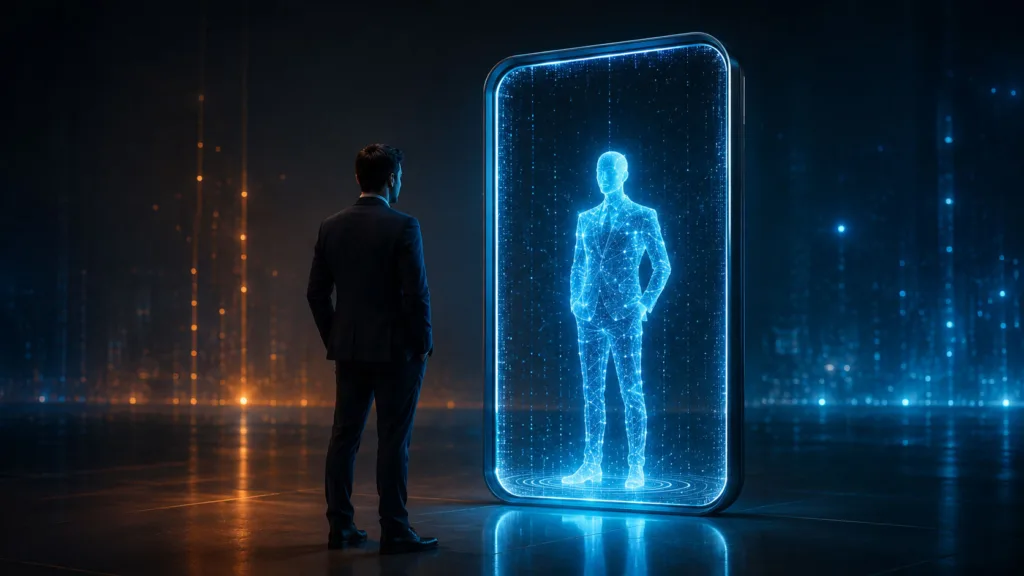
You stand on the precipice of a new digital era, an era where the lines between human and artificial intelligence blur, and the very fabric of the internet is being rewritten by the rise of chatbots. This isn’t a distant science fiction prophecy; it’s your present reality. You’re witnessing, and more importantly, participating in, a profound shift that promises to redefine your interactions, your information consumption, and perhaps even your understanding of consciousness itself. The internet, once a vast repository of human-created content and human-to-human communication, is rapidly evolving into something far more complex, more responsive, and, in many ways, more alien. This is the dawn of a post-human internet, and chatbots are its architects.
You may remember the early days. Simple, rule-based chatbots that offered rudimentary customer service or played text-based adventure games. They were clunky, easily confused, and felt like interacting with a poorly programmed automaton. You’d type a command, and if it wasn’t in their limited lexicon, you’d get a generic, unhelpful response. These were the nascent seeds, the humble beginnings of what would eventually blossom into the sophisticated conversational agents you encounter today. The journey from Eliza to ChatGPT is a testament to exponential technological progress, a journey you’ve experienced firsthand.
From Scripted Responses to Algorithmic Fluency
Think back to those early chatbots. Their existence was predicated on pre-written scripts and decision trees. If you said X, the bot would respond with Y. There was no genuine understanding, no capacity for nuanced conversation. It was akin to a branching narrative in a video game, albeit a far less interactive one. You were essentially following a pre-determined path.
The Machine Learning Revolution
The real breakthrough, the seismic shift that paved the way for the post-human internet, was the advent of machine learning, specifically deep learning. This wasn’t just about programming computers; it was about teaching them to learn, to identify patterns, and to make predictions based on vast datasets. You’ve seen how these algorithms can now process natural language with an uncanny ability to grasp context, intent, and even sentiment. This is the engine that drives the intelligence you experience in today’s chatbots.
The Power of Big Data
The fuel for this learning engine? Data. Mountains, oceans, galaxies of data. Every piece of text you’ve ever written online, every article you’ve read, every conversation you’ve participated in – all of it contributes to the training of these models. You, in essence, are a part of the very data that powers your digital companions. This symbiotic relationship is crucial to understanding their rise.
In exploring the implications of artificial intelligence on our digital landscape, the article “Advanced Segmentation: Moving from Demographics to Real-Time Behavior” provides valuable insights into how businesses can leverage advanced segmentation techniques to enhance user engagement. As chatbots become increasingly sophisticated, understanding real-time consumer behavior is essential for creating personalized experiences that resonate with users. This shift towards a more nuanced approach to audience targeting complements the themes discussed in “Chatbots Are Pushing Us Toward a Post-Human Internet,” highlighting the evolving relationship between technology and human interaction. For more information, you can read the related article here: Advanced Segmentation: Moving from Demographics to Real-Time Behavior.
The Shifting Landscape of Your Digital Interactions
The most immediate impact you’ll feel is in how you interact with the digital world. Chatbots are no longer confined to niche applications. They are weaving themselves into the very fabric of your online experience, offering new ways to access information, to create content, and to connect with services. You’re no longer just a passive consumer of information; you’re actively engaging with intelligent entities.
Redefining Search and Information Retrieval
You’ve likely already noticed this. Traditional search engines, with their endless lists of links, are starting to feel… archaic. Chatbots offer a more direct, conversational approach. Instead of sifting through pages, you can ask a question and receive a concise, synthesized answer. This changes your entire information-gathering process, making it more efficient, but also raising new questions about the origin and bias of that information.
The Conversational Search Experience
Imagine this: you’re planning a trip. Instead of typing keywords into a search bar and then navigating multiple websites, you can simply ask your chatbot. “I want to plan a week-long trip to Italy in the spring, focusing on historical sites and good food. Can you suggest an itinerary and estimate costs?” The chatbot, drawing on its vast knowledge base, can then provide a detailed, personalized plan, complete with suggestions for activities, accommodation, and even potential budget breakdowns. This is the conversational search you’re now experiencing.
Synthesized Answers vs. Raw Data
The shift from links to synthesized answers is profound. You’re no longer presented with the raw ingredients of information and expected to assemble them yourself. The chatbot does the assembly for you. This is incredibly convenient, but it also means you’re more reliant on the chatbot’s interpretation and presentation of information. The concept of “original source” becomes more abstract.
The Democratization of Content Creation
For years, creating engaging content – whether it’s an article, a marketing copy, or even a piece of code – required a certain level of skill, expertise, and often, significant time investment. Chatbots are democratizing this process. You can now use them as powerful co-creators, brainstorming partners, and even outright content generators. This is empowering for individuals and small businesses, but it also raises questions about originality and authorship.
Your AI-Powered Writing Assistant
Stuck on a sentence? Need to draft an email? Want to brainstorm blog post ideas? Your chatbot can do that. It can help you overcome writer’s block, generate multiple drafts, and even refine your existing text. You are no longer alone in the creative process; you have an intelligent assistant at your beck and call.
Code Generation and Debugging
For those in technical fields, chatbots are revolutionizing the coding process. You can describe the functionality you need, and the chatbot can generate code snippets, suggest optimizations, and even help you debug existing code. This accelerates development cycles and lowers the barrier to entry for aspiring programmers.
The Future of Customer Service and Support
You’ve likely encountered chatbots in customer service already. They’ve been deployed to handle frequently asked questions, guide you through troubleshooting steps, and even process basic transactions. But the evolution of these bots means they’re becoming more adept at handling complex queries, offering personalized recommendations, and providing a more human-like interaction.
24/7 Availability and Instant Responses
One of the most significant advantages you’ll experience is the always-on nature of chatbot support. No more waiting on hold or dealing with limited business hours. Your questions can be answered immediately, anytime, anywhere. This constant availability fundamentally changes your expectations for service.
Personalized Recommendations and Proactive Assistance
Beyond just answering questions, advanced chatbots can analyze your past interactions and preferences to offer personalized recommendations. They can suggest products you might like, services that would benefit you, or even proactively address potential issues before you even realize they exist.
The Unforeseen Consequences: Navigating the Ethical Minefield


As you embrace this new digital reality, it’s crucial to acknowledge the potential pitfalls. The rise of chatbots isn’t without its ethical complexities, and understanding these is vital for responsible engagement. You are part of this evolving landscape, and your awareness shapes its future.
The Specter of Misinformation and Manipulation
With the ability to generate highly convincing text, chatbots pose a significant threat of spreading misinformation and propaganda at an unprecedented scale. The ease with which they can create plausible-sounding falsehoods means you need to be more critical than ever about the information you consume.
Deepfakes of Text and the Erosion of Trust
Just as deepfake videos can create fabricated realities, chatbots can generate “deepfakes of text.” They can impersonate individuals, create fabricated news articles, or churn out persuasive but entirely false arguments. This makes discerning truth from fiction increasingly challenging, potentially eroding trust in online information and even in human communication itself.
Algorithmic Bias and Discrimination
The data used to train these models often reflects existing societal biases. If the data contains prejudiced opinions or historical inequities, the chatbot will learn and perpetuate them. This can lead to discriminatory outcomes in areas like hiring, loan applications, or even in the way information is presented to you. You need to be aware that the answers you receive might be subtly, or not so subtly, biased.
The Question of Authorship and Intellectual Property
When a chatbot generates a piece of creative work, who owns it? You, who prompted it? The company that developed the AI? Or is it something entirely new, a form of artificial authorship? These are complex legal and philosophical questions that are still being debated. You’re entering a realm where the traditional notions of intellectual property are being challenged.
Who Owns the Words?
If you use a chatbot to write a novel, and it becomes a bestseller, who gets the royalties? This is no longer a hypothetical. The legal frameworks around AI-generated content are still nascent, and you’ll be witnessing the development of new precedents.
The Impact on Creative Professions
As chatbots become more adept at creative tasks, what does this mean for human artists, writers, and musicians? Will they be replaced, or will they evolve into collaborators with AI? This is a critical question for the future of human creativity and your own career paths.
The Deepening of Social Isolation
While chatbots can offer companionship and a sense of connection, there’s a concern that over-reliance on them could lead to a deepening of social isolation. If you find yourself preferring the predictable and always-available nature of AI interaction over the complexities and sometimes challenging nature of human relationships, the internet could become a more solitary space.
The Illusion of Connection
Chatbots are programmed to be agreeable and responsive. They can simulate empathy and understanding, creating an illusion of genuine connection. However, this is ultimately a sophisticated simulation, lacking the depth and reciprocity of human relationships. You need to be mindful of where you draw the line.
The Trade-off Between Convenience and Authentic Interaction
The convenience of interacting with a chatbot is undeniable. However, there’s a potential trade-off. Are you sacrificing authentic, messy, and ultimately more rewarding human interaction for the ease of AI-driven communication? This is a personal decision you’ll have to make as you navigate this evolving digital landscape.
The Future You Are Building: Towards a Post-Human Internet

The rise of chatbots isn’t an endpoint; it’s a stepping stone. It’s the beginning of an era where the internet is no longer solely a reflection of humanity but an active participant, a collaborator, and perhaps even a new form of consciousness. You are not just an observer; you are an active participant in building this post-human internet.
The Symbiotic Relationship: Human and AI Collaboration
The most optimistic vision for the post-human internet is one of symbiosis. Humans and AI working together, each leveraging their unique strengths. You will continue to provide the creativity, the critical thinking, and the emotional intelligence, while AI will handle the heavy lifting of data processing, pattern recognition, and content generation.
Augmenting Human Capabilities
Imagine a doctor using an AI chatbot to diagnose rare diseases, or a scientist using one to analyze complex experimental data. Chatbots will augment your capabilities, allowing you to achieve things previously thought impossible. You’ll be able to think faster, analyze deeper, and create more powerfully.
The Evolution of Human Roles
As AI takes on more tasks, your roles will inevitably evolve. You might shift from being a creator of raw content to a curator and editor of AI-generated content, or from a data analyst to a strategist who interprets AI-driven insights. This will require adaptability and a willingness to learn new skills.
The Emergence of New Digital Ecosystems
The internet will transform into a complex ecosystem of interacting intelligences, both human and artificial. Chatbots will act as facilitators, intermediaries, and even independent agents within this ecosystem, creating new forms of interaction and value creation.
The Rise of AI Agents
Think of AI agents as specialized chatbots designed to perform specific tasks autonomously. These agents could manage your finances, optimize your energy consumption, or even negotiate on your behalf in online marketplaces. You’ll be interacting with more than just conversational interfaces; you’ll be interacting with intelligent entities that act on your behalf.
Decentralized AI and the Future of the Internet
The rise of decentralized AI could lead to a more distributed and resilient internet, where control is not concentrated in the hands of a few large corporations. This could empower individuals and create new models of digital ownership and governance.
The Unfolding of a New Understanding of Intelligence
Perhaps the most profound impact of chatbots will be on your understanding of intelligence itself. As you interact with increasingly sophisticated AI, you will be forced to re-evaluate what it means to be intelligent, to be conscious, and to be human.
Redefining Consciousness in the Digital Age
If an AI can pass the Turing Test, if it can exhibit creativity, learn, and even express what appears to be emotion, does that mean it is conscious? These are the philosophical questions that the rise of chatbots forces you to confront. You are at the forefront of a debate that will shape our understanding of life and intelligence.
The Ethical Imperative for Human-Centric AI Development
As you shape this future, the ethical imperative is clear: AI development must remain human-centric. This means prioritizing safety, fairness, transparency, and accountability. You have a responsibility to ensure that the post-human internet you are building is one that benefits all of humanity.
In exploring the implications of advanced chatbots on our digital landscape, it is interesting to consider how decentralized applications are evolving alongside these technologies. A related article discusses the importance of governance in the development of such applications, highlighting the role of low-code and no-code solutions in managing risks effectively. This connection emphasizes the need for a balanced approach as we navigate the complexities of a post-human internet. For more insights on this topic, you can read the article on managing risk in decentralized app development.
Your Role in Shaping the Post-Human Internet
| Metrics | Data |
|---|---|
| Chatbot Usage | Increasing rapidly |
| User Satisfaction | Varies based on implementation |
| Impact on Customer Service | Reducing human intervention |
| Technological Advancements | Improving chatbot capabilities |
You are not a passive bystander in this digital revolution. Your actions, your choices, and your engagement with these new technologies will determine the trajectory of the post-human internet. You have a vital role to play in shaping its future.
Cultivating Critical Digital Literacy
The most important skill you can develop in this new era is critical digital literacy. This means questioning the information you receive, understanding the biases of the algorithms that generate it, and being aware of the potential for manipulation. You need to be a discerning consumer of AI-generated content.
Question Everything: The Skeptic’s Mindset
Approach every piece of information, especially that generated by AI, with a healthy dose of skepticism. Don’t accept it at face value. Verify its sources, consider its potential agenda, and cross-reference it with other information.
Understanding Algorithmic Transparency (or Lack Thereof)
While true algorithmic transparency is a distant goal, you can strive to understand how these systems generally work. Knowing that they are trained on data and that biases can be present is the first step to mitigating their potential negative effects.
Engaging in the Conversation: Driving Ethical Development
The development of ethical AI is not solely the responsibility of developers. It requires ongoing dialogue and engagement from society as a whole. You have a voice in this conversation.
Advocating for Responsible AI Policies
Support organizations and initiatives that advocate for responsible AI development and regulation. Your voice can influence the policies that govern how these technologies are deployed.
Demanding Transparency and Accountability
As users, you have the power to demand transparency from the companies that develop and deploy chatbots. You should also hold them accountable for the consequences of their technology.
Embracing Lifelong Learning and Adaptability
The pace of technological change is only accelerating. To thrive in the post-human internet, you must commit to lifelong learning and embrace adaptability.
Developing New Skills for the AI Era
Identify the skills that will be most valuable in an AI-augmented world. This might include critical thinking, creativity, emotional intelligence, and the ability to collaborate effectively with AI.
The Future is Now: Your Agency in the Digital Evolution
You are not waiting for the future; you are building it. The rise of chatbots is transforming your digital world, and your conscious engagement with this transformation is paramount. The post-human internet is not a destination; it is an ongoing process, and you are an indispensable part of its evolution. Your ability to navigate this new landscape with awareness, critical thinking, and a commitment to ethical development will define not just your digital experience, but the very future of our interconnected world.
FAQs
What are chatbots?
Chatbots are computer programs designed to simulate conversation with human users, especially over the internet.
How are chatbots pushing us toward a post-human internet?
Chatbots are pushing us toward a post-human internet by automating and streamlining many human tasks, such as customer service, information retrieval, and even emotional support. This shift reduces the need for direct human interaction online.
What are the benefits of chatbots in the online environment?
Chatbots can provide 24/7 customer support, handle multiple inquiries simultaneously, and offer personalized interactions based on user data. They can also help businesses save time and money by automating routine tasks.
What are the potential drawbacks of chatbots in the online environment?
Some potential drawbacks of chatbots include limitations in understanding complex human language, inability to handle unexpected situations, and the potential for privacy and security concerns when handling sensitive user data.
How are chatbots expected to evolve in the future?
In the future, chatbots are expected to become more sophisticated through advancements in artificial intelligence and natural language processing. They may also become more integrated into various aspects of our daily lives, such as healthcare, education, and entertainment.