



As you step into the world of technology, you may have heard the buzz surrounding ultra-low latency 5G networks.
This next-generation wireless technology is not just an incremental upgrade from its predecessors; it represents a seismic shift in how data is transmitted and processed.
With latency levels dropping to as low as one millisecond, ultra-low latency 5G networks promise to revolutionize various sectors, from healthcare to entertainment.
The implications of this technology are profound, as it enables real-time communication and interaction, paving the way for innovations that were once confined to the realm of science fiction. Understanding ultra-low latency is crucial for grasping its potential impact on your business and daily life. Latency refers to the delay before a transfer of data begins following an instruction for its transfer.
In traditional networks, this delay can be significant, leading to lag and inefficiencies. However, with ultra-low latency 5G, you can expect instantaneous responses, which can enhance user experiences and operational efficiencies. As you delve deeper into this topic, you will discover how ultra-low latency 5G networks can transform not only your business operations but also the way you interact with technology on a personal level.
Key Takeaways
- Ultra-Low Latency 5G Networks enable real-time data processing and analysis, revolutionizing business operations.
- Businesses can enhance customer experience by leveraging Ultra-Low Latency 5G Networks for faster response times and improved connectivity.
- Supply chain management and logistics can be significantly improved with the adoption of Ultra-Low Latency 5G Networks, leading to greater efficiency and cost savings.
- Remote work can be greatly enhanced with Ultra-Low Latency 5G Networks, enabling seamless communication and collaboration.
- Edge computing can provide businesses with a competitive advantage by leveraging the capabilities of Ultra-Low Latency 5G Networks for faster data processing and reduced latency.
The Impact of Ultra-Low Latency on Business Operations
When you consider the implications of ultra-low latency 5G networks on business operations, the potential for increased efficiency and productivity becomes evident. Imagine a scenario where your team can communicate in real-time without any delays, allowing for quicker decision-making and problem-solving. This immediacy can lead to a more agile business environment, where you can respond to market changes and customer needs almost instantaneously.
The ability to transmit data at lightning speed means that your organization can operate more fluidly, adapting to challenges and opportunities as they arise. Moreover, ultra-low latency can significantly enhance collaboration among remote teams. As businesses increasingly adopt hybrid work models, the need for seamless communication tools becomes paramount.
With ultra-low latency 5G networks, video conferencing and collaborative platforms can function without interruptions or lag, making virtual meetings feel as natural as face-to-face interactions. This improvement in communication can foster a stronger sense of teamwork and cohesion among employees, regardless of their physical location.
Real-Time Data Processing and Analysis
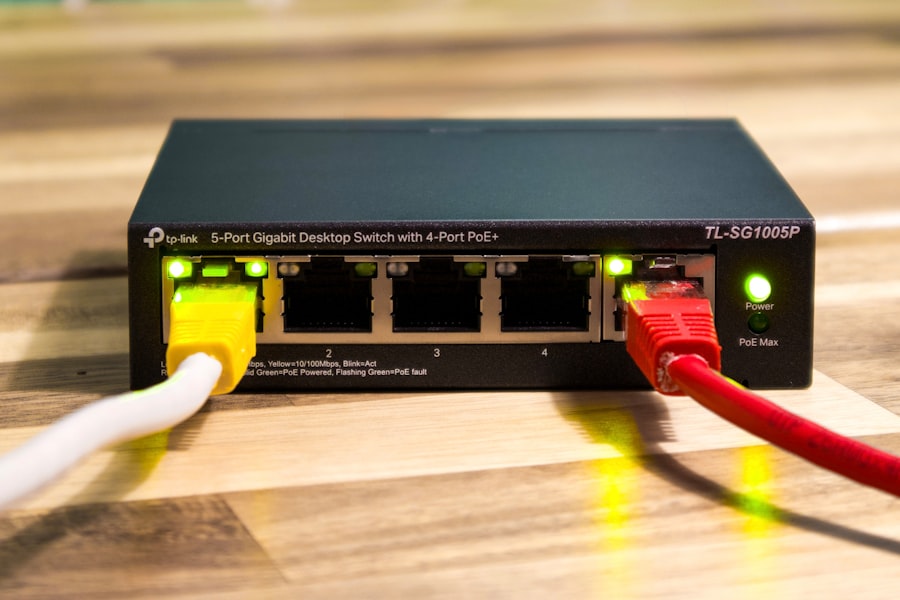

In today’s data-driven world, the ability to process and analyze information in real-time is a game-changer for businesses like yours. Ultra-low latency 5G networks facilitate this capability by enabling rapid data transmission from various sources, such as IoT devices and sensors. As you harness this technology, you can gain insights into your operations almost instantaneously, allowing for informed decision-making that can drive growth and efficiency.
For instance, consider how real-time data processing can enhance your marketing strategies. With ultra-low latency 5G, you can analyze customer behavior as it happens, enabling you to tailor your offerings and promotions on the fly. This level of responsiveness not only improves customer satisfaction but also increases your competitive edge in the market.
By leveraging real-time analytics powered by ultra-low latency 5G networks, you can make data-driven decisions that propel your business forward.
Enhancing Customer Experience with Ultra-Low Latency 5G Networks
| Metrics | Results |
|---|---|
| Latency Reduction | Less than 1 millisecond |
| Download Speed | Up to 10 Gbps |
| Network Reliability | 99.999% uptime |
| Improved Customer Satisfaction | Increased by 20% |
As a business owner or manager, you understand that customer experience is paramount to success. Ultra-low latency 5G networks can significantly enhance this experience by providing faster and more reliable services. Imagine a scenario where your customers can access your services without any delays—whether they are streaming content, making online purchases, or engaging with customer support.
This seamless interaction fosters loyalty and satisfaction, ultimately leading to increased revenue. Furthermore, ultra-low latency enables innovative customer engagement strategies that were previously unattainable. For example, augmented reality (AR) and virtual reality (VR) applications can thrive in an ultra-low latency environment, offering immersive experiences that captivate your audience.
Whether it’s virtual try-ons for retail or interactive training simulations for employees, the possibilities are endless. By embracing these technologies powered by ultra-low latency 5G networks, you can create memorable experiences that set your brand apart from the competition.
Improving Supply Chain Management and Logistics
In the realm of supply chain management and logistics, ultra-low latency 5G networks hold the potential to streamline operations significantly. As you navigate the complexities of inventory management and distribution, real-time data transmission becomes essential. With ultra-low latency capabilities, you can track shipments and inventory levels instantaneously, allowing for better forecasting and resource allocation.
Imagine being able to monitor your supply chain in real-time, identifying bottlenecks or delays as they occur. This level of visibility enables you to make proactive adjustments, ensuring that your operations run smoothly. Additionally, ultra-low latency facilitates communication between various stakeholders in the supply chain, from suppliers to distributors.
By fostering collaboration through instantaneous data sharing, you can enhance overall efficiency and reduce costs.
Ultra-Low Latency 5G Networks and Remote Work


The rise of remote work has transformed how businesses operate, and ultra-low latency 5G networks are poised to further enhance this trend. As you adapt to a more flexible work environment, the need for reliable connectivity becomes increasingly important. Ultra-low latency ensures that remote employees can access company resources without experiencing frustrating delays or interruptions.
Moreover, with ultra-low latency 5G networks, remote collaboration tools become more effective. Video conferencing platforms can deliver high-quality audio and video without lag, making virtual meetings feel more engaging and productive. This improvement in communication fosters a sense of connection among team members who may be working from different locations.
As you embrace remote work as a long-term strategy, investing in ultra-low latency 5G technology will be crucial for maintaining productivity and employee satisfaction.
Leveraging Edge Computing for Business Advantage
As you explore the capabilities of ultra-low latency 5G networks, it’s essential to consider the role of edge computing in maximizing their potential. Edge computing involves processing data closer to its source rather than relying solely on centralized cloud servers. This approach minimizes latency further by reducing the distance data must travel before being processed.
By leveraging edge computing alongside ultra-low latency 5G networks, you can achieve unprecedented levels of efficiency in your operations. For instance, in industries such as manufacturing or healthcare, where real-time data processing is critical, edge computing allows for immediate analysis and response. This synergy between edge computing and ultra-low latency 5G creates a powerful framework for innovation that can drive your business forward.
Securing Business Operations with Ultra-Low Latency 5G Networks
As with any technological advancement, security remains a top concern for businesses like yours when adopting ultra-low latency 5G networks. The rapid transmission of data presents unique challenges in terms of safeguarding sensitive information from cyber threats. However, advancements in security protocols are evolving alongside 5G technology to address these concerns.
With ultra-low latency 5G networks, you can implement robust security measures that protect your data while maintaining high-speed connectivity. Encryption techniques and advanced authentication methods can be employed to ensure that only authorized users have access to critical information. By prioritizing security in your adoption of ultra-low latency 5G technology, you can mitigate risks while reaping the benefits of enhanced operational efficiency.
Industry-Specific Applications of Ultra-Low Latency 5G Networks
The versatility of ultra-low latency 5G networks allows for tailored applications across various industries. In healthcare, for example, real-time data transmission can enable remote surgeries or telemedicine consultations with minimal delay.
This capability not only enhances patient care but also expands access to medical expertise regardless of geographical barriers.
In the automotive industry, ultra-low latency is crucial for the development of autonomous vehicles that rely on instantaneous communication between vehicles and infrastructure. As you explore industry-specific applications of ultra-low latency 5G networks, you’ll find opportunities to innovate and improve processes within your sector.
Overcoming Challenges in Adopting Ultra-Low Latency 5G Networks
While the benefits of ultra-low latency 5G networks are compelling, challenges remain in their adoption. As you consider integrating this technology into your business operations, it’s essential to address potential hurdles such as infrastructure costs and compatibility with existing systems. Developing a clear strategy for implementation will be crucial in navigating these challenges effectively.
Additionally, educating your team about the capabilities and advantages of ultra-low latency 5G will be vital for successful adoption. By fostering a culture of innovation and adaptability within your organization, you can empower employees to embrace new technologies and leverage them for business growth.
Future Opportunities and Innovations in Ultra-Low Latency 5G Networks
Looking ahead, the future opportunities presented by ultra-low latency 5G networks are vast and exciting. As technology continues to evolve, you will likely witness innovations that further enhance connectivity and data processing capabilities. From advancements in AI-driven analytics to breakthroughs in smart city infrastructure, the possibilities are endless.
By staying informed about emerging trends and technologies related to ultra-low latency 5G networks, you can position your business at the forefront of innovation. Embracing these advancements will not only improve your operational efficiency but also enable you to deliver exceptional value to your customers in an increasingly competitive landscape. In conclusion, as you navigate the landscape of ultra-low latency 5G networks, it’s clear that this technology holds transformative potential for businesses across various sectors.
By understanding its implications on operations, customer experience, supply chain management, remote work, security measures, industry-specific applications, challenges in adoption, and future innovations, you can harness its power to drive growth and success in your organization.
In the rapidly evolving landscape of telecommunications, the article “5G and Beyond: The Impact of Ultra-Low Latency Networks on Business Applications” explores the transformative potential of next-generation networks on various industries. A related article that complements this discussion is “Green is the New Black: Building a Profitable, Planet-Friendly Business in 2025,” which can be found here. This article delves into how sustainable business practices are becoming increasingly vital, and how advancements in technology, such as 5G, can support eco-friendly innovations and operations, ultimately leading to a more sustainable future.
FAQs
What is 5G and Beyond?
5G and Beyond refers to the next generation of wireless technology that promises faster speeds, higher capacity, and ultra-low latency for mobile and internet-connected devices.
What is Ultra-Low Latency?
Ultra-low latency refers to the minimal delay in data transmission between a device and a network. In the context of 5G and Beyond, ultra-low latency networks aim to reduce the time it takes for data to travel from the device to the network and back, enabling real-time communication and response.
How will Ultra-Low Latency Networks Impact Business Applications?
Ultra-low latency networks will have a significant impact on business applications by enabling real-time data processing, improved customer experiences, and the development of new innovative services and products.
What are the Potential Business Applications of Ultra-Low Latency Networks?
Potential business applications of ultra-low latency networks include autonomous vehicles, remote surgery, virtual reality, augmented reality, smart manufacturing, and Internet of Things (IoT) devices.
How will Ultra-Low Latency Networks Benefit Businesses?
Ultra-low latency networks will benefit businesses by improving operational efficiency, enabling new revenue streams, enhancing customer engagement, and fostering innovation in various industries.