


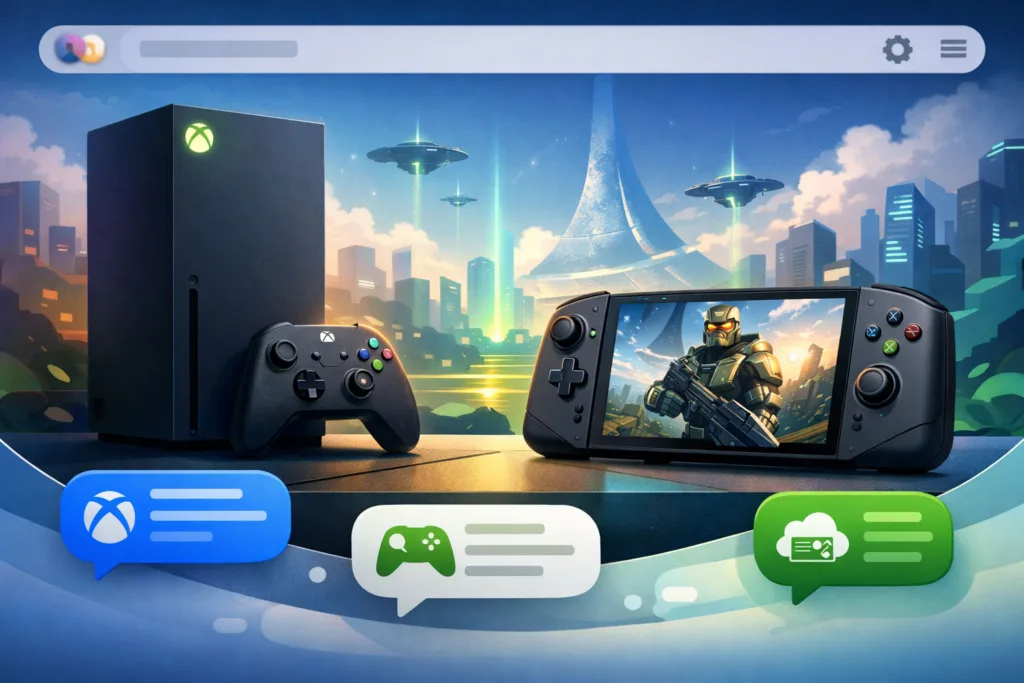
You’ve heard the whispers, the rumors that have been circulating in the hushed corridors of the tech world and the passionate forums of gaming communities. You’ve seen the leaks, the speculative designs, and the tantalizing hints dropped by industry insiders. Now, it’s time to peel back the layers and explore what’s believed to be Microsoft’s next ambitious endeavor: Project Helix.
For those unaware, Project Helix isn’t a product you can pick up off a shelf today. It’s a codename, a placeholder for a strategic initiative that appears to signal a significant evolution in Microsoft’s approach to gaming. While definitive official statements are scarce – a common tactic for companies exploring uncharted territory – the available information points towards a bold vision that aims to redefine how you interact with games, and how games are developed and delivered. At its core, Project Helix seems to be about breaking down traditional barriers, fostering greater accessibility, and leveraging the power of the cloud to deliver experiences that are more fluid, connected, and, frankly, more integrated into your digital life.
Shifting the Paradigm: Cloud Gaming at the Forefront
The most prominent aspect of Project Helix, according to the prevailing theories, is its deep integration with cloud gaming technologies. This isn’t merely about streaming games, though that’s a crucial component. It suggests a fundamental rethinking of the gaming infrastructure, where the heavy lifting of processing and rendering occurs on powerful remote servers, and you simply receive the output, be it on your console, PC, or even mobile devices. This has profound implications for the hardware you might need, the types of games that can be realized, and the very definition of a “gamer.” The aim appears to be to democratize high-end gaming, allowing a wider audience to participate in graphically intensive and complex gaming experiences without the need for expensive, cutting-edge hardware.
The Evolution of Xbox Cloud Gaming
Xbox Cloud Gaming has already made strides, but Project Helix is anticipated to take this to a whole new level. It’s not just about having a stable internet connection and playing a game remotely. It suggests a more ubiquitous and seamless experience, where the cloud is not an afterthought but an intrinsic part of the gaming DNA. This could involve features like instant game loading, seamless transitions between devices, and the ability to pick up a game exactly where you left off, regardless of the platform you’re using. The emphasis is on removing friction points that currently exist for many players, making the act of gaming as effortless as accessing any other digital media.
Network Infrastructure: The Unseen Backbone
For any ambitious cloud-based project to succeed, robust network infrastructure is paramount. Project Helix likely necessitates significant investment and optimization in this area. This includes not just Microsoft’s own data centers and cloud services, but potentially partnerships with internet service providers and advancements in network protocols. The goal is to minimize latency and maximize bandwidth, ensuring that the streamed visual information arrives at your screen with minimal delay, crucial for responsive gameplay, especially in fast-paced genres. You might not see this infrastructure directly, but its invisible strength will be the foundation upon which Project Helix stands.
Microsoft’s Xbox Project Helix has been generating buzz in the gaming community, particularly as it aims to enhance the integration of cloud gaming with traditional console experiences. For those interested in understanding the broader implications of strategic decision-making in technology, a related article discusses the hidden costs of strategic guesswork and offers insights on how to avoid them. You can read more about it here: The Hidden Costs of Strategic Guesswork. This article provides valuable context that can help inform discussions around the strategic choices made by companies like Microsoft in their gaming initiatives.
Cross-Platform Liberation: Breaking Down Silos
Another recurring theme associated with Project Helix is the concept of true cross-platform play. While Xbox has made efforts in this regard, Project Helix appears to be about expanding this to an unprecedented degree. The vision seems to be a world where the lines between Xbox consoles, PCs, and potentially mobile devices blur into a single, unified gaming ecosystem. This means that you can play with your friends, regardless of what device they are using, and your progress, achievements, and even in-game purchases are carried across all platforms. This breaks down the frustrating silos that have historically fragmented the gaming landscape and fosters a more inclusive and connected community.
Unified Player Identity and Progression
Imagine a scenario where your gamer tag and all your accumulated progress are not tied to a specific console generation or platform. Project Helix appears to be laying the groundwork for such a system. This unified player identity would allow you to maintain your gaming journey across a multitude of devices. Whether you start a game on your Xbox Series X, continue it on your Windows PC during your lunch break, and finish it on your tablet on the commute home, your experience would be consistent. This level of persistent progression and identity would fundamentally change how you approach gaming, offering a flexibility previously unimaginable.
Interoperability of Services and Content
Beyond player progression, Project Helix might also introduce greater interoperability of services and content. This could mean that digital purchases are no longer locked to a specific platform. If you buy a game on PC, you might be able to play it on your Xbox console with the same license, and vice versa. Similarly, in-game content and virtual currency could become transferable, reducing the perceived risk of investing in digital goods. This fosters a more consumer-friendly approach and strengthens the overall value proposition of the Xbox ecosystem.
A New Hardware Philosophy: The Evolution of the Console
The impact of Project Helix on hardware is a subject of much speculation. While it’s unlikely to signal the complete demise of dedicated consoles, it certainly suggests a re-evaluation of their role and design. Instead of a singular, monolithic console, we might see a tiered approach, with different devices catering to different needs and price points, all unified by the cloud services. This could mean more streamlined, cloud-centric console designs that rely heavily on streaming for their power, or perhaps a more evolutionary approach where existing hardware is augmented by cloud capabilities.
The “Smart” Console: Shifting Processing Power
The concept of a “smart” console, where the processing power is significantly offloaded to the cloud, is a strong possibility. This could lead to console designs that are more energy-efficient, less prone to overheating, and potentially more affordable. The hardware would still be necessary for input and output, but the intensive calculations and graphical rendering would happen elsewhere. This aligns with the broader tech industry trend of leveraging cloud computing for enhanced performance and functionality across a range of devices.
Peripheral Integration and Extended Ecosystem
Project Helix might also redefine how you interact with your gaming hardware through peripherals. With cloud gaming becoming more prevalent, the need for extensive local processing power within controllers or accessories might diminish. Instead, the focus could shift towards seamless integration with a wider array of devices, from smart glasses that provide augmented reality overlays to advanced haptic feedback systems that enhance immersion, all orchestrated by the cloud.
Software and Development: A Paradigm Shift for Creators
For game developers, Project Helix represents a monumental opportunity and a significant shift in their development paradigms. The ability to leverage powerful cloud-based infrastructure can unlock new creative possibilities, enabling the creation of more complex, expansive, and visually stunning game worlds. Furthermore, the cross-platform nature of Project Helix could streamline the development process, allowing studios to build and deploy games across multiple platforms from a single codebase.
Leveraging Cloud Infrastructure for Development
Developers could gain access to vast computational resources in the cloud for tasks such as asset rendering, simulation, and even AI training. This can significantly accelerate development cycles and allow for the creation of more ambitious projects that were previously infeasible due to hardware limitations. Imagine game worlds that react dynamically to player actions on a massive scale, or AI characters with unprecedented levels of realism and complexity – these are the kinds of possibilities that cloud-powered development could unlock.
Streamlined Cross-Platform Development and Deployment
The promise of a unified platform for development and deployment could be a significant boon for studios of all sizes. Instead of managing separate development pipelines for different consoles and PC, developers could focus on building a single game that natively scales across the entire Project Helix ecosystem. This could lead to faster release cycles, more consistent experiences across platforms, and a more efficient use of development resources.
Microsoft’s Xbox Project Helix is generating significant buzz in the gaming community as it aims to enhance the gaming experience through advanced cloud technology. This initiative aligns with the growing trend of edge computing, which is crucial for building reliable systems that support IoT and AI applications. For a deeper understanding of how these technologies are intertwined, you can read more in this insightful article on edge computing. As Project Helix continues to evolve, it will be interesting to see how it leverages these advancements to redefine gaming.
The Future of Gaming Accessibility and Engagement
Ultimately, Project Helix seems to be about making gaming more accessible and engaging for a broader audience. By reducing the reliance on expensive hardware and breaking down platform barriers, Microsoft aims to bring more people into the fold. This could translate into a more diverse player base, a healthier and more vibrant gaming economy, and a future where the joy of gaming is not limited by your financial resources or the specific device you own.
Reducing Hardware Barriers to Entry
The most immediate impact for consumers could be the significant reduction in the hardware barriers to entry. Instead of needing to purchase expensive consoles or high-end PCs, you might be able to access a vast library of games through a more affordable subscription service, using devices you already own. This democratizes access to AAA gaming experiences, making them available to a much wider demographic.
Fostering a More Inclusive Gaming Community
By enabling seamless cross-platform play and progression, Project Helix has the potential to foster a more inclusive and connected gaming community. Friends can play together regardless of their preferred platform, and new players can easily join existing communities without feeling excluded due to hardware limitations. This shared experience is fundamental to the growth and evolution of gaming as a social medium.
While the full scope and realization of Project Helix remain to be seen, the underlying principles point towards a transformative vision for the future of gaming. It’s an endeavor that, if successful, could redefine your relationship with interactive entertainment, making it more fluid, more connected, and more accessible than ever before. As the pieces of this ambitious puzzle continue to emerge, you’ll be on the front lines, experiencing the evolution firsthand.
FAQs
What is Microsoft Xbox Project Helix?
Microsoft Xbox Project Helix is a rumored upcoming gaming console from Microsoft. It is said to be the next generation Xbox console, following the Xbox Series X.
What are the expected features of Microsoft Xbox Project Helix?
The expected features of Microsoft Xbox Project Helix are still largely speculative, but it is rumored to have improved hardware capabilities, better graphics, faster load times, and potentially new gaming experiences.
When is Microsoft Xbox Project Helix expected to be released?
As of now, there is no official release date for Microsoft Xbox Project Helix. It is still in the rumor stage, and Microsoft has not confirmed any details about the console.
How will Microsoft Xbox Project Helix differ from the current Xbox consoles?
Microsoft Xbox Project Helix is expected to differ from the current Xbox consoles in terms of hardware capabilities, performance, and potentially new features that have not been seen in previous Xbox models.
Where can I find official updates and announcements about Microsoft Xbox Project Helix?
Official updates and announcements about Microsoft Xbox Project Helix can be found on Microsoft’s official website, as well as through their official social media channels and press releases.