


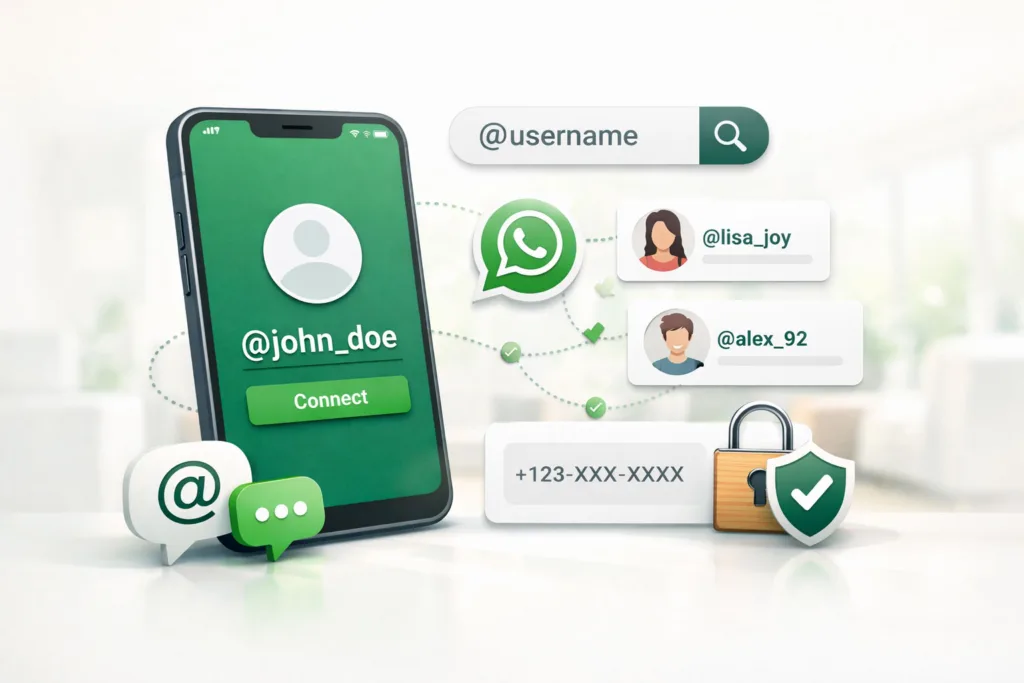
You’ve likely heard the buzz, or perhaps observed the slow rollout within your own WhatsApp interface. A significant shift is underway, one that redefines how you initiate contact and manage your privacy on the platform. WhatsApp, long anchored to your phone number as your primary identifier, is introducing usernames. This isn’t just another incremental update; it’s a fundamental change to its core interaction model, addressing a persistent user concern and bringing the service more in line with the privacy features offered by other popular messaging apps.
This new feature allows you to select a unique identifier, distinct from your mobile number, which others can use to find and message you. For many, this represents a welcome evolution, offering a layer of separation between your digital communication and your personal contact information.
For years, the reliance on phone numbers as the sole means of identification on WhatsApp has been a point of contention for users prioritizing privacy. Every new contact, every group chat invitation, every business interaction necessitated the exchange of a personal phone number. This often led to concerns about data leakage, unwanted solicitations, and the general discomfort of broadly distributing a piece of personal data inextricably linked to broader aspects of your digital life.
Addressing Direct Phone Number Exposure
Consider the scenarios where you might hesitate to share your phone number: a casual acquaintance from a social gathering, a potential client, a fleeting interaction in an online community. In each case, sharing your phone number often felt like an overcommitment, an unnecessary disclosure for a potentially brief or low-stakes interaction. The new username feature directly mitigates this.
Mitigating Third-Party Data Collection Risks
Your phone number is a sensitive piece of data. It’s frequently used as a primary key for accounts across numerous services, making it a valuable target for data brokers and those seeking to compile comprehensive user profiles. By abstracting your identity behind a username, you create an additional barrier, reducing the direct exposure of your phone number to individuals and, consequently, to potential wider data collection efforts.
Enhancing Control Over Your Digital Footprint
With a phone number, you have limited control over who accesses it once it’s shared. It can be saved, shared further, or even found through reverse lookup services. Usernames afford you a greater degree of control. If an interaction sours, or if you simply wish to sever a digital tie without blocking a “known” number, a username offers a less permanent and more flexible option. You can change your username, making it harder for unwanted contacts to persistently track you.
In light of WhatsApp’s recent introduction of the username feature, which allows users to connect without sharing their phone numbers, it’s interesting to consider how this shift in privacy and connectivity mirrors broader trends in digital communication. For a deeper exploration of how taking unconventional stances can resonate with audiences in the digital age, you might find this article insightful: The Counter Narrative: Why Taking an Unpopular Stance Can Win You an Audience.
How Usernames Will Function: A Practical Guide
Understanding the mechanics of this new feature is crucial for its effective utilization. The implementation is designed to be straightforward, ensuring a smooth transition for existing users while offering clear pathways for new ones.
Choosing Your Unique Identifier
Upon activation of the feature, you will be prompted or actively seek the option to create a username. This username must be unique across the entire WhatsApp ecosystem, meaning no two users can share the same handle. This uniqueness ensures that when someone searches for a username, there is no ambiguity about the intended recipient.
Character Limitations and Availability
Like most username systems, there will be specific rules governing character types (alphanumeric, underscores, periods) and length constraints. You will need to consider these limitations when crafting your chosen identifier. Early adoption may grant you access to more concise and desirable usernames.
The “First Come, First Served” Principle
As with any limited resource, the availability of specific usernames will likely operate on a “first come, first served” basis. If you have a preferred username in mind, it would be prudent to secure it as soon as the feature becomes broadly available to your account.
Sharing Your Username and Establishing New Connections
Once you have a username, the process of connecting with others becomes more flexible. You can share your username verbally, in text, or via a shareable link that directly initiates a chat with you.
Direct Search Capability
Other users will be able to search for you within WhatsApp by entering your username into a designated search bar. This circumvents the need to have your phone number already saved in their contacts list.
Shareable Profile Links
WhatsApp is expected to introduce shareable links tied to your username. Clicking on this link directly opens a chat window with you, streamlining the connection process for scenarios like social media profiles, email signatures, or event invitations.
Coexistence with Phone Numbers: Not a Replacement
It’s important to clarify that usernames are an addition to, not a replacement for, your phone number. Your phone number will continue to serve as your primary account identifier and the default method of contact for individuals who already have it. The username provides an alternative pathway for new connections, particularly when privacy or anonymity are desired.
Your Phone Number Remains Attached
Even with a username, your WhatsApp account will still be fundamentally linked to your registered phone number. This is crucial for account recovery, multi-device linking, and the underlying security infrastructure of the platform.
Existing Contacts Remain Unaffected
All your existing chats and contacts that were established using phone numbers will continue to function precisely as they always have. The introduction of usernames does not retroactively change their connection method.
Benefits for Specific User Groups


While the privacy advantages are broad, the username feature offers particularly salient benefits for certain segments of the WhatsApp user base.
For Freelancers and Small Businesses
Many freelancers and small businesses use WhatsApp for customer communication. Previously, this meant distributing a personal or dedicated business phone number widely. With usernames, they can maintain a professional presence without exposing their direct contact information.
Professional Anonymity and Boundary Setting
A freelancer can share their WhatsApp username on their portfolio or website, inviting inquiries without immediately giving away their personal number. This creates a more distinct boundary between their personal and professional life.
Streamlined Customer Onboarding
For services that require quick, informal communication, a username offers a simpler way for potential clients to initiate contact. They no longer need to save a number to their phone before sending a message.
For Online Communities and Social Groups
Participating in online forums, gaming communities, or special interest groups often involves interacting with people you don’t know personally. Sharing your phone number in these contexts can be a significant privacy risk.
Facilitating Casual Connections
You can now participate in a temporary group, share a username, and engage in specific discussions without the larger privacy implication of sharing your phone number with every member.
Reducing Spam and Unwanted Contact
In open group settings, your phone number could previously be easily extracted by any member. Usernames curtail this exposure, reducing the likelihood of receiving unsolicited messages or calls from group participants outside of the group context.
For Individuals Prioritizing Enhanced Privacy
For individuals who are highly conscious of their digital footprint and wish to limit the distribution of their personal data, usernames represent a significant step forward.
Controlled Disclosure of Personal Information
You gain greater control over who has access to your phone number. You can reserve your phone number for close friends and family, while using your username for all other casual or less intimate connections.
Mitigating Cyberstalking Risks
While not a complete solution, having a distinct username that isn’t tied to publicly available phone directories can add a layer of protection against certain forms of cyberstalking, where phone numbers are used as primary identifiers.
Potential Challenges and Considerations


While the benefits are considerable, the introduction of any major feature brings with it potential challenges and considerations that you should be aware of.
The Problem of Username Squatting
As with any system relying on unique identifiers, “username squatting”—where individuals register desirable usernames with the intent of selling them or holding them hostage—is a potential concern.
Brand and Identity Protection
Businesses and public figures may need to proactively secure their brand-aligned usernames to prevent others from claiming them. This could necessitate a system for verified accounts or early registration windows.
Generic vs. Personalized Usernames
The most desirable and easily memorable usernames are likely to be claimed quickly. You may need to be creative or embrace a more personalized (and potentially longer) username.
User Education and Adoption Rates
The success of the feature hinges on widespread user understanding and adoption. WhatsApp will need to effectively communicate how usernames work and their associated benefits.
Bridging the Knowledge Gap
Some users may be slow to adopt the feature, preferring the familiar phone number method. Education campaigns will be crucial to ensure a smooth transition and maximize utility.
Interoperability with Previous Connection Methods
You will need to understand when to share your phone number versus your username, and how these two connection methods interact within your contact list.
Security Implications and Abuse Prevention
While designed to enhance privacy, new features can also present new avenues for abuse if not carefully managed. WhatsApp will need to be vigilant in monitoring and addressing potential misuse.
Reporting and Blocking Mechanisms
Robust reporting and blocking features will be essential for users to manage unwanted contact initiated via usernames, similar to how they manage phone number-based interactions.
Verification of Usernames
WhatsApp may need to consider mechanisms for verifying usernames, especially for official accounts or public figures, to prevent impersonation.
In light of WhatsApp’s recent introduction of the username feature, which allows users to connect without sharing their phone numbers, it’s interesting to explore how privacy measures are evolving across various platforms. For instance, a related article discusses the challenges faced by cybersecurity professionals in the age of AI, particularly in defending against deepfake ransomware. You can read more about this pressing issue in the article found here. This highlights the broader implications of privacy and security in our increasingly digital interactions.
The Broader Context: WhatsApp’s Evolving Privacy Stance
| Feature | Details |
|---|---|
| Feature Name | WhatsApp Username Feature |
| Purpose | Connecting without sharing phone numbers |
| Functionality | Allows users to create a unique username to connect with others |
| Privacy | Enhances privacy by not requiring phone numbers to connect |
The introduction of usernames is not an isolated event but rather part of a larger trend within WhatsApp to enhance user privacy and control, reflecting ongoing industry shifts and user demands.
Aligning with Modern Messaging App Practices
Many contemporary messaging apps, such as Telegram and Signal, have long offered username-based identification. WhatsApp’s move brings it closer in feature parity with these competitors, addressing a long-standing differentiator.
User Expectations for Privacy Features
Users are increasingly demanding more sophisticated privacy controls from their communication platforms. WhatsApp’s response indicates an awareness of these evolving expectations.
Adapting to a Diverse Global User Base
With billions of users globally, WhatsApp needs to cater to a wide range of privacy preferences and cultural norms regarding the sharing of personal contact information. Usernames offer greater flexibility in this regard.
Reinforcing End-to-End Encryption
While usernames address identity exposure, it’s worth reiterating that WhatsApp’s core communication remains protected by end-to-end encryption. This means that even with a username, the content of your messages remains private between you and the recipient.
Distinct Layers of Privacy
Usernames offer a layer of identity privacy, while end-to-end encryption offers a layer of content privacy. These two features work in conjunction to provide a more comprehensive privacy framework.
Meta’s Broader Privacy Strategy
This development can also be viewed within Meta’s broader strategy to enhance privacy features across its suite of applications, potentially laying groundwork for future cross-platform communication initiatives while maintaining user trust.
In conclusion, WhatsApp’s username feature marks a significant evolution in how you connect and interact on the platform. It offers a tangible improvement in privacy by decoupling your direct phone number from many common communication scenarios. While some challenges related to adoption and potential misuse will need to be navigated, the overall direction points towards a more flexible, private, and user-centric messaging experience. You now have another tool in your arsenal to manage your digital identity and connections on one of the world’s most widely used communication services.
FAQs
What is the new username feature introduced by WhatsApp?
The new username feature introduced by WhatsApp allows users to create a unique username that can be used for connecting with others without sharing their phone numbers.
How does the username feature work on WhatsApp?
Users can create a username in the settings of their WhatsApp account, which can then be shared with others for connecting. This username will be unique to each user and can be used to search and connect with others on the platform.
What are the benefits of using the username feature on WhatsApp?
The username feature on WhatsApp provides users with an added layer of privacy and security, as they can connect with others without sharing their phone numbers. It also makes it easier to connect with new contacts and eliminates the need to exchange phone numbers for communication.
Can users still connect using phone numbers on WhatsApp?
Yes, users can still connect using phone numbers on WhatsApp. The username feature is an additional option for connecting with others on the platform, but users can continue to use phone numbers for communication as well.
Is the username feature available to all WhatsApp users?
The username feature is gradually being rolled out to all WhatsApp users, so it may not be available to everyone immediately. Users can check their app settings to see if the feature is available for them.