


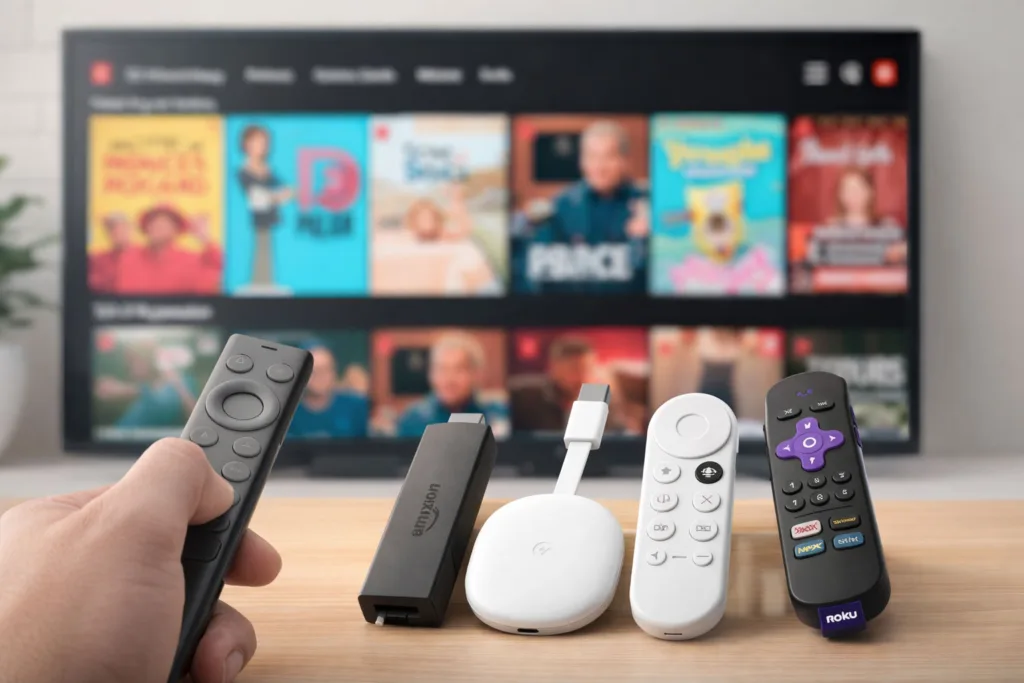
You’ve likely found yourself in a familiar predicament: you’ve invested in a brand-new television, perhaps a sleek 4K marvel, only to discover its integrated operating system (OS) falls short of your expectations. It’s sluggish, lacks critical applications, or features a user interface that feels distinctly dated. This is where the unassuming smart TV dongle enters the arena, often outperforming the very systems built into your expensive display. Your initial reaction might be to chalk it up to a momentary annoyance, but as you delve deeper, you’ll uncover a compelling argument for external streaming devices.
When you switch on your new Smart TV, you expect a pristine, efficient operating environment. What you frequently encounter instead is a clunky, pre-loaded system rife with applications you’ll never use. This “bloatware” isn’t merely an aesthetic nuisance; it actively degrades your user experience.
Pre-Installed Annoyances
Imagine purchasing a new computer that comes with a dozen unwanted programs running in the background, consuming valuable resources. That’s often the reality of Smart TV operating systems. Manufacturers often strike deals with various content providers or app developers to include their offerings by default.
- Resource Depletion: Each pre-installed application, whether you intend to use it or not, occupies storage space and can consume system memory. This overhead slows down the OS, making navigation feel less responsive and launching desired applications take longer.
- Irremovable Clutter: Many of these pre-installed apps cannot be uninstalled. You’re left with their icons cluttering your home screen and their background processes potentially draining system performance. Dongles, conversely, offer a clean slate, allowing you to install only what you need.
Optimized for Stripped-Down Performance
Dongles don’t carry the baggage of having to cater to dozens of hardware configurations. They are purpose-built, and this singular focus translates into a highly optimized operating environment.
- Leaner Operating Systems: Streaming dongles typically run pared-down versions of popular operating systems like Android TV or Fire OS. These are designed for media consumption, not for managing a complex array of television functionalities. This specialization allows them to run significantly faster on less powerful hardware than a television’s integrated system.
- Dedicated Hardware Integration: The hardware and software within a dongle are designed to work in perfect concert. TV manufacturers, conversely, often buy various components from different suppliers and then try to integrate them all under a single, generic OS. This haphazard approach can lead to inefficiencies and compatibility issues that you won’t encounter with a specialized dongle.
In exploring the advantages of smart TV dongles compared to traditional TV operating systems, it’s interesting to consider the broader implications of technology in our daily lives. For a deeper understanding of how marketing strategies influence consumer choices in the tech industry, you might find the article on marketing insights on Wasif Ahmad’s website particularly enlightening. You can read more about it here: Marketing Insights.
Longevity and Future-Proofing: A Perpetual Upgrade Cycle
Your smart TV is a significant investment. You expect it to last for many years. However, its integrated operating system often has a significantly shorter lifespan in terms of software support and feature updates. This disparity creates a crucial advantage for dongles.
The Stagnation of Integrated Systems
Manufacturers are in the business of selling new televisions. There is limited incentive for them to perpetually update the operating systems of older models when doing so doesn’t directly drive new sales.
- Limited Software Updates: After a year or two, many smart TV OS platforms receive infrequent, if any, substantial software updates. This means you miss out on new features, security patches, and performance improvements that are standard on dedicated streaming devices.
- App Compatibility Issues: As developers update their applications, they might cease supporting older versions of TV operating systems. You could find popular streaming services becoming inaccessible on your television long before the display itself is obsolete. Dongles, by contrast, are continuously updated by their respective manufacturers, ensuring broad app compatibility.
The Dongle’s Adaptability Quotient
A dongle is a relatively inexpensive component that you can easily swap out. This inherent modularity provides a powerful avenue for future-proofing your home entertainment setup.
- Cost-Effective Upgrades: When a new streaming technology emerges, a next-generation dongle with enhanced capabilities (e.g., higher processing power, new codec support, updated Wi-Fi standards) can be purchased for a fraction of the cost of a new television. You simply plug in the new device, and your TV immediately gains advanced functionality.
- Embracing New Standards: As new video codecs, audio formats, or Wi-Fi standards become prevalent, a dongle is far more likely to support them sooner. Your television’s integrated system might never receive support for these advancements, forcing you to rely on external devices anyway.
Interface and User Experience: Navigational Superiority

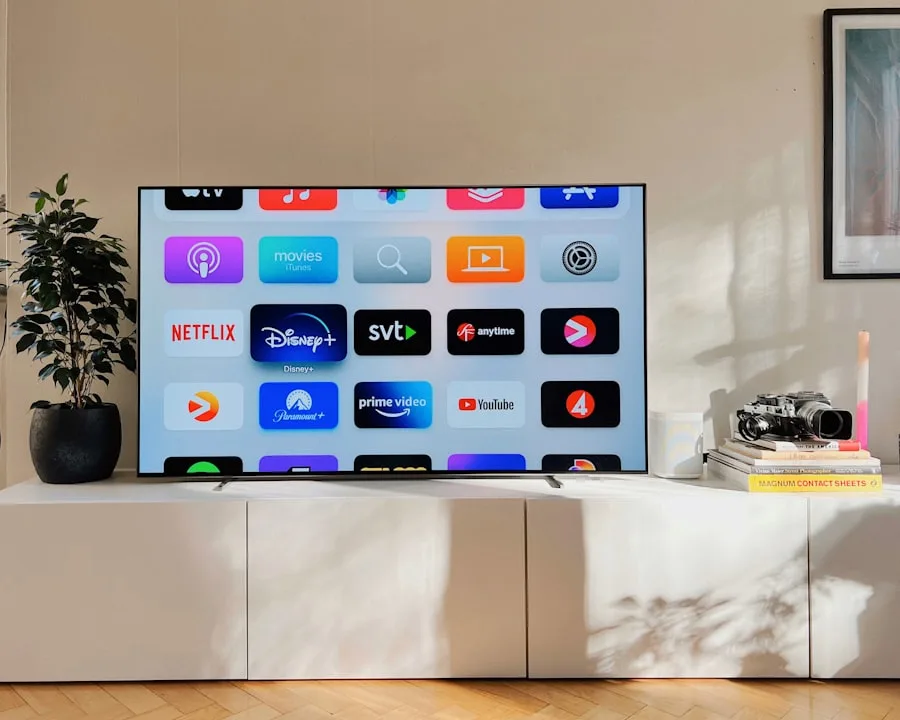
A streaming device’s efficacy is directly tied to the ease with which you can navigate its interface and access your desired content. Here, dongles frequently outshine integrated TV operating systems.
Clunky, Unintuitive TV Interfaces
Many television manufacturers prioritize form over function when it comes to their integrated OS interfaces. The result is often a visually appealing but functionally cumbersome system.
- Inconsistent Design Language: Without a unified design philosophy, TV OS interfaces can feel disjointed. Different sections or apps might have their own unique navigation schemes, adding to user frustration.
- Advertisements and Promotions: A growing trend among TV manufacturers is to integrate advertisements and promotional content directly into their home screens. This can interrupt your experience and detract from the premium feel of your device. Dongles, particularly those from companies focused solely on media consumption, often offer a cleaner, ad-free interface.
- Limited Customization: You are often stuck with the layout and organization dictated by the TV manufacturer. Personalization options are minimal, making it difficult to tailor the experience to your preferences.
The Streamlined Dongle Experience
Dedicated dongle manufacturers, having honed their craft for years, understand the nuances of media consumption. Their interfaces are typically a masterclass in clarity and efficiency.
- Unified and Intuitive Navigation: Companies like Roku, Google (with Android TV/Google TV), and Amazon (with Fire OS) have invested heavily in creating streamlined, user-friendly interfaces. Their designs are consistent across different applications and menus, making it easy for you to find what you want quickly.
- Voice Control Integration: High-quality voice control is a standard feature on most modern dongles. You can search for content, launch apps, and even control playback with simple spoken commands. While some smart TVs offer voice control, it’s often less refined and less accurate than what you find on dedicated streaming devices.
- Personalization Options: Dongles often provide extensive customization options, allowing you to rearrange apps, manage watchlists, and personalize recommendations. This level of control empowers you to create an entertainment hub that genuinely reflects your viewing habits.
App Ecosystem and Performance: A Wider, Faster Access Point

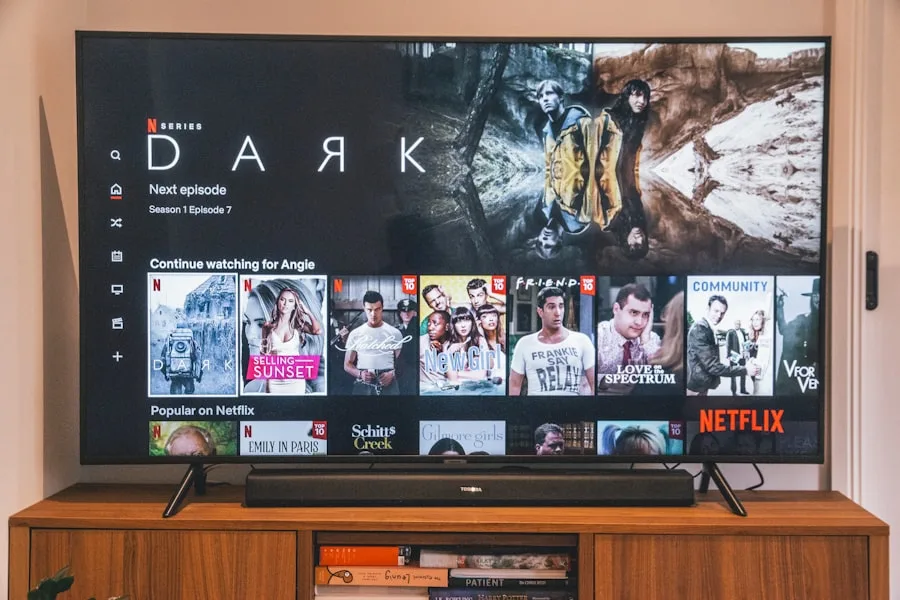
The true value of a smart TV, or any streaming device, lies in its ability to access a broad and diverse range of applications. In this crucial area, dongles typically possess a significant advantage.
Restricted and Slow TV App Stores
The app stores on smart TVs can often feel like a digital wasteland compared to the vibrant ecosystems found on dedicated streaming devices.
- Limited App Availability: TV manufacturers often have a more difficult time securing partnerships with every niche streaming service or specialized application. You might find gaps in their offerings, particularly for international content or specific hobby-related apps.
- Outdated App Versions: Even when an app is available, the version on your TV’s OS might be outdated, lacking features present in newer iterations on other platforms. This is partly due to the slower update cycles mentioned previously.
- Subpar App Performance: Applications running on integrated TV operating systems frequently exhibit sluggishness, freezing, and crashes. The underlying hardware might not be powerful enough, or the OS itself might be poorly optimized for these applications. You experience frustrating delays and interruptions to your viewing experience.
Dongles: The Powerhouses of Connectivity
Dongles are designed from the ground up to be media consumption powerhouses, offering a superior app experience in almost every regard.
- Broader App Libraries: Platforms like Android TV, Fire OS, and Roku OS boast extensive app libraries, encompassing virtually every major streaming service and countless niche applications. If it exists as a streaming app, it’s almost certainly available on a popular dongle.
- Faster App Updates and New Features: Dongle manufacturers work closely with app developers to ensure their platforms receive timely updates, bringing you the latest features and bug fixes. You are always experiencing the freshest version of your favorite streaming applications.
- Superior Processing Power: Despite their small size, many premium dongles pack impressive processing power, dedicated graphics chips, and ample RAM. This hardware ensures smooth, responsive application performance, fast loading times, and fluid navigation, even when streaming high-bandwidth 4K HDR content. You simply won’t encounter the frustrating lags and stutters common on integrated TV systems.
- Advanced Networking Capabilities: Dongles often feature more robust Wi-Fi antennas and support for the latest Wi-Fi standards (Wi-Fi 6, Wi-Fi 6E), ensuring a stable and fast connection, which is paramount for high-quality streaming. Some also offer Ethernet adapters for an even more reliable wired connection.
In exploring the advantages of smart TV dongles compared to traditional TV operating systems, it’s interesting to consider how technology is evolving across various domains. For instance, the concept of composable enterprises highlights the importance of flexibility and agility in business, which can be paralleled in the way smart TV dongles offer users a more adaptable viewing experience without the constraints of pre-installed software. This approach allows for a more streamlined and user-friendly interface, similar to the principles discussed in the article on building business agility. By focusing on ease of use and customization, smart TV dongles can enhance the overall entertainment experience.
Troubleshooting and Reliability: The Simplicity of Isolation
| Benefits | Smart TV Dongles | TV Operating Systems |
|---|---|---|
| Easy Setup | Simple plug and play | May require initial configuration |
| Portability | Can be easily moved between TVs | Dependent on TV with built-in OS |
| Cost-Effective | Generally more affordable | May require purchasing a new TV |
| Updates | Regular software updates | Dependent on TV manufacturer |
| App Compatibility | Access to wide range of apps | May have limited app store |
When something goes wrong with your smart TV, diagnosing the problem can be a convoluted process. Is it the internet connection? The specific app? Or the TV’s operating system itself? Dongles offer a simpler, more robust solution when issues arise.
The Conflation of Smart TV Issues
The integrated nature of a smart TV operating system means that problems can be intertwined, making it difficult to isolate the root cause. This complexity can lead to increased downtime and frustration.
- Ambiguous Error Messages: You might encounter generic error messages that don’t point to a specific problem. Is your TV’s Wi-Fi module malfunctioning, or is the Wi-Fi driver in the OS corrupted? Without advanced diagnostics, you’re left guessing.
- Complex Reset Procedures: Resetting your smart TV to factory settings, a common troubleshooting step, often means losing all your personalized settings, downloaded apps, and login credentials. It’s a significant inconvenience to resolve a potentially minor issue.
- Software Glitches Affecting Basic TV Functions: In some unfortunate cases, a bug in the TV’s OS might affect fundamental functions, like switching inputs, adjusting settings, or even controlling the volume. Your “smart” features are effectively holding your core TV functionality hostage.
Dongles: The Clear-Cut Problem Solver
The external nature of a dongle simplifies troubleshooting significantly. When an issue crops up, the potential culprits are fewer and easier to identify.
- Isolation of Problems: If your dongle isn’t working, you know the problem is almost certainly with the dongle itself, its power supply, or the HDMI connection. The television’s functionality remains separate and unaffected. This makes diagnosing the problem straightforward.
- Easy Replacement or Reset: If a dongle malfunctions beyond repair, or if a factory reset is necessary, the device itself is inexpensive to replace. This process does not impact your television. You can be up and running again in minutes without having to recalibrate your TV display or re-enter dozens of passwords for various services.
- Minimal Impact on Core TV Functions: A malfunctioning dongle simply means you cannot access its streaming features. Your television will continue to function as a display, allowing you to watch broadcast TV, use other inputs (like a gaming console), or utilize a different streaming device. The failure of one component does not cripple the entire system.
In conclusion, while the allure of an integrated smart TV operating system is understandable – the promise of an all-in-one entertainment hub – the practical realities often diverge from this ideal. The constrained resources, limited update cycles, cluttered interfaces, and often sluggish performance of integrated systems pale in comparison to the focused efficiency, longevity, and superior user experience offered by dedicated smart TV dongles. When you evaluate your options, you will find that a dongle provides a more robust, adaptable, and ultimately satisfying path to your streaming content.
FAQs
What are smart TV dongles?
Smart TV dongles are small devices that can be plugged into a TV’s HDMI port to enable the TV to access online content and streaming services. They typically run on their own operating system and come with pre-installed apps for popular streaming services.
What are the benefits of smart TV dongles over TV operating systems?
Smart TV dongles offer several benefits over TV operating systems, including ease of use, portability, and the ability to access a wide range of streaming services without the need for additional installations or updates.
Do smart TV dongles require Android or sideloading of apps?
No, smart TV dongles do not require Android or sideloading of apps. They come with their own operating system and pre-installed apps for popular streaming services, making them easy to set up and use without the need for additional installations.
Do smart TV dongles require the installation of apps?
No, smart TV dongles do not require the installation of apps. They come with pre-installed apps for popular streaming services, allowing users to access online content without the need for additional installations or updates.
What are some popular smart TV dongles on the market?
Some popular smart TV dongles on the market include Amazon Fire TV Stick, Roku Streaming Stick, and Google Chromecast. These devices offer a range of features and capabilities for accessing online content and streaming services on a TV.