


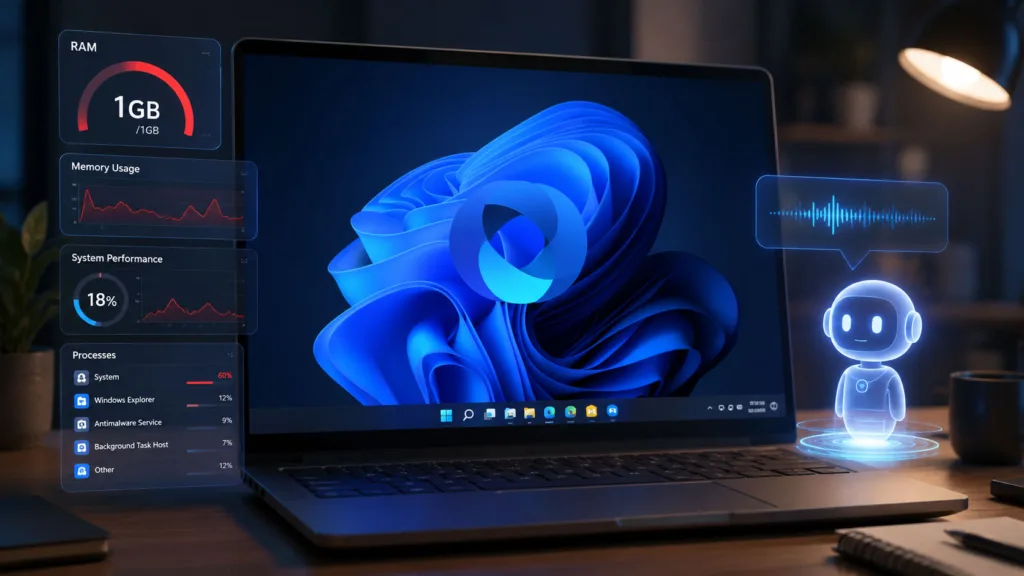
You’re probably familiar with the frustration: your Windows 11 PC, once a speedy workhorse, now chugs along like a tired ox. Every click feels like trudging through treacle, and opening a new application feels like an archaeological dig. You’ve heard of Copilot, the AI assistant, but can it really help you diagnose the root of these slowdowns, especially if you’re operating with a seemingly meager 1GB of RAM? Let’s dive in and see how Copilot can be your digital detective in this low-resource environment.
Let’s be brutally honest from the outset: running Windows 11 with only 1GB of RAM is an uphill battle. Microsoft generally recommends at least 4GB of RAM for a smooth experience, and 8GB or more for anything beyond basic browsing. So, if you’re working with 1GB, you’re already in a compromised position. This isn’t to say it’s impossible, but it means every byte counts, and every background process is a potential saboteur.
Why 1GB is a Problematic Baseline
- Operating System Overhead: Windows 11 itself consumes a significant portion of your RAM just to run its core processes, graphical interface, and essential services. This leaves very little headroom for user applications.
- Modern Application Demands: Contemporary web browsers, office suites, and communication tools are resource-hungry. Each open tab in Chrome or Edge can easily gobble up hundreds of megabytes.
- Virtual Memory Reliance: With insufficient physical RAM, your system heavily relies on virtual memory (paging file), which uses slower disk space. This constant swapping between RAM and disk is a primary cause of slowdowns.
- Multitasking Impossible: Forget about running more than one or two simple applications simultaneously. Each new program will tax your already overwhelmed memory.
The Trade-offs of a Low-RAM System
You’re constantly making performance compromises. Expect longer load times, stuttering animations, and applications freezing or crashing. Your overall user experience will be significantly degraded, making even basic tasks feel laborious.
Windows 11 Copilot has introduced a new feature that helps users identify what is slowing down their PCs, all while utilizing just 1GB of RAM itself. This innovative tool not only enhances system performance but also provides insights that can help users optimize their computing experience. For those interested in exploring more about technology and software alternatives, you might find this article on top open-source alternatives to popular SaaS apps in 2025 insightful. Check it out here: top 5 open-source alternatives to popular SaaS apps in 2025.
Introducing Copilot: Your AI Performance Assistant
Copilot, integrated directly into Windows 11, isn’t just for writing emails or generating images. It can be a powerful tool for system diagnosis, especially when you know what to ask and how to interpret its responses. Think of it as a conversational interface to your PC’s inner workings.
Your First Steps with Copilot
- Accessing Copilot: Simply press
Win + Cor click the Copilot icon on your taskbar. - Understanding its Limitations: Copilot is an AI; it doesn’t magically fix your PC. It analyzes data, provides insights, and suggests actions. You still need to implement those suggestions.
- Privacy Considerations: Be mindful of what information you share with Copilot, especially if it asks to access system logs or personal files (though for performance diagnosis, this is often necessary and safe).
Crafting Effective Prompts
The key to getting useful information from Copilot is asking the right questions. Don’t just say “My PC is slow.” Be specific. This is where you leverage its natural language understanding.
Diagnosing Slowdowns with Copilot: A Step-by-Step Guide

Now, let’s get practical. You’re going to use Copilot to pinpoint exactly what’s eating up your precious 1GB of RAM and causing your system to grind to a halt.
Step 1: Initial System Health Check
Before diving deep, get a general overview of your system’s state. This helps establish a baseline.
- Prompting Copilot:
- “Hey Copilot, what’s my current RAM usage?”
- “Can you show me a summary of my system resources?”
- “Is my CPU usage high right now?”
- Interpreting Copilot’s Response:
- Copilot will likely report your RAM usage as very high, possibly close to 100%. This is expected given your 1GB limitation.
- It might also show elevated CPU usage, as the system tries to compensate for memory pressure by doing more work with the CPU, leading to greater disk activity.
- Pay attention to any mentions of specific processes taking up significant resources.
Step 2: Identifying RAM-Hogging Applications
This is where you start to pinpoint the primary culprits. Your 1GB of RAM means every application is a potential suspect.
- Prompting Copilot:
- “Which applications are using the most RAM right now?”
- “List the top 5 memory-consuming processes.”
- “Are there any background apps consuming a lot of memory?”
- Interpreting Copilot’s Response:
- Copilot will likely list familiar names: your web browser (especially with many tabs), chat applications, older office suite versions, or even specific Windows services.
- It might also point out applications that are running in the background but aren’t actively being used.
- Actionable Insights:
- If Copilot points to your browser, consider using fewer tabs or switching to a more lightweight browser.
- If it’s an application you don’t actively use, close it immediately.
- Investigate if any startup apps are unnecessarily consuming resources – Copilot can help with this in the next step.
Step 3: Managing Startup Programs and Background Processes
Many applications launch automatically with Windows, quietly consuming resources before you even need them. These are prime targets for optimization.
- Prompting Copilot:
- “Can you help me manage my startup applications?”
- “Which programs launch automatically with Windows and use a lot of memory?”
- “Are there any unnecessary background processes I can disable?”
- Interpreting Copilot’s Response:
- Copilot will guide you to the Task Manager’s “Startup” tab or directly list some culprits.
- It might suggest disabling specific services that are known to be resource-intensive but not critical for your needs (e.g., certain syncing services or update agents for less important software).
- Actionable Insights:
- Disable any startup programs you don’t absolutely need to run the moment Windows starts. Exercise caution with critical system software or security applications.
- For background processes, Copilot might recommend stopping certain services. Always research a service before stopping it to ensure it’s not essential.
- You might find recommendations for “bloatware” or pre-installed manufacturer software that you don’t use.
Step 4: Investigating Disk Activity and Virtual Memory
When RAM is scarce, your PC relies heavily on your hard drive for virtual memory. Excessive disk activity can severely bottleneck your system.
- Prompting Copilot:
- “Is my disk usage high? What’s causing it?”
- “Am I heavily relying on virtual memory?”
- “Can you check for any disk-intensive processes?”
- Interpreting Copilot’s Response:
- Copilot might indicate high disk usage, especially if your primary drive is an HDD rather than an SSD.
- It can point to applications that are frequently writing to or reading from the disk, which is a symptom of virtual memory swapping.
- System processes like “System” or “Service Host” might appear as high disk users, often due to page file activity or Windows updates.
- Actionable Insights:
- If your disk usage is consistently high, and Copilot points to virtual memory as a cause, reducing the number of open applications is paramount.
- Ensure your disk isn’t nearly full, as this further impedes virtual memory performance.
- Consider defragmenting an HDD (if you have one, though Windows 11 on 1GB RAM often implies older hardware) or ensuring Trim is enabled for an SSD (usually automatic).
Step 5: Advanced Optimization and Maintenance Suggestions
Beyond immediate troubleshooting, Copilot can offer advice on long-term health and further optimizations.
- Prompting Copilot:
- “What other tips do you have for improving performance on a low-RAM PC?”
- “Suggest ways to free up memory on my system.”
- “Are there any settings I can change to make Windows 11 run better with 1GB RAM?”
- Interpreting Copilot’s Response:
- Copilot will often suggest things like:
- Disabling visual effects: Reducing animations, shadows, and transparency can free up GPU and RAM resources.
- Running Disk Cleanup: Removing temporary files, old downloads, and system logs.
- Checking for malware: Malicious software can consume significant resources.
- Keeping Windows updated: Sometimes updates include performance improvements.
- Using lightweight alternatives: Suggesting less resource-intensive browsers or office suites.
- Considering a RAM upgrade (the ultimate solution): While you’re focused on the 1GB, Copilot knows this is the real fix.
- Actionable Insights:
- Take Copilot’s advice seriously. Disabling visual effects often yields noticeable improvements on low-spec machines.
- Regularly run Disk Cleanup.
- Scan for malware with your antivirus software.
- Explore lightweight software alternatives (e.g., using online versions of Office apps, or lighter browsers like Brave or even older versions of Firefox).
Overcoming Copilot’s Own Resource Consumption

Here’s an ironic twist: Copilot itself requires resources to run. While it’s relatively lightweight, on a 1GB RAM system, every little bit counts.
Minimizing Copilot’s Impact
- Close Copilot When Not in Use: Don’t leave it open in the background unless you’re actively querying it. Close the sidebar when you’re done.
- Keep Prompts Concise: Longer, more complex prompts might require more processing, albeit briefly.
- Focus on Text-Based Queries: Avoid asking Copilot to generate images or engage in highly complex creative tasks, as these are more resource-intensive.
- Temporary Usage: Think of Copilot as a diagnostic tool you open, use, and then close, rather than a constantly running assistant.
Alternative Diagnostic Tools
Even with Copilot, you might sometimes need to double-check its information or get a more traditional view.
- Task Manager (
Ctrl+Shift+Esc): Your absolute best friend for seeing real-time RAM, CPU, and Disk usage by process. Nothing beats its directness for low-level diagnosis. - Resource Monitor (
Windows search > Resource Monitor): Offers a more detailed breakdown of resource usage, including network activity and disk queuing. - Event Viewer (
Windows search > Event Viewer): Can sometimes reveal underlying system errors or warnings that might be contributing to slowdowns.
Windows 11 Copilot has introduced a new feature that helps users identify what might be slowing down their PC, all while utilizing only 1GB of RAM. This innovative tool not only enhances system performance but also provides insights that can help users optimize their computing experience. For those interested in exploring how technology can drive efficiency and value in various sectors, a related article discusses the importance of APIs and their role in creating a robust partner ecosystem. You can read more about it here.
The Inevitable Conclusion: The Need for More RAM
| Feature | Details |
|---|---|
| Operating System | Windows 11 |
| Feature Name | Copilot |
| Functionality | Tells you what’s slowing down your PC |
| RAM Usage | 1GB |
While Copilot can be an invaluable guide in navigating the treacherous waters of 1GB RAM on Windows 11, it’s crucial to understand its limitations. Copilot can diagnose, advise, and suggest workarounds, but it cannot magically conjure more physical memory.
When to Bite the Bullet
- Persistent Slowness: If, despite following all of Copilot’s suggestions and implementing every possible optimization, your PC remains frustratingly slow, it’s a clear sign.
- Crashes and Freezes: Frequent application crashes or system freezes are strong indicators of insufficient RAM.
- Unbearable User Experience: Your time is valuable. If basic computing tasks are consuming an unreasonable amount of your patience, it’s time to upgrade.
The Impact of a RAM Upgrade
Even a modest upgrade to 4GB of RAM will transform your Windows 11 experience from agonizing to merely acceptable, and an upgrade to 8GB will likely make it feel genuinely responsive again. It’s often the single most cost-effective upgrade for an older machine.
You’ve got Copilot as a powerful ally, a conversational interface that can help you understand the invisible forces slowing down your PC. By asking the right questions and acting on its advice, you can squeeze every last drop of performance out of your 1GB RAM system. But remember, for true relief, more RAM is the ultimate, non-AI solution.
FAQs
What is Windows 11 Copilot?
Windows 11 Copilot is a new feature that provides users with insights into what is slowing down their PC. It offers suggestions and recommendations to improve the performance of the computer.
How much RAM does Windows 11 Copilot use?
Windows 11 Copilot uses 1GB of RAM while running on the system. This may vary depending on the specific configuration and usage of the PC.
What kind of information does Windows 11 Copilot provide?
Windows 11 Copilot provides information about the factors that are impacting the performance of the PC, such as background processes, apps, and system settings. It also offers suggestions on how to address these issues.
Can Windows 11 Copilot improve the performance of my PC?
Yes, Windows 11 Copilot can help improve the performance of your PC by identifying and addressing factors that are slowing it down. It provides actionable insights and recommendations to optimize the system.
Is Windows 11 Copilot available for all Windows 11 users?
Windows 11 Copilot is available for all Windows 11 users, providing them with valuable information and guidance to enhance the performance of their PCs.