


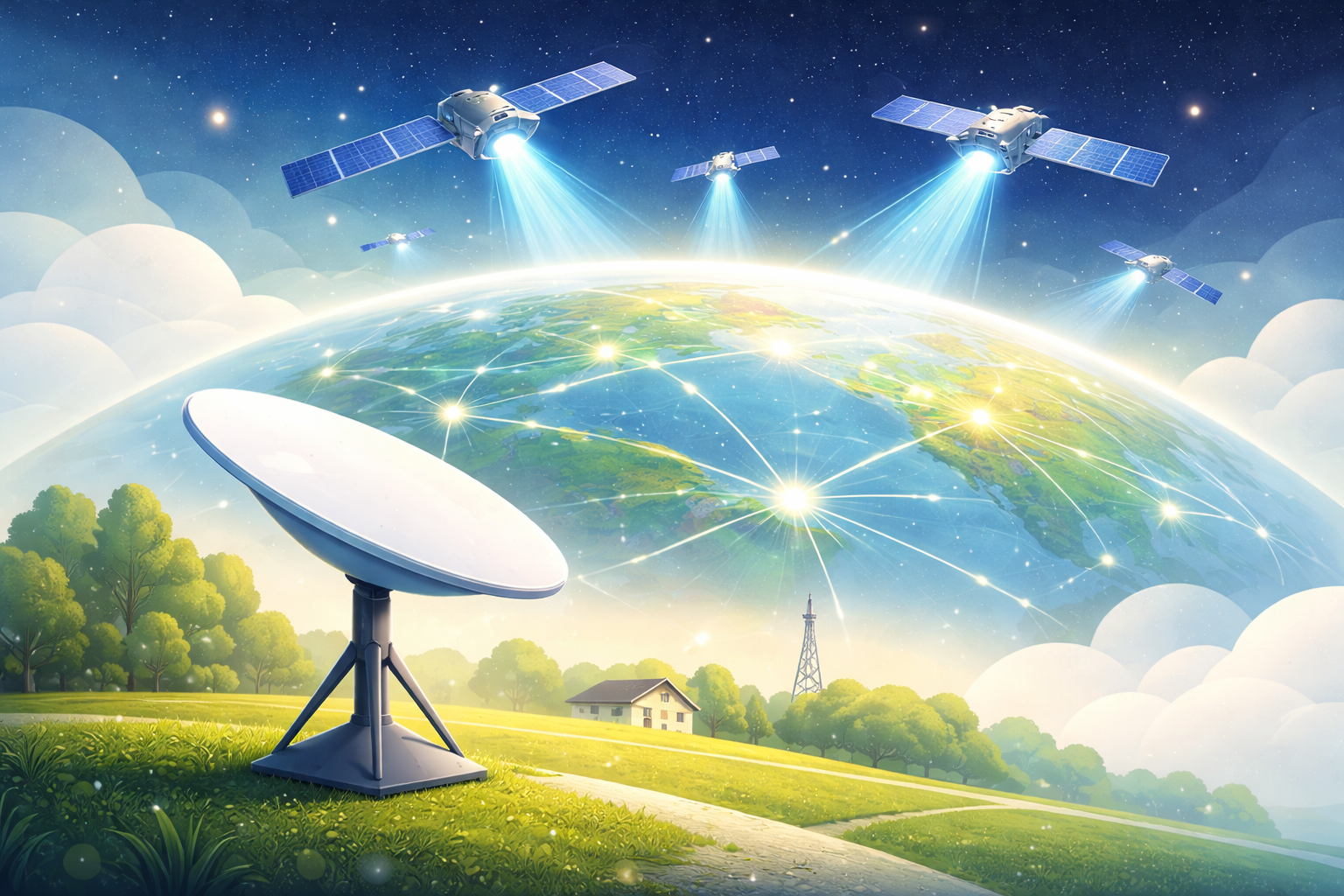
Starlink is a satellite internet constellation developed by SpaceX that provides high-speed internet access globally, with particular focus on underserved and remote areas. The system addresses connectivity gaps where traditional internet service providers have limited infrastructure. The constellation comprises thousands of small satellites operating in low Earth orbit that work together to deliver internet connectivity to ground-based users.
The technology enables internet service delivery to isolated locations that previously lacked reliable connectivity options. Starlink operates through a network of satellites that communicate with ground stations and user terminals equipped with phased-array antennas. These antennas automatically track and align with overhead satellites to maintain connection stability.
The satellites operate in low Earth orbit (LEO) at approximately 550 kilometers above Earth’s surface. This orbital altitude is significantly lower than traditional geostationary satellites, which orbit at approximately 35,786 kilometers above Earth.
The reduced distance between satellites and ground terminals decreases signal latency and enables faster data transmission speeds compared to conventional satellite internet services.
Key Takeaways
- Starlink provides satellite-based internet, improving access especially in rural and remote areas.
- It challenges traditional internet providers by offering faster, more reliable connectivity.
- Starlink supports disaster response by enabling communication when ground infrastructure fails.
- The system promotes global connectivity, potentially bridging the digital divide worldwide.
- Despite criticisms, Starlink is driving significant economic and social benefits in developing regions.
The Impact of Starlink on Rural and Remote Areas
For many individuals living in rural and remote areas, access to reliable internet has long been a challenge. Traditional broadband services often overlook these regions due to high infrastructure costs and low population density. With Starlink, you can finally enjoy high-speed internet access regardless of your location.
This newfound connectivity opens up a world of opportunities, from remote work and online education to telehealth services and e-commerce, all of which can significantly enhance your quality of life. Moreover, Starlink’s impact extends beyond mere convenience; it can also stimulate economic growth in these underserved areas. By providing reliable internet access, local businesses can expand their reach, attract new customers, and compete in the digital marketplace.
You may find that farmers can utilize precision agriculture technologies, while students gain access to online learning resources that were previously out of reach. The ripple effect of improved connectivity can lead to job creation, increased productivity, and a stronger sense of community as residents become more engaged with the world around them.
How Starlink is Changing the Game for Internet Service Providers
Starlink’s emergence has sent shockwaves through the traditional internet service provider landscape. As you observe the rapid expansion of this satellite-based service, it’s clear that it poses a significant challenge to established ISPs that have long dominated the market. With its ability to deliver high-speed internet to virtually any location, Starlink is forcing these companies to rethink their strategies and invest in improving their own services.
You may notice that some ISPs are now offering competitive pricing or enhanced packages in response to the growing popularity of satellite internet. Additionally, Starlink’s success highlights the limitations of traditional broadband infrastructure. Many ISPs have relied on outdated technologies and have been slow to adapt to changing consumer demands.
As you explore your options for internet service, you might find that Starlink’s innovative approach encourages other providers to invest in new technologies and expand their coverage areas. This competition ultimately benefits you as a consumer, leading to better service quality and more choices in the marketplace.

The Environmental Benefits of Starlink’s Satellite Internet
While the primary focus of Starlink is on providing connectivity, it also offers several environmental benefits that are worth considering. One of the most significant advantages is its potential to reduce the carbon footprint associated with traditional internet infrastructure. Laying down fiber-optic cables and building cell towers often requires extensive construction efforts that can disrupt local ecosystems.
In contrast, Starlink’s satellite-based system minimizes the need for such physical infrastructure, allowing for a more sustainable approach to internet access. Furthermore, by enabling remote work and reducing the need for commuting, Starlink can contribute to lower greenhouse gas emissions. As you embrace the flexibility of working from home or accessing online services without traveling long distances, you play a part in reducing your environmental impact.
This shift towards digital connectivity not only enhances your lifestyle but also aligns with broader efforts to combat climate change and promote sustainability.
Overcoming the Challenges of Traditional Internet Infrastructure with Starlink
| Metric | Value | Unit |
|---|---|---|
| Number of Satellites Launched | 4000+ | satellites |
| Average Latency | 20-40 | milliseconds |
| Download Speed | 100-250 | Mbps |
| Upload Speed | 20-40 | Mbps |
| Coverage Area | Global (excluding polar regions) | Area |
| Number of Users | Over 1 million | users |
| Satellite Altitude | 550 | kilometers |
Traditional internet infrastructure has long been plagued by various challenges, including high costs, slow deployment times, and limited coverage in rural areas. Starlink addresses these issues head-on by offering a solution that bypasses many of the obstacles associated with conventional broadband services. As you consider your options for internet access, you may find that Starlink’s satellite technology provides a more efficient and effective means of connecting to the digital world.
One of the most significant advantages of Starlink is its rapid deployment capabilities. Unlike traditional ISPs that may take years to lay down cables or build new towers, Starlink’s satellites are already in orbit and ready to provide service almost immediately. This means that you can enjoy high-speed internet access without waiting for lengthy construction projects or bureaucratic red tape.
As more satellites are launched and the constellation expands, coverage will continue to improve, making it an increasingly viable option for those who have been left behind by traditional providers.
The Potential for Global Connectivity with Starlink
Starlink’s vision extends far beyond national borders; it aims to provide global connectivity for everyone, regardless of their geographic location. This ambitious goal has the potential to transform lives around the world by ensuring that even the most remote communities have access to essential online services. As you think about the implications of such widespread connectivity, consider how it could empower individuals in developing countries by providing them with opportunities for education, healthcare, and economic growth.
The potential for global connectivity also means that you can connect with people from diverse backgrounds and cultures like never before. As more individuals gain access to the internet through Starlink, you may find yourself engaging in conversations and collaborations with people from all corners of the globe. This interconnectedness fosters understanding and cooperation, ultimately contributing to a more inclusive and equitable world.

Starlink’s Role in Disaster Response and Emergency Communication
In times of crisis, reliable communication is crucial for effective disaster response efforts. Starlink’s satellite-based system can play a vital role in ensuring that emergency services have access to the information they need when it matters most. When traditional communication networks fail due to natural disasters or other emergencies, Starlink can provide an alternative means of connectivity that remains operational even in challenging conditions.
As you consider the importance of timely communication during emergencies, think about how Starlink can facilitate coordination among first responders and aid organizations. By providing real-time data and communication capabilities, it enables quicker decision-making and more efficient resource allocation during critical situations. This capability not only saves lives but also helps communities recover more swiftly from disasters.
The Future of Connectivity: What’s Next for Starlink?
As Starlink continues to expand its satellite constellation and improve its services, you may wonder what lies ahead for this innovative technology. The future of connectivity looks promising as SpaceX plans to launch thousands more satellites into orbit, further enhancing coverage and capacity.
With ongoing advancements in technology and infrastructure, you can expect even faster speeds and lower latency as Starlink evolves.
Moreover, as more users come online through Starlink’s network, there will be opportunities for new applications and services that leverage this connectivity. From smart cities to advanced telemedicine solutions, the possibilities are endless as you embrace a future where high-speed internet is accessible to all. The continued growth of Starlink could pave the way for groundbreaking innovations that transform how we live, work, and interact with one another.
Addressing Concerns and Criticisms of Starlink
While Starlink presents numerous benefits, it is not without its share of concerns and criticisms. One major issue revolves around space debris; as thousands of satellites are launched into orbit, there are growing fears about overcrowding in space and potential collisions between satellites. As you consider the implications of this technology, it’s essential to weigh these concerns against its potential benefits for global connectivity.
Additionally, some critics argue that Starlink’s service may not be affordable for everyone despite its promise of accessibility. While SpaceX has made strides in reducing costs compared to traditional broadband providers, there are still concerns about pricing structures that could limit access for low-income households. As you explore your options for internet service, it’s important to advocate for policies that promote equitable access while holding companies accountable for their pricing strategies.
The Economic and Social Implications of Starlink’s Expansion
The expansion of Starlink has far-reaching economic and social implications that could reshape communities around the world. As you consider how improved internet access can drive economic growth, think about how local businesses can thrive when they have reliable connectivity at their fingertips. Entrepreneurs can launch online ventures, farmers can access market information in real-time, and students can pursue educational opportunities without geographical limitations.
Socially, increased connectivity fosters greater engagement within communities as residents become more informed about global issues and local events alike. You may find that access to information empowers individuals to participate actively in civic life or advocate for change within their communities. The ripple effects of improved connectivity can lead to stronger social ties and a more informed citizenry.
How Starlink is Revolutionizing Connectivity in Developing Countries
In developing countries where traditional internet infrastructure is often lacking or non-existent, Starlink represents a beacon of hope for millions seeking reliable connectivity. As you think about the challenges faced by these regions—such as limited access to education or healthcare—consider how satellite internet can bridge these gaps by providing essential services that were previously out of reach. Starlink’s ability to deliver high-speed internet without extensive ground infrastructure means that even remote villages can connect with urban centers or global markets.
This newfound access empowers individuals by opening doors to educational resources, telemedicine services, and economic opportunities that can transform lives for generations to come. As you reflect on the potential impact of this technology on developing countries, it’s clear that Starlink is not just about connectivity; it’s about creating pathways toward a brighter future for all.
Starlink, the satellite internet constellation developed by SpaceX, has been making waves in the tech world for its potential to provide high-speed internet access to underserved areas. This innovative approach to connectivity aligns with the growing need for effective time management in our increasingly digital lives. For professionals looking to enhance their productivity, exploring modern time management techniques can be beneficial. You can read more about this in the article on modern time management techniques.
FAQs
What is Starlink?
Starlink is a satellite internet constellation project developed by SpaceX, aimed at providing high-speed, low-latency broadband internet service globally, especially in remote and underserved areas.
How does Starlink work?
Starlink works by deploying a large network of small satellites in low Earth orbit (LEO) that communicate with ground-based user terminals to deliver internet connectivity.
Who owns and operates Starlink?
Starlink is owned and operated by SpaceX, the aerospace company founded by Elon Musk.
Where is Starlink available?
Starlink is available in many countries worldwide, with ongoing expansion efforts to increase coverage, particularly in rural and remote regions.
What equipment is needed to use Starlink?
Users need a Starlink Kit, which includes a satellite dish (also called a user terminal), a Wi-Fi router, power supply, and mounting tripod or hardware.
What internet speeds can Starlink provide?
Starlink typically offers download speeds ranging from 50 Mbps to over 250 Mbps, with latency between 20 to 40 milliseconds, though speeds can vary based on location and network congestion.
Is Starlink suitable for gaming and streaming?
Yes, due to its relatively low latency and high speeds, Starlink is suitable for online gaming, video streaming, and other bandwidth-intensive activities.
How much does Starlink cost?
The cost includes a one-time fee for the Starlink Kit (around $499 USD) and a monthly subscription fee (approximately $110 USD), though prices may vary by region.
Does Starlink require professional installation?
No, Starlink is designed for easy self-installation by users, with the equipment being plug-and-play and guided by an app.
Are there any limitations or challenges with Starlink?
Challenges include potential service interruptions due to weather, obstructions like trees or buildings, and limited availability in some regions due to regulatory approvals.
Is Starlink environmentally friendly?
Starlink satellites are designed to deorbit and burn up in the atmosphere at the end of their operational life to reduce space debris, but concerns about space congestion and light pollution remain topics of discussion.
Can Starlink be used on moving vehicles?
Starlink offers specialized services for moving vehicles such as RVs, boats, and aircraft, with hardware and plans tailored for mobility.
How many satellites does Starlink have in orbit?
As of mid-2024, Starlink has launched over 4,000 satellites, with plans to deploy tens of thousands more to expand and improve coverage.
Is Starlink affected by weather conditions?
Heavy rain, snow, or dense cloud cover can temporarily affect Starlink’s signal quality, similar to other satellite internet services.
How does Starlink compare to traditional internet providers?
Starlink offers competitive speeds and latency, especially in areas lacking fiber or cable infrastructure, but may have higher latency than fiber-optic connections in urban areas.
