


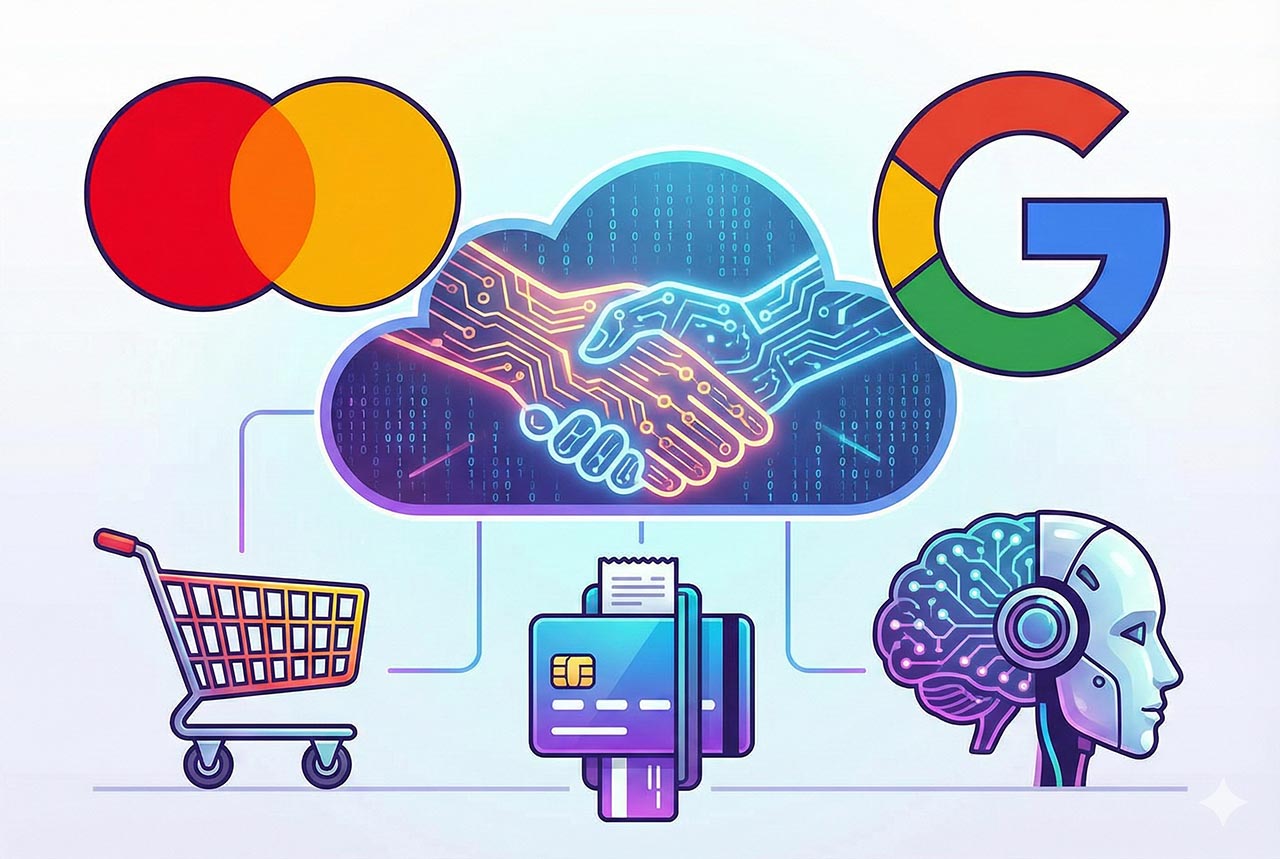
You stand at the precipice of a significant transformation in the digital economy. The lines between your digital identity, your purchasing power, and the services you consume are blurring, creating an integrated ecosystem where your actions and preferences drive a new paradigm: agentic commerce. Mastercard, a stalwart in the payment processing industry, and Google, a titan of information and artificial intelligence, are not merely observing this shift; they are actively orchestrating its arrival. This collaboration signifies more than a technological upgrade; it represents a fundamental re-imagining of how you interact with markets, moving from passive consumer to an empowered, agent-driven participant.
Understanding Agentic Commerce: A New Paradigm
To truly grasp the significance of Mastercard and Google’s venture, you must first understand the core tenets of agentic commerce. This isn’t just about faster transactions or more personalized ads; it’s about shifting the locus of control and decision-making in your purchasing journey.
From Passive Consumption to Active Agency
Historically, your role as a consumer has been largely reactive. You encounter products, analyze information, and make a purchase. Agentic commerce, however, positions you differently. Imagine a world where your digital agents—powered by sophisticated AI—act on your behalf, understanding your needs, anticipating your desires, and even negotiating on your behalf. This isn’t science fiction; it’s the trajectory these companies are pursuing. Your digital footprint, encompassing your browsing history, purchase patterns, and even your stated preferences, becomes the fuel for these intelligent agents.
The Emergence of Intelligent Agents
These intelligent agents are not simply glorified chatbots. They are complex algorithms designed to mimic human reasoning and decision-making on a limited, yet powerful, scale. Think of them as your personal, highly efficient digital assistants, operating across various platforms and services. Their capabilities extend beyond simple recommendations, venturing into proactive problem-solving and automated fulfillment. This shift means that instead of searching for a product, an agent might identify a need, source the optimal solution, and even initiate the purchase process, all with your pre-approved parameters.
The Role of Data and Trust
The bedrock of agentic commerce is data. Your data, specifically. The success of this model hinges on the ability of these agents to interpret and utilize your information ethically and efficiently. This necessitates an unprecedented level of trust. You are essentially delegating certain aspects of your financial and procurement decisions to an algorithm. Therefore, the transparency of data usage, the security of your information, and the inherent trustworthiness of the platforms facilitating this agency become paramount. Mastercard’s long-standing reputation in secure transactions and Google’s expertise in data management are crucial in building this foundational trust.
Mastercard’s Strategic Position in the Agentic Ecosystem
Mastercard, at its core, is an infrastructure provider. Its genius lies in facilitating seamless and secure financial transactions globally. In the context of agentic commerce, its role evolves from a mere payment processor to an enabler of intelligent financial flows.
Secure Transaction Rails for AI Agents
Imagine your agent, having identified the perfect flight deal, needing to execute the purchase. Mastercard provides the underlying rails for this transaction. Their existing network, built for speed, security, and global reach, becomes the essential conduit for agent-initiated payments. This infrastructure is not just about moving money; it’s about providing the confidence that an agent, acting on your behalf, can execute financial commitments reliably.
Identity and Authentication in an Agentic World
As agents increasingly act on your behalf, the question of identity and authentication becomes more complex. How do platforms verify that an agent is truly authorized to represent you? Mastercard, through its extensive work in digital identity solutions and biometric authentication, is uniquely positioned to address this. Their expertise in secure credentialing extends to verifying the legitimacy of agent-initiated transactions, ensuring that unauthorized agents cannot compromise your financial security. This might involve protocols that link your digital identity to specific agent permissions, creating a granular control system.
Enabling Merchant Readiness for Agentic Purchases
The success of agentic commerce also depends on the readiness of merchants to accept agent-initiated transactions. Mastercard, with its vast network of merchant partnerships, plays a crucial role in standardizing these interactions. They are working to ensure that payment gateways and merchant systems are equipped to process purchases initiated not just by a human clicking “buy,” but by an intelligent agent executing a pre-programmed command, potentially with nuanced conditions or preferences. This involves adapting existing payment infrastructure to interpret richer transaction data flowing from agent systems.
Google’s Contributions to the Agentic Evolution
Google’s involvement brings a different, yet equally indispensable, set of capabilities to the agentic commerce landscape. Their dominion over information, search, and artificial intelligence is the engine that powers these intelligent agents.
The AI Backbone for Intelligent Agents
Google’s prowess in AI and machine learning is the very foundation upon which agentic commerce is built. Their deep learning models, natural language processing capabilities, and predictive analytics are what enable agents to understand your intentions, interpret complex queries, and make informed decisions. Think of Google Cloud’s AI services as the brain of these agents, providing the computational power and algorithmic sophistication necessary for their operation. This isn’t just about understanding what you say, but what you implicitly mean and need.
Data Aggregation and Contextual Understanding
You generate an immense amount of data through your interactions with Google’s ecosystem—search queries, email communications, location history, voice commands. This comprehensive data footprint, when ethically handled and permissioned by you, provides the unparalleled contextual understanding that fuels intelligent agents. An agent powered by Google’s data infrastructure can understand your preferences for eco-friendly products, your urgency for a particular delivery, or your budgetary constraints for a specific service. This contextual awareness elevates agents beyond simple search tools to sophisticated decision-making entities.
Orchestrating User Experience Across Platforms
Google’s omnipresence across devices and platforms—from Android to Chrome to Google Assistant—positions them as a natural orchestrator of the agentic user experience. Your agents won’t be confined to a single app; they will ideally operate seamlessly across your digital life. Google’s expertise in creating integrated user journeys ensures that interactions with your agents feel natural, intuitive, and consistent, regardless of the touchpoint. This means your agents could initiate actions based on verbal commands to your smart speaker, or by interpreting an email on your daily commute.
The Synergistic Impact: A Glimpse into the Future
The combined strengths of Mastercard and Google create a synergistic effect that promises to accelerate the adoption and sophistication of agentic commerce. This isn’t merely the sum of their parts; it’s a multiplication of their individual capabilities.
Enhanced Personalization and Proactive Solutions
Imagine a future where your digital agent, informed by your purchase history (Mastercard data) and your online behavior (Google data), proactively identifies that your subscription to a streaming service is nearing expiration and offers you a selection of alternative, more cost-effective options, complete with reviews and a one-click signup (Mastercard payment integration). This level of personalization moves beyond targeted advertising to proactive problem-solving, making your digital life demonstrably more efficient.
Frictionless Transactions and Reduced Cognitive Load
The ultimate goal for you, the user, is a reduction in cognitive load. Instead of spending time researching, comparing prices, and manually entering payment details, your agent handles these tasks. Mastercard’s secure, one-click payment solutions, integrated with Google’s agent intelligence, mean that once you’ve approved a decision, the fulfillment of that decision is virtually instantaneous and invisible. This frees up your mental energy for more complex or enjoyable pursuits.
Expanding the Reach of Digital Commerce
For businesses and merchants, agentic commerce, powered by this partnership, opens new avenues for reaching you. Your agents might discover new products or services that you wouldn’t have actively sought out, based on their deep understanding of your evolving preferences. This expands the market beyond direct search and discovery to proactive, agent-driven recommendations, potentially introducing you to niche businesses or alternative providers you weren’t aware of.
Challenges and Considerations for You
While the vision of agentic commerce is compelling, it is crucial for you to consider the challenges and ethical implications that accompany this transformative shift. The “Mastercard & Google” partnership, while powerful, does not inherently solve all these complexities.
Data Privacy and Control: Your Digital Sovereignty
The profound personalization inherent in agentic commerce relies on extensive data collection and analysis. You must grapple with the question of your data sovereignty. How much control do you truly have over the data your agents utilize? What are the mechanisms for revoking access or anonymizing information? Both Mastercard and Google have publicly committed to data privacy, but the practical implementation in such an intricate ecosystem requires your vigilant attention and demand for robust transparency. Understanding the terms of service, permission settings, and data retention policies becomes more important than ever.
Algorithmic Bias and Ethical Decision-Making
Intelligent agents, like any AI system, are susceptible to algorithmic bias. If the data used to train these agents reflects existing societal biases, the agents themselves could perpetuate or even amplify those biases in their recommendations and actions. For example, an agent might inadvertently steer you towards certain products or away from others based on demographic data. It is imperative that the development and deployment of these agents prioritize ethical AI principles, fairness, and accountability. You should be aware of the “black box” problem where the decision-making process of an AI can be opaque, and demand transparency in how agents arrive at their conclusions.
The Evolution of Trust and Accountability
When an agent acts on your behalf, who bears the ultimate responsibility if something goes wrong? If an agent makes an erroneous purchase or a faulty recommendation, is it the responsibility of the platform (Google), the payment processor (Mastercard), the merchant, or you, the principal? The legal and ethical frameworks surrounding agentic commerce are still nascent. You will need clarity on liability and recourse mechanisms as this ecosystem matures. Your ability to override agent decisions, provide clear instructions, and seek human intervention will be critical safety valves.
The Path Forward: Your Role as an Informed Participant
The collaboration between Mastercard and Google marks a definitive step towards fully realized agentic commerce. This isn’t a distant future; it’s a rapidly unfolding present. As a user, your role is not passive. You are not merely a recipient of these technological advancements but an active participant in shaping their trajectory. By understanding the underlying principles, questioning the implications, and demanding ethical and transparent practices, you can help steer this powerful alliance towards a future where technology truly empowers you, rather than simply automates you. The digital economy is evolving; ensure you evolve with it, armed with knowledge and critical discernment.
FAQs
What is agentic commerce?
Agentic commerce refers to the use of artificial intelligence (AI) systems that can autonomously make purchasing decisions and complete transactions on behalf of consumers, streamlining the shopping experience.
How are Mastercard and Google involved in agentic commerce?
Mastercard and Google have partnered to develop technology that enables AI to shop for consumers, integrating Mastercard’s payment solutions with Google’s AI capabilities to facilitate seamless, automated purchasing.
What benefits does agentic commerce offer to consumers?
Agentic commerce can save time by automating shopping tasks, provide personalized product recommendations, and simplify payment processes, making online shopping more efficient and convenient.
Is agentic commerce secure for users?
Security is a priority in agentic commerce systems, with companies like Mastercard implementing advanced fraud detection and encryption technologies to protect users’ payment information and ensure safe transactions.
When will agentic commerce be widely available?
While specific timelines vary, partnerships like that of Mastercard and Google indicate that agentic commerce technologies are currently in development and testing phases, with broader consumer availability expected in the near future.
