


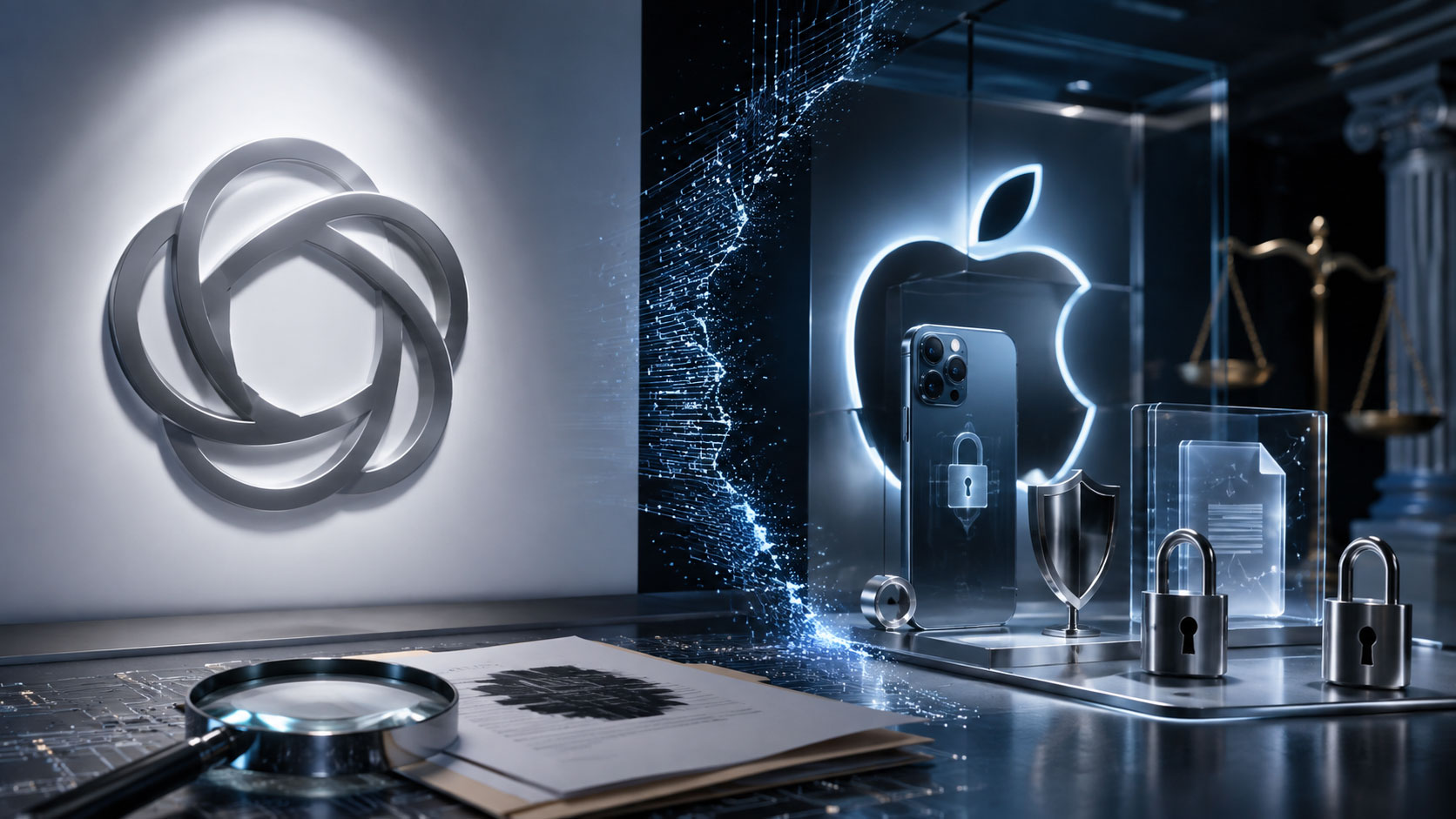
You’re standing at a precipice, aren’t you? A titan of technology, a veritable fortress of innovation, is being challenged. And the battleground isn’t a sterile courtroom filled with legal jargon, but the very fabric of your own company’s security. You are OpenAI, and you’re facing a formidable opponent: Apple. The accusation? Theft of trade secrets. The irony, however, is that you might be unwittingly aiding and abetting your own downfall by highlighting perceived laxity in Apple’s security protocols.
You see, in your pursuit of justice, in your fervent desire to protect what you believe is rightfully yours, you’ve begun to weave a narrative. This narrative, while intended to bolster your case against Apple, carries a dangerous undertow. It’s a narrative that paints a picture of Apple as a company whose security practices are, to put it mildly, questionable. And by doing so, you’re not just pointing fingers at an alleged wrongdoer; you’re inadvertently casting a shadow over your own carefully constructed image of robust security and proprietary protection.
The Genesis of the Allegation
It all started with a feeling, a suspicion that something was amiss. You sensed that proprietary information, the very lifeblood of your groundbreaking AI research, had found its way into the hands of Apple. This wasn’t a minor oversight; it was a breach, a violation of trust that threatened to derail your competitive edge. You needed to act, to defend your innovations, to ensure that your hard-won advancements remained your exclusive domain.
The Accusation Takes Shape
Your legal team, tasked with translating this gut feeling into a concrete legal argument, began to meticulously gather evidence. They looked for patterns, for anomalies, for any indication that Apple had illicitly accessed or disseminated your secrets. And in their investigation, they stumbled upon something that would become a central pillar of your case: Apple’s security posture.
In the ongoing legal battle between OpenAI and Apple, a recent article highlights how Apple’s own security practices may inadvertently weaken its case regarding trade secrets. This situation raises important questions about the balance between innovation and protection of proprietary information. For a deeper understanding of how organizations can navigate complex security and automation challenges, you can read more in this article on creating a federated center of excellence for automation: How to Create a Federated Center of Excellence (CoE) for Automation.
Shining a Spotlight on Apple’s Alleged Weaknesses
This is where things get particularly interesting, and perhaps, for you, a little uncomfortable. Your legal strategy, in its aggressive pursuit of Apple, has led you to meticulously dissect and highlight what you perceive as vulnerabilities within Apple’s own security framework. You are, in essence, using the perceived flaws of your opponent to strengthen your claims, a tactic that, while strategically sound in some contexts, carries significant collateral implications for your own reputation.
The “Insider Threat” Angle
A key element of your argument revolves around the idea that the alleged theft couldn’t have happened without some form of internal access or compromise within Apple. This line of reasoning, while potentially valid in demonstrating how such a breach could occur, requires you to posit scenarios where Apple’s internal security measures might have failed.
Questioning Access Controls
You’ve begun to question how Apple grants and monitors access to sensitive information. Are their internal systems truly as impenetrable as they project? You’re suggesting, through your legal filings and public statements, that if a breach did occur, it points to a failure in their access control protocols, a point of vulnerability that could be exploited.
The Role of Employee Vigilance
Furthermore, you’re implying that the human element of Apple’s security might be less robust than ideal. You’re hinting that a lack of stringent employee vetting, inadequate training on data handling, or insufficient monitoring of employee activity could have paved the way for the alleged misappropriation.
The Dissemination Pathway
Beyond just access, you’re also scrutinizing how information is disseminated within Apple. Your case implicitly suggests that if your trade secrets were indeed acquired by Apple, the subsequent use or further leakage points to a breakdown in their policies and procedures for handling and protecting sensitive data once it’s within their ecosystem.
Inadvertent Disclosure Risks
You’re pointing to the possibility that even without malicious intent, Apple’s internal processes might be prone to inadvertent disclosures. Perhaps their collaborative tools, their file-sharing mechanisms, or their development environments lack the necessary safeguards to prevent accidental leaks of proprietary information.
Deliberate Misuse Scenarios
And, of course, you’re not shying away from the possibility of deliberate misuse. Your legal team is likely exploring how Apple employees, with access to your secrets, might have been incentivized or had the opportunity to leverage this information for their own gain or the company’s benefit.
The Double-Edged Sword of Your Own Security Scrutiny

Herein lies the delicate tightrope you’re walking. While you’re meticulously detailing Apple’s supposed security shortcomings to support your claim of stolen trade secrets, you’re simultaneously creating a precedent. You are, in effect, demonstrating a willingness to publicly dissect and criticize the security practices of a major technology player.
The “What If” Factor for You
Consider this: if you can highlight potential vulnerabilities in Apple’s security, what does that say about the security of your own systems? If Apple’s alleged weaknesses could allow for the theft of your trade secrets, then what’s to say your own, perhaps less established, security protocols wouldn’t be equally, if not more, susceptible?
Internal Security Audits Under the Microscope
Your public dissection of Apple’s security will inevitably invite scrutiny of your own internal security audits. Are they as thorough as they claim? Are you truly safeguarding your innovations against the very types of breaches you’re alleging against Apple? Potential investors, partners, and even your own employees will be asking these questions.
The Illusion of an Impenetrable Fortress
You’ve built your reputation on being at the cutting edge of AI, a field that thrives on innovation and, by extension, the protection of that innovation. The narrative you’re crafting, while designed to win your case, risks shattering the illusion that you yourself are an impenetrable fortress of intellectual property.
The Risk of Backfire
The very act of painting Apple as a company with permeable security could, in a cruel twist of fate, backfire. If your case is unsuccessful, or if Apple successfully counters your claims by highlighting their own robust security measures, you’ll be left in a weakened position. More importantly, you’ll have inadvertently provided a roadmap for others looking to exploit any potential weaknesses within your own organization.
Competitors Taking Notes
Imagine your competitors observing this legal battle. They see you meticulously detailing how trade secrets could be compromised. They’re not just listening to your accusations against Apple; they’re taking notes on how such a breach might be facilitated, and more importantly, how they might apply similar logic to identify and exploit vulnerabilities in your own systems.
Public Perception and Trust
Beyond the immediate legal implications, there’s the broader issue of public perception. If you’re seen as someone who readily points out security flaws in others to advance your own agenda, it can breed an atmosphere of distrust. Users and partners might begin to question how diligently you protect their data and your own intellectual property.
The Strategic Dilemma: Aggression vs. Self-Preservation

You’re faced with a significant strategic dilemma. Your aggressive legal stance, while necessary to pursue what you believe is rightful, carries inherent risks to your own standing. You must navigate this complex terrain with extreme caution, balancing the need to win your case with the imperative of maintaining your own reputation for security and integrity.
The Cost of Revelation
The information you’re bringing to light about Apple’s alleged security practices comes at a cost. You are revealing a detailed understanding of potential attack vectors and security loopholes. This revelation, while intended to prove Apple’s culpability, inadvertently educates the public and potential adversaries on how to potentially compromise systems.
Unintended Disclosure of Vulnerabilities
You might be unintentionally revealing vulnerabilities that exist not just in Apple’s systems, but in similar technological infrastructures, including your own. The detailed descriptions of how data could be accessed and disseminated can serve as a blueprint for malicious actors.
The Importance of Maintaining Your Own Aura
Your success, and indeed your continued growth, hinges on the trust and confidence placed in your ability to innovate and protect that innovation. If you are perceived as a company that is itself vulnerable, or one that readily exposes the vulnerabilities of others without impeccable self-assurance, that trust can erode.
The “Pot Calling the Kettle Black” Scenario
The risk of appearing hypocritical, or of being accused of the “pot calling the kettle black,” is very real. If your own security practices are found to be wanting, your arguments against Apple will lose significant weight, and your credibility will be severely damaged.
In a recent discussion about the complexities of trade secrets and corporate security, OpenAI highlighted how Apple’s own security practices may inadvertently weaken its case regarding trade secrets. This situation raises important questions about the balance between innovation and protection in the tech industry. For a deeper understanding of how companies can navigate these challenges, you might find the article on decoupling content for true omnichannel digital experiences with headless CMS tools insightful. You can read it here.
Beyond the Legal Battle: The Long-Term Implications for OpenAI
| Metrics | Data |
|---|---|
| Case | OpenAI says Apple’s own security practices undermine its trade secrets case |
| Source | OpenAI |
| Implication | Apple’s security practices may weaken its trade secrets case |
This isn’t just about winning a single lawsuit. This is about shaping your future. The way you conduct yourself in this legal battle, the narrative you choose to emphasize, will have lasting repercussions for your organization.
The “Cybersecurity Stance” Re-evaluation
Your current legal strategy forces a re-evaluation of your own “cybersecurity stance.” You are implicitly stating that security is paramount, and that breaches of proprietary information are egregious. This means you will be held to an even higher standard.
Demonstrating Impeccable Internal Security
To successfully navigate this situation, you will need to demonstrably prove that your internal security practices are not only robust but also demonstrably superior to the alleged shortcomings of Apple. This means investing even more heavily in your security infrastructure, personnel, and protocols.
Transparency and Trust Building
While aggressively pursuing your case, you must also find ways to build and maintain trust. This might involve proactive communication about your security measures, independent audits, and a commitment to transparency (within the bounds of protecting your own secrets, of course).
The Competitive Landscape and Future Innovations
Your actions now will influence how you are perceived within the competitive AI landscape. Will you be seen as a shrewd litigant, or as a company that has inadvertently exposed its own potential weaknesses? This perception will impact your ability to attract top talent, forge partnerships, and continue to lead in the rapidly evolving field of artificial intelligence.
Setting a Precedent for Responsible Disclosure
While you are focused on seeking redress, you are also setting a precedent for how AI companies handle intellectual property disputes. Will this case be remembered for its aggressive pursuit of justice, or for its unintended consequences on industry-wide security perceptions?
The Path Forward: A Tightrope Walk of Prudence and Power
You are in a precarious position, OpenAI. You’ve embarked on a legal journey that, while necessary for protecting your innovations, has led you to publicly dissect and question the security practices of one of the world’s most prominent technology companies. This is a powerful, but dangerous, strategy.
The Critical Need for Ironclad Self-Defense
Your primary focus must now shift, not just to proving Apple’s alleged transgressions, but to ensuring that your own defenses are beyond reproach. The very arguments you are using against Apple can and will be turned against you if your own security is found to be lacking.
Proactive Security Audits and Enhancements
You need to be conducting more rigorous, more frequent, and more transparent security audits than ever before. Any identified weaknesses must be addressed immediately and decisively. This isn’t just about compliance; it’s about survival.
Investing in Human Capital for Security
Technology is only as strong as the people who manage it. You need to ensure your employees are thoroughly vetted, rigorously trained, and constantly vigilant. Cultivating a strong security-conscious culture from the top down is paramount.
The Art of Strategic Communication
How you communicate your case is as important as the case itself. While you must be firm and assertive in your legal pursuits, you also need to be mindful of the broader implications of your public statements.
Balancing Aggression with Prudence
Avoid language that could be interpreted as a blanket condemnation of all large tech companies’ security practices. Focus on the specifics of your allegations against Apple, rather than making sweeping generalizations that could inadvertently implicate yourself or create a blueprint for others.
Highlighting Your Own Security Prowess (Subtly)
While your legal strategy focuses on Apple’s weaknesses, you can subtly reinforce your own security strengths. This might involve showcasing your commitment to data privacy, your investments in AI security research, and your track record of safeguarding sensitive information.
You are at a crossroads, OpenAI. The path you are currently treading is fraught with both promise and peril. Your success in this trade secrets case hinges not only on your ability to prove Apple’s alleged wrongdoing but also on your capacity to emerge from this legal battle with your own security reputation not just intact, but enhanced. The narrative you are crafting is a double-edged sword; wield it with the utmost precision, for your own future depends on it.
FAQs
1. What is the OpenAI’s claim about Apple’s security practices?
OpenAI claims that Apple’s security practices undermine its trade secrets case, suggesting that Apple’s own security measures may have contributed to the alleged theft of trade secrets.
2. What is the trade secrets case involving Apple?
The trade secrets case involving Apple revolves around allegations that a former employee, who later joined a rival company, stole trade secrets related to Apple’s autonomous vehicle technology.
3. How does OpenAI’s claim impact the trade secrets case?
OpenAI’s claim raises questions about the effectiveness of Apple’s security measures and how they may have influenced the alleged theft of trade secrets. It could potentially impact the outcome of the case and the perception of Apple’s security practices.
4. What are the implications of OpenAI’s claim for Apple?
The implications of OpenAI’s claim for Apple could include damage to its reputation, increased scrutiny of its security practices, and potential challenges in proving the theft of trade secrets.
5. What steps is Apple taking in response to OpenAI’s claim?
Apple has not publicly disclosed specific steps it is taking in response to OpenAI’s claim. However, it is likely that Apple will address the allegations and defend its security practices as part of the ongoing trade secrets case.
