


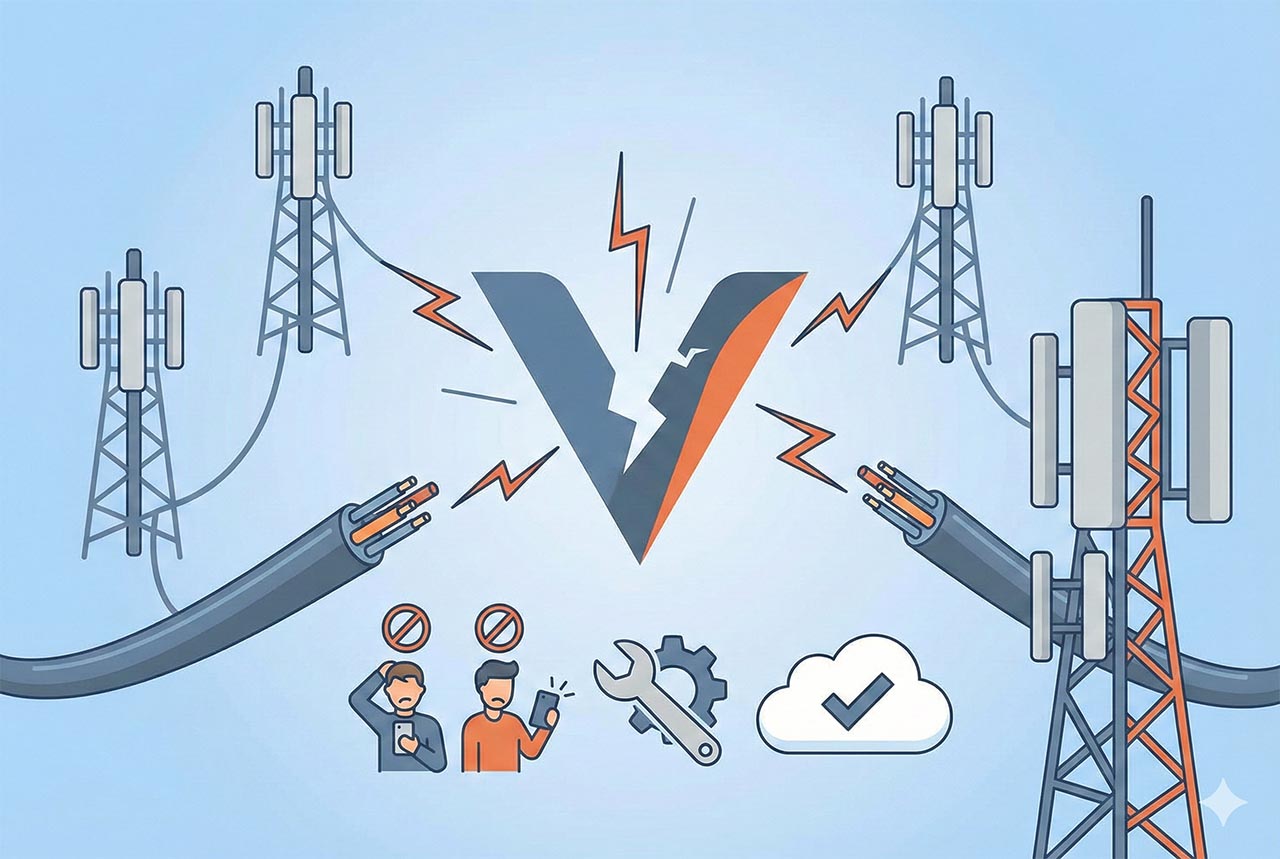
The moment your phone displays “No Service” or the internet connection sputters and dies, a wave of disorientation can wash over you. You’re not alone. For many, a Verizon outage is more than just an inconvenience; it’s a disruption that can ripple through your personal and professional life, leaving you stranded in a digital desert. This article aims to peel back the layers of these pervasive disruptions, exploring their impact and offering concrete solutions to navigate these periods of connectivity loss.
When you experience a Verizon outage, it’s like a vital artery in the vast network of communication being temporarily blocked. This can manifest in numerous ways, affecting your ability to make calls, send texts, or access the internet, leaving you in a communication blackout.
The Spectrum of Service Disruptions
Verizon outages, like a chameleon, can appear in various forms. Some are localized, affecting a single street or neighborhood, while others can cast a wider net, impacting entire cities or even regions. The duration can also vary, from a fleeting hiccup lasting minutes to extended periods that stretch for hours or even days.
Dropped Calls and Garbled Conversations
One of the most immediate and frustrating symptoms of a cellular network issue is the dropped call. You’re in the middle of a critical conversation, and suddenly, the connection evaporates, leaving you with a dial tone and a sense of unfinished business. This can be particularly disruptive for business professionals who rely on seamless communication for client interactions and deal-making.
The Silent Scroll: Internet Connectivity Woes
Beyond voice calls, internet access is the lifeblood of modern digital life. When Verizon’s data network falters, your social media feeds freeze, your streaming services buffer endlessly, and your ability to complete online tasks grinds to a halt. This can feel like being disconnected from the global consciousness, unable to participate in the digital conversations and transactions that define our era.
The Unanswered Message: Text and Data Delays
Even when calls seem to function sporadically, text messages and data packets can become tangled in the network’s congestion. You might find yourself sending messages that are received hours later, or not at all, transforming your once instant messaging into a game of digital Pictionary with unpredictable delivery times.
The Domino Effect: Cascading Impacts of Connectivity Loss
An outage doesn’t exist in a vacuum; it triggers a cascade of consequences that can affect nearly every facet of your daily routine. Imagine a world where your communication channels are suddenly jammed shut – that’s the reality many face.
Business Operations Grind to a Halt
For businesses large and small, Verizon’s network is often the backbone of their operations. Point-of-sale systems falter, cloud-based services become inaccessible, and communication between employees and with customers becomes a Herculean task. This can lead to lost productivity, missed sales opportunities, and a significant financial hit. Consider a restaurant relying on its online ordering system or a retail store processing credit card payments – an outage can bring their entire operation to its knees.
Personal Emergencies and Safety Concerns
In situations demanding immediate action, a Verizon outage can be a matter of life and death. The inability to contact emergency services, family members, or even share your location can create a dangerous vulnerability. This is particularly concerning for individuals with medical conditions requiring constant monitoring or for those who rely on their phones for personal safety apps.
The Erosion of Social Connections
In today’s hyper-connected world, social media and instant messaging are primary tools for maintaining relationships. When these channels are down, you can feel isolated, missing out on important updates from friends and family, and unable to participate in digital social events. This can contribute to feelings of loneliness and disconnect.
Disruption to Daily Routines and Conveniences
From checking the weather to navigating unfamiliar routes, many of us have integrated our phones into the fabric of our daily lives. An outage disrupts these seamless routines, forcing us to fall back on older, less efficient methods, or simply go without. This can be a minor annoyance or a significant logistical challenge depending on the necessity of the task.
In light of the recent Verizon outage, it’s essential to consider the broader implications of network security and reliability. A related article that delves into securing endpoints in our increasingly connected environment is available here: Zero Trust for APIs: Securing Your Endpoints in a Hyper-Connected World. This piece discusses the importance of implementing robust security measures to protect against potential disruptions and vulnerabilities that can arise in modern communication networks.
Pinpointing the Culprits: Common Causes of Verizon Outages
Understanding why these disruptions occur can empower you to prepare for and mitigate their impact. Outages are rarely random acts of digital malice; they typically stem from identifiable causes.
Infrastructure Failures: The Unseen Weaknesses
The physical infrastructure that underpins Verizon’s network, like the plumbing of a city, can experience its own set of problems, leading to widespread communication failures.
Equipment Malfunctions and Technical Glitches
At the heart of any network are sophisticated pieces of equipment. Like any complex machinery, these components can fail due to age, manufacturing defects, or simple wear and tear. A malfunctioning cell tower, a faulty router, or a problem with their core network systems can create a localized or widespread blackout.
Power Grid Issues and Their Digital Echoes
Cell towers and network facilities require a constant supply of electricity. When the local power grid experiences an outage, these critical communication hubs can lose power, leading to a loss of service in the surrounding area. While backup generators exist, they are not infallible and can have their own limitations.
Environmental Factors: The Unpredictable Forces of Nature
Nature, with its often untamed power, can also be a significant contributor to network disruptions.
Weather-RelatedDamage: Storms, Floods, and Fires
Severe weather events, such as hurricanes, tornadoes, heavy snowstorms, and widespread flooding, can physically damage cell towers, fiber optic cables, and other vital infrastructure. Wildfires can also pose a threat, forcing the shutdown of equipment to prevent further damage or ensure public safety.
Accidental Damage and Human Error
Sometimes, the disruption isn’t a grand act of nature but a more mundane, yet equally impactful, human act. Construction crews accidentally cutting fiber optic cables, vandalism, or even simple human error in maintenance or upgrades can trigger an outage.
Network Congestion and Overload: The Digital Traffic Jams
During peak usage times or special events, the demand on Verizon’s network can surge, leading to a slowdown or complete shutdown, much like a highway during rush hour.
High Usage Periods: Peaks and Peaks
Every day, there are predictable times when more people are trying to use the network simultaneously. Think of the evening hours when people are home from work, or major holidays when families are trying to connect. If the network is operating at or near capacity, even a small additional load can tip it over the edge.
Special Events and Mass Gatherings
Large-scale events, such as concerts, sporting events, or even public celebrations, can create sudden, localized spikes in network traffic. The sheer density of people using their phones simultaneously can overwhelm the capacity of the cell towers in the vicinity, leading to a temporary but frustrating outage for those present.
Cyberattacks and Security Breaches: The Invisible Sabotage
In the digital realm, malicious actors pose a constant threat. Cyberattacks can target Verizon’s network, causing disruptions and compromising service.
Denial-of-Service (DoS) and Distributed Denial-of-Service (DDoS) Attacks
These attacks aim to overwhelm a network’s servers with a flood of traffic, rendering it inaccessible to legitimate users. Imagine a swarm of digital locusts descending upon a vital communication hub – that’s the essence of a DDoS attack.
Exploiting Vulnerabilities and System Sabotage
Attackers may seek out and exploit weaknesses in Verizon’s network infrastructure or software. Successful exploitation can lead to service disruptions, data theft, or even the complete shutdown of certain functionalities.
The Ripple Effect: Your Preparedness and Mitigation Strategies
While you cannot prevent Verizon outages from happening, you can significantly cushion their blow by implementing proactive strategies. Think of these as building your personal communication emergency kit.
Diversifying Your Connectivity: Beyond a Single Lifeline
Relying solely on one provider is like having only one ladder to climb out of a well. When that ladder breaks, you’re left in a precarious position.
Exploring Wi-Fi as a Primary Backup
When your cellular data is down, but your home or office Wi-Fi is operational, you still have a lifeline. Many apps and services that typically use cellular data can seamlessly switch to Wi-Fi, providing a bridge until cellular service is restored.
Considering a Secondary SIM Card or eSIM
For dual-SIM phones, having a secondary SIM card from a different carrier can be an invaluable backup. In the event of a Verizon outage, you can simply switch to your secondary carrier, maintaining essential communication capabilities. eSIM technology makes this even easier, allowing you to activate multiple plans without needing a physical card.
Leveraging Public Wi-Fi Hotspots
While not ideal for sensitive personal information, public Wi-Fi hotspots in cafes, libraries, or other public spaces can offer a temporary solution for accessing essential services or contacting others during an outage.
Traditional Communication Methods: The Old Guard’s Resilience
In an era of digital dominance, it’s easy to forget the enduring power of older communication methods.
The Simplicity of Landline Phones
If you still have a landline, this can be your most reliable backup during a cellular outage. Landlines are often on a separate network and are less susceptible to the same issues affecting cellular service.
The Power of Radio Communication (Where Applicable)
For those in remote areas or with specific hobbyist interests, shortwave radios or other forms of radio communication can be a lifesaver when all other electronic communication means are down.
Informing Your Network: Keeping Others in the Know
When you’re facing an outage, the most important thing you can often do is inform those who rely on you.
Pre-arranged Communication Plans with Family and Friends
Establish a plan with your loved ones for how you will communicate during an outage. This might include designating a meeting point if all electronic communication fails, or agreeing on a specific time to check in via a different method once service is restored.
Using Social Media (When Service is Available)
If you have intermittent service, or if your primary communication method is down, social media platforms can still be a viable way to get the word out to a wider circle of contacts.
Verizon’s Proactive Measures and Customer Support
While outages are an inherent risk in any complex network, Verizon, like all major carriers, invests heavily in minimizing their occurrence and duration.
Network Redundancy and Resilience: Building a Stronger Foundation
Verizon employs sophisticated engineering to build redundancy into its network, aiming to create a system that can withstand failures without widespread disruption.
Geographic Diversity of Data Centers and Switching Facilities
Verizon operates multiple data centers and network facilities across different geographic locations. This means that if one facility experiences a problem, traffic can often be rerouted to another operational facility, preventing a complete service shutdown.
Multiple Fiber Optic Pathways
Critical data travels through fiber optic cables. Verizon often lays multiple fiber optic lines along different routes. If one line is damaged, traffic can be redirected through an alternative path.
Continuous Monitoring and Proactive Maintenance: The Network’s Vigilance
Verizon employs teams of engineers and sophisticated systems to constantly monitor the health and performance of its network.
Real-time Network Performance Tracking
Sophisticated software and hardware constantly monitor the performance of cell towers, network switches, and other critical components. Any anomalous readings or performance dips are flagged for immediate investigation.
Scheduled Maintenance and Infrastructure Upgrades
Regularly scheduled maintenance and planned infrastructure upgrades are essential for preventing failures. This proactive approach helps to identify and address potential issues before they lead to an outage.
Communication During an Outage: Keeping You Informed
When an outage does occur, Verizon aims to keep its customers informed through various channels.
Official Verizon Outage Updates
Verizon typically provides updates on their website, through social media channels, and sometimes via direct communication to affected customers through text messages (ironically, which may not be sent if the issue is widespread).
Customer Service Channels: Your Direct Line of Inquiry
While customer service lines can be overwhelmed during an outage, they remain a resource for reporting issues and seeking information. Be patient, as their capacity is also strained during these times.
Recent reports of a significant Verizon outage have raised concerns among users relying on the network for communication and internet services. This disruption has prompted many to seek solutions and alternatives during the downtime. For those interested in improving their outreach strategies during such incidents, a related article offers valuable insights on transitioning from cold outreach to warm conversations. You can read more about it in this informative piece here.
Navigating the Aftermath: Solutions and Moving Forward
| Metric | Value | Details |
|---|---|---|
| Outage Start Time | 2024-06-15 08:30 AM (EST) | Reported beginning of widespread issues |
| Outage Duration | 4 hours | Time until partial service restoration |
| Affected Services | Mobile Data, Voice Calls, SMS | Major disruptions in cellular network |
| Regions Impacted | New York, New Jersey, Pennsylvania | Highest concentration of outage reports |
| Number of Reports | 15,000+ | Customer complaints logged during outage |
| Root Cause | Network Configuration Error | Identified by Verizon engineering team |
| Service Restoration Time | 2024-06-15 12:30 PM (EST) | Partial restoration; full recovery ongoing |
| Customer Support Response | Increased staffing and extended hours | To handle surge in inquiries |
Once the digital dust settles and service is restored, taking steps to understand what happened and to improve your preparedness can transform a frustrating experience into a learning opportunity.
Understanding the Cause of the Outage: Learning from the Disruption
The first step to avoiding future disruptions is understanding why the last one happened.
Reviewing Verizon’s Official Statements
After an outage, Verizon often releases information about the cause and the steps taken to resolve it. Reviewing these statements can provide valuable insights.
Comparing Personal Observations with Official Explanations
Cross-referencing your own experience with the official explanations can help you gauge the accuracy and completeness of the information provided.
Adjusting Your Personal Preparedness Plan: Strengthening Your Defenses
Based on your experience, refine your strategies for dealing with future outages.
Updating Your Emergency Contact Information
Ensure your important contacts have alternate ways to reach you, and vice-versa.
Investing in a Portable Power Bank
A fully charged power bank can be a lifesaver, allowing you to keep essential devices operational during extended power outages that may accompany a network disruption.
Creating a “Communication Essentials” Kit
This could include a list of important phone numbers, emergency contact protocols, and even a small paper map of your local area, harkening back to a pre-smartphone era.
Advocating for Improved Service: Your Voice Matters
As a customer, your feedback is valuable in driving improvements.
Providing Constructive Feedback to Verizon
When you encounter issues, take the time to provide detailed and constructive feedback to Verizon’s customer service. This feedback can highlight areas where improvements are needed.
Participating in Customer Surveys and Forums
Engage with customer surveys and online forums where you can share your experiences and contribute to broader discussions about service quality.
By understanding the nuances of Verizon outages, their common causes, and implementing proactive mitigation strategies, you can transform yourself from a victim of connectivity loss into a resilient communicator, capable of weathering the digital storms and maintaining essential connections even when the network falters.
FAQs
What is a Verizon outage?
A Verizon outage refers to a temporary disruption or failure in Verizon’s network services, which can affect internet, phone, or TV connectivity for customers.
How can I check if there is a Verizon outage in my area?
You can check for Verizon outages by visiting the Verizon website, using the My Verizon app, or checking third-party outage tracking websites and social media for real-time updates.
What should I do if I experience a Verizon outage?
If you experience a Verizon outage, first restart your device and modem/router. If the problem persists, check for outage reports online and contact Verizon customer support for assistance.
How long do Verizon outages typically last?
The duration of Verizon outages varies depending on the cause and severity. Some outages may last a few minutes, while others can take several hours to resolve.
Does Verizon provide compensation for service outages?
Verizon’s policy on compensation for outages varies. Customers experiencing prolonged or frequent outages may be eligible for credits or refunds, but this is typically handled on a case-by-case basis.
