


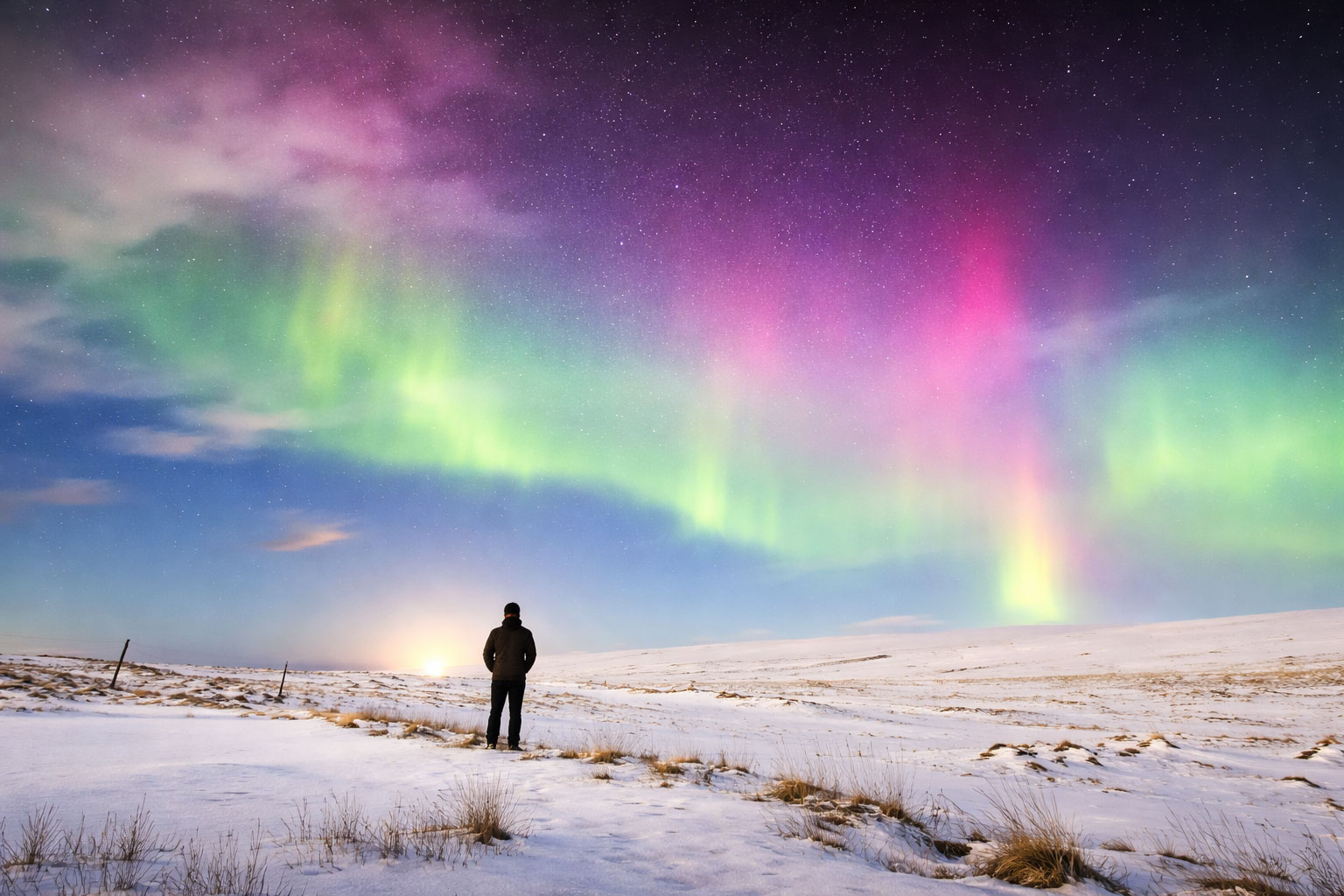
You might want to check your local forecast and keep an eye on the sky this week. An upcoming geomagnetic storm is expanding the potential viewing area for the Aurora Borealis, commonly known as the Northern Lights, further south than usual. This celestial phenomenon, typically confined to higher latitudes, may become visible in at least 15 US states, offering a rare opportunity for many to witness its captivating display.
This isn’t a guarantee of a spectacular show, as numerous factors influence aurora visibility. However, the elevated solar activity presents a heightened chance for the aurora to manifest, even in regions not accustomed to seeing it. You’ll need clear skies and a bit of patience, but the possibility is present.
The primary driver behind this extended viewing window is a significant solar event, likely a coronal mass ejection (CME) or a stream of high-speed solar wind impacting Earth’s magnetosphere. When charged particles from the sun collide with atoms and molecules in Earth’s upper atmosphere, they release energy in the form of light, creating the ethereal colors of the aurora. The intensity and latitude of the aurora are directly correlated with the strength and direction of this solar activity. This week’s conditions are predicting a more powerful and widespread interaction, pushing the aurora’s visibility further south.
Understanding Solar Activity and Its Impact on Auroras
The sun, a constant source of energy for our solar system, is not always a placid celestial body. It experiences cycles of activity, with periods of heightened solar storms. These storms are not merely localized events; they can have far-reaching consequences for Earth. Understanding the basics of solar activity is crucial to appreciating why the aurora might be visible in your neck of the woods this week.
The Sun’s Dynamic Nature
The sun is a giant ball of hot plasma, a state of matter where electrons are stripped from atoms, creating a charged gas. This plasma is in constant motion, driven by convection and magnetic fields. These magnetic fields are responsible for much of the sun’s dramatic activity.
Magnetic Field Lines and Solar Flares
At the surface of the sun, known as the photosphere, magnetic field lines emerge and loop back. When these field lines become twisted and stressed, they can snap and reconnect, releasing immense amounts of energy. This release is what we observe as solar flares. Solar flares are bursts of electromagnetic radiation, including X-rays and ultraviolet light, that travel at the speed of light. While visually impressive from a safe distance, they can disrupt radio communications and satellite operations on Earth.
Coronal Mass Ejections (CMEs)
Perhaps more significant for aurora activity are Coronal Mass Ejections (CMEs). These are massive expulsions of plasma and magnetic field from the sun’s corona, its outer atmosphere. CMEs can travel at immense speeds, some reaching millions of miles per hour. When a CME is directed towards Earth, it can carry a powerful magnetic field and a significant load of charged particles.
Earth’s Magnetosphere: Your Shield Against Solar Storms
Fortunately, Earth is not defenseless against the onslaught from the sun. You have a natural shield: the magnetosphere. This is a protective magnetic field generated by the motion of molten iron in Earth’s core. The magnetosphere extends hundreds of thousands of kilometers into space, deflecting most of the harmful charged particles from the sun.
Interaction with Solar Wind
The constant stream of charged particles emitted by the sun, known as the solar wind, interacts with the magnetosphere. Most of these particles are diverted around Earth. However, during periods of intense solar activity, like the one predicted for this week, the solar wind can be stronger and more energized, pushing against the magnetosphere and causing it to compress.
The Role of Geomagnetic Storms
When the charged particles from the sun, particularly during a CME, manage to penetrate the magnetosphere, they can trigger a geomagnetic storm. These storms are essentially disturbances in Earth’s magnetic field. The strength of a geomagnetic storm is measured on a scale, and this week’s event is expected to reach a level that allows for auroral displays at lower latitudes.
If you’re excited about the possibility of witnessing the Aurora Borealis, you might also be interested in exploring how technology is evolving in other fields. For instance, check out this insightful article on the future of code editors, titled “The AI-First IDE: A Deep Dive into Cursor and the Future of Code Editors.” It discusses the impact of artificial intelligence on programming tools and how these advancements can enhance productivity for developers. You can read the article here: The AI-First IDE: A Deep Dive into Cursor and the Future of Code Editors.
What Causes the Aurora Borealis?
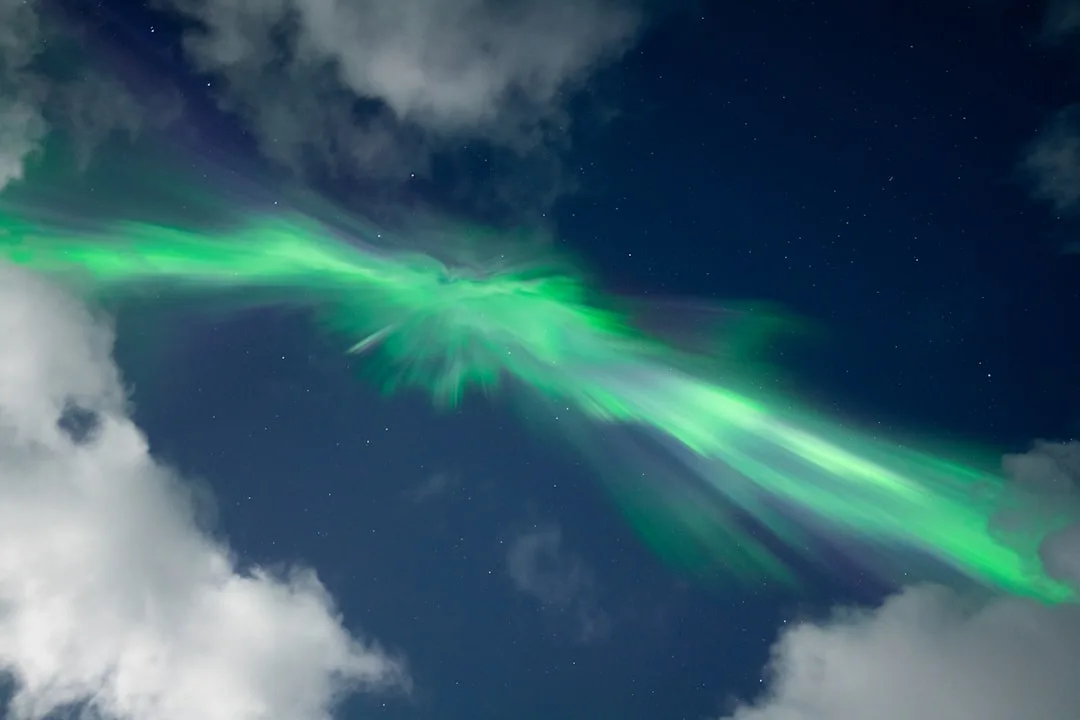
The term “aurora” encompasses both the Northern Lights (Aurora Borealis) and the Southern Lights (Aurora Australis). The fundamental mechanism driving both is the interaction of charged solar particles with your planet’s atmosphere. The colors and intensity of the aurora depend on the type of atmospheric gas being excited and the altitude at which the collision occurs.
The Collision Process
When energetic charged particles, primarily electrons and protons, guided by Earth’s magnetic field lines, enter the upper atmosphere, they collide with atoms and molecules of nitrogen and oxygen. These collisions transfer energy to the atmospheric gases, exciting their electrons to higher energy levels.
Excitation and Relaxation
As these excited electrons return to their normal, lower energy states, they release the absorbed energy in the form of photons, which are particles of light. This emitted light is what you see as the aurora. The process is analogous to how a neon sign works, where an electric current excites gas atoms to produce light.
Altitude and Color
The color of the aurora depends on the type of gas and the altitude of the collision:
- Green: This is the most common color and is produced by oxygen atoms at altitudes of approximately 100-300 kilometers.
- Red: This color is also produced by oxygen atoms but at higher altitudes, typically above 300 kilometers, where the atmosphere is thinner and oxygen molecules are less dense.
- Blue and Purple: These colors are produced by nitrogen molecules at lower altitudes, typically below 100 kilometers. However, these colors can be more difficult to distinguish with the naked eye and are often observed at the lower edges of auroral displays.
The Magnetic Field’s Guiding Role
Your planet’s magnetic field plays a crucial role in funneling these charged solar particles towards the polar regions. The magnetic field lines converge at the north and south magnetic poles. When solar particles encounter the magnetosphere, they are guided along these field lines. This is why auroras are most frequently observed in the auroral ovals, which are regions surrounding the magnetic poles. However, during strong geomagnetic storms, these ovals can expand significantly, bringing the aurora within reach of less northerly locations.
Preparing for Aurora Viewing This Week
With a heightened chance of seeing the Northern Lights, taking steps to maximize your viewing experience is advisable. This involves understanding when and where to look, and what conditions are most favorable.
Checking Aurora Forecasts
While this article highlights the general alert, staying updated on real-time aurora forecasts is essential. Several websites and apps provide predictions based on solar activity and geomagnetic conditions. These tools often use data from space weather agencies to estimate the Kp-index, a measure of geomagnetic activity. A Kp-index of 5 or higher generally indicates that auroras may be visible at lower latitudes.
Reliable Sources for Information
Look for forecasts from reputable organizations like the National Oceanic and Atmospheric Administration (NOAA) Space Weather Prediction Center or the University of Alaska Fairbanks Geophysical Institute. These sources offer detailed information and forecasts that can help you plan your viewing.
Understanding the Kp-Index
The Kp-index is a scale from 0 to 9 that measures geomagnetic activity. A Kp of 0 indicates very quiet conditions, while a Kp of 9 signifies a severe geomagnetic storm. For the Northern Lights to be visible in states typically outside the auroral ovals, a Kp-index of 5 or higher is generally required, with higher numbers increasing the likelihood of southerly visibility.
Choosing the Right Location
Location is paramount when it comes to aurora viewing. You need to be in an area with the darkest possible skies, away from the light pollution of cities. The less urban sprawl you have interfering with your view, the better your chances of seeing faint auroral displays.
Minimizing Light Pollution
Cities and towns emit significant amounts of artificial light that can wash out the fainter glow of the aurora. Driving away from urban centers, even just 30-60 minutes, can make a substantial difference. Parks, rural areas, and designated dark-sky preserves are ideal locations.
Looking North
Since this is the Aurora Borealis, you’ll want to focus your attention towards the northern horizon. Even in states where the aurora is rarely seen, the display will typically appear low in the northern sky.
Ideal Viewing Conditions
Beyond locating yourself away from light pollution, several other factors contribute to a successful aurora viewing experience.
Clear Skies are Essential
Clouds are the aurora viewer’s nemesis. Even the most intense geomagnetic storm is useless if you can’t see through the cloud cover. Check your local weather forecast for clear skies. A forecast with minimal cloud cover is ideal.
Moon Phase Considerations
While not as critical as clear skies, the moon can also impact your ability to see the aurora. A full moon can brightly illuminate the landscape and make the aurora appear dimmer. Aim for nights with a new moon or a crescent moon to maximize contrast.
States with Potential Aurora Visibility This Week
This alert indicates that a number of states, beyond the usual aurora-viewing territories, have an increased chance of experiencing the Northern Lights. The exact extent of visibility will depend on the intensity of the geomagnetic storm and local atmospheric conditions.
Northern Tier States Still Prime Candidates
States that are historically more prone to aurora sightings will, of course, have the highest probability of seeing a display. These regions are situated closer to the typical auroral ovals.
Alaska and Canada’s Proximity
Alaska, being the northernmost state, is a perennial favorite for aurora watchers. Regions in Canada, while not part of the US list, are also prime locations for viewing.
Northern US States
States like Maine, Vermont, New Hampshire, New York, Michigan, Minnesota, North Dakota, Montana, Idaho, and Washington are generally more likely to see auroras during active periods compared to states further south.
Expanded Viewing Opportunity Further South
The significant solar activity predicted this week is what is pushing the aurora’s potential visibility southward into states that rarely experience it. This is the part of the alert that represents a novel opportunity.
Mid-Western Possibilities
States in the Midwest, such as Wisconsin, Iowa, and Illinois, could potentially witness the aurora. These regions are on the fringe of where it’s typically seen but may fall within the expanded auroral oval.
Northeastern Expansion
In the Northeast, parts of Pennsylvania and even Ohio could see the aurora. These are states where a significant auroral event is a rare but not impossible occurrence.
Pacific Northwest and Beyond
Further west, states like Oregon and even parts of northern California might be in a position to observe the lights if the geomagnetic storm is particularly strong.
As the excitement builds around the Aurora Borealis Watch, many are eager to learn more about the science behind this stunning natural phenomenon. For those interested in enhancing their understanding of visual experiences, a fascinating read can be found in an article discussing innovative approaches to UI design that can elevate user engagement. You can explore this insightful piece on revolutionizing UI designs for enhanced user experience, which complements the awe-inspiring visuals of the Northern Lights.
What to Expect and How to Capture the Display
Witnessing the Northern Lights can be a profound experience. Understanding what you might see, and how to document it, can enhance your appreciation.
The Visual Experience
The aurora is not a static light show. It can manifest in various forms, from faint, diffuse glows to vibrant, dancing curtains of light.
Shapes and Movement
You might see arcs, bands, rays, or even coronas (where the aurora appears to radiate directly overhead). The aurora is dynamic and constantly shifting, with lights shimmering, pulsing, and moving across the sky.
Color Intensity
The intensity of the colors will vary. Sometimes, the aurora is a subtle green haze, while at other times, it can be a vivid, multi-colored spectacle that illuminates the landscape.
Photography and Videography Tips
Capturing the aurora requires specific camera settings and techniques. If you plan to photograph the event, preparation is key.
Camera Equipment
You’ll need a camera with manual controls (DSLR or mirrorless), a sturdy tripod, and a wide-angle lens with a fast aperture (low f-number).
Essential Camera Settings
- Shutter Speed: Long exposures are crucial. Start with 10-30 seconds, or even longer for very dark skies.
- Aperture: Use the widest aperture your lens allows (e.g., f/2.8 or f/4) to let in as much light as possible.
- ISO: Experiment with ISO settings, starting around 800-1600. Be mindful of noise; higher ISOs can lead to grainy images.
- Focus: Manual focus to infinity is essential. Pre-focus during daylight or use live view to achieve sharp focus on a distant light source.
- White Balance: Manual white balance, often set to around 3000-4000K, can help capture natural colors, though experimentation is advised.
Patience and Observation
Remember that the aurora can be unpredictable. Even with a strong forecast, there’s no guarantee of a spectacular display. The best approach is to be patient, observe, and enjoy the rare opportunity to witness this natural wonder. Sometimes, a subtle glow on the horizon can evolve into something more dramatic. Being present and taking it all in is as important as any photograph you might capture. This week’s alert offers a chance to potentially see something extraordinary, so make the most of it if clear skies bless your location.
FAQs
What is the Aurora Borealis?
The Aurora Borealis, also known as the Northern Lights, is a natural light display in the Earth’s sky, predominantly seen in high-latitude regions.
What causes the Aurora Borealis?
The Aurora Borealis is caused by the interaction between the solar wind and the Earth’s magnetic field, resulting in the ionization and excitation of atmospheric constituents, leading to the emission of colorful lights.
Which states may catch a glimpse of the Northern Lights this week?
According to the article, 15 states in the United States may have the opportunity to see the Northern Lights this week. These states include Washington, Oregon, Idaho, Montana, North Dakota, South Dakota, Minnesota, Wisconsin, Michigan, New York, Vermont, New Hampshire, Maine, and Alaska.
What time of day is best for viewing the Aurora Borealis?
The best time to view the Aurora Borealis is typically during the late evening to early morning hours, when the sky is dark and the lights are more visible.
What should I do to increase my chances of seeing the Northern Lights?
To increase your chances of seeing the Northern Lights, it is recommended to find a location away from city lights, have clear skies, and be patient as the lights can be unpredictable.
