


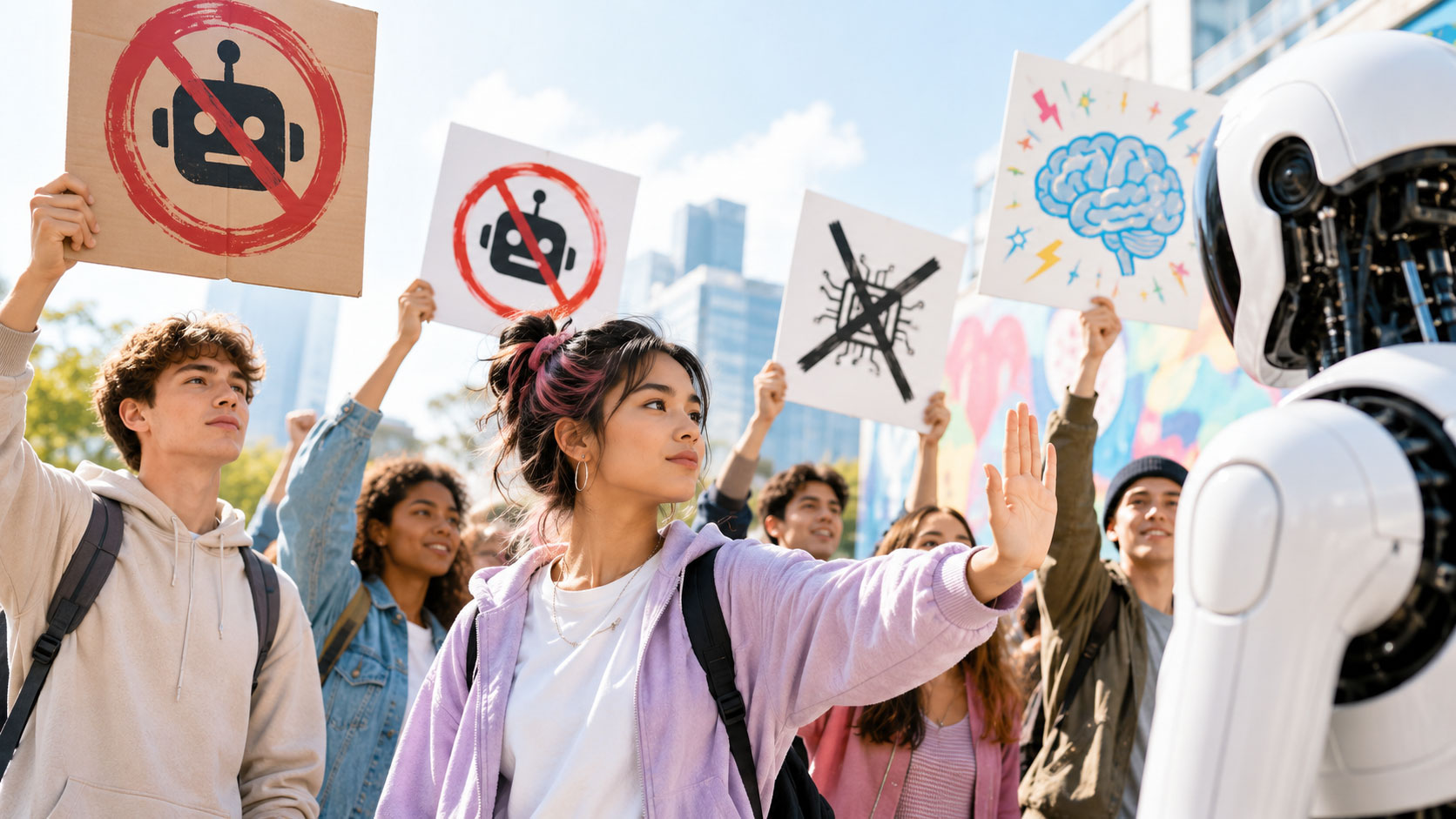
You’re probably scrolling through this on a device, a testament to the digital age you’ve always known. You’ve grown up with the internet, social media, and evolving technology as your constant companions. You are Gen Z, and you’re witnessing, and indeed, actively participating in, one of the most profound technological shifts in human history: the rise of Artificial Intelligence. For years, you’ve heard the whispers, seen the headlines, and experienced the subtle integrations of AI in your daily life. But now, it’s no longer subtle. It’s here, it’s powerful, and for many of you, it’s a direct challenge. This isn’t just about jobs or efficiency; it’s about identity, creativity, and the very essence of human connection. You are not just observing; you are rebelling, and your actions are shaping the future of AI in ways no one anticipated.
You’ve seen AI evolve from a futuristic concept to a palpable reality. It’s in your recommendations, your smart devices, and increasingly, in your creative tools. But what exactly is this “AI onslaught” you’re encountering?
The Pervasive Reach of Algorithmic Control
Think about your daily digital interactions. From the moment you open your social media feed, algorithms are at work. They curate your content, influencing what you see, what you click, and, subtly, what you believe.
- Filtered Realities: You’re constantly fed information tailored to your past behaviors, creating an echo chamber that, while comfortable, can limit your exposure to diverse perspectives. Is this convenient, or is it manipulative? You’re starting to ask that question more often.
- Recommendation Engines on Steroids: Whether it’s music, movies, or even purchases, AI is suggesting your next move. This simplifies choices, but it also dictates discovery, pushing you towards popular trends rather than genuinely unique finds. You’re noticing this pattern and questioning its ultimate impact on your individuality.
- The Gamification of Everything: Many apps and platforms use AI-driven psychology to keep you engaged, using dopamine hits and intermittent rewards to make you feel perpetually “caught up” or “winning.” You’re becoming increasingly aware of how these systems are designed to capture and hold your attention.
The Automation Anxiety: Jobs and the Future of Work
This is perhaps the most tangible and immediate concern for many of you. You’re entering a workforce where automation is no longer a distant threat but a present reality.
- Entry-Level Erosion: You’re seeing how many entry-level tasks, once key stepping stones for your generation, are now being automated. Customer service, data entry, and even some content creation are increasingly handled by AI. This raises questions about how you’re supposed to gain foundational experience.
- The Skills Gap Dilemma: The rapid evolution of AI demands new skills, skills that often aren’t taught in traditional educational settings. You’re feeling the pressure to constantly upskill and adapt, often without clear guidance.
- The Gig Economy’s AI Frontier: While the gig economy offered flexibility, AI is now influencing how tasks are distributed, priced, and evaluated, further impacting your control over your own labor. You’re seeing platforms use algorithms to manage workers, raising concerns about fair compensation and treatment.
The article “Gen Z Generation Is Turning Against AI in an Incredible Way” highlights the growing skepticism among young people regarding artificial intelligence and its implications for society. This sentiment is echoed in a related piece that discusses the potential dangers of AI technologies, particularly in the context of deepfake scams. For more insights on how businesses can protect themselves from these emerging threats, you can read the article at Protecting Your Business from Deepfake Scams: AI vs AI.
The Gen Z Counter-Offensive: Tools of Rebellion
You are not passive observers. You are actively pushing back, using your digital fluency and inherent skepticism to challenge the status quo. Your rebellion is multifaceted, leveraging creativity, critical thinking, and collective action.
Subverting the Algorithm: Digital Activism and Algorithmic Manipulation
You understand how algorithms work better than any previous generation. And you’re using that understanding to your advantage.
- Hashtag Hijacking and Trend Manipulation: You’re seeing how activists utilize trending hashtags to push their messages, sometimes intentionally polluting unrelated trends to gain visibility for social causes. You know that even fleeting attention can spark broader conversations.
- Misinformaton Defense and Fact-Checking Initiatives: While you might also be susceptible to misinformation, you are also at the forefront of debunking it. Online communities, independent fact-checkers, and critical peer review are all tools you employ to combat algorithmic biases and false narratives disseminated by AI.
- Meme Warfare and Satirical Commentary: Memes aren’t just for entertainment; they’re powerful vehicles for social commentary and dissent. You use them to swiftly and effectively communicate complex ideas, critique AI’s shortcomings, and even poke fun at the anxieties it generates. This lighthearted approach often disarms and engages wider audiences.
Championing Human Creativity: The Authentic versus the Artificial
Perhaps the most visceral part of your rebellion is your steadfast defense of human creativity against the perceived threat of AI-generated content.
- The “Human-Made” Premium: You are increasingly valuing and seeking out art, music, writing, and photography created purely by human hands. There’s a growing appreciation for the imperfections, the unique perspectives, and the emotional resonance that AI often struggles to replicate. This is evident in the rise of independent artists and creators who explicitly market their work as “AI-free.”
- Artistic Strikes and Protests: You’ve seen artists, especially visual artists and writers, actively protest the use of their work to train AI models without consent or compensation. These acts of resistance, often amplified on social media, highlight ethical concerns and demand fair treatment.
- The Revival of Analog: In a world saturated with digital, you’re seeing a resurgence of interest in analog hobbies and crafts. Film photography, vinyl records, traditional painting, and even DIY projects appeal to your desire for tangible, human-crafted experiences that explicitly stand apart from the sterile perfection of AI.
As the Gen Z generation increasingly voices their concerns about the implications of artificial intelligence, many are seeking alternative approaches to technology that prioritize human connection and creativity. This shift is not just a passing trend; it reflects a deeper desire for meaningful engagement in a rapidly changing digital landscape. For those interested in understanding how modern workflows can adapt to these evolving preferences, an insightful article on key performance indicators can be found here. This resource highlights the importance of measuring what truly matters in today’s work environment, aligning perfectly with the values of the younger generation.
The Privacy Pushback: Reclaiming Digital Sovereignty
You’ve grown up in a world where your data is constantly being collected. But you’re no longer blindly accepting it.
- Ad-Blockers and Privacy Tools as Standard: For many of you, ad blockers, VPNs, and privacy-focused browsers are not optional; they are essential. You understand that your data is valuable, and you’re taking steps to protect it from large corporations and their AI-driven tracking systems.
- Scrutinizing Terms and Conditions: While the lengthy legal documents are still tedious, there’s a growing awareness and communal effort to understand and critique the privacy policies of platforms and apps. You’re calling out opaque language and demanding transparency.
- The Right to Be Forgotten (Online): You’re advocating for greater control over your digital footprint, recognizing that past online behavior can have lasting consequences, especially when analyzed by powerful AI. The desire to curate and even erase your online persona is a strong motivator.
Redefining “Success” in the Age of AI

Your rebellion isn’t just about what you’re against; it’s about what you’re for. You’re actively redefining what it means to be successful and live a fulfilling life in a world increasingly shaped by AI.
Beyond the Algorithm: The Value of Authentic Connection
You’ve experienced the paradox of being more connected than ever, yet feeling isolated. You’re now prioritizing genuine human interaction.
- Community Over Content: While you still consume vast amounts of content, you’re also seeking out genuine communities—online and offline—where you can build meaningful relationships and engage in shared experiences that aren’t purely algorithmically driven. This means actively choosing platforms and activities that foster real connection.
- The Human Touch in Service and Experience: You’re increasingly frustrated by AI-driven customer service that lacks empathy or effective problem-solving. This frustration is driving a renewed appreciation for personalized, human-centric interactions in all aspects of your life, from shopping to healthcare.
- The Embrace of Imperfection: In a world striving for algorithmic perfection, you’re finding beauty and authenticity in the flawed, the irregular, and the spontaneous moments that AI cannot replicate. This translates into a greater appreciation for handmade goods, raw artistic expression, and uncurated personal experiences.
The Pursuit of Purpose: Finding Meaning Beyond Efficiency
AI excels at efficiency. But you’re realizing that life isn’t just about doing things faster; it’s about doing meaningful things.
- Ethical Consumerism and Conscious Choices: You’re demanding transparency from companies, not just about their products, but about their ethical practices, their environmental footprint, and their use of AI. You want to align your purchases and support with your values.
- Skills for a Human-Centric Future: Instead of solely focusing on technical skills that AI might eventually replace, you’re valuing human-centric skills like critical thinking, emotional intelligence, creativity, and complex problem-solving. You understand that these are the unique strengths that will differentiate you in the future workforce.
- The Rise of the “Experience Economy”: You’re investing in experiences over material possessions, recognizing that these fleeting, human-centric moments are far more enriching and difficult for AI to automate or replicate. This includes travel, live events, unique workshops, and communal activities.
The Future You Are Forging: A New Covenant with AI

Your rebellion isn’t about destroying AI; it’s about shaping it. You’re advocating for a future where AI serves humanity, rather than dominating it, a future where human values are prioritized.
Demanding Ethical AI: Regulation and Accountability
You understand that without ethical guardrails, AI can perpetuate biases and cause harm. You’re vocal in your demands for responsible development.
- Bias Detection and Mitigation: You’re calling for AI systems to be scrutinized for inherent biases, particularly those related to race, gender, and socioeconomic status. You want developers to actively work towards creating more equitable and fair algorithms.
- Transparency and Explainable AI (XAI): You don’t want black boxes. You want to understand how AI makes decisions, especially in critical areas like finance, healthcare, and criminal justice. This demand for explainable AI is crucial for building trust.
- Legal Protections for Human Labor and Creativity: You’re pushing for legislation that protects human artists, writers, and workers from exploitation by AI, ensuring fair compensation and consent for data used in training. This means advocating for copyright reform adapted for the AI age.
AI as an Ally, Not a Master: Collaboration and Augmentation
You’re not rejecting AI entirely; you’re reimagining its role as a powerful tool to augment human capabilities, not replace them.
- AI as a Creative Assistant: Imagine AI that helps you overcome writer’s block, experiment with new artistic styles, or generate innovative melodies, all while you maintain ultimate creative control. This is the collaborative model you envision.
- Personalized Learning and Development: You see AI as a way to personalize education, identifying your learning styles and gaps, and adapting content to your needs, rather than a one-size-fits-all approach.
- Solving Grand Challenges: You believe AI, when directed ethically, can be a powerful force for good in areas like climate change, disease research, and sustainable development. You want AI to tackle humanity’s greatest problems, not just optimize advertising.
The Power of Collective Action: A Generation United
Your strength lies in your ability to organize, communicate, and act collectively on an unprecedented scale.
- Global Digital Networks: You are interconnected like no previous generation. Your ability to share information, mobilize resources, and organize protests across borders is a formidable force.
- Advocacy and Lobbying: You are learning to channel your digital activism into real-world influence, engaging with policymakers and industry leaders to shape the future of AI. You are demanding a seat at the table.
- Shaping Public Opinion: Through your content creation, your discussions, and your direct actions, you are profoundly influencing public perception of AI, shifting the narrative from uncritical acceptance to cautious optimism and proactive insistence on ethical development.
You, Gen Z, are at the vanguard of a critical moment in human history. Your rebellion against the uncritical acceptance of AI is not a rejection of progress, but a powerful demand for thoughtful, ethical, and human-centric technological development. You are not just adapting to the future; you are actively shaping it, ensuring that humanity remains at the heart of the digital age. The incredible shift is happening now, and you are leading it.
FAQs
What is the Gen Z generation’s attitude towards AI?
The Gen Z generation is increasingly turning against AI, expressing concerns about privacy, job displacement, and ethical implications of AI technology.
What are some reasons for Gen Z’s skepticism towards AI?
Gen Z’s skepticism towards AI is fueled by concerns about data privacy, job security, and the potential for AI to perpetuate biases and discrimination.
How is Gen Z expressing their opposition to AI?
Gen Z is expressing their opposition to AI through activism, advocacy for ethical AI development, and calls for increased regulation and transparency in AI technologies.
What impact could Gen Z’s stance on AI have on the future of technology?
Gen Z’s stance on AI could influence the development and implementation of AI technologies, leading to greater emphasis on ethical considerations, privacy protection, and addressing societal impacts.
What are some potential implications of Gen Z’s opposition to AI?
Gen Z’s opposition to AI could lead to shifts in consumer preferences, corporate practices, and government policies, shaping the future of AI technology and its societal impact.
