


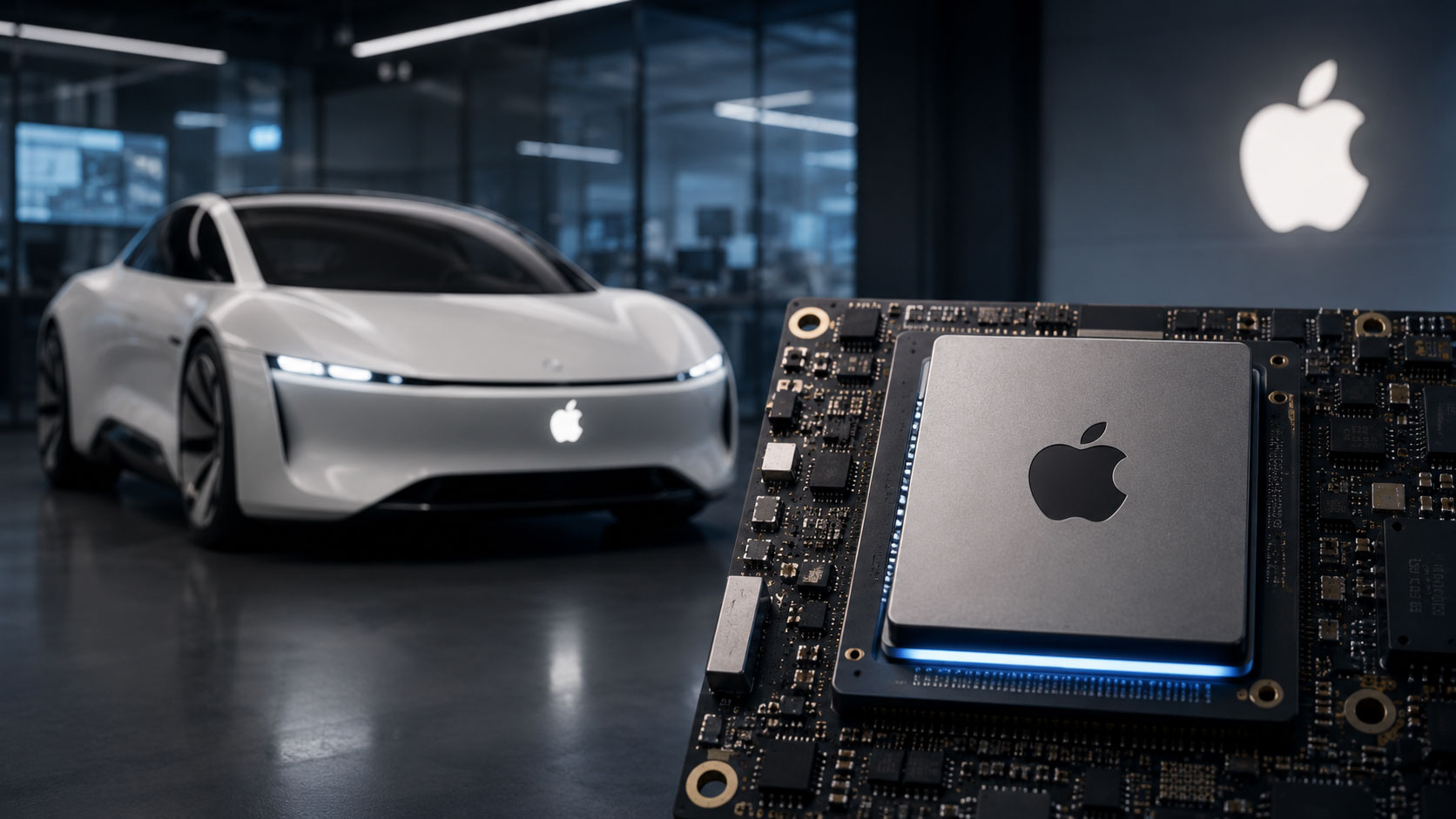
You’ve always been drawn to the future, haven’t you? That’s why the whispers and rumors surrounding Apple’s self-driving car program, Project Titan, have likely caught your attention. It’s not just about another vehicle; it’s about a colossal undertaking steeped in innovation, secrecy, and, most crucially, a profound reliance on advanced AI chips. You understand that the legacy of this ambitious endeavor won’t solely be defined by whether a car rolls off a production line, but by the intellectual property, the technological leaps, and the very foundation of artificial intelligence it leaves behind.
You remember when the first hints of Apple’s automotive aspirations surfaced, a tantalizing whisper in a sea of smartphone launches. It felt audacious, a company known for sleek gadgets venturing into the notoriously complex world of car manufacturing.
A Departure from the Core Business
You initially questioned the rationale. Why would a tech giant with a near-monopoly on personal electronics dive into an industry with razor-thin margins and massive capital expenditure? You considered the competitive landscape, recognizing that Apple rarely enters a market without a compelling differentiating factor. Their strategy isn’t about incremental improvements; it’s about redefinition.
The Initial “Project Titan” Buzz
You followed the early reports, a flurry of speculation about a full-fledged Apple-branded electric car. The idea was intoxicating: an iPhone on wheels, imbued with the same design philosophy and user experience that had captivated millions. You imagined seamless integration with your existing Apple ecosystem, a truly smart car that anticipated your needs.
Early Setbacks and Strategic Pivots
You also witnessed the inevitable stumbles. The hiring and departures of key personnel, the whispers of internal disagreements, and the shift from designing a complete car to focusing on the underlying autonomous driving system. This redirection, you realized, wasn’t a sign of failure but a strategic recalibration, allowing Apple to leverage its core strengths: software, user experience, and, crucially, artificial intelligence. This is where the AI chips truly began to gain prominence in your mind.
Apple’s ambitious self-driving car program may have ultimately faltered, but it has left behind a significant legacy in the form of powerful AI chips that continue to influence the tech landscape. These advancements in artificial intelligence hardware are crucial for various applications, including machine learning and data processing. For a deeper understanding of how AI is reshaping performance metrics in technology, you can explore the article titled “The AI Competency Paradox: How to Redefine High Performance When Everyone Has a Co-Pilot” available at this link.
The Central Role of AI Chips in Apple’s Vision
You understand that at the heart of any truly autonomous vehicle lies an incredibly sophisticated brain – an AI system powered by highly specialized silicon. For Apple, this wasn’t just a component; it was the cornerstone of their entire enterprise.
Architecting the Autonomous Brain
You’ve always admired Apple’s meticulous approach to hardware and software integration. You know they wouldn’t simply buy off-the-shelf processors. Instead, they would meticulously design their own, creating custom AI chips specifically optimized for the unique challenges of self-driving. This implies an unprecedented level of control over the entire vertical stack, from the foundational silicon to the user interface.
The Need for Edge Computing at Scale
You grasp the sheer computational demands of autonomous driving. Imagine a vehicle processing real-time sensor data from cameras, lidar, radar, and ultrasonic sensors, making split-second decisions about obstacle avoidance, lane keeping, and navigation. This isn’t a task for cloud-based AI alone; it requires powerful, energy-efficient AI processing directly on the vehicle itself – edge computing at an extraordinary scale. These custom AI chips, you realized, were designed to handle that immense workload with unparalleled efficiency and low latency.
Beyond Mere Infotainment: True Intelligence
You’ve seen the evolution of in-car technology, from basic radios to sophisticated infotainment systems. But Apple’s ambition went far beyond entertainment. Their AI chips were intended to power true intelligence – decision-making, predictive analysis, and contextual awareness that would redefine the driving experience. This wasn’t about a better Spotify interface; it was about preventing accidents, optimizing routes, and personalizing the journey in ways you hadn’t yet imagined.
The Legacy of Custom Silicon Design

You realize that even if Project Titan never fully materializes into a branded car, the advancements made in AI chip design will have a profound and lasting impact.
Learning from the A-Series and M-Series Success
You’ve witnessed the transformative power of Apple’s in-house silicon, from the A-series chips in your iPhone, enabling incredible performance and energy efficiency, to the groundbreaking M-series chips in your Mac, revolutionizing the computing landscape. You know that the same meticulous engineering and relentless pursuit of performance and efficiency would be applied to their automotive AI chips. This deep expertise in SoC (System on a Chip) design was a significant advantage.
Specialized Neural Engines for Automotive Tasks
You understand that general-purpose processors aren’t sufficient for the demanding, high-throughput, and specialized tasks of autonomous driving. Apple’s AI chips would likely feature highly specialized neural engines, dedicated hardware accelerators designed to efficiently execute machine learning algorithms crucial for object detection, scene understanding, and path planning. These engines would be optimized for specific neural network architectures used in perception and decision-making for vehicles.
Impact on Future Apple Products
You can envision the trickle-down effect. The innovations in low-power, high-performance AI processing developed for Project Titan could find their way into a myriad of other Apple products. Imagine enhanced Siri capabilities, more sophisticated augmented reality experiences, or even more intelligent home devices, all benefiting from the R&D poured into powering a self-driving car. This isn’t just about automotive; it’s about advancing the state of the art in AI across Apple’s entire ecosystem. You recognize that even a “failed” project can generate invaluable intellectual property that fuels future successes.
The Data-Driven Development Pipeline

You know that powerful AI chips are only as good as the data they’re trained on. Apple’s approach to self-driving, you suspect, involves a massive and sophisticated data pipeline to refine its AI models.
Fleet Learning and Simulation Environments
You imagine Apple operating a large fleet of test vehicles, meticulously collecting vast amounts of real-world driving data. This data, encompassing every conceivable scenario, from mundane commutes to perilous weather conditions, would be crucial for training and validating their autonomous systems. Alongside this, you envision sophisticated simulation environments, allowing for the rigorous testing of algorithms in virtual worlds, at a speed and scale impossible in the real world. This data, combined with the specialized AI silicon, forms a powerful feedback loop.
Ethical Considerations in Data Collection
You also ponder the ethical implications of such extensive data collection. Privacy, data security, and the responsible use of
personal information would be paramount concerns for a company like Apple, which prides itself on user privacy. You expect rigorous anonymization protocols and transparent data governance to be integral to their data-driven development.
The Feedback Loop: Chips and Algorithms Improving Each Other
You understand the symbiotic relationship between hardware and software in AI. The custom AI chips are designed to accelerate specific algorithms, and in turn, the insights gained from algorithm development inform the next generation of chip design. This continuous feedback loop is crucial for achieving optimal performance, efficiency, and safety in an autonomous system. It’s a dance between silicon and code, orchestrated by brilliant engineers.
Apple’s ambitious self-driving car program may have ultimately faltered, but it has left behind a significant legacy in the form of powerful AI chips that continue to influence the tech landscape. These chips have paved the way for advancements in various applications, particularly in generative AI, which is rapidly transforming creative processes. For a deeper understanding of how these trends are evolving, you can explore this insightful article on the subject. The intersection of AI and creativity is becoming increasingly important, and Apple’s contributions in this area cannot be overlooked. To learn more, visit this article.
A Legacy Beyond the “Car” Itself
| Metrics | Data |
|---|---|
| Company | Apple |
| Program | Self-driving car |
| Legacy | Powerful AI chips |
You’ve come to realize that the story of Apple’s self-driving car project isn’t simply about whether a car emblazoned with the Apple logo will appear in your driveway. Its true legacy is far broader, touching upon fundamental advancements in technology.
Reshaping the Automotive Industry
Even without launching its own vehicle, Apple’s involvement has undoubtedly pushed the traditional automotive industry forward. You’ve seen how their high standards for design, user experience, and technological integration have influenced other players. The sheer competition from a tech giant with such deep pockets and engineering prowess forces everyone else to raise their game, particularly in the realm of advanced driver-assistance systems (ADAS) and autonomous technology.
Advancements in Machine Learning and Computer Vision
You recognize that the billions invested in Project Titan have directly contributed to significant advancements in core AI disciplines like machine learning and computer vision. The challenges of real-time, robust perception in dynamic environments are immense, and solving them for autonomous driving pushes the boundaries of current AI capabilities. These breakthroughs, developed in the context of self-driving, will undoubtedly spill over into other fields, from medical imaging to robotics.
The Talent Pipeline and Knowledge Generation
You know that attracting and retaining top-tier AI talent is crucial for any ambitious tech project. Apple’s self-driving car program has served as a magnet for some of the brightest minds in AI, robotics, and hardware engineering. The sheer volume of knowledge generated, the patents filed, and the expertise cultivated within this program represent an invaluable asset, regardless of the final product. This intellectual capital will continue to influence Apple’s future endeavors and the broader tech landscape. You can almost feel the intellectual ferment within those secretive Apple labs.
The Enduring Influence on User Experience and Safety
You envision a future where the seamless, intuitive user experience you’ve come to expect from Apple extends to how you interact with your vehicle, whether it’s an Apple car or not. The focus on safety, driven by the imperative of autonomous driving, will also leave a lasting mark. The rigorous testing, validation, and redundancy built into their autonomous systems will set new benchmarks for what is considered safe and reliable in transportation.
In conclusion, you recognize that Apple’s self-driving car program, Project Titan, is a testament to the company’s ambition and its profound reliance on advanced AI chips. Its legacy won’t be solely etched in the eventual appearance (or non-appearance) of an Apple-branded car, but in the groundbreaking custom silicon designs, the advancements in machine learning, the data-driven pipelines, and the indelible influence it will have on both the automotive industry and the broader field of artificial intelligence. You understand that sometimes the journey itself, with all its technological innovations and intellectual property, is the most profound destination. And in this case, the journey has been powered by the relentless pursuit of smarter, more efficient AI chips.
FAQs
What was Apple’s self-driving car program?
Apple’s self-driving car program, known as Project Titan, was an initiative to develop autonomous vehicle technology. The project aimed to create a self-driving car that could compete with other companies in the industry.
Why did Apple’s self-driving car program fail?
Apple’s self-driving car program faced numerous challenges, including leadership changes, technical hurdles, and a lack of clear direction. These issues ultimately led to the project’s failure to produce a viable self-driving car.
What is the legacy of Apple’s failed self-driving car program?
Despite the failure of the self-driving car program, Apple was able to leverage the technology and expertise gained from the project to develop powerful AI chips. These chips have been integrated into other Apple products and have contributed to the company’s advancements in artificial intelligence.
How have Apple’s AI chips impacted the technology industry?
Apple’s AI chips have had a significant impact on the technology industry, particularly in the realm of artificial intelligence and machine learning. These powerful chips have enabled advancements in various applications, including image recognition, natural language processing, and augmented reality.
What are the future implications of Apple’s AI chip legacy?
The legacy of Apple’s AI chips is likely to continue shaping the future of technology, particularly in the development of advanced AI-driven products and services. The expertise gained from the failed self-driving car program has positioned Apple as a key player in the AI chip market, with potential for further innovation and industry influence.
