


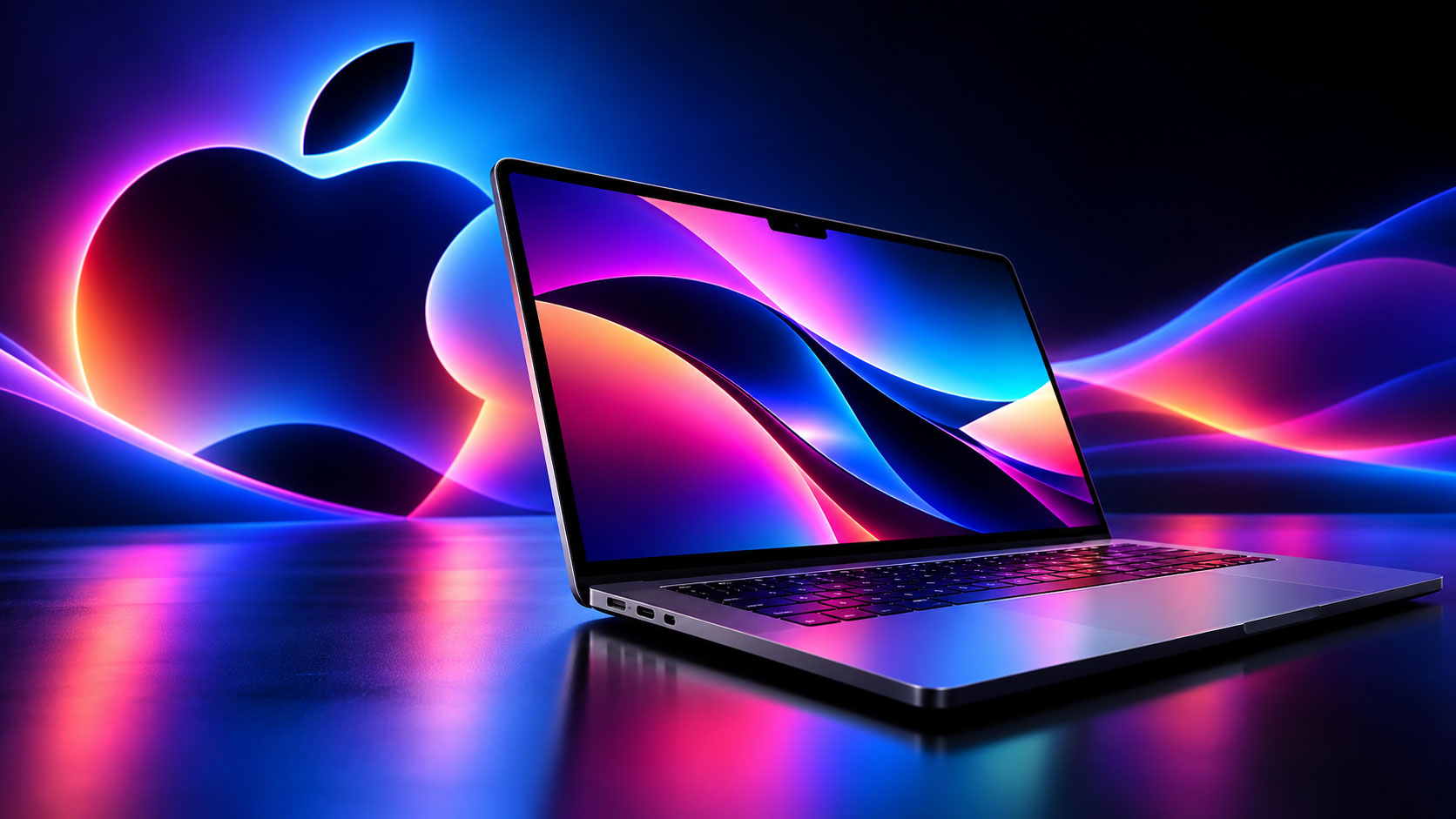
The Long-Awaited Leap: Embracing Touch and OLED
You’ve been waiting for this, haven’t you? The whispers have grown into a murmur, and now, a roar. Apple, long a holdout in the touchscreen laptop space, appears poised to finally bring this functionality to its flagship MacBook Pro line, coupled with the dazzling visual fidelity of OLED displays. This isn’t just a minor update; it’s a fundamental reimagining of how you interact with your professional portable workstation. For years, the argument against touch on a MacBook revolved around the perceived inefficiency of reaching up to a vertical screen, the “gorilla arm” syndrome. However, the industry has shifted, user expectations have evolved, and the practical benefits, especially when combined with a well-integrated macOS experience, are becoming undeniable. You’re looking at a future where your MacBook Pro isn’t just a powerful workhorse, but a more versatile and intuitive creative tool. The shift to OLED, meanwhile, promises a visual experience that will make your current Retina display feel almost quaint in comparison. Imagine the deeper blacks, the vibrant colors, the incredible contrast – all essential for anyone working with visual media, or indeed, anyone who simply appreciates a superior display. This article will delve into everything we know, and everything we can infer, about this revolutionary new MacBook Pro.
Why Now for Touchscreen and OLED?
You might be asking yourself, “What took them so long?” Apple’s history is one of deliberate, often unhurried, adoption of new technologies. They rarely rush into trends, preferring to perfect an implementation rather than be first to market. Several factors likely contributed to the timing of this significant pivot. Firstly, the iPad Pro, with its powerful M-series chips and Magic Keyboard integration, has blurred the lines between tablet and laptop. You’ve likely seen professionals using iPads for tasks traditionally reserved for MacBooks, complete with a keyboard and trackpad. Adding touch to the MacBook Pro is a logical extension, allowing for similar, yet distinct, workflows within the same device. Secondly, the maturation of OLED display technology has reached a point where it can meet Apple’s stringent quality, longevity, and power efficiency standards for a laptop. Earlier OLED panels, while visually stunning, often struggled with burn-in and higher power consumption, issues that Apple would be keen to avoid in a premium device. Finally, the competitive landscape has also played a role. Many high-end Windows laptops have offered touchscreens and OLED for years, and while Apple often marches to its own beat, ignoring market trends entirely can eventually impact sales and user perception, especially among those who might prefer the flexibility a touchscreen offers. You can envision a scenario where a user, choosing between a MacBook Pro and a premium Windows laptop, might be swayed by the latter’s touch capabilities.
The Technological Evolution Paving the Way
Consider the sheer amount of engineering that goes into a shift like this. It’s not simply about slapping a touchscreen on a traditional laptop. The M-series chips, with their unified memory architecture and incredible efficiency, provide the necessary grunt to handle the additional processing requirements of touch input without sacrificing battery life or performance. You’ve seen how these chips have transformed the Mac lineup, and they are arguably the cornerstone of enabling such an ambitious redesign. Furthermore, the development of robust, long-lasting touch layers that can withstand constant interaction and integrate seamlessly with macOS requires significant R&D. And then there’s the OLED technology itself. Apple has been using OLED in its iPhones and Apple Watches for years, giving them invaluable experience in managing its characteristics, from color calibration to mitigating potential burn-in. You’re not just getting a new feature; you’re getting a feature built upon years of iterative refinement and expertise within Apple’s ecosystem.
In addition to the exciting developments surrounding Apple’s Touchscreen OLED MacBook Pro, you may find it interesting to explore the article on email marketing strategies that can enhance your business outreach. This article provides valuable insights into how effective email campaigns can complement the use of advanced technology like the new MacBook Pro. For more information, check out the article here: Email Marketing Strategies.
Design Philosophy and Aesthetic Considerations

You expect a certain level of design excellence from Apple, and the touchscreen OLED MacBook Pro will undoubtedly deliver. While the core aesthetic of the MacBook Pro is likely to remain familiar – the sleek aluminum unibody, the precise keyboard, the expansive trackpad – you can anticipate subtle yet significant refinements to accommodate the new display technology and touch input. The shift to OLED, for instance, will allow for even thinner display bezels, enhancing the immersive experience. Imagine your content extending closer to the edges, creating a more expansive canvas for your work. You’ll likely see a continued emphasis on minimizing thickness and weight, even with the added components.
Display Integration and Durability
The integration of the touchscreen layer and the OLED panel will be paramount. You won’t want a flimsy or overly reflective screen. Apple’s reputation for premium displays suggests they will utilize advanced bonding techniques to ensure minimal glare, excellent optical clarity, and robust durability. Expect a high-quality glass layer that feels smooth and responsive to the touch, akin to the iPad Pro’s display. You can anticipate an anti-reflective coating that further enhances usability in various lighting conditions, a crucial feature for a professional device. The durability of the display will also be a major concern, given the increased potential for direct interaction. Apple will likely employ toughened glass, similar to the Ceramic Shield on iPhones, to protect against scratches and impacts, ensuring your investment is well-protected. Think of the peace of mind you’ll have knowing your valuable display is built to withstand the rigors of daily use.
The Role of the Hinge and Form Factor
With the introduction of a touchscreen, the stability of the display hinge becomes even more critical. You don’t want a wobbling screen when you’re trying to precisely tap or swipe. Expect an exceptionally rigid and robust hinge mechanism, potentially even more refined than current MacBook Pro hinges, to minimize screen bounce and provide a stable platform for touch interaction. While a full 360-degree convertible design like many Windows laptops is highly unlikely for the MacBook Pro, given Apple’s consistent design language, you might see a slightly increased maximum display tilt angle to facilitate more comfortable touch use when the laptop is on a desk. The fundamental “clamshell” laptop form factor will almost certainly be retained, reinforcing its identity as a professional notebook first and foremost, rather than trying to mimic a tablet with a keyboard. This means you’ll still be getting the premium laptop experience you’ve come to expect, but with added versatility.
The Software Experience: macOS Reimagined

This is where the true magic will happen. A touchscreen MacBook Pro isn’t just about hardware; it’s about how macOS adapts and evolves to embrace touch input while retaining its core desktop paradigm. You can expect a thoughtful, deliberate approach from Apple, avoiding a simple porting of iOS gestures and instead integrating touch in a way that feels natural and additive to the existing macOS experience. Imagine precision gestures for creative applications, or quick taps for navigation in system utilities.
Intuitive Touch Gestures and UI Refinements
You’ll likely see new, dedicated touch gestures that complement, rather than replace, the trackpad and keyboard. These might include two-finger taps for contextual menus, pinch-to-zoom directly on content, and more fluid scrolling with your fingers. Crucially, these gestures will need to feel distinctly “Mac” – precise, responsive, and intelligently integrated. Apple will also likely introduce subtle UI refinements to macOS to make targets easier to tap with a finger without making the interface feel overly “bloated” or tablet-like. Think slightly larger hit areas for certain buttons or sliders when touch is detected, or perhaps adaptive interface elements that subtly adjust when you interact directly with the screen. You won’t see a radical overhaul that alienates existing macOS users, but rather a sophisticated evolution that enhances usability. Consider how a simple tap to confirm a selection or drag-and-drop an element directly on the screen could streamline your workflow.
Pro Apps and Developer Adoption
The success of a touchscreen MacBook Pro will heavily depend on how professional applications adapt. You can expect Apple’s own Pro Apps – Final Cut Pro, Logic Pro, Xcode, etc. – to be among the first to fully leverage touch input. Imagine scrubbing through a timeline in Final Cut Pro with your finger, or precisely positioning elements in an Xcode interface. This will open up new avenues for creative expression and efficiency that were previously difficult or impossible with just a trackpad. Furthermore, Apple will undoubtedly provide developers with robust APIs and tools to integrate touch functionality into their applications seamlessly. You can anticipate a wave of updates to third-party professional software, with developers eager to take advantage of these new input methods. This isn’t just about casual browsing; it’s about empowering professionals with new ways to interact with their most critical tools. For artists, architects, and designers, direct manipulation on screen could be a game-changer.
Continuity and the Apple Ecosystem
The integration with the broader Apple ecosystem will be a significant advantage. You already benefit from features like Universal Control and Sidecar, seamlessly extending your workflow across devices. A touchscreen MacBook Pro will further enhance this continuity. Imagine air-dropping a file from your iPhone and then directly manipulating it on your MacBook Pro’s touch display. You might even see new “handoff” capabilities that intelligently transfer touch-based workflows between your iPad and MacBook Pro. This cohesive experience is a hallmark of Apple’s strategy, and the touchscreen MacBook Pro will be a powerful new piece of that puzzle, ensuring your devices work together harmoniously, regardless of the input method you choose.
Performance and Power Efficiency with OLED
The move to OLED won’t come at the expense of performance or battery life. You’re buying a MacBook Pro, after all, and you expect it to be a powerhouse that lasts all day. Apple’s M-series chips are uniquely positioned to deliver this combination of stunning visuals and exceptional endurance.
M-Series Powerhouse
The upcoming MacBook Pro models will undoubtedly feature the latest iteration of Apple’s M-series chips, likely an M4 or M4 Pro/Max. These chips are renowned for their industry-leading performance-per-watt, meaning they can deliver incredible processing power without excessive heat generation or power drain. You’ve already seen the transformative impact of these chips on the Mac lineup, enabling fanless designs in some models and extending battery life to unprecedented levels in others. This efficiency will be crucial for powering a high-resolution OLED display and managing the additional processing overhead of touch input, ensuring that the touch experience is always fluid and responsive without compromising core performance. Your demanding professional applications will continue to run without a hitch, perhaps even faster than before, all while providing the new interactive layer.
OLED Benefits and Challenges for Laptops
While OLED offers unparalleled visual quality – perfect blacks, infinite contrast, and vibrant colors – it also presents specific challenges for laptop integration. Early OLED panels could suffer from burn-in, a phenomenon where static images left on screen for too long could leave a faint ghost image. However, modern OLED technology, particularly the panels Apple sources, has significantly mitigated this risk through advanced pixel shifting techniques and improved material longevity. You can expect Apple to implement its own sophisticated software and hardware optimizations to further prevent burn-in and ensure the longevity of the display.
Power consumption is another area where OLED can sometimes be more demanding than traditional LCDs, especially when displaying bright, white content. However, for typical macOS interfaces with dark modes and varied content, OLED can actually be more power efficient by turning off individual pixels in black areas. Apple’s meticulous power management, coupled with the efficiency of the M-series chips, will ensure that the OLED display doesn’t drastically reduce battery life. You’ll likely see battery life figures on par with, or even exceeding, current MacBook Pro models, a testament to Apple’s engineering prowess. The benefits for tasks like video editing, graphic design, and photography will be immense; the accuracy and depth of color on an OLED display are simply superior.
Thermal Management and Sustained Performance
Introducing a touchscreen layer and a potentially higher-power-draw OLED display requires careful thermal management to ensure sustained performance, especially in a professional laptop that might be under heavy load for extended periods. Apple’s MacBook Pro thermal designs are already industry-leading, featuring efficient fan systems and advanced heat pipes. You can expect these cooling solutions to be further refined to accommodate the new display technology and ensure that your MacBook Pro remains cool and quiet even when pushing its limits. This means your M-series chip will be able to sustain its peak performance for longer, a critical factor for professionals who rely on their machines for demanding tasks like 3D rendering, video encoding, or scientific simulations.
The upcoming Apple Touchscreen OLED MacBook Pro has generated significant buzz in the tech community, with many eager to learn more about its features and capabilities. For those interested in enhancing their digital experience, a related article on creating stunning WordPress web designs can provide valuable insights into how to optimize your online presence. You can read more about it here. As Apple continues to innovate, the integration of touchscreen technology in their laptops may revolutionize the way users interact with their devices.
What to Expect and When to Expect It
| Feature | Details |
|---|---|
| Display Type | Touchscreen OLED |
| Screen Size | Expected 14-inch and 16-inch variants |
| Resolution | High resolution with deep blacks and vibrant colors (OLED) |
| Touch Capability | Full touchscreen support integrated into the display |
| Processor | Apple Silicon (M2 Pro / M2 Max expected) |
| RAM Options | 16GB, 32GB, and possibly 64GB |
| Storage Options | 512GB, 1TB, 2TB, 4TB, and 8TB SSD |
| Ports | Thunderbolt 4, HDMI, SD card slot, MagSafe charging |
| Battery Life | Up to 21 hours video playback |
| Operating System | macOS Ventura (or later) |
| Release Date | Expected late 2024 |
You’re eager to get your hands on one, aren’t you? The timeline for Apple’s product releases is often a closely guarded secret, but based on industry rumors, supply chain reports, and Apple’s historical patterns, we can make some educated guesses about when you’ll be able to purchase a touchscreen OLED MacBook Pro.
Release Window Predictions
The most persistent rumors point to a release sometime in late 2024 or early 2025. This timeframe allows Apple to finalize the integration of the touchscreen and OLED technology, optimize macOS for touch, and ramp up production. You might see an initial announcement at a dedicated Apple event, perhaps in the fall alongside new iPhones, or a spring event in the new year focusing on Mac hardware. It’s plausible that Apple will debut the technology first in the higher-end 14-inch and 16-inch MacBook Pro models, targeting professionals who demand the absolute best in display quality and versatility. This allows them to refine the technology before potentially expanding it to other MacBook lines, such as the MacBook Air. You’ll want to keep an eye on Apple’s usual announcement periods for concrete details.
Potential Price Point and Configurations
You can expect a premium price for a premium product. The introduction of OLED and touchscreen technology will undoubtedly push the starting price of the MacBook Pro higher than current models. While specific pricing details are impossible to confirm, you should anticipate a significant investment, likely starting at $2,000-$2,500 USD for the entry-level 14-inch model, and potentially climbing much higher for the 16-inch version with top-tier M-series chips, increased RAM, and larger SSDs. This pricing reflects the cutting-edge technology, the robust design, and the professional-grade performance that the MacBook Pro represents. You’ll likely have a range of configurations to choose from, allowing you to tailor the machine to your specific needs and budget, much like current MacBook Pro offerings.
Implications for Other Mac Lines
While the initial focus is on the MacBook Pro, the introduction of a touchscreen and OLED display will undoubtedly have ripple effects across the entire Mac lineup. You might see OLED displays eventually make their way to the MacBook Air, offering consumers a more affordable entry point into this stunning visual technology. However, the touchscreen aspect might remain a “Pro” feature for longer, or be implemented differently in other models, perhaps with less emphasis on direct manipulation and more on gesture-based interactions. The success of the touchscreen OLED MacBook Pro will dictate the pace and direction of these changes. You’re witnessing the beginning of a new era for the Mac, one where the lines between traditional computing and direct interaction are increasingly blurred, offering a richer and more versatile computing experience for everyone.
FAQs
1. Will the new MacBook Pro have a touchscreen OLED display?
Yes, according to reports and leaks, Apple is planning to introduce a touchscreen OLED display on the upcoming MacBook Pro model.
2. What are the advantages of having a touchscreen OLED display on a MacBook Pro?
A touchscreen OLED display offers better color accuracy, higher contrast ratios, faster response times, and improved energy efficiency compared to traditional LCD screens. It also allows for more interactive and intuitive user experiences.
3. Will the touchscreen OLED display support Apple Pencil input?
It is rumored that the touchscreen OLED display on the new MacBook Pro will support Apple Pencil input, enabling users to take notes, draw, and interact with the screen using the stylus.
4. How will the touchscreen OLED display impact the overall design of the MacBook Pro?
The introduction of a touchscreen OLED display may lead to a redesign of the MacBook Pro, potentially featuring slimmer bezels, a more compact form factor, and a more modern aesthetic to accommodate the interactive display.
5. When is the expected release date for the new MacBook Pro with a touchscreen OLED display?
While an official release date has not been confirmed by Apple, industry insiders speculate that the new MacBook Pro with a touchscreen OLED display could be unveiled in late 2021 or early 2022.
