


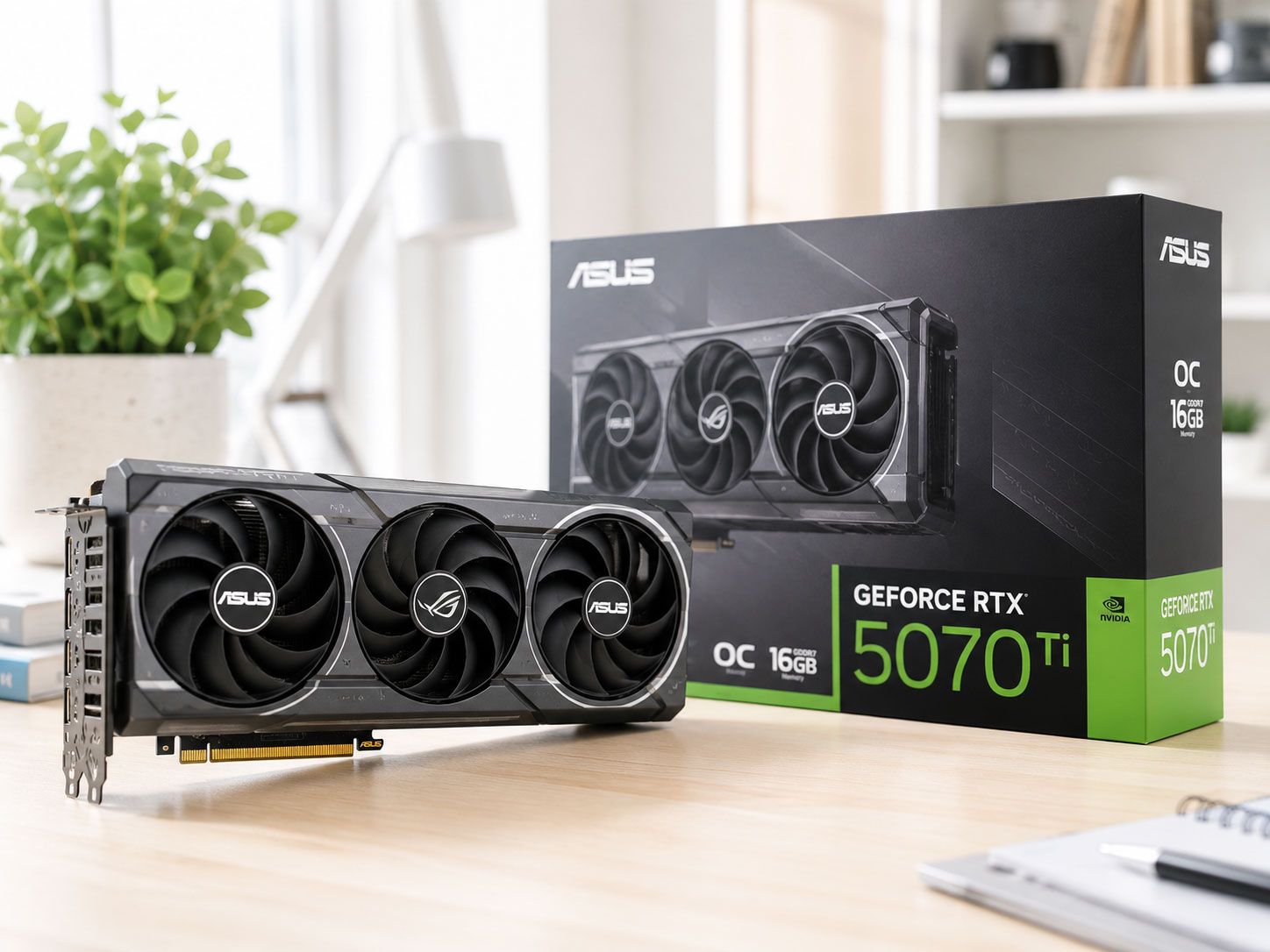
You’re looking at the GPU market, and a familiar pattern is emerging, tinged with a new twist. You’ve likely been following the graphics card scene for a while, and you know the ebb and flow of supply and demand, the whispers of new architectures, and the inevitable pricing shifts. This time, however, the narrative is being shaped by something a little more fundamental, a bit more… sticky: memory shortages. And ASUS, a titan in this space, is visibly adjusting its strategy, a shift that directly impacts your pursuit of cutting-edge gaming and creative power. You’re about to see how the company is prioritizing the highly anticipated RTX 5070 Ti, even amidst broader industry challenges, and what that means for you, the discerning consumer.
You’ve probably noticed that graphics cards don’t just magically appear. They are the culmination of a complex global supply chain, where chips are designed, manufactured, and then assembled onto printed circuit boards with a host of other components. For a long time, the Graphics Processing Unit (GPU) itself, the silicon heart of the card, was the bottleneck. But lately, the narrative has been subtly but decidedly changing. You’re now facing a scenario where the memory chips – the GDDR6X or GDDR7 modules that feed data to the GPU – are becoming the chokepoint.
Understanding the Memory Crunch
You might be wondering, why memory? It seems counterintuitive. We hear about advancements in core counts, clock speeds, and ray tracing capabilities. However, the sheer bandwidth and capacity of memory are critical for these very advancements. As GPUs become more powerful and game textures grow in complexity, the demand for high-speed, high-capacity memory escalates. This isn’t just about raw speed; it’s about the sheer volume of data that needs to be transferred to and from the GPU per second. Think of it like a superhighway: if the lanes are too narrow or the entrance/exit ramps are too small, even the fastest cars will get stuck in traffic.
The Role of GDDR6X and Beyond
You’ve seen the specifications of recent high-end cards. They boast impressive GDDR6X memory capacities, measured in gigabytes, and incredible speeds, measured in gigabits per second. This memory is essential for handling the massive textures, intricate geometry, and complex shader calculations that define modern gaming experiences. But the manufacturers of these specialized memory chips are themselves facing production constraints. You might not see their names plastered on the boxes, but their output directly dictates how many high-end GPUs can be built.
Supply Chain Dependencies
You can trace this back to the semiconductor foundries that produce these memory chips. Their production lines are already stretched thin, serving a multitude of industries from smartphones to automotive. Then there are the yield rates – not every memory chip produced is perfect. A lower yield rate means fewer usable chips per wafer, exacerbating the scarcity. You’re not just competing with other gamers for GPUs; you’re also indirectly competing with the entire tech industry for a limited supply of this crucial component.
ASUS’s Strategic Pivot: Why the RTX 5070 Ti?
Now, let’s talk about ASUS and their observed shift. When you see a major manufacturer like ASUS making strategic decisions, it’s usually a reaction to market forces, aiming for maximum return on investment. Their focus on the RTX 5070 Ti, NVIDIA’s anticipated next-generation flagship from the Lovelace architecture iteration, isn’t arbitrary. It’s a calculated move designed to navigate the current memory landscape while maximizing profitability.
The “Halo” Product Strategy
You understand the concept of a “halo” product. These are the top-tier, aspirational devices that showcase the pinnacle of a company’s engineering prowess. For ASUS, the RTX 5070 Ti is set to be that kind of product. It will command the highest price tag, attract the most enthusiast attention, and generate the most discussion. By prioritizing its production, ASUS is betting on the fact that consumers willing to invest in this ultra-premium segment are less price-sensitive and more tolerant of slightly longer wait times, provided they can secure the absolute best performance.
High Margin, High Demand
This is where the profitability comes in. High-end GPUs, especially flagship models, carry significantly higher profit margins for manufacturers. The research and development costs are substantial, of course, but the perceived value and the limited availability in the initial stages allow for premium pricing. You’ve likely seen this play out with previous generations. When you can produce a limited number of cards at a very high price point, you can recoup your investment and generate substantial profit, even if overall shipment volumes are lower than for a more mainstream card.
Addressing the Memory Constraints Directly
You might think that focusing on a memory-intensive card like the RTX 5070 Ti would be more difficult given the shortages. However, the strategy is about which cards to prioritize given the constraints. If memory is the bottleneck, then focusing production on the cards that offer the highest profit margin per unit of memory used makes the most sense.
Optimizing for Profit per GB
ASUS is likely analyzing the cost of memory versus the potential selling price for different GPU models. The RTX 5070 Ti, by virtue of its top-tier status, can command a price that makes the investment in its specialized memory more justifiable in terms of profit. This means that even if they have to pay a premium for the scarce memory chips, the profit margin on an RTX 5070 Ti sold can absorb that higher cost more readily than on a less expensive, more volume-oriented card. You’re essentially seeing a reallocation of precious resources to where they will yield the greatest financial reward.
In light of recent developments in the graphics card market, ASUS’s decision to prioritize the more profitable RTX 5070 Ti over the RTX 5070 Ti due to memory shortages has sparked discussions about the future of gaming hardware. This pivot reflects a broader trend in the tech industry, where companies are increasingly focusing on maximizing profitability amid supply chain challenges. For a deeper understanding of how technology companies are adapting to changing market demands, you may find the article on the rise of super apps insightful, as it explores the integration of various services into a single platform. You can read more about it here: The Rise of the Super App.
Navigating the RTX 40 Series Landscape
While the RTX 5070 Ti is the focal point, you can’t ignore the existing RTX 40 series. ASUS’s prioritization of the next generation inevitably has implications for the current lineup, particularly for cards that are also memory-intensive. You’re likely wondering how this affects cards like the RTX 4080 or even the RTX 4090.
The RTX 4080: A Case Study in Shifting Focus
The RTX 4080, while a powerful card, has often been in a somewhat awkward position in the market. You’ve seen it priced very close to the RTX 4090 sometimes, making the premium for the absolute top-tier hard to ignore. Now, with ASUS potentially shifting its top-tier manufacturing focus towards the 5080, the availability and production of the 4080 might see further adjustments.
Production Ramping Down or Reallocated?
You’re not seeing ASUS simply abandon the RTX 4080. Instead, it’s more likely a reallocation of manufacturing capacity and component sourcing. The resources – the skilled labor, the factory floor time, and especially the crucial memory chips – that might have gone into producing more RTX 4080s are now being directed towards the RTX 5070 Ti. This could mean slower production runs or even a gradual phase-out as the 5080 ramps up.
Impact on Pricing and Availability
For you, the consumer, this means the RTX 4080 might become even harder to find or see price fluctuations as supply tightens. If the demand remains steady but the supply shrinks, you can expect prices to potentially creep up or at least stay stubbornly high. You might be looking at fewer discounted offers or bundles for this particular card.
The RTX 4090: Enduring Demand and Supply Tensions
The RTX 4090, the current king of the hill, is in a slightly different category. Its demand remains incredibly strong, and its performance is still unmatched. However, it too is reliant on the same memory components that are becoming scarce.
Prioritizing Existing High-Margin Products
Even with the focus shifting to the 5080, ASUS will likely continue to produce the 4090 as long as it remains highly profitable and demand is robust. The question is, at what capacity? You’re seeing a balancing act here: continuing to capitalize on the existing flagbearer while preparing for the successor. This means that while the 4090 won’t disappear overnight, you might find its supply also subject to the same memory constraints, leading to periods of scarcity.
The Interplay Between Generations
You can observe an interesting interplay. The success and continued production of the 4090, even as the 5080 is being prepped, helps pave the way. It keeps the enthusiast market engaged and ensures ASUS has a strong presence at the very top. However, the memory situation will invariably influence how many 4090s can be produced alongside the ramp-up of the next generation.
The Technical Backbone: Memory Technologies and Their Constraints
You’ve heard the term “memory shortage,” but let’s delve a bit deeper into what that actually means for the components within your graphics card. It’s not just about having “enough” silicon; it’s about having the right kind of silicon, manufactured to incredibly stringent tolerances.
GDDR6X: The Current Bottleneck
You’re familiar with GDDR6X. This is the high-performance memory standard that powers many of the current generation’s top-tier GPUs, including the RTX 40 series. It offers superior bandwidth and clock speeds compared to standard GDDR6, making it crucial for gaming at high resolutions and with demanding graphical settings. However, GDDR6X is a more complex chip to manufacture, requiring specialized foundries and more advanced processes.
Specialized Manufacturing Processes
You’re looking at fabs that are dedicated to producing these high-speed memory chips. These are not your everyday semiconductor factories. They require incredibly clean environments, precise etching techniques, and advanced lithography. Any disruption in these specialized production lines, a technical issue on a particular wafer, or even a shortage of a critical raw material for these processes can have a ripple effect across the entire GPU industry.
Limited Foundry Capacity
The number of foundries capable of producing GDDR6X at the required scale and quality is limited. This means that even a small surge in demand for GDDR6X, from multiple GPU manufacturers or even other tech sectors that might adopt it, can quickly outstrip supply. You’re in a situation where the number of available GDDR6X chips is a hard ceiling on how many high-performance GPUs can be built.
The Promise of GDDR7 and Future Challenges
Looking ahead, you’re anticipating the arrival of GDDR7. This next-generation memory technology promises even greater speeds and efficiency. However, you also know that new technologies often come with their own unique manufacturing hurdles, at least in the initial stages.
Early Adoption Hurdles
When GDDR7 starts to roll out, you can expect it to be even more expensive and scarce than GDDR6X is today. The initial production runs will likely be limited, and the yield rates might be lower as manufacturers work through the kinks. This means that any GPU that relies heavily on GDDR7, such as the RTX 5070 Ti, will face even more pronounced memory-related supply challenges in its early life cycle.
ASUS’s Proactive Planning
This is precisely why ASUS’s focus on the RTX 5070 Ti, even with current GDDR6X constraints, suggests a degree of foresight. They are likely securing supply contracts for the types of memory the 5080 will use, anticipating the overall market trend. They might even be working closely with memory manufacturers to ensure a smoother transition to GDDR7 as it becomes more widely available. You’re seeing a company that isn’t just reacting but is trying to get ahead of the curve.
The Consumer Impact: What Does This Mean for You?
You’re at the heart of all this. The strategic decisions made by companies like ASUS trickle down to your wallet and your gaming setup. Understanding these shifts is crucial for making informed purchasing decisions and managing your expectations.
Difficulty in Acquiring Top-Tier GPUs
You’ve likely experienced this already. High-end GPUs, especially at launch, are notoriously difficult to get your hands on. With the memory shortages and ASUS prioritizing the RTX 5070 Ti, you can expect this difficulty to persist, and potentially worsen, for the most sought-after cards.
Pre-Order Scrambles and Limited Availability
You’re looking at continued pre-order scrambles, bot-driven scalping, and limited quantities available at retail. The strategy of focusing on high-profit, low-volume products means that even if ASUS manages to produce a decent number of RTX 5070 Ti, they will likely sell out almost instantaneously. You’ll need to be exceptionally quick, lucky, or willing to pay a premium over MSRP to secure one.
The Waiting Game
For many of you, this means playing the waiting game. You might have to hold off on your upgrade for longer than anticipated, or you might need to adjust your expectations and consider slightly less powerful, or even older generation, cards if immediate availability is your priority.
Price Premiums and Value Considerations
You know that scarcity drives up prices. The memory shortage combined with ASUS’s focus on high-margin products means you should brace yourself for premium pricing. The RTX 5070 Ti will undoubtedly be expensive, possibly even more so than initial projections due to component costs.
Justifying the Investment
For you, the question becomes: how do you justify this investment? You’re looking for a significant leap in performance that justifies the increased cost. For gamers, this means higher frame rates at higher resolutions, better ray tracing performance, and the ability to push graphical settings to their absolute limits. For content creators, it means faster rendering times and smoother workflows. You need to weigh the performance gains against the financial outlay.
Exploring Alternatives and Timed Purchases
You might also be considering alternatives. Perhaps a slightly older but still capable GPU from the RTX 40 series will offer a better price-to-performance ratio for your needs by the time the 5080 is more readily available. Or, you might decide to wait for the initial launch hype and memory constraints to subside before making your purchase, hoping for more stable pricing and availability. You could also consider the used market, though that comes with its own set of risks.
In light of recent developments in the graphics card market, ASUS’s decision to prioritize the more profitable RTX 5070 Ti over the RTX 5080 due to memory shortages has sparked considerable discussion among tech enthusiasts. This shift not only highlights the challenges faced by manufacturers but also raises questions about the future of gaming hardware. For those interested in how technological advancements are shaping various industries, a related article explores the transformative potential of quantum computing and its implications for processing power. You can read more about it here.
ASUS’s Broader Market Strategy
| Graphics Card | RTX 5070 Ti | RTX 5080 |
|---|---|---|
| Memory | Shortages | More Profitable |
| Availability | Limited | More |
| Price | Lower | Higher |
| Focus | Reduced | Increased |
ASUS’s decisions are not made in a vacuum. They are part of a larger competitive landscape and reflect a strategic approach to navigating a challenging but potentially lucrative market.
Catering to the Enthusiast Segment
You can see that ASUS is doubling down on the enthusiast market. These are the consumers who demand the absolute best, are willing to pay a premium for it, and often act as brand evangelists. By focusing on products like the RTX 5070 Ti, ASUS ensures it maintains a strong presence and reputation within this crucial demographic.
Innovation and Brand Prestige
By pushing the boundaries with halo products, ASUS reinforces its image as an innovator. This brand prestige can trickle down to its more mainstream offerings, benefiting your overall perception of the brand. You see the top-tier cards and understand that the underlying engineering and quality are likely present in their entire product stack.
Building a Loyal Customer Base
Customers who invest in ASUS’s highest-end products often develop a strong loyalty to the brand. They appreciate the performance, the build quality, and the premium experience. This loyalty is invaluable for long-term business success.
Balancing Profitability and Market Share
The strategy you’re observing is a delicate balancing act. While the RTX 5070 Ti is about profitability, ASUS also needs to maintain a presence in different market segments to retain overall market share. You’re not seeing ASUS completely abandon mid-range or entry-level GPUs, but the emphasis has clearly shifted.
The Role of Mid-Range and Entry-Level Cards
You can infer that ASUS will continue to produce and sell mid-range and entry-level cards, but perhaps with less direct R&D investment or with the understanding that these will be more volume-driven products. Their production will likely be more sensitive to fluctuations in component costs and market demand, as their profit margins are thinner.
Long-Term Vision and Product Roadmaps
ASUS, like any major tech company, operates with long-term product roadmaps. This current focus on the RTX 5070 Ti is not a short-term tactic but a strategic alignment with NVIDIA’s future product releases and the evolving demands of the GPU market. You are, in essence, witnessing the company positioning itself for the next wave of graphics technology.
FAQs
What is the current situation with ASUS and the RTX 5070 Ti?
ASUS is facing a shortage of memory for the RTX 5070 Ti, which has led the company to pivot towards focusing on the more profitable RTX 5070 Ti.
Why is ASUS facing a shortage of memory for the RTX 5070 Ti?
ASUS is experiencing a shortage of memory for the RTX 5070 Ti due to ongoing global memory shortages.
How is ASUS responding to the memory shortage for the RTX 5070 Ti?
ASUS is responding to the memory shortage for the RTX 5070 Ti by shifting its focus towards the more profitable RTX 5070 Ti.
What is the impact of the memory shortage on the availability of the RTX 5070 Ti?
The memory shortage has impacted the availability of the RTX 5070 Ti, leading ASUS to prioritize the production of the more profitable RTX 5070 Ti.
What can consumers expect in terms of availability of the RTX 5070 Ti from ASUS?
Consumers can expect limited availability of the RTX 5070 Ti from ASUS due to the memory shortage and the company’s pivot towards the RTX 5070 Ti.
