


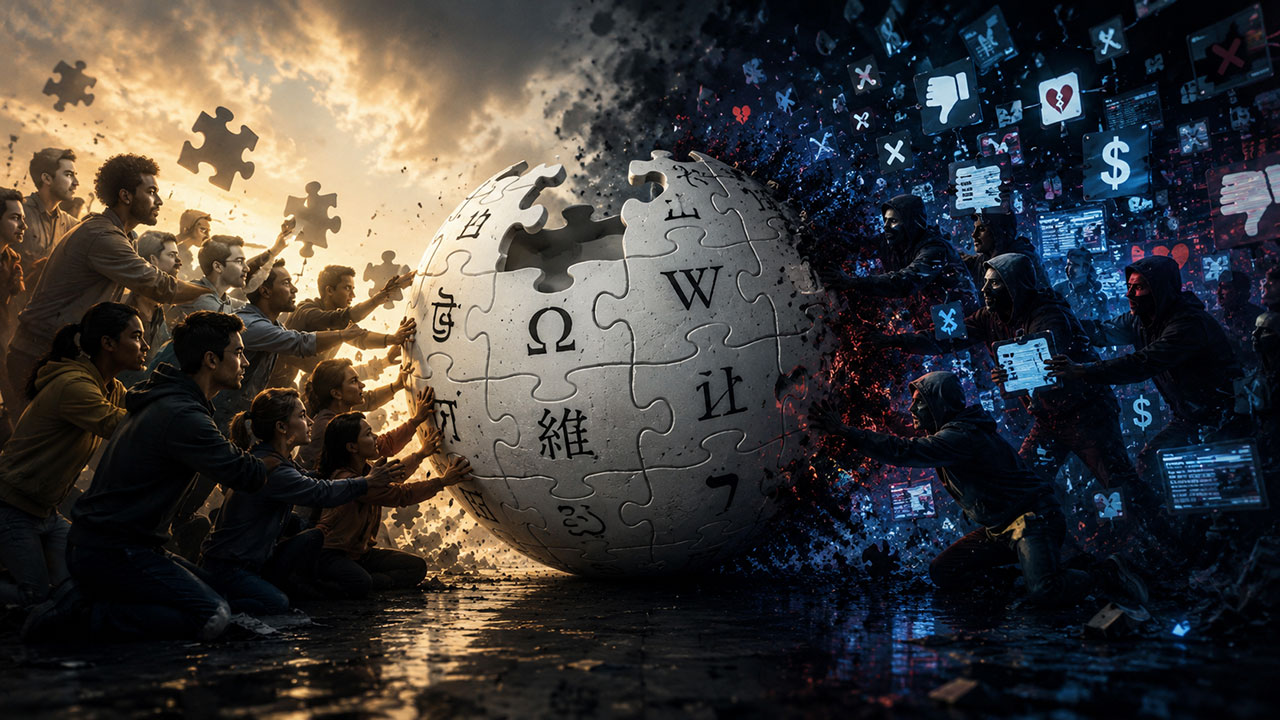
You stand at the precipice of a digital battleground, and the weapon of choice isn’t a rifle, but an edit button. The very foundation of your understanding, a seemingly inexhaustible wellspring of knowledge, is under siege. This isn’t a conspiracy theory; it’s the reality of the ongoing struggle for the soul of the internet, and at its heart lies Wikipedia, the encyclopedia that anyone can edit. You’ve likely used it, a quick search to settle a pub debate, a deep dive into a historical event, or even a starting point for a school project. But behind this facade of accessible, free information lies a constant, often invisible, fight to maintain its integrity, its neutrality, and its very existence as we know it. This is Wikipedia’s fight, and it’s a fight for the soul of how you, and millions of others, access and interpret information in the digital age.
Think about the last time you learned something new, something factual, something you could verify. Chances are, a significant portion of that knowledge journey led you to Wikipedia. It’s so ubiquitous, so seamlessly integrated into the fabric of your online life, that you probably don’t even pause to consider who is behind its countless articles. You assume a benevolent, faceless entity ensures accuracy and balance. But the truth is far more dynamic, and far more human. Wikipedia is built and maintained by volunteers, a dispersed, global community of individuals driven by a shared passion for knowledge sharing. This is where the first cracks in your understanding might appear. It’s not some government-funded institution or a corporate behemoth. It’s you, or people like you, dedicating their free time to contributing.
The Volunteer Vanguard: A Global Network of Knowledge Keepers
Imagine a vast, decentralized army of editors, armed with keyboards and an unwavering commitment to encyclopedic principles. These are the volunteer editors of Wikipedia, the backbone of the entire enterprise. They come from all walks of life, with diverse backgrounds, expertise, and motivations. Some are academics meticulously citing sources for complex scientific topics. Others are passionate hobbyists delving into the minutiae of obscure historical periods. Still others are concerned citizens striving to ensure marginalized voices and perspectives are represented. You might even be one of them, drawn in by the desire to correct a factual error or to flesh out an under-served topic. This collaborative spirit, this collective effort, is what makes Wikipedia so extraordinary, and so vulnerable.
Motivations Beyond the Obvious: Why Do They Do It?
It’s easy to assume altruism is the sole driver. And while it’s certainly a significant factor, the motivations are more nuanced. For some, it’s a genuine desire to contribute to a public good, to democratize knowledge and make it accessible to everyone, regardless of their socio-economic status or geographic location. For others, it’s an intellectual challenge, a way to hone their research and writing skills while engaging with a vast array of subjects. There’s a certain thrill in uncovering a forgotten piece of history or in simplifying a complex scientific concept for a wider audience. And, we can’t discount the simple satisfaction of being part of something larger than oneself, of contributing to a project that benefits millions. You might find yourself nodding along, recognizing these latent desires within your own digital interactions.
The Double-Edged Sword: Openness and Vulnerability
The very principle that makes Wikipedia so powerful – its open editing model – is also its greatest vulnerability. Anyone, with an internet connection, can attempt to contribute. This accessibility is revolutionary, allowing for rapid updates and diverse perspectives. However, it also opens the door to those who seek to manipulate, mislead, or simply disrupt the flow of information. This is where the battle truly begins, a continuous, often silent, struggle against those who would pervert Wikipedia’s purpose.
The Specter of Vandalism: Petty Acts of Destruction
The most visible threat is outright vandalism. This can range from the juvenile act of replacing factual text with profanity or memes, to the more insidious act of subtly altering information to promote a personal agenda. You might have stumbled upon a vandalized article, a temporary blight on the otherwise reliable landscape. These acts are often quickly corrected by the vigilant community, but they represent a constant drain on resources and a reminder of the fragility of the system. It’s like a tireless security guard constantly patrolling a building, having to deal with broken windows and graffiti.
The Shadow of Bias: Infowars and Agenda Driven Edits
Beyond overt vandalism lies a more sophisticated and pervasive threat: bias. This isn’t always malicious in the traditional sense. Sometimes, it’s individuals or groups attempting to promote their own viewpoints, companies trying to spin their narratives, or even governments seeking to control information flow. This is where the fight for neutrality becomes paramount. Editors must constantly be on guard, identifying and challenging edits that lean too heavily in one direction, ensuring that Wikipedia remains a balanced reflection of reality, not a propaganda machine. You might not always see the edit wars, the heated discussions in talk pages, but they are the constant hum beneath the surface, the unseen battles fought to maintain objectivity.
In the ongoing discussion about the future of online knowledge sharing, the article “Is Wikipedia Battling for the Soul of the Internet” highlights the platform’s struggle to maintain its integrity and reliability amidst the rise of misinformation and competing sources. A related article that delves into the technological aspects of managing online content is “Simplified MLOps: Mastering Tools for Model Deployment & Monitoring,” which explores how machine learning operations can enhance the efficiency and accuracy of digital platforms. For more insights, you can read the article here: Simplified MLOps: Mastering Tools for Model Deployment & Monitoring.
The Never-Ending Edit War: Maintaining Neutrality in a Polarized World
The defining characteristic of Wikipedia, its commitment to a Neutral Point of View (NPOV), is a constant battle. In an increasingly polarized world, where information is weaponized and echo chambers thrive, maintaining objectivity is a monumental task. This isn’t about avoiding opinions; it’s about presenting all significant viewpoints fairly and without editorializing. This is the core of the fight for Wikipedia’s soul, and it’s a fight that engages you, whether you realize it or not, every time you click on a link.
The Pillars of NPOV: Verifiability and Due Weight
At the heart of Wikipedia’s NPOV policy lie two fundamental principles: verifiability and due weight. Verifiability means that all information must be attributable to a reliable published source. You can’t just assert something as fact; you need to prove it with evidence. Due weight, on the other hand, means that all significant viewpoints on a topic should be represented in proportion to their prominence in reliable sources. This is a delicate balancing act, especially when dealing with controversial subjects.
The Challenge of Controversial Topics: Navigating Minefields
Topics like politics, religion, and social issues are minefields of competing narratives and deeply held beliefs. It’s here that the edit wars can rage fiercest. Editors must meticulously research, ensuring that every claim is sourced, and that the article reflects the spectrum of credible opinions without giving undue prominence to fringe theories or unsubstantiated claims. You might find yourself reading an article on a contentious issue and feeling a slight imbalance, a subtle leaning. This is often the work of editors struggling to apply NPOV principles, and the community is constantly striving to refine these efforts.
The Arbitration Committee: The Higher Court of Wikipedia
When disputes reach an impasse, when editors can’t agree on the presentation of information or when clear violations of policy occur, the Arbitration Committee (ArbCom) steps in. This is Wikipedia’s highest dispute resolution body, a group of experienced editors tasked with impartially resolving complex conflicts and setting precedents for future cases. Their decisions can have a profound impact on how entire topics are presented on the platform, making their role crucial in the ongoing battle for integrity. Understanding this internal governance structure reveals the sophisticated mechanisms in place to uphold their principles, even if they are often invisible to the casual user.
The Weight of Responsibility: Decisions With Far-Reaching Impact
The decisions made by ArbCom are not taken lightly. They involve extensive deliberation, evidence gathering, and often, heated debate among the committee members themselves. Their rulings can affect the editing privileges of individuals, lead to the development of new policies, and ultimately shape the content and direction of Wikipedia articles. You might not be aware of an ArbCom case, but its ripple effects could be influencing the information you consume.
The Business of Knowledge: Wikipedia’s Unique Funding Model

Unlike most major online platforms that rely on advertising or subscription fees, Wikipedia operates on a fundamentally different model. It is a non-profit, funded primarily through donations. This independence is crucial to its mission, shielding it from the direct pressures of commercial interests that might compromise its neutrality. However, this reliance on public generosity also presents its own set of challenges and complexities.
The Annual Fundraising Drive: A Test of Public Support
Every year, you’ll likely see the familiar banner at the top of Wikipedia, a plea for donations. This annual fundraising campaign is vital for the Wikimedia Foundation, the non-profit organization that supports Wikipedia. It’s a testament to its global reach and the value people place on its existence. But this model also means that the platform is constantly vying for attention and financial support, a quiet struggle for survival that underpins its continued operation.
The Allure of Independence: Freedom from Corporate Influence
The beauty of Wikipedia’s funding model is its independence. It’s not beholden to advertisers who might demand favorable coverage or to shareholders who might push for data monetization. This freedom allows Wikipedia to prioritize accuracy, neutrality, and accessibility above all else. You benefit from this every time you read an article without intrusive pop-ups or product placements. This is a direct result of the choices made by the community and the foundation to prioritize a different path.
The Challenge of Growth: Scaling While Maintaining Core Values
As Wikipedia continues to grow, so do the challenges of maintaining its core values. The sheer volume of information, the expanding user base, and the ever-evolving landscape of online threats require constant adaptation and innovation. This requires resources, not just for servers and bandwidth, but for community development, outreach, and ongoing policy refinement.
Community Outreach and Education: Building the Next Generation of Editors
To ensure its long-term health, Wikipedia actively engages in community outreach and education. This involves efforts to recruit new editors, particularly from underrepresented groups, and to train them in Wikipedia’s policies and best practices. This proactive approach is crucial for combating the threats of bias and vandalism by cultivating a larger, more diverse, and more knowledgeable community. You might see calls for new editors, or initiatives aimed at increasing representation, all part of this continuous effort to strengthen the platform.
The Ever-Present Threats: Navigating a Complex Digital Landscape
The battle for the soul of Wikipedia is not a singular event with a clear beginning and end. It’s an ongoing, multifaceted struggle against a constantly shifting array of threats. From the subtle manipulation of information to the outright ideological attacks, Wikipedia must remain vigilant to preserve its integrity. You are an unwitting participant in this struggle, and understanding these threats is crucial to appreciating the value of this remarkable resource.
The Rise of Disinformation Campaigns: Coordinated Attacks on Truth
In an era of “fake news” and sophisticated disinformation campaigns, Wikipedia is a prime target. Organized groups, often with political or ideological agendas, attempt to flood the platform with false or misleading information, aiming to shape public opinion. These attacks are often coordinated and can be difficult to detect and combat, requiring constant vigilance and rapid response from the Wikipedia community. You might have seen news reports about specific instances where Wikipedia was targeted, showcasing the scale and ambition of these attacks.
The “Edit War” Phenomena: When Conflict Becomes Policy
The term “edit war” is common parlance within Wikipedia. It describes a situation where multiple editors repeatedly revert each other’s changes to a particular article. While some edit wars are minor disputes, others represent significant ideological battles where opposing viewpoints clash. These situations can escalate and often require intervention from stricter administrators or even ArbCom. Understanding this phenomenon highlights the direct impact of external forces on the internal workings of the platform.
The Challenge of Global Reach: Censorship and Accessibility
Wikipedia’s global reach also exposes it to censorship attempts by governments or other authorities who seek to control the information available to their citizens. Blocking or restricting access to Wikipedia can limit your ability to access impartial information, posing a significant threat to freedom of expression and access to knowledge. This global dimension adds another layer of complexity to the ongoing fight.
Navigating Different Legal and Cultural Contexts: A Delicate Dance
Operating on a global scale means navigating a complex web of different legal frameworks, cultural norms, and political sensitivities. What is acceptable in one country might be considered offensive or illegal in another. Wikipedia’s editors and administrators must constantly balance the need to adhere to its core principles with the practical realities of operating in diverse global contexts. This requires a nuanced approach and a deep understanding of the regions they are trying to serve.
In the ongoing debate about the future of online information, an insightful article titled Synthetic Data Generation: How to Train Your AI Without Compromising Privacy explores the implications of data privacy in the digital age. This discussion is particularly relevant as Wikipedia strives to maintain its integrity and reliability amidst challenges from various sources of information on the internet. The balance between open access and the protection of individual privacy is crucial for platforms like Wikipedia, which aim to provide accurate knowledge while navigating the complexities of modern technology.
Your Role in the Digital Republic: The Power of Informed Engagement
| Metrics | Data |
|---|---|
| Number of Wikipedia editors | 280,000 |
| Number of Wikipedia articles | over 6 million |
| Monthly Wikipedia pageviews | over 15 billion |
| Number of languages supported by Wikipedia | over 300 |
| Number of active Wikipedia users | over 100,000 |
The battle for the soul of the internet, as embodied by Wikipedia’s struggle, is not merely an abstract online conflict. It directly impacts how you, as an individual, understand the world around you. Your ability to access reliable information, to form informed opinions, and to participate meaningfully in democratic discourse hinges on the health and integrity of platforms like Wikipedia. And in this battle, you are not just a passive observer; you are a potential participant, a guardian of knowledge.
The Power of the “Watchlist”: Becoming an Active Participant
Wikipedia empowers you to do more than just read. You can “watch” articles that are of interest to you, receiving notifications of any changes made. This simple feature transforms you from a passive consumer of information into an active participant in its preservation. Imagine being alerted to a suspicious edit on an article about a historical event you care deeply about. This allows you to investigate, engage in discussion, and potentially contribute to correcting the record.
The Importance of Critical Consumption: Questioning and Verifying
Even if you choose not to become a direct editor, your role as a critical consumer of information is paramount. Approach every piece of information, including Wikipedia articles, with a healthy dose of skepticism. Look for sources, consider the biases of the authors (if discernible), and cross-reference information with other reliable sources. Your willingness to question and verify is a powerful defense against misinformation.
Supporting the Foundation: A Direct Investment in Knowledge
Beyond active editing, there are other ways to support Wikipedia. The annual fundraising drives are crucial, and even a small donation can make a difference. By contributing financially, you are directly investing in the infrastructure, the technology, and the community that keeps Wikipedia running, free and accessible to all. This is a tangible way to acknowledge its value and to ensure its continued existence.
The Long-Term Vision: Preserving Knowledge for Future Generations
The fight for the soul of Wikipedia is a long-term endeavor. It’s about ensuring that the accumulated knowledge of humanity remains accessible, accurate, and neutral for generations to come. It’s about safeguarding a digital public square where ideas can be exchanged, debated, and understood. You are part of this vision, and your informed engagement, your critical thinking, and your support are all vital components of this ongoing, essential battle for the future of information. The next time you search for something online, remember the unseen battles being fought to provide you with that knowledge, and consider your own role in shaping the digital republic.
FAQs
What is Wikipedia?
Wikipedia is a free online encyclopedia that allows anyone to edit and contribute to its articles. It is one of the most popular websites on the internet and is available in multiple languages.
What is the “battle for the soul of the internet” that Wikipedia is facing?
The “battle for the soul of the internet” refers to Wikipedia’s ongoing struggle to maintain the integrity and accuracy of its content in the face of misinformation, vandalism, and biased editing. Wikipedia’s open editing model makes it vulnerable to these challenges.
How does Wikipedia combat misinformation and biased editing?
Wikipedia employs a community of volunteer editors who monitor and review changes to articles. It also has strict guidelines for sourcing and verifiability, and uses automated tools to detect and revert vandalism and biased edits.
Why is Wikipedia’s role important in the digital age?
Wikipedia is often the first source of information for many people, and its content frequently appears at the top of search engine results. As such, it plays a crucial role in shaping public knowledge and understanding of various topics.
How can individuals support Wikipedia’s mission?
Individuals can support Wikipedia by contributing accurate and well-sourced information, donating to the Wikimedia Foundation, and advocating for the importance of reliable information on the internet.
