


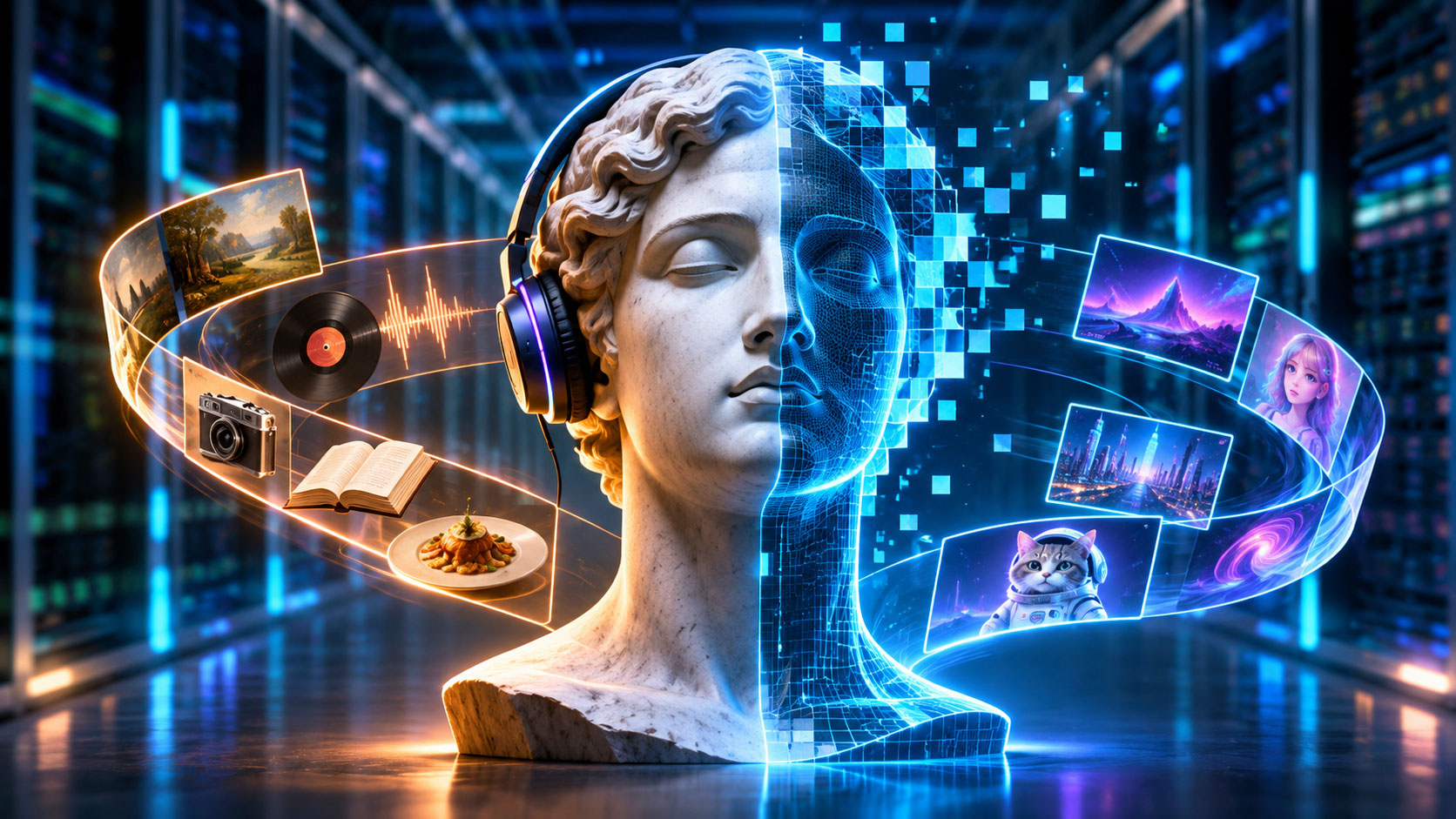
The Shifting Sands of Aesthetic Preferences
You remember a time, not so long ago, when your taste felt distinctly your own. It was a mosaic built from childhood influences, local culture, and the serendipitous discovery of a band on late-night radio or a film in a dusty video store. This internal compass guided your consumption, shaping your identity and informing your conversations. Then came the internet, a seemingly endless wellspring of content and connection, promising to broaden your horizons. And it did, in ways you couldn’t have imagined. But it also began to subtly, insidiously, dismantle that compass, scattering its fragments across a globalized, hyper-connected landscape. You’ve witnessed firsthand how the internet broke our taste, blurring lines, elevating the mundane, and flattening the peaks of genuine artistry. Now, as artificial intelligence enters the fray, a new, more profound question looms: will A.I. destroy it for good?
The Echo Chamber Effect on Personal Taste
Consider your early forays into online communities. You sought out like-minded individuals, a natural human inclination. But the algorithms, ever-eager to please and keep you engaged, amplified this tendency. You were shown more of what you already liked, reinforcing existing preferences and creating powerful echo chambers. Your musical tastes, once eclectic, might have narrowed to a specific subgenre that your online community championed. Your cinematic preferences, once broad, might now align perfectly with the “critically acclaimed” indie darlings pushed by a particular forum. This wasn’t necessarily a conscious choice; it was an osmotic absorption, a slow but steady conditioning. The subtle nuances that once defined your unique palate began to erode, replaced by a more homogenized, algorithmically curated version of “good.” You started to see trends emerge – micro-trends that exploded onto your feed, dominating discussions for a few weeks before being unceremoniously discarded for the next viral sensation. This rapid cycle, fueled by algorithmic amplification, meant that truly original or challenging works often struggled to gain traction outside of very specific, pre-existing niches.
The Rise of Niche-Marketed Homogenization
Paradoxically, while the internet allowed for the rise of incredibly specific niches, it also contributed to a certain kind of homogenization within those niches. If you’re into artisanal, ethically sourced coffee, the internet will show you hundreds of similar brands, each striving for a subtly different aesthetic but ultimately operating within a tightly defined set of consumer expectations. The “weird” or “out-of-left-field” options, those that truly challenged the prevailing sensibilities, often struggled to break through the noise generated by their more conventional counterparts. Your preferences, once a wild garden of diverse flora, became more like a meticulously cultivated arboretum, beautiful in its own way, but lacking the surprising biodiversity of its former self. You learned to navigate this landscape, to identify the markers of quality within your chosen niches, but the sheer volume of content meant that genuine discovery became increasingly rare. Instead, you found yourself sifting through variations on a theme, rather than unearthing entirely new melodies.
In the ongoing discussion about the impact of technology on our preferences and culture, the article “The Protocol Economy: Exploring the Future of Decentralized Ownership” provides valuable insights into how decentralized systems could reshape our interactions with digital content. As we ponder whether A.I. will ultimately destroy our taste, this related piece delves into the potential for a new economic model that prioritizes user ownership and agency in the digital landscape. For more information, you can read the article here.
The Algorithm’s Invisible Hand in Cultural Consumption

You might not always be aware of it, but algorithms are the silent architects of your cultural consumption in 2026. From the moment you open a streaming service to the instant you scroll through your social media feed, these complex systems are working tirelessly to predict your preferences, guide your choices, and ultimately, keep your eyes glued to the screen. This isn’t inherently malicious, but its cumulative effect on taste has been profound. The internet broke our taste by outsourcing a significant portion of our discovery process to these opaque digital gatekeepers.
Recommendation Engines and the Narrowing of Exposure
Think about your music streaming service. It boasts millions of songs, an unprecedented library of human creativity. Yet, how many truly new artists or genres have you discovered through its recommendations in the last year that weren’t already tangentially related to your existing listening habits? The “Discover Weekly” playlist, while often enjoyable, tends to operate within a relatively narrow band, refining your taste rather than revolutionizing it. It’s like a highly efficient assistant who knows your favorite restaurant but rarely suggests trying an entirely different cuisine. This narrowing of exposure means you’re less likely to stumble upon the truly unconventional, the challenging, or the boundary-pushing art that often requires a higher initial investment of attention but ultimately offers greater rewards. The internet, instead of being a boundless ocean of discovery, often feels more like a carefully curated aquarium, showcasing only those species deemed “compatible” with your existing aquatic interests. Your taste, in turn, becomes a reflection of this curated environment.
The Viral Loop and the Elevation of the Mediocre
The viral loop is another powerful force in shaping contemporary taste. A short video, a catchy song, or a quirky meme can explode into global consciousness overnight, dominating cultural conversations for a fleeting period. While some genuinely brilliant works have achieved viral success, the mechanism itself doesn’t discriminate based on artistic merit. Often, it’s the easily digestible, the immediately gratifying, or the sensationally shocking that captures the collective attention. You’ve seen it yourself: a product or piece of content goes viral, not necessarily because of its inherent quality, but because of its shareability, its meme-ability, or its ability to tap into a current cultural zeitgeist. This has a dual effect on taste. Firstly, it elevates content that might otherwise be considered mediocre or even disposable, creating a false sense of cultural significance. Secondly, it creates a pressure to conform, to engage with what’s currently “trending,” lest you be left out of the conversation. Your individual taste becomes less about genuine aesthetic appreciation and more about participation in the collective cultural churn. The internet broke our taste by making “trending” synonymous with “good,” a dangerous conflation.
The Commodification of Authenticity and the Erosion of Subtlety

In the pursuit of clicks, views, and engagement, the internet has inadvertently commodified authenticity. What once felt organic and raw now often feels manufactured for mass consumption. This has had a profound impact on your ability to discern genuine artistic intent from calculated performance, further muddying the waters of taste. You’re increasingly bombarded with content that looks authentic but is, in fact, meticulously crafted to trigger specific emotional responses or fit neatly into prevailing aesthetic trends.
The “Influencer Aesthetic” and Manufactured Relatability
Consider the “influencer aesthetic.” Whether it’s the perfectly curated home, the effortlessly stylish outfit, or the seemingly candid confession, there’s a meticulousness behind the apparent spontaneity. Influencers, by their very nature, are selling a lifestyle, an ideal, and often products. This requires them to cultivate a specific persona that resonates with their audience. The result is a proliferation of content that prioritizes relatability and aspirational imagery over genuine artistic expression or challenging thought. Your taste, subjected to this constant barrage of manufactured perfection, begins to internalize these superficial markers as indicators of quality or desirability. The truly raw, the unpolished, the unconventional, which once held their own charm and artistic merit, are often pushed to the sidelines because they don’t fit the clean, curated aesthetic that drives engagement. The internet broke our taste by training you to value surface-level appeal over deeper substance. You’ve become accustomed to a certain visual language, a specific tone of voice, that screams “authentic” while being anything but.
Short-Form Content and the Diminishment of Nuance
The rise of short-form video platforms has further exacerbated this trend. TikTok, Instagram Reels, and YouTube Shorts prioritize brevity, immediate impact, and easily digestible content. Complex narratives, nuanced arguments, and slow-burn artistic expressions simply don’t fit the format. Creators are incentivized to condense, to simplify, to deliver a punchy message within a matter of seconds. This constant exposure to truncated experiences diminishes your capacity for sustained attention and appreciation of subtlety. Your taste, once capable of savouring a long, intricate novel or a multi-layered symphonic piece, now craves the instant gratification of a 15-second clip. The art that truly challenges and enriches often requires time to unfold, to be absorbed, to reveal its depths. But in a world optimized for immediate engagement, these deeper experiences are increasingly overlooked. The internet broke our taste by prioritizing speed over depth, instantaneity over introspection, leaving you with a diminished capacity for true appreciation.
The A.I. Deluge: A New Frontier for Taste Manipulation
You’ve seen how the internet, through its algorithms and platforms, has already reshaped your taste. But now, with the rapid advancement of artificial intelligence, you stand on the precipice of an even more profound transformation. A.I. isn’t just recommending; it’s creating. It’s generating content, composing music, writing narratives, and even designing aesthetics. This isn’t merely a refinement of existing tools; it’s a fundamental shift that could irrevocably alter the very nature of taste. Will A.I. destroy it for good? The question weighs heavily.
A.I.-Generated Content and the Blurring of Originality
Imagine a world where A.I. can generate perfectly plausible pop songs, visually stunning but emotionally hollow artworks, or even entire television series designed to cater to your every demographic preference. You’re already seeing glimpses of this future. A.I. art generators can produce breathtaking images in seconds, often replicating the style of famous artists with uncanny accuracy. A.I. music composers can create genre-specific tracks that are indistinguishable from human-made ones to the untrained ear. The problem isn’t necessarily the technical capability; it’s the impact on your perception of originality and value. If A.I. can endlessly replicate and refine existing styles, what does that do to the concept of artistic innovation? Your taste, currently predicated on the idea of human creativity and expression, might struggle to differentiate between genuine human genius and algorithmically optimized pastiche. The sheer volume of A.I.-generated content could flood the cultural landscape, making it even harder to discover and appreciate truly original human work. The internet broke our taste by making it harder to find the signal in the noise; A.I. threatens to turn the signal into more noise.
Personalized Media and the Creation of Algorithmic Taste Bubbles
The algorithms of today already create taste bubbles, but A.I. promises to take this to an unprecedented level. Imagine a future where your entire media consumption – every song, every film, every article – is custom-generated by an A.I. specifically for you. This personalized content would be meticulously crafted to appeal to your precise aesthetic sensibilities, your emotional triggers, and your intellectual curiosities. While this might sound appealing at first, consider the implications for taste. If you’re constantly fed content that perfectly aligns with your existing preferences, where is the room for growth, for challenge, for serendipitous discovery? Your taste would become static, a reflection of the algorithm’s understanding of your past self, never evolving, never encountering the unexpected that broadens horizons. This hyper-personalization risks creating utterly isolated taste bubbles, where shared cultural experiences diminish, and the very concept of a collective “taste” or aesthetic standard evaporates. You would exist in a perfectly optimized, yet utterly insular, cultural reality. Will A.I. destroy taste by atomizing it completely?
In exploring the impact of technology on our cultural preferences, a thought-provoking article titled “Building a Uniqueness Moat: Sourcing Original Data and Expert Insights for Your Content” delves into how originality in content creation can counteract the homogenizing effects of AI. This discussion complements the themes presented in “The Internet Broke Our Taste. Will A.I. Destroy It for Good?” by highlighting the importance of unique perspectives in a world increasingly influenced by artificial intelligence. For those interested in understanding how to maintain authenticity amidst technological advancements, this article offers valuable insights on the significance of originality in content. You can read more about it here.
Reclaiming Your Palate in an Algorithmic World
| Metric | Data/Value | Description |
|---|---|---|
| Average Daily Internet Usage | 7 hours 35 minutes | Average time spent online by users globally |
| Content Overload | 4.6 billion pieces | Estimated daily pieces of content created on the internet |
| AI-Generated Content Share | 30% | Percentage of online content generated or assisted by AI tools |
| User Attention Span | 8 seconds | Average attention span of internet users in 2024 |
| Content Diversity Index | 0.45 | Measure of variety in content types and styles online (scale 0-1) |
| AI Impact on Taste Formation | High | Degree to which AI influences user preferences and cultural trends |
| Decline in Original Content Creation | 15% | Reduction in unique content creation since widespread AI adoption |
Given the pervasive influence of the internet and the looming shadow of A.I., you might feel a sense of despair about the future of taste. But it’s not a foregone conclusion. You have agency, and there are active steps you can take to reclaim your palate, to cultivate a taste that is genuinely your own, and to resist the homogenizing forces of the digital age. This isn’t about rejecting technology outright, but about engaging with it mindfully and strategically.
Curating Your Own Discovery Pathways
The first step is to actively diversify your sources of discovery. Don’t rely solely on algorithmic recommendations. Seek out trusted human curators – critics, journalists, independent artists, and even knowledgeable friends. Explore niche publications, attend local art shows, visit independent bookstores, and listen to community radio stations. These human-driven pathways often highlight works that algorithms might overlook because they don’t fit neatly into existing patterns. Make a conscious effort to step outside your comfort zone. If your streaming service only recommends one genre, deliberately seek out another. If your social media feed is dominated by one type of content, actively follow creators and voices that offer different perspectives. This proactive curation helps you build a more robust and resilient internal compass, one that isn’t solely dependent on what an algorithm thinks you’ll like. It’s about being an active participant in your cultural journey, not a passive recipient.
Cultivating Critical Consumption and Aesthetic Literacy
In a world awash with content, critical consumption is more important than ever. Don’t simply consume; analyze. Ask yourself why you like something. Is it genuinely moving, thought-provoking, or skillfully crafted, or is it simply designed to be easily digestible or to trigger a predictable emotional response? Develop an aesthetic literacy that allows you to deconstruct and understand the techniques and intentions behind the art you encounter. Learn about different art movements, musical theories, or literary styles. This knowledge empowers you to look beyond superficial appeal and appreciate the deeper layers of creative expression. Engage in discussions with others about art, film, and music, challenging your own assumptions and exposing yourself to alternative interpretations. This active engagement strengthens your discernment and helps you to identify genuine artistry amidst the digital noise. The internet broke our taste by making you a passive consumer; reclaiming it means becoming an active critic.
Embracing Deliberate Discomfort and the Value of the Challenging
True growth, whether personal or aesthetic, often comes from discomfort. The works that truly expand your horizons are rarely the ones that immediately align with your existing preferences. Make a conscious effort to seek out art that challenges you, that makes you think, that even initially makes you uncomfortable. This might mean watching a film in a genre you typically avoid, reading a book by an author whose style is unfamiliar, or listening to music that requires multiple listens to fully appreciate. These experiences might not always be immediately gratifying, but they are crucial for expanding your aesthetic palate and preventing it from becoming stagnant. The internet broke our taste by making comfort the default; reclaiming it means deliberately seeking out the stimulating, the provocative, and the unfamiliar. By embracing these challenges, you not only broaden your taste but also sharpen your ability to appreciate the rich, multifaceted tapestry of human creativity, ensuring that your unique aesthetic sensibility can thrive even in a world increasingly shaped by algorithms and A.I.
FAQs
What does the article mean by “The Internet Broke Our Taste”?
The phrase “The Internet Broke Our Taste” refers to the idea that the vast amount of content available online has diluted our ability to appreciate quality and originality in art, music, and other forms of expression. The article discusses how algorithms and trends can lead to homogenization of culture, making it harder for unique voices to be heard.
How does A.I. play a role in shaping our cultural tastes?
A.I. influences cultural tastes by analyzing user data and preferences to curate content that is likely to engage users. This can lead to a feedback loop where popular trends are amplified, potentially stifling diversity and innovation in creative fields as A.I. prioritizes what is already popular over new or unconventional ideas.
Can A.I. create original art or music?
Yes, A.I. can create original art and music by using algorithms that analyze existing works and generate new compositions based on learned patterns. However, the debate continues about whether A.I.-generated works can truly be considered “original” or if they lack the emotional depth and intent that human creators bring to their art.
What are the potential consequences of A.I. dominating creative fields?
The potential consequences include a decrease in the diversity of creative expression, as A.I. may favor commercially viable content over experimental or niche works. This could lead to a cultural landscape that is less rich and varied, as well as challenges for human artists who may struggle to compete with A.I. in terms of production speed and cost.
Is there a way to preserve human creativity in the age of A.I.?
Preserving human creativity may involve promoting platforms that prioritize unique voices and innovative ideas, as well as encouraging critical engagement with A.I.-generated content. Additionally, fostering education in the arts and supporting independent creators can help maintain a diverse cultural ecosystem that values human expression alongside technological advancements.
