


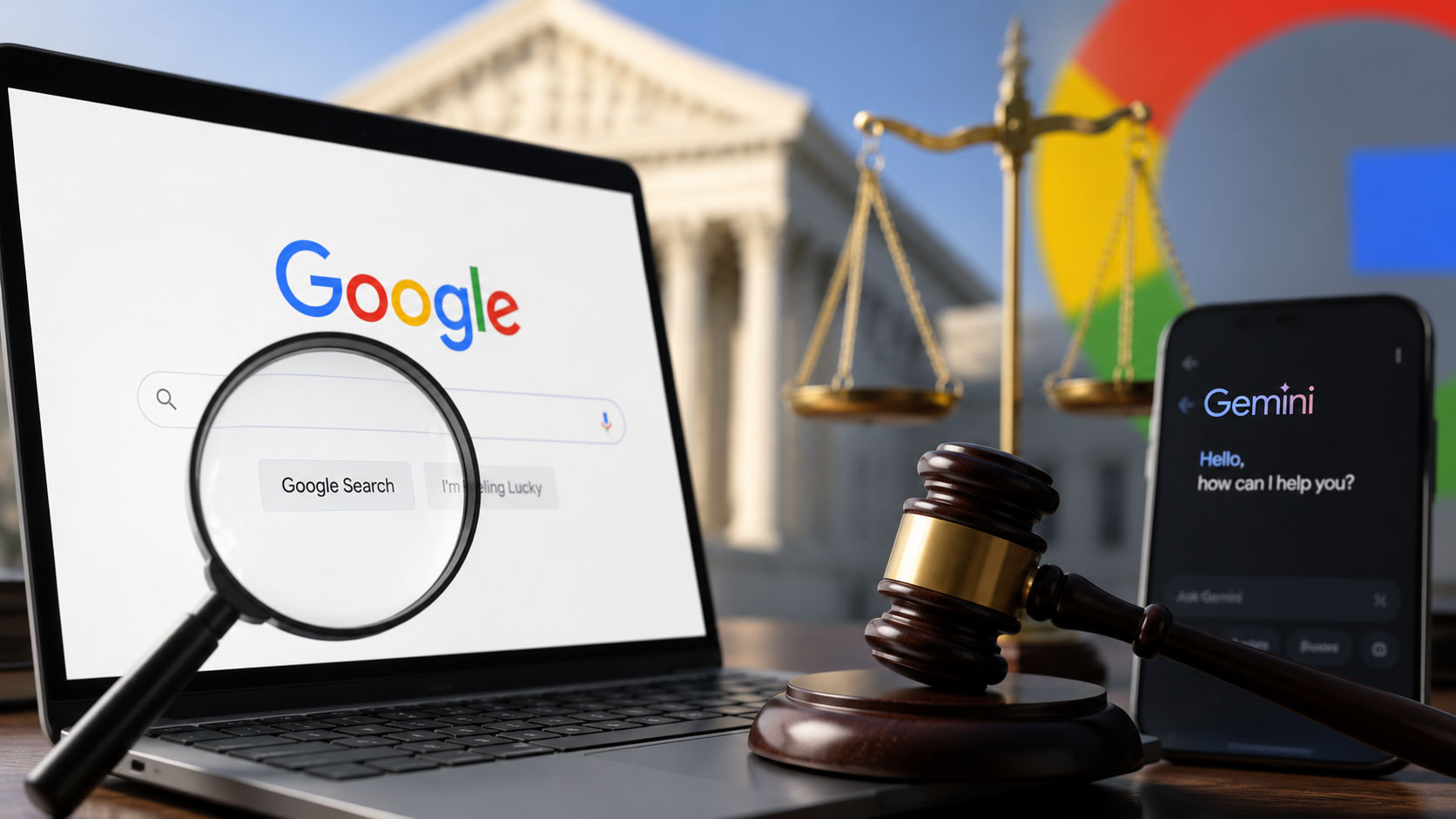
You awaken to a jarring piece of news, a digital tremor rippling through the tech world: “Court rules against Google: AI not needed for internet searches.” Immediately, your mind races, piecing together the implications. This isn’t just a legal spat; it’s a profound declaration, a challenge to the very foundation upon which you’ve come to understand information retrieval.
You rub your eyes, rereading the headline, the words solidifying their meaning. A court, a judicial body, has formally declared that Artificial Intelligence, the very technology Google has increasingly touted as indispensable for modern search, is not necessary. This isn’t a recommendation or a suggestion; it’s a legal judgment, and its reverberations will be felt for years to come.
Unpacking the Verdict: What Does “Not Needed” Truly Mean?
Your initial thought might be, “But how can AI not be needed? It powers so much of what I do online!” You’re not alone in this sentiment. The court’s ruling isn’t about banning AI from search entirely, but rather about a specific legal challenge that questioned its essentiality for providing effective and comprehensive search results. The plaintiffs, a consortium of smaller search engine developers and privacy advocates, successfully argued that a functional, robust internet search experience can and does exist without the ubiquitous application of complex AI algorithms for every query.
The Nuance of “Necessity” in a Legal Context
Consider the legal definition of “necessary” in this context. It doesn’t mean “undesirable” or “inefficient.” It means “not indispensable.” The court examined the core function of a search engine – connecting users to relevant information – and determined that this function could be adequately served through established, non-AI-centric methods. This isn’t to say AI doesn’t offer benefits, but rather that its absence doesn’t equate to a fundamental breakdown of the search mechanism.
Impact on Google’s Dominance: A Crack in the Foundation?
You instantly recognize the seismic shift this could represent for Google. For years, Google has leveraged its advanced AI capabilities, like RankBrain, MUM, and BERT, as a key differentiator, a pillar of its market dominance. This ruling, however, suggests that this pillar isn’t as structurally critical as Google might have led you to believe. It opens the door for competitors, perhaps those eschewing complex, data-hungry AI, to gain a stronger foothold.
In light of the recent court ruling stating that “Nobody needs AI to search the Internet,” which was a significant decision against Google, it is essential to consider the implications of AI in search engine optimization. For those interested in mastering the evolving landscape of search engines, a related article titled “Mastering Google’s SGE: 7 SEO Strategies for AI Success” offers valuable insights into how businesses can adapt their strategies in an AI-driven environment. You can read the article here: Mastering Google’s SGE: 7 SEO Strategies for AI Success.
The Plaintiffs’ Triumph: A Victory for Simplicity and Transparency
You can almost hear the cheers from the plaintiffs’ camp. This is a monumental victory for them, a validation of their long-held arguments. Their case wasn’t just about technological preference; it was deeply intertwined with principles of fairness, competition, and user autonomy.
The Argument for Simpler Search Algorithms
You recall reading about the plaintiffs’ core argument: that simpler indexing, keyword matching, and link analysis algorithms, while perhaps less “intelligent” than AI, are sufficient for providing accurate and useful search results. They contended that Google’s relentless pursuit of ever more complex AI, while undeniably impressive, often serves to further entrench its market position by creating a technological barrier to entry for smaller players.
Privacy Concerns at the Forefront
Beyond algorithmic simplicity, the plaintiffs vigorously championed privacy. You understand that advanced AI, especially in search, thrives on vast quantities of user data. The more Google knows about your search history, location, browsing habits, and even your intonation when speaking to voice assistants, the “smarter” its AI becomes at predicting your needs. The court’s decision, by implicitly valuing simpler search methods, could be seen as a subtle yet significant win for data privacy, suggesting that the trade-off of personal information for “smarter” search isn’t always legally mandated or indeed, necessary for a functional internet.
Leveling the Playing Field for Smaller Search Engines
You recognize the practical implications for smaller search engine developers. The barrier to entry in the search market has been astronomically high, largely due to the immense resources required to develop and maintain cutting-edge AI. This ruling, by demonstrating that alternative, less AI-intensive approaches are legally viable, could embolden new players to enter the arena, fostering greater competition and innovation beyond the current oligopoly. This could mean more diverse search options for you in the future.
Google’s Defense: An Echo of Innovation and User Experience

You envision Google’s legal team, meticulously building their defense, highlighting the myriad ways AI has, in their view, improved your search experience. Their arguments, while ultimately unsuccessful in this specific legal context, are not without merit in the broader technological landscape.
The Promise of Personalized and Contextual Search
You’ve undoubtedly benefited from AI-driven search. Remember that time you searched a vague phrase and Google still understood your intent, pulling up surprisingly relevant results? Or the way it suggested a local restaurant based on your previous dining habits? This personalization, this contextual understanding, is largely a product of sophisticated AI. Google’s defense likely centered around these very improvements, arguing that they are not merely enhancements but fundamental shifts in how you interact with information online.
Tackling Misinformation and Spam: The AI Guardian
You’ve also witnessed the internet’s darker side: misleading information, spam, and malicious content. Google has frequently asserted that its AI plays a crucial role in identifying and filtering out such undesirable elements, thereby protecting you from unreliable sources and enhancing the overall quality of your search results. Their defense would have emphasized AI’s role as a digital guardian, sifting through the vastness of the web to present you with trustworthy information.
The ‘Efficiency’ Argument: Faster, Smarter, Better?
You might also consider the sheer efficiency AI brings. When you type a query, the results appear almost instantaneously. This speed, Google would argue, is optimized by AI that can rapidly process, categorize, and rank vast amounts of data. They would posit that without AI, search would be slower, less precise, and ultimately, a less satisfying experience for you.
The Future of Search: Navigating a Post-AI-Necessity Landscape
You ponder what this legal ruling means for the trajectory of internet search. It’s not a death knell for AI in search, but it certainly recalibrates its perceived indispensability. The future, you realize, will likely be a fascinating blend of old and new.
A Renaissance for Traditional Search Methodologies?
Could this ruling inspire a resurgence of interest in and investment in “simpler” search algorithms? You might see new search engines prioritizing transparent ranking factors, emphasizing keyword exactness, and offering less personalized but perhaps more objective results. This could cater to a segment of users who are wary of AI’s data collection and want a more straightforward, less “black box” approach to finding information. Imagine a search engine that always shows you literally what you asked for, without trying to guess your intent.
AI’s Role Redefined: Enhancement, Not Foundation
Artificial intelligence isn’t going to vanish from Google or other search engines. Instead, its role might be refined. You might see AI relegated to more specific, additive functions rather than being the absolute core of every search query. Think of AI as an intelligent assistant, offering refinements, suggestions, and richer contextual information after a core, non-AI-driven search has been performed. It could be used for summarization, language translation for international results, or multimedia content analysis, rather than the primary ranking of web pages.
Increased Scrutiny and Regulation of AI in Tech
The court’s decision also signals a growing judicial willingness to scrutinize the power and pervasiveness of AI in major tech companies. You can expect more legal challenges, more regulatory oversight, and a greater demand for transparency around how AI is developed, deployed, and how it impacts your digital interactions. This could lead to stricter ethical guidelines for AI development and deployment, particularly concerning data privacy and potential biases in algorithmic outcomes.
In a recent ruling against Google, a court stated that nobody needs artificial intelligence to effectively search the Internet, raising significant questions about the role of AI in everyday technology. This decision has sparked discussions about the implications for tech companies and the future of search engines. For those interested in exploring how businesses can adapt to changing landscapes, a related article on sustainability strategies can provide valuable insights. You can read more about this topic in the article on sustainability as strategy.
Your Role as a User: Empowered Choice and Critical Thinking
| Article Title | Nobody needs AI to search the Internet, court says in ruling against Google |
|---|---|
| Key Ruling | The court ruled against Google, stating that AI is not necessary for internet searching. |
| Implications | This ruling may have implications for the use of AI in internet search technology and related legal cases. |
You realize that in this evolving landscape, your role as a user becomes even more critical. This ruling empowers you, giving you a renewed sense of agency over your digital interactions.
The Power of Informed Search Engine Selection
No longer is Google’s sophisticated AI the only legally sanctioned path to effective internet search. You now have a stronger legal basis to explore and choose alternative search engines that align with your values – whether that’s privacy-focused engines, open-source initiatives, or those prioritizing specific types of content. The market, spurred by this legal precedent, may offer you more diverse choices, allowing you to vote with your clicks.
Developing Media Literacy in an AI-Enhanced World
Even if AI’s role in search becomes more refined, you’ll still encounter its influence. This ruling underscores the importance of critical thinking and media literacy. Understand that even without pervasive AI, search results are still shaped by algorithms, and those algorithms have biases. Learn to evaluate sources, cross-reference information, and understand the motivations behind the content you consume, regardless of how it was discovered.
Advocating for Transparency and Ethical AI
Finally, this decision encourages you to be an active participant in the ongoing conversation about technology, ethics, and societal impact. You have a voice to advocate for greater transparency in how AI systems function, for robust privacy protections, and for responsible innovation that prioritizes user well-being over unchecked technological expansion. This court ruling is not the end of the AI story, but rather a compelling new chapter, and you are a vital character in its unfolding narrative.
FAQs
What was the court ruling against Google regarding AI and internet search?
The court ruled that Google does not need to use AI to search the internet, and that it is not a necessary component for internet search.
Why did the court make this ruling?
The court made this ruling because it determined that AI is not essential for internet search and that traditional methods of indexing and searching the web are sufficient.
How does this ruling impact Google’s use of AI in internet search?
This ruling may impact Google’s use of AI in internet search by potentially limiting the company’s ability to argue that AI is necessary for its search functionality.
What are the implications of this ruling for the use of AI in other industries?
This ruling may set a precedent for the use of AI in other industries, potentially leading to more scrutiny and regulation of AI usage in cases where it is deemed non-essential.
What are the potential future legal and technological implications of this ruling?
The ruling may lead to further legal challenges and discussions about the role of AI in various industries, as well as potential shifts in technological development and innovation related to AI.
