


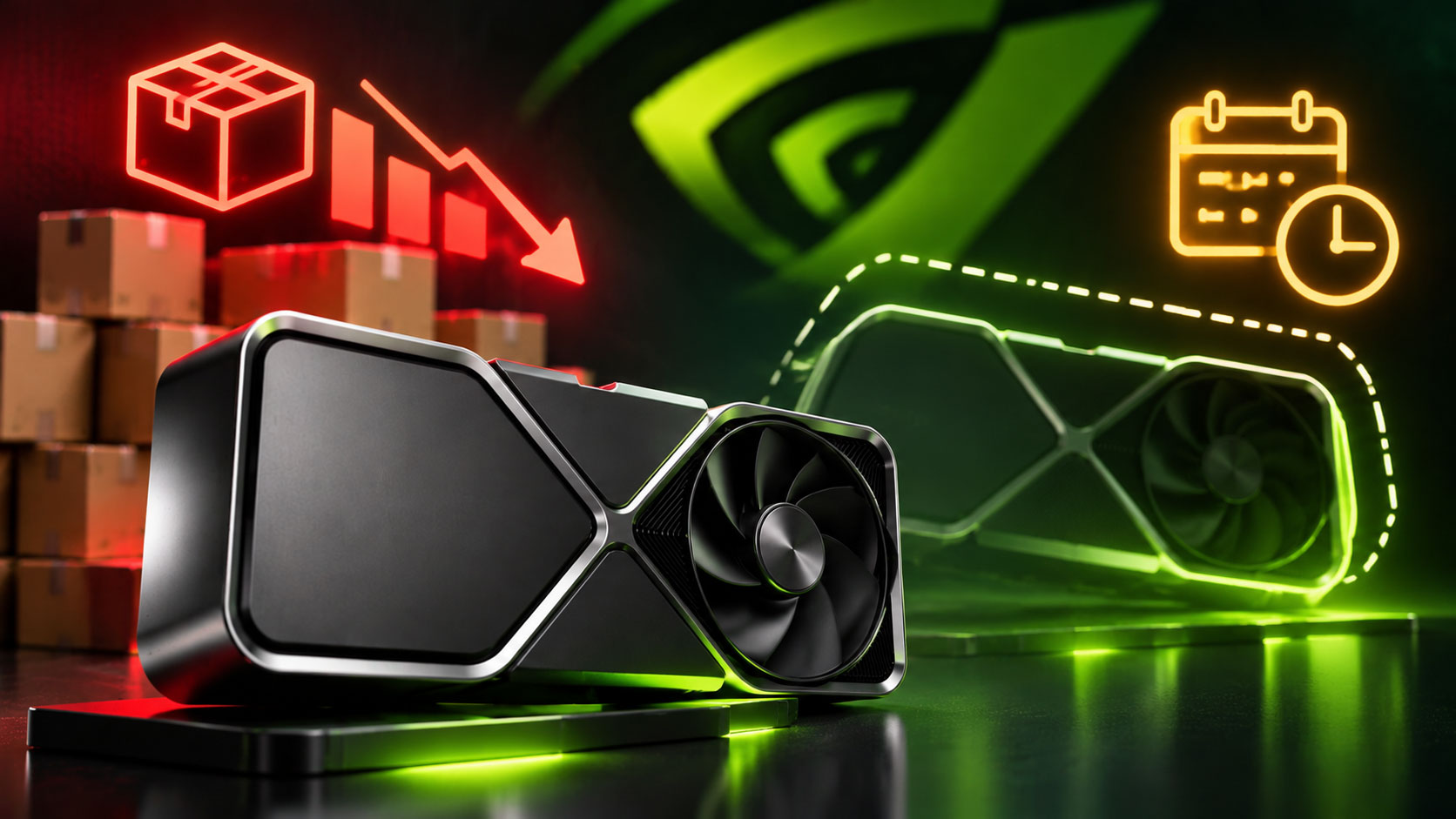
Navigating the Shifting Sands of GPU Supply
You’ve been tracking the GPU market for years, experiencing the highs of new releases and the lows of unforeseen shortages. Now, in late 2026, a familiar yet unsettling narrative is beginning to unfold. Reports are surfacing, painting a picture of NVIDIA strategically reducing the supply of its anticipated RTX 50-series graphics cards. This isn’t just a simple inventory adjustment; it’s a move deeply intertwined with whispers of a potential delay for the subsequent RTX 60-series. For you, the enthusiast, the gamer, the professional relying on cutting-edge hardware, this news has immediate and long-term implications. Understanding the dynamics at play requires a careful dissection of market forces, manufacturing realities, and NVIDIA’s strategic playbook. You’re not just observing a change in product availability; you’re witnessing a carefully orchestrated dance of supply and demand, designed to optimize profit and market positioning in a highly competitive landscape. The ramifications for product availability, pricing, and your upgrade path are significant, demanding your close attention as this situation develops.
The Unfolding Scenario: Reduced 50-Series Availability
The initial reports are quite clear: NVIDIA is scaling back the planned production and distribution of its RTX 50-series cards. While official statements from NVIDIA are, as expected, scarce and often guarded, the information comes from various industry sources – supply chain partners, distributors, and even some AIB (add-in board) manufacturers. These sources, often anonymous due to confidentiality agreements, paint a consistent picture. You’re seeing indicators like reduced allocation numbers for upcoming shipments, extended lead times for specific SKUs, and a general tightening of the flow of new 50-series cards into the retail channel. This isn’t just about the flagship 5090 or the enthusiast-grade 5080; the impact is expected to ripple across the entire product stack, affecting even the more mainstream 5070 and 5060 models. For you, this translates directly into a potentially more challenging purchasing experience when the RTX 50-series officially launches or becomes more widely available. Gone are the days of plentiful day-one stock; instead, you might be facing limited initial waves and potentially higher prices due to scarcity.
Early Market Indicators and Distributor Insights
You’re already seeing the signs if you’re closely monitoring the retail landscape. Pre-order availability has been surprisingly constrained for a highly anticipated launch, with many retailers offering only small batches or requiring lengthy waitlists. Distributors, the crucial link between NVIDIA and your favorite store, are reportedly receiving lower initial quotas than they had anticipated. This under-allocation is a significant tell. It’s a direct signal from NVIDIA that they are not pushing the 50-series into the market with the aggressive volume typically associated with a full product cycle. Your local electronics store, or your preferred online retailer, is feeling this squeeze directly, and it will inevitably filter down to your ability to purchase these cards. The early adopter crowd, typically eager to jump on the latest generation, will likely face intense competition for the limited stock that does appear. This controlled release strategy suggests a careful, almost hesitant, approach to the 50-series launch, which only deepens the mystery surrounding NVIDIA’s long-term plans.
In light of recent developments regarding NVIDIA’s supply chain, particularly the cuts to the RTX 50-Series and the potential delays facing the RTX 60-Series, it’s essential to consider the broader implications for the tech industry. A related article that delves into the automation of API discovery, which can be crucial for optimizing tech workflows and enhancing efficiency, can be found here: How to Automate API Discovery with RFC 9727. This exploration of automation techniques may provide insights into how companies can adapt to supply chain challenges and streamline their operations.
The Specter of the RTX 60-Series Delay

The reason behind NVIDIA’s cautious approach with the RTX 50-series is, according to these same industry reports, directly linked to a potential delay in the release of the much-anticipated RTX 60-series. This isn’t just a minor adjustment to a roadmap; it’s a significant shift that could have profound implications for NVIDIA’s competitive strategy and the overall GPU market for the next 12 to 18 months. You’ve been expecting the 60-series to arrive within a relatively predictable generational cadence, likely by late 2027 or early 2028, based on historical patterns. However, the whispers now suggest this timeline could be pushed back, potentially by several quarters, extending well into 2028 or even beyond. This delay, if confirmed, is the central piece of the puzzle explaining the 50-series supply cuts. NVIDIA appears to be navigating a complex web of challenges that are forcing them to re-evaluate their release schedule for their next-generation architecture.
Potential Factors Driving the Delay
You might be wondering what could possibly cause such a significant delay for a product as crucial as a new GPU generation. Several factors are reportedly at play, each contributing to the complexity NVIDIA faces.
Manufacturing Challenges and Advanced Process Nodes
One of the primary culprits cited in the reports is the inherent difficulty in ramping up production on advanced semiconductor manufacturing processes. You know that each new generation of GPUs typically relies on a smaller, more efficient manufacturing node – say, moving from a 4nm process to a 3nm or even a 2nm equivalent. These cutting-edge nodes, often sourced from TSMC or Samsung Foundry, are incredibly complex to perfect. Yield rates – the percentage of functional chips produced from a wafer – can be notoriously low in the early stages of a new node. For NVIDIA, ensuring a sufficient supply of high-quality dies for an entire product stack is a monumental task. If TSMC, for instance, is experiencing unexpected hurdles in achieving target yields for the specific node NVIDIA plans to use for the 60-series, it directly impacts NVIDIA’s ability to produce chips in volume. You’re likely aware of the historical challenges other companies have faced with new process nodes, and NVIDIA is not immune to these realities. A delay here could mean a delay across the entire product line.
Design Iterations and Architectural Complexities
Beyond manufacturing, the sheer complexity of designing a next-generation GPU architecture like the one powering the RTX 60-series cannot be underestimated. You’ve seen the technological leaps with each generation – improved ray tracing performance, more powerful Tensor Cores for AI, new memory technologies, and architectural enhancements aimed at increasing raw compute power. Integrating these innovations, ensuring their stability, and optimizing them for performance requires an immense amount of engineering effort. Reports suggest that NVIDIA might be encountering unforeseen challenges or desiring further optimization in specific areas of the 60-series design. This could involve anything from core logic design to memory controller integration, or even driver development. A decision to iterate further on the design, even if it means delaying the launch, is often made to ensure a more polished, performant, and reliable product at release. NVIDIA has a reputation for delivering high-performance products, and they’re unlikely to rush a product to market if they feel it doesn’t meet their stringent performance or feature targets.
Competitive Landscape and Market Strategy
You also need to consider the broader competitive landscape. While AMD is NVIDIA’s primary competitor in the discrete GPU space, the evolving AI market also plays a significant role. NVIDIA has seen unprecedented growth in its data center and AI divisions, driven by demand for its Hopper and Blackwell architectures. You might suspect that resources and engineering talent are being heavily prioritized for these highly lucrative segments. If the market for consumer GPUs is perceived to be in a temporary lull, or if NVIDIA believes it can maintain market dominance with its existing and upcoming 50-series cards for a longer period, it might strategically choose to delay the 60-series. This isn’t just about technology; it’s about business. A delay allows NVIDIA to maximize the revenue potential of the 50-series, potentially clearing existing inventory and ensuring a more favorable market entry for the 60-series when it eventually launches. You’re witnessing NVIDIA’s strategic flexibility in action, prioritizing long-term market leadership and profitability over a strict adherence to a generational release cadence.
The Interplay: Why Supply Cuts and Delays are Linked

For you, the connection between reduced RTX 50-series supply and a delayed RTX 60-series is not immediately obvious, but it’s a critical aspect of understanding NVIDIA’s current strategy. These two pieces of news are not independent events; they are intrinsically linked, representing a calculated response from NVIDIA to a complex set of internal and external factors. You can think of it as a domino effect, where the anticipated delay of the next-gen product forces a recalibration of the current-gen’s availability. NVIDIA is not simply pulling 50-series cards off the shelves out of spite; there’s a clear, strategic rationale at play.
Preventing Market Saturation and Inventory Bloat
You’ve seen what happens when GPU manufacturers overproduce: a flooded market, price cuts, and inventory sitting in warehouses. NVIDIA learned harsh lessons from past cycles where excessive supply led to significant financial write-downs. With a potential 60-series delay on the horizon, NVIDIA is likely taking proactive steps to prevent a similar scenario with the 50-series. If the 60-series is pushed back, the 50-series will need to remain relevant and sellable for a longer period than originally planned. By controlling the supply of the 50-series now, NVIDIA can:
- Maintain higher average selling prices (ASPs): Scarcity naturally helps sustain demand and justifies premium pricing. You’re less likely to see aggressive price cuts on the 50-series if supply is kept tight, even over an extended period.
- Avoid creating an inventory glut: If the 60-series were to launch immediately after a period of heavy 50-series production, retailers and NVIDIA itself would be left with a large inventory of “old” cards that suddenly lose significant value. This pre-emptive cut minimizes that risk. You wouldn’t want to buy a 50-series card only for a vastly superior 60-series to appear months later, severely devaluing your purchase. NVIDIA aims to manage this transition smoothly, for its own benefit.
- Extend the lifespan of the current generation: By limiting supply, the 50-series can effectively serve as the “new” product for a longer duration, filling the gap until the 60-series is truly ready for mass production and launch. This allows NVIDIA to maximize the return on its investment in the 50-series architecture.
Managing Customer Expectations and Upgrade Cycles
You, the consumer, are acutely aware of generational performance leaps. If the 50-series were released in full force, only to be supplanted by an even more powerful 60-series a mere 12-18 months later, many would feel compelled to wait, or even regret an early purchase. By limiting 50-series supply and implicitly signaling a longer lifecycle, NVIDIA manages your expectations. It suggests that the 50-series will be the top-tier offering for a more substantial period. This strategy aims to:
- Encourage immediate 50-series purchases: If you know the next generation is far off and the current one is scarce, you’re more likely to grab a 50-series card when you can, rather than waiting indefinitely.
- Prevent “holding out” for the next best thing: You might be tempted to always wait for the next generation. NVIDIA’s current strategy makes that wait potentially much longer, pushing you towards the available 50-series.
- Smooth out the demand curve: By controlling the flow, NVIDIA attempts to create a more consistent demand for the 50-series over an extended period, rather than a massive initial rush followed by a rapid decline as anticipation for the 60-series builds.
Implications for You: The Gamer and Professional
This unfolding situation has tangible consequences for you, whether you’re building a new gaming rig, upgrading an older system, or seeking professional workstation performance. Understanding these implications is crucial for making informed decisions in the coming months. Your upgrade plans, your budget, and your access to cutting-edge technology are all directly impacted by NVIDIA’s strategic moves.
Pricing and Availability Challenges
The most immediate and obvious impact for you will be on pricing and availability. With reduced 50-series supply and a delayed 60-series, you can anticipate:
Higher Initial Prices and Slower Price Drops
You should expect the RTX 50-series to launch at a premium, and those prices are likely to hold firm for longer than usual. The typical pattern of prices gradually dropping a few months post-launch might be significantly attenuated. Scarcity inherently drives up value, and NVIDIA, facing potential delays for its next-gen product, has a strong incentive to maximize revenue from the cards it does release. You’ll need to be prepared to pay full MSRP, or potentially even slightly above, especially for the more desirable SKUs, and don’t count on significant discounts appearing quickly.
Limited Stock and Increased Competition
Getting your hands on an RTX 50-series card at launch, or even in the months following, could prove challenging. You’ll likely encounter limited initial stock, quick sell-outs, and a need to be vigilant about inventory updates from retailers. Flash sales and pre-order drops will be fiercely contested. This situation mirrors some of the supply challenges seen during previous GPU cycles, albeit for different reasons. Your best bet will be to subscribe to stock alerts, follow reputable hardware news outlets for availability updates, and be prepared to act quickly when cards do become available.
Longevity of the Current Generation and Upgrade Path
The delay of the RTX 60-series effectively extends the reign of the RTX 50-series (and, by extension, even the 40-series for some segments). For you, this means:
Extended Relevance of RTX 50-Series
If you do purchase an RTX 50-series card, you can rest assured that it will remain NVIDIA’s flagship offering for a considerably longer period than initially anticipated. This means longer driver support, continued optimization for new games, and sustained performance leadership in the consumer space. Your investment in a 50-series card will likely offer a solid return in terms of longevity before a truly generational leap appears. You won’t feel compelled to upgrade again as quickly as you might have if the 60-series were arriving on a more aggressive timeline. This stability can be a positive aspect, allowing you to settle into your new hardware without immediate fear of obsolescence.
Decision Point: Upgrade Now or Wait Longer?
This situation forces a critical decision point for you. If you’re currently on an older generation card (e.g., RTX 30-series or older), the performance leap offered by the 50-series will be substantial. The question becomes: do you upgrade now, navigating the supply challenges and higher prices, knowing it will be a long time until the 60-series arrives? Or do you hold out, potentially for another 18-24 months, for the 60-series, enduring your current hardware’s limitations? This decision will depend heavily on your current system’s capabilities, your performance needs, and your budget flexibility. If you need a significant performance boost now, and you can afford the 50-series, it might be the right time to buy. If your current card is still doing well and you can tolerate a longer wait, holding out for the next true generational leap might be a viable, albeit patient, strategy.
In light of recent developments regarding NVIDIA’s supply chain, the news about the RTX 50-Series cuts and the potential delay of the RTX 60-Series has sparked considerable interest among tech enthusiasts. This situation highlights the ongoing challenges in the semiconductor industry, which have been discussed in various articles. For instance, a related piece on lifecycle email automation explores how companies can effectively guide subscribers through different stages of engagement, ensuring they remain informed and loyal. You can read more about it here.
Looking Ahead: The Evolving GPU Landscape
| Metric | Details |
|---|---|
| Product Line | RTX 50-Series |
| Supply Status | Cut / Reduced |
| Reason for Supply Cut | Possible delay in RTX 60-Series launch |
| Upcoming Product Line | RTX 60-Series |
| Launch Status | Possible Delay |
| Reported By | Industry Reports |
As 2026 draws to a close and we move into 2027, the GPU market is in a state of flux. NVIDIA’s strategic decisions regarding the RTX 50-series supply and the potential RTX 60-series delay are reshaping the landscape for the foreseeable future. You, as a consumer, need to remain agile and informed. The traditional release cycles and pricing expectations are being challenged, and adaptability will be key.
AMD’s Position and Potential Responses
You’re undoubtedly considering AMD’s role in this scenario. NVIDIA’s potential delay of the 60-series could open a window of opportunity for AMD, its primary competitor in the consumer GPU market. If AMD can maintain its own release cadence for its RDNA 4 or RDNA 5 architecture, it might find itself in a stronger competitive position against NVIDIA’s extended 50-series reign. You might see AMD being more aggressive with pricing or aiming to fill the performance gaps that NVIDIA’s controlled supply creates. However, AMD also faces similar challenges with advanced manufacturing nodes and design complexities. Their ability to capitalize on NVIDIA’s situation will depend on their own production capabilities and whether they can avoid similar delays. For you, a stronger AMD presence could lead to increased competition and potentially more favorable pricing across the board, which is always a welcome development.
The Broader Market and AI’s Influence
Beyond the direct GPU competition, the broader market dynamics, particularly the surging demand for AI hardware, are profoundly influencing NVIDIA’s strategy. You’ve seen NVIDIA’s incredible financial success driven by its data center and AI accelerators. It’s plausible that top engineering talent and manufacturing capacity are being prioritized for these highly profitable segments. This prioritization, while excellent for NVIDIA’s bottom line, could inadvertently contribute to delays or constrained supply in the consumer GPU division. For you, this means understanding that consumer GPUs, while still important, might not always be the absolute top priority for NVIDIA’s overall corporate strategy in the current climate. The future of gaming and professional visual computing hardware will continue to be intertwined with, and influenced by, the relentless pace of AI development. Your journey through this evolving landscape will require patience, careful research, and a keen eye on the ongoing shifts in technology and market strategy.
FAQs
What is the reason behind NVIDIA cutting RTX 50-Series supply?
NVIDIA has reportedly cut the supply of its RTX 50-Series graphics cards due to a combination of lower-than-expected demand and inventory management strategies. This decision aims to optimize production and focus on upcoming product lines.
What challenges is the RTX 60-Series facing?
The RTX 60-Series is facing potential delays attributed to supply chain issues and production challenges. These factors may hinder NVIDIA’s ability to meet the anticipated launch timeline for these graphics cards.
How does the supply cut affect consumers?
The supply cut of the RTX 50-Series may lead to limited availability in the market, potentially increasing prices for consumers who are looking to purchase these graphics cards. Additionally, delays in the RTX 60-Series could prolong the wait for those seeking the latest technology.
When is the expected release date for the RTX 60-Series?
While NVIDIA has not officially announced a release date for the RTX 60-Series, reports suggest that delays could push the launch further into 2024. Consumers are advised to stay tuned for official announcements regarding the timeline.
What impact does this have on NVIDIA’s market position?
The supply cut and potential delays may impact NVIDIA’s competitive edge in the graphics card market, especially as competitors may capitalize on the situation by releasing their own products. Maintaining a strong product lineup is crucial for NVIDIA to retain its market leadership.
