


In recent years, Google has established itself as a leader in artificial intelligence, consistently advancing technological capabilities. Google AI encompasses a diverse range of innovations, research initiatives, and practical applications that are transforming daily experiences. The company’s work spans from refining search algorithms to developing sophisticated machine learning models, positioning Google at the cutting edge of a technological transformation that is reshaping industries and changing how humans interact with computers.
Google AI’s importance transcends technological innovation alone; it represents a fundamental shift in artificial intelligence implementation and utilization. Google is building both tools and a comprehensive environment for AI development and growth. This technological ecosystem has wide-ranging implications across multiple sectors, raises important ethical questions, and helps shape the future direction of artificial intelligence technology.
Key Takeaways
- Google AI continues to advance with significant new technological breakthroughs.
- Its innovations are transforming multiple industries, from healthcare to finance.
- Ethical considerations remain a key focus in Google’s AI development process.
- Collaborations and partnerships play a crucial role in accelerating Google’s AI research.
- The future of Google AI holds both promising benefits and potential risks to monitor.
Google’s Latest Breakthroughs in AI Technology
Google has made remarkable strides in AI technology, with innovations that have captured the attention of both the tech community and the general public. One of the most notable breakthroughs is the development of advanced natural language processing models, such as BERT and its successors. These models have revolutionized how machines understand and generate human language, enabling more accurate search results and enhancing user experience across various platforms.
As you engage with these technologies, you will notice how they facilitate more intuitive interactions between users and machines. Another significant advancement is in the realm of computer vision. Google’s AI systems can now analyze images and videos with unprecedented accuracy, allowing for applications ranging from automated tagging in Google Photos to real-time translation of text in images through Google Lens.
This capability not only enhances user convenience but also opens up new avenues for businesses to leverage visual data in innovative ways. As you witness these developments, it becomes clear that Google is not merely keeping pace with AI advancements; it is setting the standard for what is achievable.
The Impact of Google AI on Various Industries
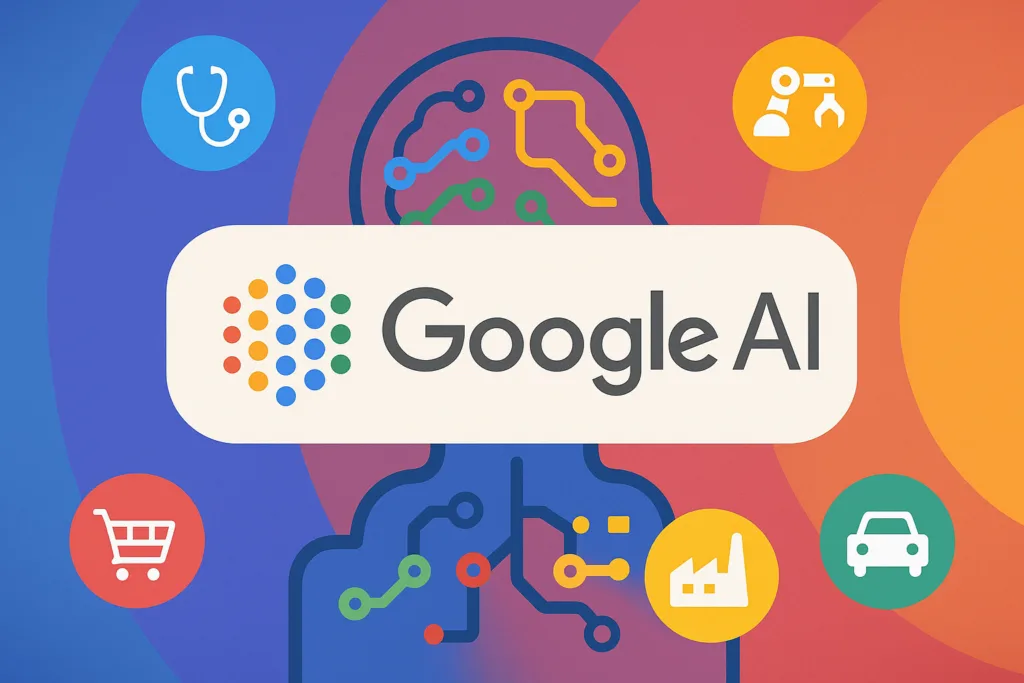
The influence of Google AI extends across a multitude of industries, fundamentally altering how businesses operate and interact with their customers. In healthcare, for instance, Google’s AI technologies are being utilized to analyze medical images, predict patient outcomes, and even assist in diagnosing diseases. By harnessing vast amounts of data, these systems can identify patterns that may elude human practitioners, ultimately leading to improved patient care and more efficient healthcare delivery.
As you consider these applications, you will appreciate how AI can enhance decision-making processes in critical fields. In the realm of finance, Google AI is transforming risk assessment and fraud detection. Financial institutions are increasingly relying on machine learning algorithms to analyze transaction patterns and identify anomalies that may indicate fraudulent activity.
This proactive approach not only protects consumers but also streamlines operations for banks and financial services. As you explore these advancements, it becomes evident that Google AI is not just a tool for efficiency; it is a catalyst for innovation that drives entire industries forward.
Ethical Considerations in Google AI Development
As you navigate the exciting landscape of Google AI, it is essential to address the ethical considerations that accompany such powerful technology. The rapid advancement of AI raises questions about privacy, bias, and accountability. For instance, as Google collects vast amounts of data to train its models, concerns about user privacy and data security become paramount.
You may find yourself pondering how companies can balance innovation with the responsibility to protect individual rights. Moreover, the potential for bias in AI algorithms is a critical issue that cannot be overlooked. If the data used to train these systems reflects societal biases, the resulting AI applications may perpetuate or even exacerbate existing inequalities.
Google has acknowledged these challenges and is actively working to implement fairness and transparency in its AI development processes.
As you reflect on these ethical dilemmas, you will recognize the importance of fostering a responsible approach to AI that prioritizes inclusivity and fairness.
Google’s Role in Shaping the Future of AI
| 2024-05-15 | Google AI introduces new language model for improved translation | Product Update | High | Google AI Blog |
| 2024-04-28 | Google AI announces partnership with healthcare providers for AI diagnostics | Partnership | Medium | TechCrunch |
| 2024-03-10 | Google AI releases open-source toolkit for machine learning researchers | Open Source | High | GitHub |
| 2024-02-20 | Google AI’s new ethical guidelines for AI development published | Policy | Medium | Google AI Blog |
| 2024-01-05 | Google AI achieves breakthrough in natural language understanding | Research | High | Nature Journal |
Google’s influence on the future of AI cannot be overstated. As a leader in research and development, the company is not only advancing its own technologies but also shaping industry standards and best practices.
Through initiatives like TensorFlow, an open-source machine learning framework, Google has democratized access to powerful AI tools, enabling developers worldwide to create innovative applications.
This commitment to open-source collaboration fosters a vibrant community that accelerates progress in the field. Furthermore, Google’s investment in AI research extends beyond its own products; it actively collaborates with academic institutions and industry partners to explore new frontiers in artificial intelligence. By supporting research initiatives and sharing knowledge, Google plays a pivotal role in driving collective advancements that benefit society as a whole.
As you consider these contributions, it becomes clear that Google’s vision for the future of AI is one that emphasizes collaboration, innovation, and societal impact.
The Potential Risks and Benefits of Google AI

While the benefits of Google AI are substantial, it is crucial to acknowledge the potential risks associated with its widespread adoption. One significant concern is job displacement due to automation. As AI systems become more capable of performing tasks traditionally carried out by humans, there is a growing fear that many jobs may become obsolete.
You may find yourself contemplating how society can adapt to this shift and ensure that workers are equipped with the skills needed for an evolving job market. On the other hand, the benefits of Google AI are equally compelling. From enhancing productivity to enabling groundbreaking discoveries in science and technology, the potential for positive impact is vast.
For instance, AI-driven insights can lead to more effective climate change solutions or advancements in renewable energy technologies. As you weigh these risks against the benefits, it becomes evident that responsible development and implementation are essential to harnessing the full potential of Google AI while mitigating adverse effects.
Google’s Collaborations and Partnerships in AI Research
Collaboration is at the heart of Google’s approach to advancing AI research. The company has formed strategic partnerships with leading academic institutions, non-profit organizations, and industry players to foster innovation and share knowledge. These collaborations enable researchers to tackle complex challenges collectively and accelerate breakthroughs that might not be possible in isolation.
As you explore these partnerships, you will see how they contribute to a more robust understanding of artificial intelligence. One notable example is Google’s collaboration with universities on projects related to ethical AI development and responsible machine learning practices. By engaging with scholars and thought leaders in the field, Google aims to address pressing ethical concerns while promoting transparency and accountability in its technologies.
This commitment to collaboration underscores Google’s recognition that the future of AI relies on collective efforts to navigate its complexities responsibly.
The Future of Google AI: Predictions and Speculations
As you look ahead to the future of Google AI, predictions abound regarding its trajectory and potential impact on society. Many experts anticipate that advancements in generative AI will continue to reshape creative industries, enabling artists, writers, and musicians to collaborate with machines in unprecedented ways. You may envision a world where human creativity is augmented by intelligent systems that inspire new forms of expression.
Additionally, as AI becomes increasingly integrated into everyday life, there are expectations for enhanced personalization across various platforms. From tailored content recommendations on YouTube to personalized learning experiences through educational tools like Google Classroom, the potential for individualized interactions is vast. However, as you consider these possibilities, it is essential to remain vigilant about ethical implications and ensure that advancements serve the greater good.
In conclusion, Google’s journey in artificial intelligence represents a remarkable fusion of innovation and responsibility. As you engage with this dynamic field, you will witness how Google continues to shape the future of technology while navigating complex ethical landscapes. The potential for positive impact is immense, but it requires a collective commitment to responsible development and collaboration across sectors.
The future of Google AI holds promise—one that invites you to imagine a world where technology enhances human potential while addressing societal challenges head-on.
FAQs
What is Google AI?
Google AI refers to the artificial intelligence research and development initiatives undertaken by Google. It encompasses a wide range of technologies including machine learning, natural language processing, computer vision, and robotics.
Where can I find the latest Google AI news?
The latest Google AI news can be found on Google’s official AI blog, technology news websites, and reputable tech news platforms such as TechCrunch, The Verge, and Wired.
What are some recent advancements in Google AI?
Recent advancements include improvements in natural language understanding with models like LaMDA, enhancements in AI-powered tools such as Google Assistant, and breakthroughs in AI ethics and fairness.
How does Google use AI in its products?
Google integrates AI into many of its products, including search algorithms, Google Photos, Google Translate, Google Maps, and Google Assistant, to improve user experience through personalization, automation, and enhanced accuracy.
Is Google AI involved in ethical AI development?
Yes, Google AI has dedicated teams and initiatives focused on ethical AI development, emphasizing fairness, transparency, privacy, and accountability in AI systems.
Can developers access Google AI tools?
Yes, developers can access Google AI tools and APIs through platforms like Google Cloud AI, TensorFlow, and Google AI Hub to build and deploy AI-powered applications.
How does Google AI impact everyday users?
Google AI impacts everyday users by enabling smarter search results, voice recognition, personalized recommendations, real-time language translation, and improved accessibility features.
What is Google’s approach to AI research?
Google’s approach to AI research involves open collaboration, publishing research papers, developing open-source tools, and partnering with academic institutions to advance the field responsibly.
Are there any controversies related to Google AI?
There have been discussions and concerns regarding privacy, data security, and ethical implications of AI technologies developed by Google, which the company addresses through policies and ongoing research.
How can I stay updated on Google AI developments?
To stay updated, follow Google AI’s official blog, subscribe to newsletters from tech news outlets, attend AI conferences, and follow Google AI researchers and engineers on social media platforms.
