


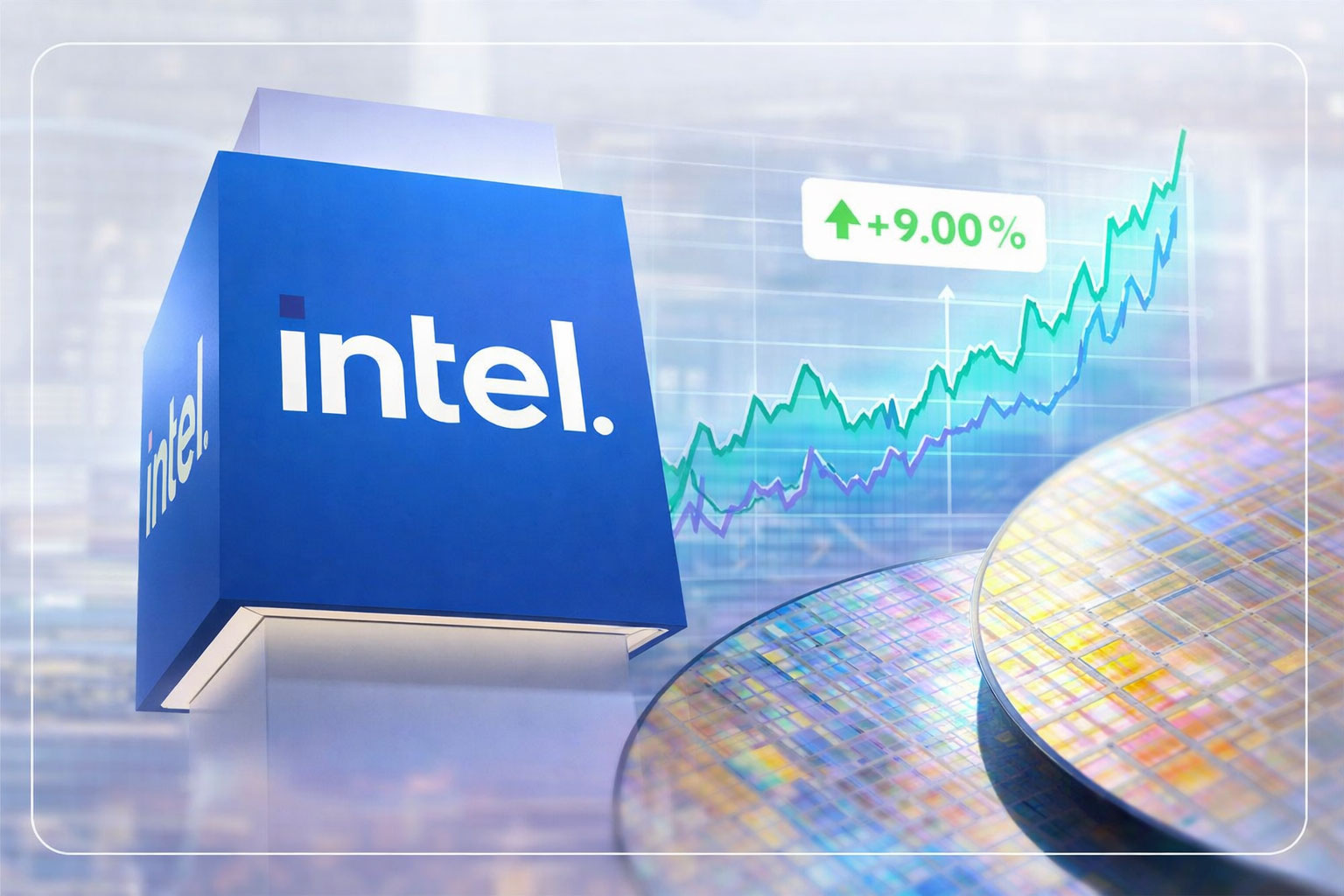
You’ve likely noticed the recent buzz surrounding Intel. Its stock price experienced a notable jump, a 9% surge that has analysts and investors taking a closer look. This isn’t just random fluctuation; it’s tied to a significant strategic move: Intel’s substantial investment in its Irish manufacturing facilities. Understanding this development requires a deeper dive into what it signifies for the company, the semiconductor industry, and your own potential perception of Intel’s future trajectory.
Intel’s presence in Ireland, particularly at its Leixlip campus, is not a new development. However, the scale of the recent investment signals a conscious decision to solidify and expand this operational base. This isn’t about acquiring a new, unknown entity; it’s about strengthening an existing and integral part of their global manufacturing network. Evaluating the reasons behind this focused investment is crucial to grasping its potential impact.
A Decades-Long Commitment to Leixlip
Your understanding of Intel’s Irish operations needs to be grounded in its history there. Leixlip has been a cornerstone of Intel’s European manufacturing for a considerable period. This isn’t a hastily assembled project; it’s a testament to a long-term commitment that has seen the facility evolve and adapt to changing technological landscapes. You’re witnessing not a new venture, but an upgrade and refurbishment of a proven asset.
The Significance of “Buyback”
The term “buyback” in this context can be nuanced. It’s not typically about Intel buying back its own stock (though that’s a different financial maneuver). Here, you’re seeing Intel invest heavily in its existing Irish fab, effectively bringing it back to a state of peak operational efficiency and technological readiness. Think of it as a substantial refurbishment and retooling, ensuring that this facility can handle the latest and most demanding chip manufacturing processes. This is about investing in what they already possess, rather than acquiring external capabilities.
Upgrading Existing Infrastructure
The core of this investment lies in upgrading the existing infrastructure at Leixlip. This involves incorporating advanced manufacturing technologies, improving automation, and potentially expanding cleanroom space. For you, this translates to Intel ensuring its Irish operations are at the bleeding edge of semiconductor fabrication. This is vital in an industry where technological obsolescence is a constant threat.
European Manufacturing: A Strategic Imperative
The timing of this investment also highlights the growing emphasis on diversifying semiconductor manufacturing geographically. With global supply chain disruptions becoming a more prominent concern, having robust manufacturing capabilities within Europe becomes a significant strategic advantage. You’re seeing Intel positioning itself to benefit from this trend, reducing reliance on more geographically concentrated production hubs.
Intel’s recent decision to buy back its Ireland chip fabrication facility has led to a significant 9% jump in its shares, signaling a renewed strength in the company’s operations and strategic direction. This move not only reflects Intel’s commitment to bolstering its manufacturing capabilities but also highlights the growing importance of semiconductor production in the global market. For those interested in exploring how technology and innovation are shaping various industries, a related article on the impact of generative AI in creative processes can be found here: The AI Creative Director: A/B Testing and Scaling Ad Copy with Generative AI.
The 9% Share Jump: Interpreting the Market’s Reaction
The immediate reaction to this news was a palpable surge in Intel’s stock value. This 9% jump is not merely a blip; it’s a market indicator of investor confidence and a positive reception to Intel’s strategic direction. Analyzing the drivers behind this market movement offers insights into broader industry sentiment.
Investor Confidence Re-evaluation
For a period, Intel has faced skepticism regarding its manufacturing prowess, particularly with the rise of competitors who have embraced leading-edge foundry models more aggressively. This investment in its own, advanced fabrication capabilities, especially in a strategically important region, signals to the market that Intel is committed to regaining its manufacturing leadership. Your observation of this jump suggests that investors are re-evaluating Intel’s long-term prospects based on this tangible commitment.
The “Foundry” Narrative and Intel’s Response
Intel’s strategic shift to becoming a foundry, offering its manufacturing services to other companies (Intel Foundry Services or IFS), is a crucial backdrop. This Irish investment is a concrete demonstration that IFS is not just a theoretical concept but is backed by substantial, state-of-the-art manufacturing capacity. You’re seeing Intel invest in the very infrastructure that underpins its foundry ambitions. This move is designed to attract external customers by showcasing its advanced capabilities and reliability.
Competitor Landscape and Market Share
The semiconductor industry is fiercely competitive. Companies like TSMC and Samsung have been at the forefront of advanced process nodes for some time. Intel’s investment in Leixlip is a direct response to this competitive pressure. By upgrading its facilities, Intel aims to close the technological gap and potentially reclaim market share in advanced chip manufacturing. You should consider how this move positions Intel against its rivals and what it means for the future distribution of manufacturing dominance.
Long-Term Growth Potential Acknowledged
A 9% jump can also reflect a renewed appreciation for Intel’s long-term growth potential. By securing and enhancing its manufacturing base, Intel is laying the groundwork for future product cycles and the development of next-generation technologies. This investment signals a forward-looking strategy, suggesting that the company is preparing for sustained growth rather than just short-term gains.
Technological Advancement: Powering the Fab
The decision to invest in the Irish fab is intrinsically linked to the adoption of advanced semiconductor manufacturing technologies. This isn’t about incremental improvements; it’s about embracing the processes that define the cutting edge of chip production. Your understanding of these technologies is key to appreciating the significance of Intel’s move.
Embracing Advanced Process Nodes
The core of semiconductor advancement lies in shrinking transistors and increasing their density. This Irish investment is almost certainly geared towards supporting Intel’s roadmap for advanced process nodes, potentially moving towards or enhancing its capabilities in areas like the Intel 4 process or beyond. These smaller, more efficient nodes are critical for delivering performance gains and power efficiency in future processors. You should be aware that this investment is aimed at producing the most advanced chips possible.
The Importance of EUV Lithography
Extreme Ultraviolet (EUV) lithography is a game-changer in semiconductor manufacturing, enabling the creation of incredibly intricate patterns on silicon wafers. While it’s not always publicly detailed, significant investments in fabs of this nature often involve the infrastructure and capabilities to support EUV. If Intel is indeed integrating or expanding EUV capabilities in Leixlip, this would be a major step towards competing at the highest levels of chip production. You can infer that such advanced technology is likely a key component of this investment.
Automation and AI Integration
Modern chip fabrication is a highly automated process, increasingly integrating artificial intelligence (AI) for process control, defect detection, and optimization. You can expect that this investment in Leixlip includes upgrades to these advanced automation systems. This not only improves efficiency and reduces costs but also enhances the precision required for manufacturing at the leading edge.
Die Size and Manufacturing Yield
The ability to manufacture smaller, more complex chips also impacts the potential for larger, more integrated designs. This investment could be aimed at enabling the production of larger, more powerful chips or, conversely, smaller and more power-efficient chips for a wider range of applications. Ultimately, the focus is on achieving higher manufacturing yields of high-quality silicon, which directly impacts profitability and product availability.
The Geopolitical Context: Supply Chain Resilience
The timing of Intel’s Irish expansion also resonates with broader geopolitical conversations about supply chain resilience, particularly in the technology sector. You are witnessing a strategic response to global uncertainties.
Reducing Reliance on Asia-Pacific
A significant portion of global advanced semiconductor manufacturing is concentrated in the Asia-Pacific region, particularly Taiwan. Recent geopolitical tensions have highlighted the vulnerabilities of this concentration. Intel’s investment in Europe, a region with a different geopolitical standing, contributes to a more diversified and resilient global supply chain. You’re seeing Intel hedging against potential disruptions by strengthening its European manufacturing footprint.
Government Incentives and Support
It’s important to note that significant investments in semiconductor manufacturing often come with substantial government support and incentives. Intel’s Irish expansion is likely benefiting from programs designed to bolster domestic and regional chip production capabilities. These incentives can significantly reduce the financial burden of such large-scale projects. You should be aware that external financial support often plays a role in these strategic decisions.
The CHIPS Act and Global Initiatives
| Metrics | Data |
|---|---|
| Company | Intel |
| Share Jump | 9% |
| Action | Buying back Ireland chip fab |
| Sign | Renewed strength |
Globally, governments are enacting legislation, such as the CHIPS Act in the United States and similar initiatives in Europe, to encourage domestic semiconductor manufacturing. Intel’s investment in Ireland aligns with these broader efforts to de-risk and onshore critical manufacturing capabilities. You’re seeing a company capitalizing on and contributing to these global policy shifts.
Long-Term Economic Impact for Ireland
For Ireland, and specifically the region around Leixlip, this investment represents a significant economic boost. It means job creation, the development of specialized skills, and a continued strengthening of Ireland’s position as a hub for advanced technology manufacturing. You should consider the tangible benefits this brings to the local and national economy.
Intel’s recent decision to buy back its chip fabrication facility in Ireland has resulted in a significant 9% jump in its shares, signaling a potential resurgence in the company’s operational strength. This move not only reflects Intel’s commitment to bolstering its manufacturing capabilities but also aligns with broader trends in the semiconductor industry. Investors are keenly observing how such strategic shifts can impact market dynamics, much like the insights shared in a related article about the importance of adaptability in business strategies. For more on this topic, you can read about it in the article on the art of the pivot here.
The Future Outlook for Intel
The recent surge in Intel’s stock price and the significant investment in its Irish fabrication capabilities are more than just immediate news items. They represent a strategic pivot and a renewed commitment to core strengths. Your interpretation of these developments should extend to how they shape Intel’s future.
Reclaiming Manufacturing Leadership
Intel’s long-term ambition is to regain its position as the undisputed leader in semiconductor manufacturing. This investment in Leixlip is a tangible step in that direction, demonstrating a commitment to advanced technology and capacity. You should gauge if this move is sufficient to achieve that ambitious goal.
The Intel Foundry Services (IFS) Vision
The success of Intel Foundry Services is critical to its future. By showcasing and enhancing its manufacturing capabilities in regions like Ireland, Intel aims to attract a broad range of customers for its foundry services. This diversification of revenue streams is a key element of its turnaround strategy. You need to assess the potential for IFS to become a significant contributor to Intel’s revenue.
Innovation and Product Development
The synergy between cutting-edge manufacturing and innovative product development is crucial. With enhanced fabrication capabilities, Intel can more rapidly bring its next-generation processors and other semiconductor products to market, improving performance and efficiency. You should question whether this investment will translate into a faster cadence of groundbreaking product releases.
Navigating the Semiconductor Cycle
The semiconductor industry is known for its cyclical nature. Intel’s strategic investments are designed to provide resilience and adaptability through these cycles. By strengthening its manufacturing backbone, the company aims to be well-positioned to capitalize on upswings and weather downturns. You might consider how this investment positions Intel for long-term stability in a volatile market.
In conclusion, Intel’s 9% share jump is a clear signal of market optimism, largely driven by its substantial investment in its Irish chip fabrication plant. This isn’t just a cosmetic upgrade; it’s a strategic reinforcement of its manufacturing capabilities, a move that aligns with global imperatives for supply chain resilience and technological advancement. As you observe Intel’s trajectory, consider how this strengthened Irish presence supports its foundry ambitions, its competitive standing, and its overarching commitment to innovation in the critical field of semiconductor manufacturing.
FAQs
1. What is the significance of Intel’s decision to buy back the chip fab in Ireland?
Intel’s decision to buy back the chip fab in Ireland is a sign of renewed strength for the company. It demonstrates their commitment to investing in their manufacturing capabilities and signals confidence in their future growth.
2. How much did Intel’s shares jump after the announcement?
Intel’s shares jumped 9% after the announcement of the buyback of the chip fab in Ireland. This significant increase reflects the positive reaction from investors to the company’s strategic move.
3. What does the purchase of the chip fab in Ireland mean for Intel’s manufacturing capabilities?
The purchase of the chip fab in Ireland will enhance Intel’s manufacturing capabilities, allowing the company to have greater control over its production processes. This acquisition is expected to strengthen Intel’s position in the semiconductor industry.
4. How does the buyback of the chip fab in Ireland impact Intel’s overall financial position?
The buyback of the chip fab in Ireland is a strategic investment for Intel and is expected to have a positive impact on the company’s overall financial position. It demonstrates Intel’s confidence in its future growth and is likely to contribute to long-term financial stability.
5. What does the 9% jump in Intel’s shares indicate about investor confidence in the company?
The 9% jump in Intel’s shares indicates a strong show of confidence from investors in the company’s strategic decision to buy back the chip fab in Ireland. This positive reaction reflects optimism about Intel’s future prospects and its ability to remain competitive in the semiconductor market.
