


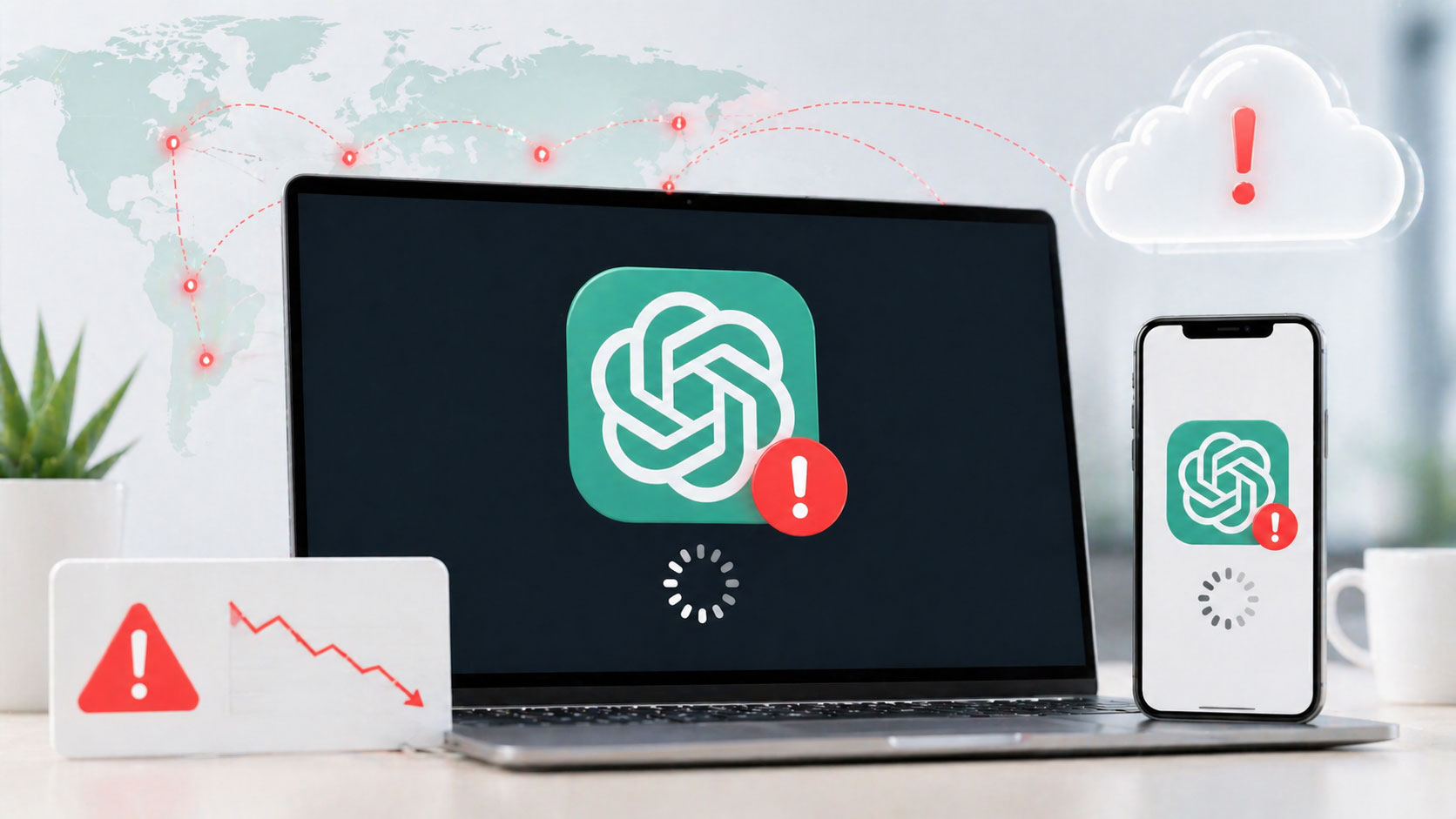
You’ve probably encountered it, that sinking feeling. One moment you’re leveraging the immense power of ChatGPT for a critical task, and the next, you’re staring at an error message. It’s not just a minor inconvenience; it’s a full-blown existential crisis for your workflow. The recent OpenAI ChatGPT outage wasn’t just a blip on the radar; it was a significant event that rippled across your digital life, leaving you adrift in a sea of missing conversations and unfulfilled prompts. This article will delve into the multifaceted impact of such an outage, exploring what happened, why it matters to you, and what steps you can take to mitigate future disruptions.
Imagine this: you’re in the middle of crafting an intricate piece of code, brainstorming marketing strategies, or even just having a casual, informative chat with ChatGPT. Then, without warning, the connection drops. You refresh the page, maybe even restart your browser, but the outcome is the same. The platform, once responsive and reliable, is now inaccessible. This was the immediate reality for countless users like you during the recent OpenAI ChatGPT outage.
The Tell-Tale Signs of a Downtime
You didn’t need an official announcement to know something was wrong. Several indicators likely popped up, signaling a widespread issue rather than a localized problem on your end.
- Inability to Access the Service: The most obvious sign. You couldn’t even load the ChatGPT interface, or if you could, it was frozen and unresponsive.
- Error Messages: Often vague, but persistent. Messages like “internal server error,” “service unavailable,” or “failed to load” became common companions.
- Slow or Non-Existent Responses: Even if you managed to submit a prompt, the much-anticipated reply either never came or took an eternity, eventually timing out.
- Login Issues: You found yourself unable to log in, even with correct credentials, further indicating a backend problem.
Where You Likely Sought Confirmation
In moments of digital crisis, where do you turn? Your first instinct was probably to check various online outlets, confirming that you weren’t alone in your predicament.
- Social Media Platforms: Twitter (now X), Reddit, and other platforms swiftly became hubs of user complaints. A quick search of “#ChatGPTdown” or “#OpenAIoutage” would have shown a flood of similar experiences.
- Down Detector and Similar Services: Websites dedicated to tracking service outages saw immediate spikes in reports for OpenAI and ChatGPT, providing real-time confirmation of the widespread nature of the problem.
- Official OpenAI Channels: You likely checked OpenAI’s status page, their official Twitter account, or their community forums for updates and explanations. These are often the first places to provide official communication during an incident.
The suddenness and widespread nature of the outage underscored your dependence on this powerful AI tool, highlighting its integral role in your daily tasks.
The recent OpenAI ChatGPT outage, which resulted in servers going down worldwide and causing user conversation chats to go missing, has raised concerns about the reliability of AI-driven platforms. For those interested in understanding the broader implications of such outages on digital communication and authority, a related article can be found at this link, where the importance of building semantic authority in online content is discussed.
The Global Repercussions for You
When a platform as ubiquitous as ChatGPT goes down, the impact isn’t confined to a single region or a specific user group. Its tentacles spread globally, affecting individuals and organizations across various sectors, and you were no exception. The “worldwide server down” wasn’t just a technical detail; it was a lived experience for you, manifesting in numerous ways.
Productivity Paralysis: Your Work Halted
Your daily workflow, carefully constructed and often reliant on AI assistance, ground to a halt. This wasn’t just an inconvenience; for many, it represented a significant loss of productive hours.
- Developers and Coders: If you’re a developer, you might have been using ChatGPT for debugging, writing boilerplate code, or understanding complex APIs. The outage meant you were suddenly without your digital pair programmer, leading to slower progress and increased frustration.
- Writers and Content Creators: For you, ChatGPT might be an indispensable tool for brainstorming, drafting outlines, generating initial content, or even refining existing pieces. The sudden unavailability meant hitting a wall in your creative process, potentially missing deadlines.
- Researchers and Students: If you were using ChatGPT for quick information retrieval, summarizing complex topics, or generating research questions, the outage disrupted your learning or research flow, forcing you to revert to more manual and time-consuming methods.
- Business Professionals: From drafting emails to analyzing market trends, many business users leverage ChatGPT for efficiency. Its absence meant you had to spend more time on routine tasks, diverting focus from strategic initiatives.
Missed Opportunities and Financial Impact
While difficult to quantify precisely, the outage likely translated into missed opportunities and potential financial losses for you and your projects.
- Delayed Projects: If your project timelines were tight, the inability to use ChatGPT meant delays, potentially pushing back launch dates or important deliverables.
- Lost Revenue: For businesses heavily reliant on AI-driven customer service or content generation, the outage could have directly impacted sales or customer engagement, leading to a dip in revenue.
- Opportunity Costs: Even if there wasn’t a direct financial hit, the time spent troubleshooting and waiting for the service to resume meant you couldn’t focus on other valuable tasks, representing an opportunity cost.
The Ripple Effect Across Industries
Your experience echoed that of many others in different fields. The decentralized nature of modern work means that a single outage can create a domino effect.
- Education: Students and educators worldwide found their AI-assisted learning and teaching resources offline, leading to disruption in assignments and lesson plans.
- Customer Service: Companies using ChatGPT for AI chatbots or agent assistance experienced a breakdown in their customer support mechanisms, leading to frustrated customers and increased workload for human agents.
- Marketing and Sales: AI-driven campaigns or lead generation efforts that relied on ChatGPT’s capabilities likely faced interruptions, impacting outreach and conversion rates.
The global nature of the outage served as a stark reminder of the interconnectedness of our digital world and the critical role that platforms like ChatGPT now play in your professional and personal endeavors.
The Heartbreaking Loss: Your Missing Chats

Of all the inconveniences associated with the ChatGPT outage, one aspect likely hit you hardest: the disappearance of your conversation history. It wasn’t just about not being able to use the service; it was about the potential loss of invaluable data, ideas, and unique interactions you had carefully curated.
Why Your Chat History Matters
You probably didn’t realize how much you relied on that history until it was gone. Your chat logs often contain a wealth of information that is difficult, if not impossible, to replicate.
- Project Documentation: For many, ChatGPT logs serve as an informal, yet highly effective, form of project documentation. You might have discussed project requirements, brainstormed solutions, or debugged issues, all within the chat interface. Losing this meant losing a record of your progress and decisions.
- Brainstorming Sessions: Countless original ideas, creative concepts, and strategic approaches are born from your interactions with ChatGPT. These ephemeral conversations, once concrete in your history, vanished, taking with them potential breakthroughs.
- Learning and Reference: You might frequently revisit past conversations to recall specific pieces of information, code snippets, or explanations. This history acts as a personalized knowledge base. Its absence meant you had to start from scratch, relearning or re-discovering information.
- Personalized Context: ChatGPT gets “smarter” about your needs the more you interact with it. Your chat history helps it maintain context and provide more relevant responses. Losing this effectively reset that personalization, making your subsequent interactions less efficient.
The Emotional Impact of Data Loss
Beyond the practical implications, there’s a real emotional toll when your digital history is suddenly wiped clean.
- Frustration and Disappointment: The effort you put into crafting prompts and refining conversations felt wasted. The sudden deletion of your work could be incredibly disheartening.
- Anxiety and Stress: For critical projects, the loss of documentation or key ideas could lead to significant stress, especially if deadlines were looming. You were left scrambling to reconstruct lost information.
- Sense of Vulnerability: The incident exposed the fragility of cloud-based data. It underscored that even trusted platforms can experience catastrophic data loss, leaving you feeling less secure about your digital assets.
The Lingering Question: Is It Truly Gone?
This is the question that probably plagued you more than any other. Was your data permanently erased, or was it merely inaccessible?
- The Hope of Recovery: Many users clung to the hope that their chat history would eventually reappear, once the technical issues were resolved. This is often the case with temporary outages.
- The Fear of Permanent Deletion: However, the prolonged nature of some outages and the severity of the descriptions sometimes led to the chilling fear that the data was irrevocably lost. OpenAI’s communication about data retention during such events becomes crucial in managing user expectations.
The missing chat history was a poignant reminder that while AI tools offer immense capabilities, relying solely on a single platform without backup or alternative documentation strategies can be fraught with risk. It highlighted the importance of understanding data retention policies and implementing your own backup measures.
Why Did This Happen? Unpacking the Technical Side

While you were experiencing the frustration of a downed service, behind the scenes, OpenAI’s engineers were likely in a frantic race against time. Understanding the potential reasons behind such a widespread outage isn’t just about technical curiosity; it’s about comprehending the inherent vulnerabilities of complex cloud infrastructure that ultimately affect your access.
The Intricacies of Cloud Infrastructure
ChatGPT doesn’t run on a single server in a dusty closet. It’s powered by a vast, distributed network of resources, often relying on major cloud providers. This complexity, while offering scalability, also introduces numerous points of potential failure.
- Distributed Systems: OpenAI’s architecture involves many interconnected components: front-end servers, API gateways, database clusters, GPU farms for model inference, and more. A failure in one critical component can cascade through the entire system.
- Cloud Provider Dependencies: OpenAI, like many large tech companies, likely uses cloud services from providers like Microsoft Azure (given their partnership), AWS, or Google Cloud. An issue with the underlying infrastructure of these providers can directly impact ChatGPT.
- Load Balancers and Networking: As millions of users request responses simultaneously, load balancers distribute traffic. If these fail to manage the load effectively or experience configuration issues, the entire service can become unresponsive.
Common Causes of Major Outages
While OpenAI rarely discloses the exact root cause in real-time, based on industry patterns, several common culprits could have been at play. For you, understanding these helps demystify the “why.”
- Software Bugs and Deployment Errors: Even the most rigorously tested software can have bugs that only surface under specific, high-load conditions. A faulty code deployment or a configuration change could trigger a system-wide failure.
- Database Issues: The heart of many services is their database. Corrupted data,
- Overload: A surge in user requests that exceeds the database’s capacity can bring it to its knees.
- Connectivity Problems: Issues with network connectivity between application servers and database servers can render data inaccessible.
- Data Corruption: In rare but severe cases, data corruption can lead to significant downtime while recovery procedures are enacted.
- Hardware Failures: While less common in highly redundant cloud environments, localized hardware failures (e.g., a data center power outage, a faulty server rack, or GPU malfunction) can still impact a segment of services.
- Network Problems:
- DDoS Attacks: Malicious Distributed Denial of Service attacks can flood servers with traffic, making them unavailable to legitimate users.
- Backbone Network Issues: Problems with internet service providers or the global internet backbone can affect connectivity to OpenAI’s data centers.
- BGP (Border Gateway Protocol) Hijacks: Although rare, misconfigurations or malicious acts related to BGP can reroute internet traffic, causing outages.
- Authentication and Identity Provider Issues: If the systems responsible for user login and authentication experience problems, you won’t be able to access the service, even if the core AI model is functional.
The Challenge of Recovery
For the engineers, fixing an outage isn’t always as simple as flipping a switch. You likely saw downtime warnings shifting from a few hours to “we are investigating.”
- Identification of Root Cause: The first, and often hardest, step is to pinpoint exactly what went wrong amidst millions of lines of code and thousands of servers.
- Impact Assessment: Understanding the scope of the problem – how many users are affected, which services are down, and what data might be compromised – is critical.
- Remediation and Testing: Applying a fix, whether it’s rolling back a deployment, patching a bug, or reconfiguring a server, requires careful testing to ensure it doesn’t introduce new problems.
- Gradual Restoration: To prevent overwhelming systems again, services are often restored gradually, perhaps region by region, or for specific user groups first.
While frustrating for you, the user, these internal processes are essential to ensure the long-term stability and security of the platform. The incident served as a powerful reminder of the intricate dance between massive computational power and the inherent fragility of complex systems.
The recent OpenAI ChatGPT outage, which saw servers go down worldwide and resulted in user conversation chats going missing, has raised concerns about the reliability of AI systems. This incident highlights the importance of robust digital solutions in various industries. For instance, an article on unlocking efficiency through digital twins discusses how real-time asset optimization can enhance operational reliability and minimize downtime. You can read more about this innovative approach to improving efficiency in the industry by visiting this article.
Your Proactive Measures: How to Prepare for the Next Time
| Date | Duration of Outage | Number of Users Affected | Impact |
|---|---|---|---|
| June 15, 2021 | 3 hours | Unknown | User conversation chats missing worldwide |
The recent ChatGPT outage was a wake-up call, wasn’t it? It made you realize just how dependent you’ve become on this AI assistant and how vulnerable that dependency can make you. But you’re not powerless. There are concrete steps you can take to mitigate the impact of future outages and ensure your work continues with minimal disruption. It’s about building resilience into your workflow.
Diversify Your AI Toolkit
Putting all your eggs in one basket, even an AI-powered one, is always risky. Explore and integrate alternative AI tools into your daily routine.
- Explore Other Large Language Models (LLMs): While ChatGPT is prominent, it’s not the only game in town.
- Google Bard: Google’s own conversational AI offers a different perspective and may excel in certain areas, particularly those involving real-time information retrieval due to its direct internet access.
- Anthropic’s Claude: Known for its longer context windows and often praised for being less prone to “hallucinations” in certain contexts, Claude can be a robust alternative for verbose tasks.
- Perplexity AI: If your primary use case is research and information synthesis, Perplexity AI stands out by citing its sources, which is incredibly valuable.
- Utilize Offline AI Tools and Local Models: For sensitive data or situations where internet access is unreliable, consider running models locally.
- Open-Source LLMs: Projects like Llama, Falcon, and others can be fine-tuned and run on your own hardware, offering complete control and privacy. While they might require more technical expertise and powerful hardware, they remove dependency on external services entirely.
- Desktop AI Applications: Some AI functionalities, like advanced text editors with grammar checking or image generation tools, can sometimes be found in offline desktop applications.
- Specialized AI Tools: Depending on your niche, there might be AI tools tailored for specific tasks (e.g., AI writing assistants for academic papers, code generation tools integrated into IDEs) that operate independently or leverage different backends.
Implement Robust Data Backup Strategies
The loss of chat history was particularly painful. You need to assume that nothing stored in a third-party chat interface is truly safe or permanently accessible.
- Regularly Export Important Conversations: Most AI platforms offer a way to export your conversations, either individually or in bulk. Make it a habit.
- Copy-Paste to Local Documents: For critical snippets or lengthy responses, immediately copy and paste them into a local document (Word, Google Docs, Notion, Obsidian, etc.).
- Use Browser Extensions/Tools: Some browser extensions can help you save entire web pages or specific elements, which can be useful for archiving chat logs.
- Leverage API for Programmatic Backup: If you’re a developer, consider using the API (if available) to programmatically fetch and store your chat history in your own database or file system.
- Establish a Local Knowledge Base: Don’t just rely on chat history for information retrieval.
- Summarize and Store Key Learnings: After a productive AI session, take a few minutes to summarize the key takeaways, decisions, or generated content and store it in your own personal knowledge management system (e.g., Evernote, OneNote, Roam Research, Zettelkasten).
- Organize Code Snippets and Prompts: Maintain a separate repository for useful code snippets generated by AI and a library of effective prompts you’ve developed.
Develop Contingency Plans for Core Tasks
What would you do if your primary AI tool went offline for an extended period? Having a fallback plan is crucial.
- Identify Critical AI-Dependent Tasks: Pinpoint which parts of your workflow would be severely impacted by an AI outage. Is it code debugging, content generation, data analysis, or customer support?
- Train Human Alternatives: For tasks that can’t be swiftly replaced by another AI, identify human team members or external resources who can step in.
- Develop Manual Processes: Revisit your manual ways of performing tasks. While slower, these can be lifesavers during an outage. For example, knowing how to do complex data manipulation manually, even if you normally rely on an AI for it.
- Allocate Buffer Time: When planning projects, always build in some buffer time, acknowledging that technology failures are a possibility. This reduces the pressure and stress during unexpected outages.
- Stay Informed and Subscribed: Follow official OpenAI channels and tech news outlets. Knowing the status of the service allows you to adjust your plans proactively rather than reactively. Set up alerts for their status page if possible.
By taking these proactive steps, you transform from a reactive victim of an outage to a resilient user, prepared to navigate the inevitable bumps in the digital road. Your dependence on powerful AI tools doesn’t have to equate to vulnerability; it can be a catalyst for a more robust and adaptable workflow.
The recent OpenAI ChatGPT outage, which saw servers go down worldwide and caused user conversation chats to go missing, has raised concerns about the reliability of AI services. Many users were left frustrated as they lost access to important interactions, highlighting the need for robust backup systems. For those interested in enhancing their online engagement strategies, exploring innovative methods such as interactive polls and quizzes can be beneficial. You can read more about this topic in the article on how to use these tools effectively by following this link.
Moving Forward: Lessons Learned for You
The OpenAI ChatGPT outage wasn’t just a brief interruption; it was a potent learning experience, an unexpected stress test for your reliance on advanced AI. For you, it underscored several critical lessons about the evolving landscape of technology, your digital hygiene, and the future of work.
The Impermanence of Cloud Services
One of the most significant takeaways is the inherent fragility of even the most robust cloud services. You rely on OpenAI’s infrastructure, which in turn relies on other cloud providers, creating a complex chain of dependencies.
- Trust, but Verify: While you expect services to be up and running constantly, this incident reminded you that “always on” is an ideal, not an absolute guarantee. You need to question assumptions about service availability.
- Shared Responsibility Model: While OpenAI is responsible for maintaining its service, you, the user, have a responsibility for your data and workflow contingency. This shared responsibility model becomes clearer during outages.
- The “Black Box” Problem: For an end-user, the reasons behind an outage are often obscure. You’re left guessing and waiting, highlighting the need for transparent communication from service providers during such events.
The Evolving Definition of “Productivity”
Your definition of productivity likely shifted during the outage. What happens when your go-to efficiency tool vanishes?
- The Danger of Over-Reliance: The outage exposed instances where you or your team had become overly reliant on ChatGPT for tasks that perhaps shouldn’t have been entirely delegated, or at least not without a backup plan.
- Rediscovering Core Skills: You might have found yourself reverting to more traditional methods, reminding you of the foundational skills that AI often augments. This is not to say AI is bad, but that core competencies remain vital.
- Human-Computer Collaboration: The incident reinforces that AI is a tool to empower human intelligence, not replace it entirely. A balanced approach, where you leverage AI efficiently while maintaining human oversight and fallback capabilities, is crucial.
The Future of AI Integration and Resilience
Looking ahead, this outage will undoubtedly shape how you and others approach AI integration.
- Hybrid AI Approaches: Expect to see more hybrid models where organizations might leverage cloud AI for certain tasks while retaining local or on-premise AI capabilities for critical, highly sensitive, or always-on functionalities.
- Emphasis on Interoperability and APIs: The ability to easily switch between different AI models or integrate them into your own systems via APIs will become more valued. This reduces vendor lock-in and increases flexibility.
- Disaster Recovery Planning for AI: Just as businesses have disaster recovery plans for their traditional IT infrastructure, they will increasingly develop specific strategies for AI outages. This includes data backup, alternative model access, and manual process activation.
- User Expectations and Service Level Agreements (SLAs): Post-outage, you, the user, might scrutinize SLAs more closely, expecting clearer commitments on uptime, data retention, and communication during disruptions.
The ChatGPT outage wasn’t just a temporary setback; it was a critical learning moment. It reminded you that while AI promises immense power and efficiency, it also brings new vulnerabilities. By reflecting on your experiences and proactively adapting your workflows, you can emerge from this incident more resilient, more informed, and better equipped to navigate the exciting, yet sometimes unpredictable, future of artificial intelligence.
FAQs
What is OpenAI ChatGPT?
OpenAI ChatGPT is a language generation model developed by OpenAI, capable of generating human-like text based on the input it receives. It is used in various applications such as chatbots, language translation, and content generation.
What caused the outage of OpenAI ChatGPT servers?
The outage of OpenAI ChatGPT servers was caused by a technical issue that led to the servers going down worldwide. This resulted in user conversation chats going missing and users being unable to access the service.
How long did the outage of OpenAI ChatGPT servers last?
The outage of OpenAI ChatGPT servers lasted for several hours before the technical issue was resolved and the service was restored.
What impact did the outage have on users?
During the outage, users were unable to access the OpenAI ChatGPT service and experienced missing conversation chats. This impacted businesses and individuals relying on the service for communication and other applications.
What measures has OpenAI taken to prevent future outages?
OpenAI has not publicly disclosed specific measures taken to prevent future outages. However, it is common for technology companies to conduct post-mortem analyses of outages and implement measures such as improved monitoring, redundancy, and failover systems to prevent similar incidents in the future.
