


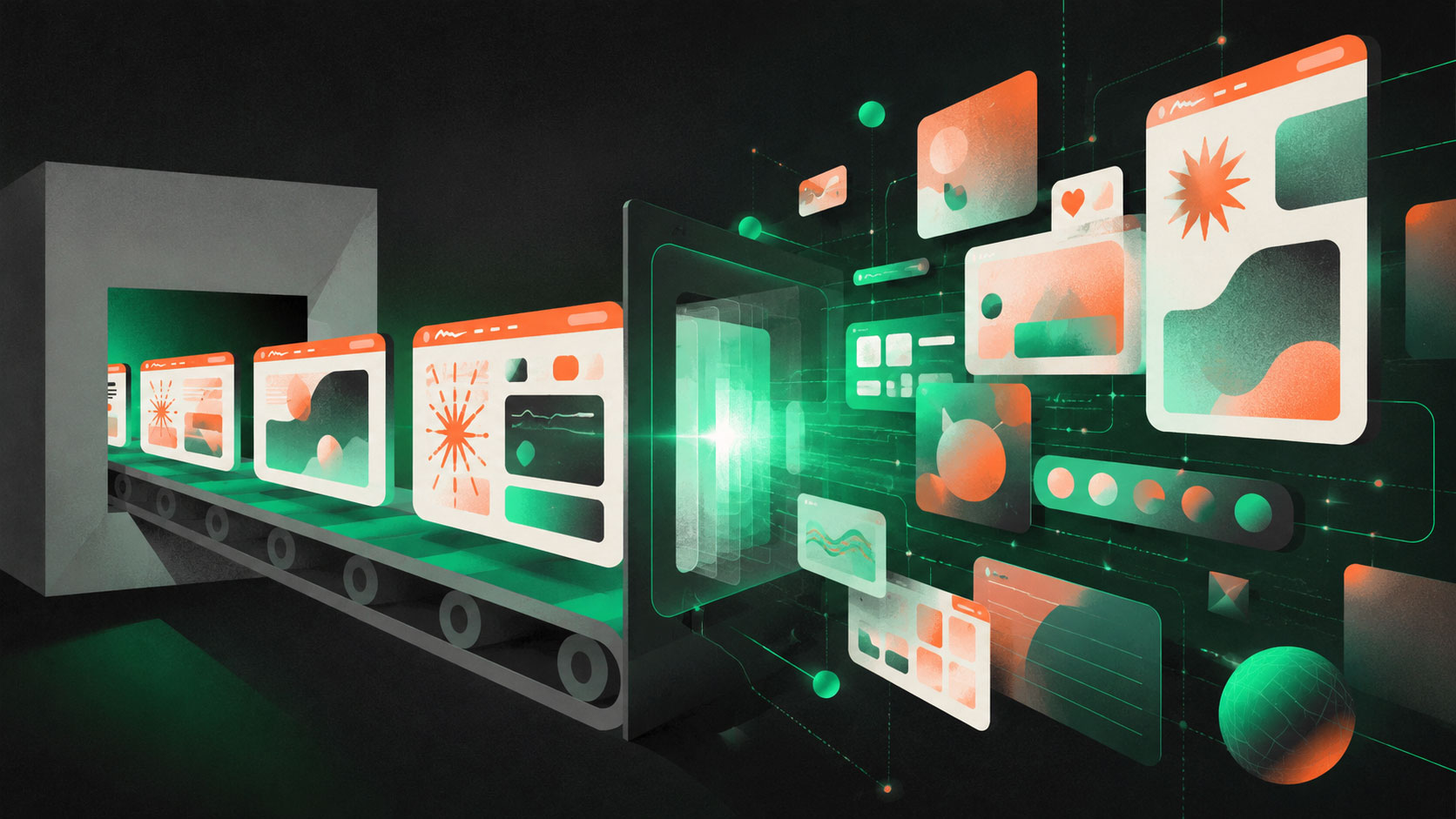
Your internet experience is subtly shifting. You’ve seen it, haven’t you? The sudden influx of images that possess a certain… smoothness. A polish that feels almost too perfect. The way certain website designs now echo each other with uncanny precision. You might have dismissed it as a trend, another fleeting moment in the ever-evolving landscape of online aesthetics. But what if you’re witnessing the dawn of something more profound? What if you’re observing the quiet, yet relentless, takeover of the A.I.-Design Aesthetic?
This isn’t about a single style, a neon-drenched retro revival or a minimalist obsession. Instead, you’re encountering a curated collection of visual cues and design principles that have been, in part or wholly, generated or heavily influenced by artificial intelligence. It’s a paradigm shift, an evolution in how visual content is conceived, created, and consumed. You see it in the hyper-realistic yet subtly uncanny character portraits, the flawlessly smooth product mockups, the seamlessly generated backgrounds that feel both familiar and entirely novel. This aesthetic isn’t just a visual trend; it’s a manifestation of new creative tools and processes that are fundamentally reshaping the digital world you navigate daily. You might not always be able to pinpoint it, but the A.I.-Design Aesthetic is already here, and it’s becoming increasingly ubiquitous.
You might wonder how we arrived at this point. Where did this all begin? The seeds of the A.I.-Design Aesthetic were sown not in art studios or design agencies, but in research labs and data centers. It’s a story rooted in the exponential growth of computing power and the insatiable appetite of algorithms for data.
From Pixels to Philosophies: The Evolution of Generative Models
For years, artificial intelligence has been dabbling in the realm of creation. Early attempts were rudimentary, generating abstract patterns or simple images. You might remember those early AI-generated art pieces that looked more like digital Rorschach tests. However, the development of sophisticated neural networks, particularly Generative Adversarial Networks (GANs) and later, diffusion models, marked a significant turning point.
Generative Adversarial Networks (GANs): A Creative Tug-of-War
GANs operate on a fascinating principle: a game between two neural networks. One network, the “generator,” tries to create realistic images, while the other, the “discriminator,” tries to distinguish between real images and those created by the generator. Through this constant competition, the generator becomes increasingly adept at producing indistinguishable fakes. You’ve likely seen the uncanny portraits generated by GANs – faces of people who don’t exist, yet look remarkably believable. This technology laid the groundwork for generating novel visual content with unprecedented realism.
Diffusion Models: The Art of Iterative Refinement
More recently, diffusion models have taken the AI art world by storm. These models work by gradually adding noise to an image until it’s pure static, and then learning to reverse that process, effectively “denoising” back to a coherent image. This iterative approach allows for incredible control and a higher degree of fidelity, enabling the generation of highly detailed and often breathtaking imagery. You can now prompt an AI with a few words – “a cyberpunk cityscape at sunset, with neon reflections on wet streets” – and receive a stunning, original artwork in seconds. This accessibility and power have democratized image creation and accelerated the adoption of AI-generated visuals across the internet.
Data as the Divine Ingredient
The fuel for these powerful AI models is, of course, data. Vast datasets of existing images, ranging from photography and illustration to 3D renders and historical art, are fed into the algorithms. The AI learns patterns, textures, color palettes, lighting techniques, and compositional rules from this enormous corpus of human-created visual information.
The Bias Within the Beauty: Learned Aesthetic Tendencies
It’s crucial to understand that AI doesn’t invent aesthetics from a vacuum. It learns from what it’s shown. This means that the A.I.-Design Aesthetic is inherently influenced by the biases and preferences present in the training data. If the training data predominantly features a certain style, color scheme, or subject matter, the AI is more likely to reproduce and amplify those elements. You might notice a recurring emphasis on certain gradients, soft lighting, or a particular digital rendering style. This isn’t necessarily a flaw, but rather an emergent property of how AI learns.
The Unseen Curators: The Role of Human Input
While we often talk about AI as autonomous creators, it’s important to remember the human element that guides and refines these processes. Designers, artists, and prompt engineers play a critical role in shaping the output of AI models. They curate the datasets, fine-tune the algorithms, and craft the prompts that steer the AI towards desired outcomes. You might be unaware of the skilled humans behind the scenes meticulously guiding these powerful tools to produce specific visual results.
The rise of the A.I.-design aesthetic on the internet is not only transforming visual trends but also reshaping how consumers interact with products online. A related article that delves into this evolution is “How Crate & Barrel’s ‘View in My Room’ Feature Revolutionized E-Commerce with AR,” which explores how augmented reality is enhancing the online shopping experience by allowing customers to visualize furniture in their own spaces. You can read more about this innovative approach to e-commerce by following this link: How Crate & Barrel’s ‘View in My Room’ Feature Revolutionized E-Commerce with AR.
The Ubiquitous Signatures of AI Design
You’re probably interacting with the A.I.-Design Aesthetic more than you realize. It’s not always screaming its presence, but its influence is woven into the fabric of your online world. Recognizing these signatures is the first step to understanding its pervasive nature.
The Flawless and the Familiar: Hyperrealism with a Digital Sheen
One of the most immediate signatures of AI-generated visuals is often a hyperrealism that feels, for lack of a better word, too perfect. Images possess an uncanny smoothness, a lack of natural imperfections that you’d typically find in photography or even skilled manual illustration.
The Unblemished Surface: The Absence of “Human Error”
Think about product mockups for e-commerce sites. The lighting is always precisely placed, the textures are impeccably rendered, and there’s a distinct lack of smudges, dust motes, or slight asymmetries that add character to real-world objects. AI can generate these product shots with a level of polish that would take a human photographer and stylist considerable time and effort. You see this in everything from digital gadgets to clothing lines online.
The Ethereal Glow: Algorithmic Lighting and Shading
AI models have become incredibly adept at simulating light and shadow. You might notice a consistent, often soft, ethereal glow that bathes subjects. This isn’t necessarily a bad thing; it can create a sense of professionalism and polish. However, sometimes this algorithmic lighting can feel generic, lacking the unique interplay of light and shadow that tells a story or evokes a specific mood, as a skilled human cinematographer might achieve.
The Rise of the “AI Persona”
Beyond static images, AI is increasingly being used to create digital personas that populate websites, social media, and even virtual events. These aren’t just cartoon characters; they are increasingly sophisticated and lifelike digital beings.
The Digital Influencers and Spokesmodels
You’ve likely encountered them – the flawlessly sculpted digital influencers promoting products on Instagram, or the disembodied AI voices narrating explainer videos. These personas are often designed to be universally appealing, free from the perceived messiness of human individuality. Their expressions are carefully calibrated, their movements fluid, and their messaging always on-brand. They represent a dream of perfect representation, devoid of personal opinions or potential controversies.
The Algorithmic Empathy: Generated Emotional Expression
AI can now generate images and even short animations of people expressing a wide range of emotions. While impressive, there’s often a subtle artificiality to these expressions. The nuances of human emotion, the micro-expressions, the subtle shifts in gaze – these are incredibly complex and can be challenging for AI to perfectly replicate. You might find yourself feeling a slight disconnect, a sense that the emotion is simulated rather than genuinely felt.
The Seamless Symphony of Generated Environments
The backgrounds and environments you encounter online are also increasingly benefiting from AI’s generative capabilities. This allows for the creation of highly specific and visually appealing backdrops.
The Infinite Studio: Customizable Backdrops and Scenes
Need a sleek, futuristic office space for a corporate website? Or perhaps a serene, sun-drenched beach for a travel agency? AI can generate these scenarios with remarkable speed and accuracy. This eliminates the need for expensive photoshoots or elaborate set design. You see these generated environments supporting everything from app interfaces to marketing campaigns, creating a cohesive and visually pleasing context for the content.
The Metaverse Muse: Building Virtual Worlds
As the concept of the metaverse gains traction, AI’s role in generating its visual components becomes even more paramount. AI can assist in the rapid creation of vast and varied virtual landscapes, objects, and even sentient NPCs (non-player characters), paving the way for immersive digital experiences designed entirely by algorithms.
The Designer’s New Toolkit and the Shifting Role of Creativity
The emergence of the A.I.-Design Aesthetic is not a death knell for human designers. Instead, it’s a profound redefinition of their roles and a powerful expansion of their creative toolkit. You’ll see designers adapting, not disappearing.
The Prompt Engineer: The Art of Dialogue with the Machine
The skill of crafting effective prompts is becoming a crucial art form in itself. This isn’t just about typing a few words; it’s about understanding how the AI interprets language, how to guide its output, and how to iterate on prompts to achieve precise results.
The Alchemy of Words: Translating Vision into Code
A skilled prompt engineer can take a nascent idea and, through a series of precise verbal instructions, guide the AI to generate visuals that align with a specific brand identity, mood, or narrative. This requires a deep understanding of art history, visual language, and the capabilities and limitations of the AI model being used. It’s a new form of creative direction, speaking the language of the machine to coax out artistic expression.
The Iterative Symphony: Refining AI Output
The first AI-generated image is rarely the final one. The process often involves multiple iterations, refining prompts, adjusting parameters, and selecting the best outputs. Designers are becoming adept at this iterative dance, using AI as a collaborator to explore visual possibilities at an unprecedented speed. You might be seeing the polished final product, but behind it lies a process of refinement and exploration guided by human intent.
The Curator and the Editor: Guiding the Algorithmic Output
With the sheer volume of content AI can generate, the role of the human curator and editor becomes even more vital. It’s no longer just about creating something new, but about selecting, refining, and integrating AI-generated assets in a meaningful and impactful way.
The Aesthetic Architects: Ensuring Brand Cohesion
Human designers are essential for ensuring that AI-generated visuals align with a brand’s overall aesthetic, messaging, and values. They act as the gatekeepers, preventing the visual landscape from becoming a chaotic mishmash of AI outputs. You rely on their discerning eye to ensure that the visuals you see contribute to a cohesive and professional experience.
The Human Touch: Adding Nuance and Emotion
While AI can mimic emotion and realism, it often lacks the subtle imperfections, the lived experience, and the unique human perspective that can imbue a piece of design with genuine resonance. Designers are crucial for adding this layer of emotional depth and authenticity, ensuring that the AI-generated elements serve a human purpose.
The Democratization of Design: Opportunities and Challenges
The accessibility of AI tools has democratized aspects of design, allowing individuals and small businesses with limited resources to create professional-looking visuals. However, this democratization also presents new challenges.
The Rise of the “Accidental” Aesthetic
As more people experiment with AI generation tools, you might see a rise in visuals that, while technically proficient, lack a deeper artistic intent or a cohesive brand strategy. This can lead to a certain visual homogeneity across many online platforms.
The Ethical Crossroads: Authenticity and Intellectual Property
The ease with which AI can generate novel content raises complex ethical questions about authenticity, intellectual property, and the potential for misuse. You’re likely to see ongoing debates and the development of new guidelines surrounding these issues.
The Psychological and Societal Implications
The pervasive nature of the A.I.-Design Aesthetic goes beyond mere visuals; it has profound psychological and societal implications for how you perceive and interact with the digital world.
The Uncanny Valley of Perfection
You might experience a subtle sense of unease or disquiet when confronted with AI-generated content that is almost perfect. This is the “uncanny valley” effect, a phenomenon where something that is very close to human resemblance, but not quite, can evoke feelings of creepiness or revulsion.
The Erosion of Authenticity
As AI-generated visuals become indistinguishable from human-created ones, it can erode your sense of authenticity online. You may begin to question the genuineness of images, advertisements, and even online interactions, leading to a general sense of distrust. You’ll have to work harder to discern what is real and what is fabricated.
The Amplification of Ideals
AI, trained on vast datasets, can inadvertently amplify existing societal ideals and biases related to beauty, success, and lifestyle. This can contribute to unrealistic expectations and further pressure individuals to conform to these manufactured standards. You might find yourself bombarded with images that present an almost impossibly perfect version of reality.
The Remapping of Visual Consumption
The speed and ease with which AI can generate content are fundamentally changing how you consume visual information. The sheer volume of available imagery can lead to a desensitization and a constant, almost passive, scrolling through endless aesthetically pleasing, yet potentially shallow, content.
The Shortened Attention Span
The constant barrage of visually stimulating, AI-generated content can contribute to a further shortening of attention spans. You become accustomed to quick, visually gratifying experiences, making it harder to engage with deeper, more nuanced content that requires sustained focus.
The Filter Bubble of Aesthetics
If AI-generated content is tailored to your perceived preferences, it can create a visual “filter bubble,” reinforcing existing tastes and limiting exposure to diverse or challenging aesthetics. This can inadvertently narrow your visual world and impact your openness to new artistic expressions.
The rise of the A.I.-design aesthetic has sparked numerous discussions about its implications for digital creativity and user experience. For those interested in exploring how technology influences design and personalization, a related article delves into the intricacies of crafting seamless email journeys and website personalization. You can read more about it here. This intersection of A.I. and design is reshaping how brands connect with their audiences, making it a fascinating topic for anyone in the digital space.
The Future of the Algorithmic Canvas
| Metrics | Data |
|---|---|
| Number of websites using A.I.-design aesthetic | Increasing |
| User engagement with A.I.-designed content | High |
| Impact on user experience | Positive |
| Feedback from users | Favorable |
The A.I.-Design Aesthetic is not a static entity. It’s a rapidly evolving field, and its future holds both exciting possibilities and significant challenges.
The Continued Evolution of AI Capabilities
As AI technology advances, you can expect even more sophisticated and nuanced visual generation capabilities. This will encompass a deeper understanding of context, emotion, and artistic intent.
Towards True Generative Artistry
The goal for many AI researchers is to move beyond mere replication and towards true generative artistry. This means AI systems that can not only create aesthetically pleasing images but also imbue them with unique conceptual depth, narrative power, and emotional impact. You might one day see AI-generated works commanding the same critical appreciation as human masterpieces.
The Fusion of Human and Machine Intelligence
The most likely future involves a seamless fusion of human and machine intelligence. AI will become an indispensable tool in the creative process, augmenting human capabilities and allowing for an unprecedented level of exploration and innovation. Imagine designers working in tandem with AI, where the AI handles the labor-intensive aspects of generation and iteration, while the human provides the vision, the critical judgment, and the unique emotional resonance.
The Ethical and Societal Reckoning
As AI’s influence grows, society will need to grapple with the ethical and societal implications of this technological shift. This will involve ongoing discussions and the development of new frameworks for responsible AI use.
Regulation and Guidelines for AI-Generated Content
You’ll likely see increasing calls for regulation and the establishment of clear guidelines surrounding the creation and dissemination of AI-generated content. This could include labeling requirements, ethical standards for training data, and legal frameworks for intellectual property. The aim will be to ensure transparency and accountability.
Redefining Creativity and Artistic Value
The rise of AI will prompt a re-evaluation of what it means to be creative and what constitutes artistic value. Discussions will inevitably shift to focus on the conceptual intent, the emotional resonance, and the originality of ideas, rather than solely on the technical execution. You’ll have to ask yourself: what makes a piece of art valuable in an age where perfect replication is possible?
Your Role in the Algorithmic Art World
Ultimately, you are not a passive observer in this evolving landscape. Your consumption habits, your critical engagement, and your demand for authenticity all play a role in shaping the future of the A.I.-Design Aesthetic. You have the power to support human creativity, to question the provenance of what you see, and to champion the nuanced and imperfect beauty of human expression. This is your internet, and its visual future is, in part, in your hands. You can choose to embrace the flawless efficiency of AI, or you can seek out the stories, the imperfections, and the soul that only human hands and hearts can imbue. The A.I.-Design Aesthetic is here, but its ultimate trajectory is still being written, line by digital line, by all of us.
FAQs
What is the A.I.-design aesthetic?
The A.I.-design aesthetic refers to the visual style and design elements that are inspired by artificial intelligence and machine learning. This aesthetic often includes futuristic, abstract, and surreal elements that are created using algorithms and data-driven processes.
How is the A.I.-design aesthetic influencing the internet?
The A.I.-design aesthetic is influencing the internet by shaping the visual identity of websites, social media platforms, and digital content. It is being used to create visually striking and innovative designs that capture the attention of online audiences.
What are some key characteristics of the A.I.-design aesthetic?
Some key characteristics of the A.I.-design aesthetic include bold colors, geometric shapes, glitch effects, surreal imagery, and abstract patterns. These elements are often combined in unconventional ways to create visually engaging and thought-provoking designs.
Which industries are embracing the A.I.-design aesthetic?
The A.I.-design aesthetic is being embraced by a wide range of industries, including technology, fashion, art, advertising, and entertainment. It is being used to create brand identities, marketing campaigns, digital art, and user interfaces that reflect a modern and cutting-edge aesthetic.
What are the potential implications of the A.I.-design aesthetic on visual culture?
The A.I.-design aesthetic has the potential to reshape visual culture by challenging traditional design norms and inspiring new creative possibilities. It may lead to a greater integration of technology and art, as well as a redefinition of what is considered visually appealing in the digital age.
