


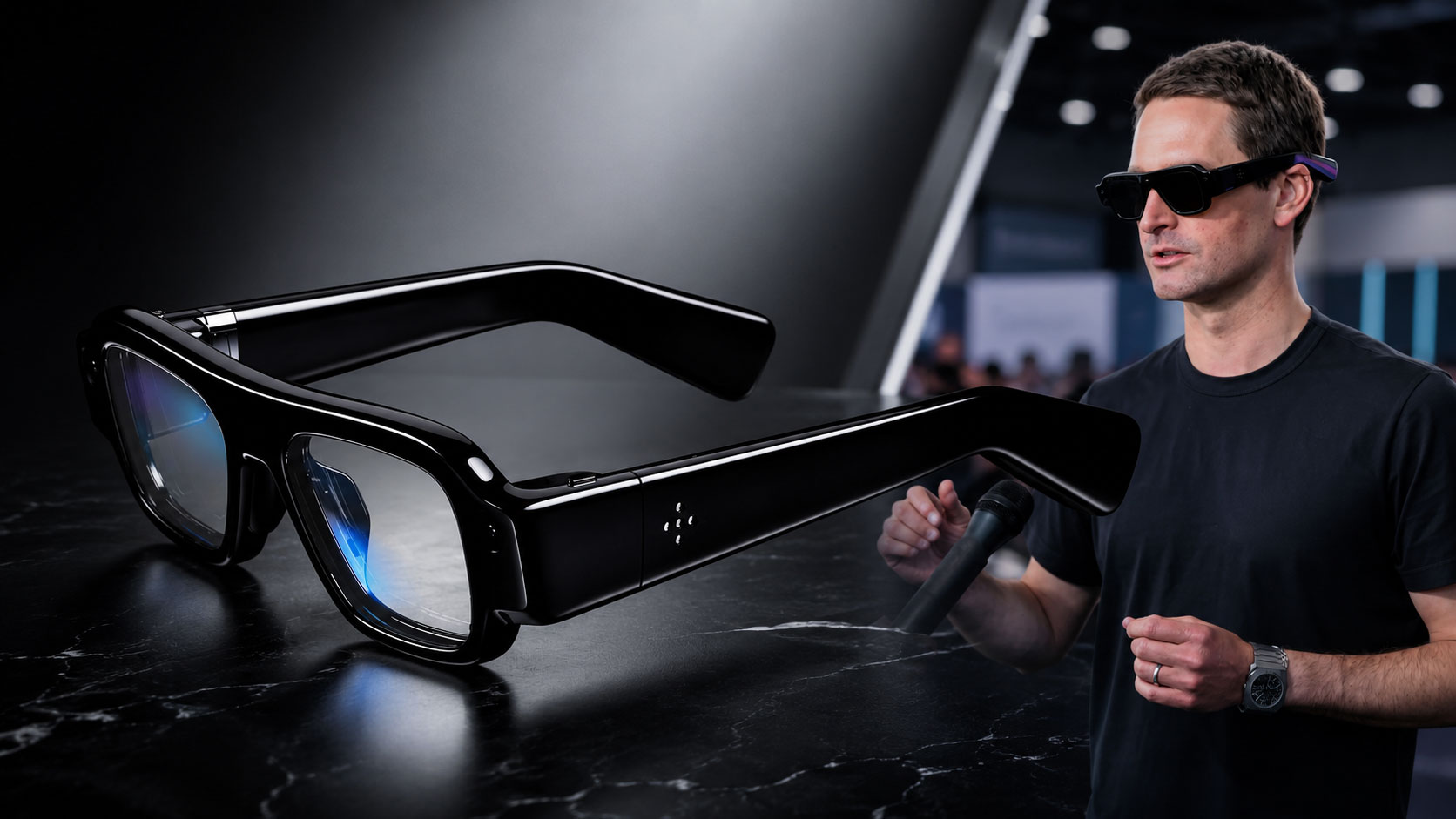
You saw it coming, didn’t you? Or perhaps you didn’t, swept up in the glittering promises of augmented reality and the ever-present allure of innovation. Either way, the headlines screamed, and your investment portfolio probably winced. Snap, the social media darling that defied expectations and then sometimes crashed spectacularly back to earth, has done it again. Its stock, once soaring on the wings of fleeting trends and futuristic visions, has taken a nosedive, and the culprit? A pair of pricey AR glasses you probably couldn’t even get your hands on.
You might remember the excitement surrounding Spectacles, Snap’s first foray into hardware. Fun, quirky, and ultimately a bit of a flop. You thought they’d learned their lesson. You hoped they had. But then it happened again, only this time with more ambition, more technology, and a price tag that made even venture capitalists raise an eyebrow.
A Look Back at Spectacles’ Rocky Road
Do you remember buying those first Spectacles? Or perhaps you just saw your friends fiddling with them, recording short, circular videos that you’d then watch with a bemused expression on your face. The novelty was there, for a brief moment. You probably thought it was a cool idea, a fun gadget. But convenience, style, and ultimately, real utility, were missing. They were a fashion accessory that recorded video, not a groundbreaking piece of tech that seamlessly integrated into your life. You probably recall seeing them discounted heavily, eventually gathering dust in people’s drawers. Snap learned a little from this. They learned that the tech needed to be more than just a gimmick.
The Promises of the New AR Glasses: A Vision of the Future
This time, you heard the whispers, the hype. You saw the carefully curated marketing, the sleek prototypes. “True augmented reality,” they promised. “Overlay digital information onto the real world.” Imagine, you thought, walking through a city and seeing a restaurant’s menu hovering in front of their door, or a friend’s location pinpointed directly in your field of view. The potential was intoxicating. You might have even started to fantasize about the possibilities for work, for personal communication, for truly immersive experiences that moved beyond the confines of a screen. This wasn’t just about recording a quick video; this was about fundamentally altering how you perceive and interact with your environment.
The Hefty Price Tag: A Barrier to Entry
Then came the price. You probably did a double-take. For a piece of technology that was still in its nascent stages, for a product that was clearly aimed at developers and early adopters rather than the mass market, the cost was astronomical. You immediately understood the implications. This wasn’t something you’d buy on a whim. This wasn’t going to be the next big trend that swept across your social feeds. This was a niche product, designed for a very specific, well-heeled audience. The general public, the very users Snap needs to maintain its relevance, were immediately excluded. You might have found yourself asking: who exactly is this for? And why is it so expensive? The answer, you quickly realized, was that it wasn’t for you, and therein lay a significant part of the problem.
In light of Snap’s recent unveiling of their exorbitantly priced AR glasses, which has led to a notable decline in their stock value, it’s essential to explore the broader implications of such high-end tech products on consumer behavior and market trends. For a deeper understanding of how innovative marketing strategies can influence product perception and sales, you may find this related article on content marketing insightful: Content Marketing Insights.
Investor Jitters: A Crisis of Confidence
You’ve watched Snap’s stock fluctuate wildly over the years. You’ve seen the euphoria followed by the despair. This latest plunge, however, feels different. It’s not just a dip; it’s a statement, a vote of no confidence from investors who are tired of grand visions that don’t translate into tangible returns.
The Previous Quarterly Report: Flashing Red Lights
Before this latest AR debacle, you probably noticed the writing was already on the wall. The previous quarterly report wasn’t exactly a stellar performance. User growth was slowing, advertising revenue was under pressure, and the company was struggling to demonstrate consistent profitability. You might have felt a chill down your spine then, recognizing the familiar pattern of a company whose core product was facing increasing competition and whose future growth strategies seemed hazy at best. Investors, always looking for a clear path to profitability, were already twitchy. You saw the subtle shifts in analyst ratings, the cautious pronouncements. The market was already signaling its apprehension.
The AR Glasses Announcement: A Catalyst for Concern
And then came the AR glasses. You likely heard the news and immediately associated it with the company’s ongoing financial struggles. Instead of a clear, coherent strategy to bolster their existing platform or diversify into proven revenue streams, Snap doubled down on an unproven, expensive hardware gambit. You probably saw the market react almost instantly. The stock dipped. Not wildly at first, but enough to make you pay attention. It was a sign that the market was questioning Snap’s priorities, wondering why they were investing so heavily in such a high-risk, low-immediate-reward venture when their core business required more attention.
A Lack of Clear Monetization Strategy: The Unanswered Question
The biggest red flag for you, and for investors, was the glaring absence of a clear monetization strategy. You understand that developing cutting-edge technology is expensive. You get that innovation requires investment. But for a publicly traded company, there needs to be a path to making that investment worthwhile. How would these AR glasses generate revenue? Was it through direct sales, which, given the price, would be limited? Would it be through a new advertising model, still undefined and unproven? Or was it simply a technology demonstration, a flashy presentation that would eventually lead to something else? The lack of these answers left a gaping hole in Snap’s narrative, and you know that investors despise uncertainty. They want to see a return on their capital, and the AR glasses presented only a distant, foggy promise.
The Competition and the AR Arms Race

You’re not naive. You know Snap isn’t the only player in this game. The tech giants are all vying for a slice of the augmented reality pie, and they have significantly deeper pockets and more established ecosystems.
Apple’s Shadow: The Elephant in the Room
You can’t talk about AR glasses without mentioning Apple. You know they’re working on something, probably in secret, probably perfecting it until it’s a seamless, undeniable product. Their track record for integrating hardware and software, for creating user experiences that are both intuitive and aspirational, is unparalleled. You understand that when Apple eventually enters the AR market, they will likely set the benchmark, perhaps even revolutionize it. And when that happens, you wonder, where will Snap’s expensive, niche offering stand? Apple’s entry, even in speculation, casts a long shadow over any competitor, and you recognize that Snap’s move felt rushed, almost preemptive, in an attempt to claim some ground before the inevitable storm.
Meta’s Metaverse Ambitions: A Different Approach
Then there’s Meta. You’ve heard Zuckerberg expound at length on the metaverse, a vision of an interconnected virtual and augmented world. While Meta’s approach is broader, encompassing virtual reality as well as augmented reality, their investment in this space is staggering. You’ve seen their research, their partnerships, their relentless drive to build this new digital frontier. They’re playing a different game, with different rules, but the ultimate goal – capturing your digital attention in an immersive way – is similar. You realize that Snap is trying to compete with companies that view AR as their fundamental future, not just an interesting side project.
Google’s Continued AR Experiments: A Legacy of Innovation
And let’s not forget Google. You might recall Google Glass, another early AR experiment that had its own set of challenges. But Google hasn’t given up. You see their continued development in AR tools, platforms, and even subtle integrations into their existing services. Their long history of innovation, their vast resources, and their commitment to exploring advanced technologies mean they will always be a formidable competitor in any emerging tech space. You understand that Snap is not just facing off against two or three companies; it’s against an entire ecosystem of giants who can afford to experiment, fail, and re-innovate with significantly less immediate pressure from shareholders.
The User Experience Dilemma: Beyond the Hype

You, as a user, are ultimately what matters. If the product isn’t compelling, isn’t useful, isn’t integrated into your life, then no amount of technological wizardry will save it. And that’s where Snap’s AR glasses face their toughest challenge.
Battery Life and Comfort: Practical Limitations
You immediately think of the practicalities. How long would these glasses last on a single charge? Would you need to carry a separate power bank? And comfort? You’ve worn VR headsets, you’ve worn glasses – combining advanced optics, processors, and batteries into a lightweight, comfortable form factor is an immense engineering challenge. You probably envisioned the bulkiness, the pressure points, the heat. If you’re going to wear something on your face all day, every day, it needs to be as unobtrusive as possible. Any significant discomfort or constant concern about battery depletion would quickly lead to these devices being relegated to a drawer – just like the first Spectacles. You know that inconvenience is the death knell for consumer tech.
The “Look” Factor: A Social Stigma?
Then there’s the social aspect. You remember Google Glass and the “Glasshole” moniker. People were uncomfortable with the idea of being secretly recorded, or with the slightly awkward appearance of the device. Snapchat’s aesthetic has always been about coolness, about trends. Can they make AR glasses genuinely cool? Can they overcome the inherent social awkwardness of wearing a piece of technology on your face that constantly records or overlays digital information? You wonder if the current design can truly merge seamlessly with fashion and personal style. If they don’t look good, and don’t feel good, you probably won’t wear them, and neither will anyone else you know.
Real-World Use Cases: Beyond the Demos
Finally, the most critical question you ask: what can they actually do for me? The marketing videos are always impressive, showcasing incredible overlays and interactive experiences. But how often will those perfect scenarios play out in your everyday life? Will the AR glasses genuinely enhance your commute, your work, your social interactions, or will they just be a source of distraction? You’ve seen plenty of impressive tech demos that never translate into meaningful real-world utility. For the average user, the “killer app” for AR is still elusive, and until a compelling, universal use case emerges, any AR glasses, no matter how technologically advanced, will struggle to gain mainstream adoption. You know that without a clear, undeniable benefit, the high price tag becomes an insurmountable barrier.
After unveiling ridiculously expensive AR glasses, Snap’s stock takes a dive, raising questions about the company’s future in the competitive tech landscape. Investors are increasingly concerned about the sustainability of Snap’s business model, especially in light of the significant investments in augmented reality. For those interested in understanding how social media trends can impact stock performance, a related article offers insights into effective strategies for enhancing return on investment through social listening. You can read more about it in this informative piece.
The Path Forward: What’s Next for Snap?
| Date | Event | Impact |
|---|---|---|
| November 18, 2021 | Unveiling of expensive AR glasses | Stock takes a dive |
You’re watching Snap closely. This isn’t just about the stock price; it’s about the future of a company that has, at times, redefined social media. Can they recover from this latest misstep, or is this the beginning of a more prolonged decline?
Refocusing on the Core Business: Snapchat’s Strengths
You probably agree that Snap needs to go back to basics. What makes Snapchat unique? What are its enduring strengths? You think of the ephemeral nature of stories, the communication tools, the creative filters, and the focus on close friends. These are the elements that built Snap’s user base and appeal. The company needs to double down on improving the existing app, fostering user engagement, and developing innovative features that leverage its current platform. This means refining the user experience, enhancing privacy, and truly listening to what its existing users want. You know that a strong, thriving core product provides the necessary foundation for any future ambitious ventures. Without it, everything else crumbles.
More Strategic R&D: Learning from Mistakes
You understand that innovation is crucial, but it needs to be smart innovation, informed by past mistakes. Instead of launching another expensive, experimental hardware product directly to a skeptical market, perhaps Snap needs a different approach to research and development. You might suggest focusing on B2B applications for their AR tech, licensing it out, or pursuing partnerships that alleviate some of the financial burden and risk. Or perhaps developing AR filters and features within the existing Snapchat app, leveraging the camera as a window to AR before committing to standalone hardware. You realize that a more measured, strategic R&D approach, one that builds incrementally and proves value at each stage, would be far more beneficial than repeated, high-profile, and costly gambits.
Improved Transparency and Investor Communication: Rebuilding Trust
Finally, you recognize the critical need for better communication. Investors are wary, and you’ve seen why. Snap needs to be more transparent about its long-term vision, its financial goals, and its strategy for achieving them. They need to articulate how experimental projects like AR glasses fit into the broader business model, and how they plan to monetize these ventures. This means providing clear timelines, realistic expectations, and demonstrating a path to profitability. You know that rebuilding trust with the investor community isn’t just about making money; it’s about sharing a compelling narrative that inspires confidence and conviction. Without that, you’ll continue to see the rollercoaster ride, and your portfolio will continue to feel the jolts.
FAQs
1. What are Snap’s AR glasses and why are they considered expensive?
Snap’s AR glasses, also known as Spectacles, are a pair of smart glasses that allow users to overlay digital images onto the real world. They are considered expensive because they are priced at $380, which is significantly higher than other smart glasses on the market.
2. Why did Snap’s stock take a dive after unveiling the AR glasses?
Snap’s stock took a dive after unveiling the AR glasses because investors were concerned about the high price point of the glasses and the potential lack of consumer demand at that price. This led to a decrease in confidence in Snap’s ability to generate significant revenue from the product.
3. How did the unveiling of the AR glasses impact Snap’s overall stock performance?
The unveiling of the AR glasses caused Snap’s stock to drop by approximately 6%, reflecting investor concerns about the potential market reception and financial impact of the high-priced product.
4. What are some potential challenges Snap may face with the AR glasses?
Some potential challenges Snap may face with the AR glasses include consumer reluctance to purchase the product at its high price point, competition from other more affordable smart glasses, and the need to demonstrate the practical value and utility of the glasses to consumers.
5. What is Snap’s strategy for addressing the concerns surrounding the AR glasses?
Snap’s strategy for addressing the concerns surrounding the AR glasses includes emphasizing the unique features and capabilities of the glasses, targeting specific niche markets where the high price may be justified, and potentially exploring options to lower the cost of production in the future.
