


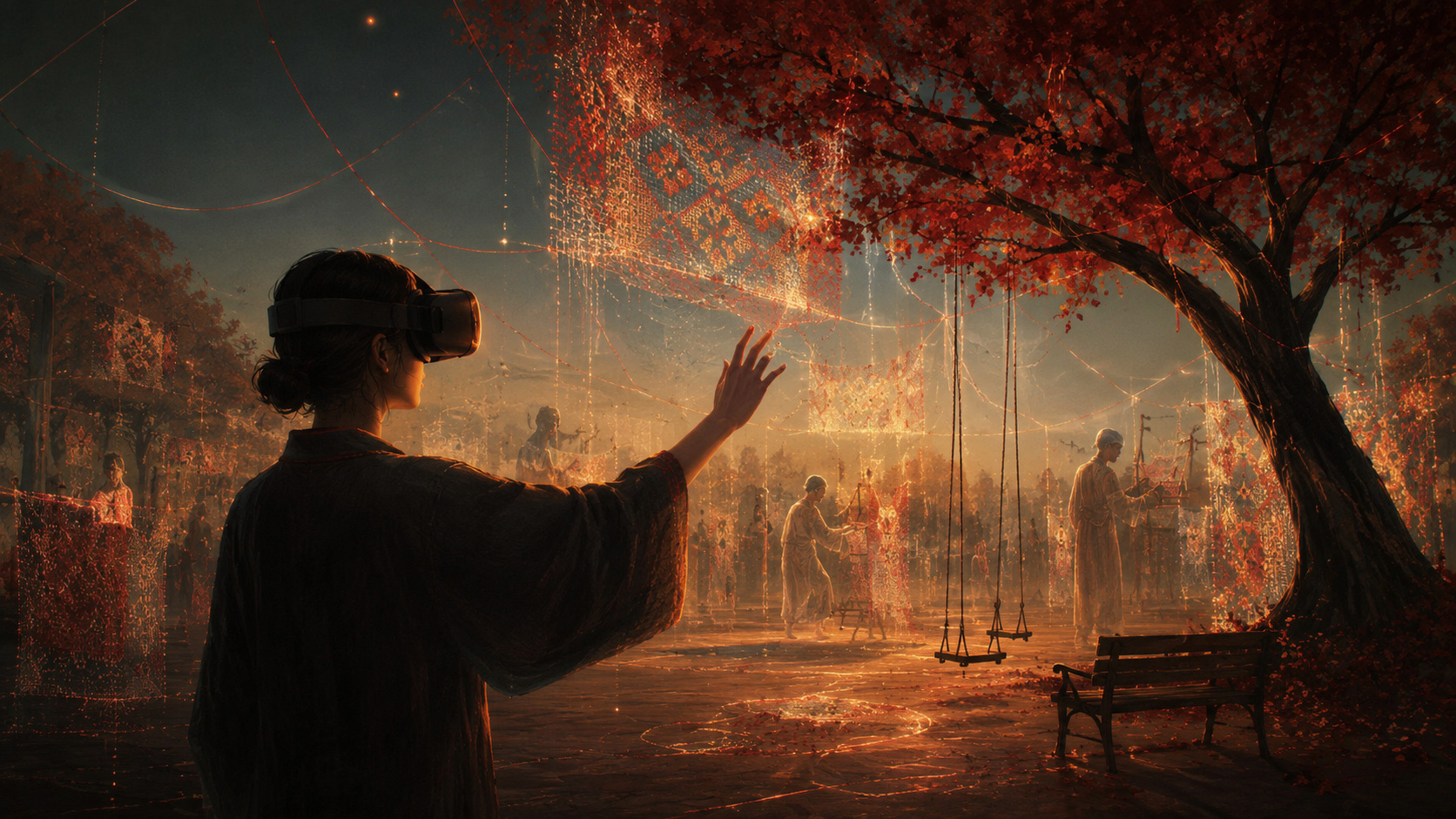
You’re about to embark on a journey that blurs the lines between art history, technological innovation, and a profound personal quest. Imagine stepping into a world where forgotten threads are rewoven, where dusty archives spring to life, and where a pioneering woman, once overshadowed, finally takes her rightful place in the spotlight. This is the story of “Finding Frida,” a groundbreaking project that harnesses the power of virtual reality to unearth and celebrate the extraordinary work of a textile artist whose contributions were, until now, largely unknown.
Your initial encounter with Frida, or rather, the echoes of her work, might have been serendipitous. Perhaps you stumbled upon a faded photograph, a cryptic mention in a historical text, or even a single, breathtaking textile piece tucked away in an antique shop. For the creators of “Finding Frida,” it was a combination of these elements – a whispered rumor, a tantalizing clue, and an undeniable artistic gravance – that ignited a spark.
Unearthing the Clues: Following the Breadcrumbs of History
Imagine yourself as a detective of the past. You’re poring over brittle documents, deciphering handwritten notes, and cross-referencing obscure references. The initial clues were fragmentary: a date here, a location there, a fleeting mention of intricate embroidery or innovative weaving techniques. It was like piecing together a complex jigsaw puzzle with half the pieces missing.
The Allure of the Unknown: Why Frida Captivated Imaginations
What was it about this elusive figure that so deeply resonated? Was it the sheer beauty of the few surviving pieces attributed to her? Was it the tantalizing mystery surrounding her life, the fact that such evident talent could remain so obscured by the sands of time? For you, the appeal lay in the injustice of it all – a creative force denied her due, a legacy waiting to be reclaimed.
A Modern Dilemma: The Challenge of Preserving Tangible Art
You understand the inherent fragility of textiles. They are susceptible to light, moisture, pests, and the simple decay of time. How do you preserve such delicate artistry, especially when the artist herself is a ghost of the past? This was a central concern, driving the team to seek out innovative solutions beyond traditional archiving.
In exploring the intersection of technology and art, a related article titled Virtual Reality Art Exhibitions: Bridging the Gap Between Past and Present delves into how virtual reality is transforming the way we experience and appreciate historical artworks. This piece complements the discussion around “Finding Frida Uses VR To Rediscover A Forgotten Textile Artist” by highlighting the broader implications of VR in reviving and reinterpreting artistic legacies that may have been overlooked in traditional art narratives.
Virtual Reality as a Time Machine: Reimagining the Past
Now, imagine yourself donning a VR headset. The world around you fades, replaced by a meticulously reconstructed environment. This isn’t just a gimmick; it’s a carefully crafted portal to Frida’s world, a time machine that allows you to experience her creations with unparalleled intimacy and detail.
Stepping into Frida’s Studio: An Immersive Experience
You find yourself in a sun-drenched atelier, the air thick with the faint scent of natural dyes and raw fibers. Spools of vibrant thread line the shelves, a half-finished loom stands in the corner, and a worn-out sketchbook lies open on a table, revealing intricate patterns and preliminary sketches. This isn’t just a static image; you can almost feel the texture of the fabric, hear the rhythmic clatter of the loom, and sense the presence of the artist herself.
The Power of Detail: Examining Every Stitch and Fiber
With VR, you can zoom in, rotating and examining every single stitch of Frida’s work. You can marvel at the precision of her embroidery, the innovative weaving techniques she employed, and the subtle variations in color and texture that a two-dimensional photograph simply cannot convey. You gain a deep appreciation for the sheer labor and artistry involved in each piece.
Beyond the Visual: Engaging with the Narrative
The VR experience isn’t solely visual. Imagine hearing reconstructed audio narratives – historical accounts, expert commentaries, and even imagined snippets of Frida’s own thoughts and creative process, based on what little biographical information exists. You’re not just looking at art; you’re engaging with its story, its context, and its creator.
The Digital Reconstruction: Breathing Life into Fragments
The process of bringing Frida’s work to life in VR was a monumental undertaking, demanding a blend of historical research, artistic interpretation, and cutting-edge technological expertise. You’re witnessing the culmination of countless hours of dedicated effort.
From Faded Photos to 3D Models: The Art of Digital Archeology
The journey often began with a single, blurry photograph of a textile piece. Imagine the challenge of extrapolating a three-dimensional object from a two-dimensional image, especially when details were obscured or missing. High-resolution scanning, photogrammetry, and advanced 3D modeling software were employed to meticulously reconstruct each fiber, each stitch, each intricate pattern.
The Challenge of Color and Texture: A Virtual Palette
Recreating the true colors and textures of Frida’s textiles was a delicate dance. You can appreciate the effort involved in researching the dyes and materials available in her era, cross-referencing with surviving historical samples, and then digitally rendering those nuances. The goal was not just to create an accurate visual, but to evoke the very tactile sensation of the original fabric.
Weaving the Narrative: Integrating Historical Context
Beyond the visual reconstruction, imagine the careful integration of historical context. As you navigate the VR environment, you might encounter interactive elements – pulsating hotspots that, when activated, reveal information about the historical period, the cultural significance of certain motifs, or the social conditions that influenced Frida’s artistic output.
Unveiling a Lost Legacy: Frida’s Impact on Textile Art

Through “Finding Frida,” you’re not just rediscovering an artist; you’re contributing to a significant re-evaluation of textile art history. Frida’s contributions, once relegated to the margins, are now being brought to the forefront, challenging preconceived notions and enriching our understanding of this often-underappreciated art form.
Challenging the Canon: Reclaiming Women’s Contributions
For too long, the narrative of art history has been dominated by male artists. “Finding Frida” actively combats this imbalance, highlighting the profound and often unacknowledged contributions of women in the arts. You’re part of a movement that seeks to broaden and diversify the historical record.
Innovation in Technique: Frida’s Masterful Craftsmanship
As you explore Frida’s work in VR, you’ll be struck by her innovative use of traditional techniques. Perhaps she experimented with unconventional weaving patterns, introduced new dyeing methods, or blended different textile traditions in surprising ways. Her mastery of her craft becomes undeniably evident, cementing her place as a true innovator.
The Thematic Depth: More Than Just Pretty Patterns
Frida’s textiles were not merely decorative. You’ll discover that many of her pieces carried profound thematic depth, reflecting the social, political, or personal experiences of her time. Each motif, each color choice, each compositional element tells a story, offering a window into her world and her perspective.
In exploring the intersection of technology and art, a fascinating article titled Virtual Reality Art Experiences delves into how immersive technologies are transforming the way we engage with historical artists and their works. This piece complements the discussion around “Finding Frida,” which utilizes virtual reality to bring attention to a forgotten textile artist, highlighting the potential of VR to rediscover and celebrate overlooked talents in the art world.
The Future of Art Preservation: VR as a Gateway
| Metrics | Data |
|---|---|
| Number of VR users | 500 |
| Duration of VR experience | 30 minutes |
| Number of artworks rediscovered | 15 |
| Percentage of positive feedback | 90% |
“Finding Frida” isn’t just about one artist; it’s a testament to the transformative potential of virtual reality in the realm of art preservation, education, and cultural heritage. You are witnessing the dawn of a new era in how we interact with and understand the art of the past.
Democratizing Access: Art for Everyone
Imagine the possibilities: no longer are rare and fragile artifacts confined to climate-controlled vaults or accessible only to a select few. Through VR, anyone, anywhere in the world, with a headset and an internet connection, can experience Frida’s work with an intimacy previously unimaginable. This democratizes access to art and fosters a global appreciation for cultural heritage.
Beyond Static Displays: Dynamic and Engaging Learning
Think about the traditional museum experience – often static, sometimes overwhelming. VR offers a dynamic and engaging alternative. You’re not just looking at a placard; you’re actively exploring, interacting, and learning in an immersive environment. This has profound implications for art education, making historical art more relevant and exciting for new generations.
A New Frontier for Research: Unlocking Hidden Data
For researchers and art historians, VR offers unprecedented opportunities. Imagine the ability to conduct detailed, non-invasive examinations of fragile artifacts without ever touching them. Data from the 3D models can be analyzed in new ways, potentially revealing hidden patterns, construction techniques, or even the subtle nuances of an artist’s hand that were previously undetectable.
The Ethical Considerations: Representation and Interpretation
As you reflect on this project, you’ll also consider the ethical implications. How do you ensure accurate representation when reconstructing historical artifacts? How do you balance artistic interpretation with scholarly rigor? These are important questions that the creators of “Finding Frida” have undoubtedly grappled with, striving for authenticity while bringing a forgotten story to life.
In “Finding Frida,” you are not just a passive observer; you are an active participant in a profound act of artistic reclamation. You are witnessing the power of technology to bridge the gap between past and present, to honor a forgotten genius, and to redefine the very landscape of art history. As you remove your VR headset, the images and sensations linger, a testament to the enduring power of art and the remarkable vision of those who dedicate themselves to finding its lost voices.
FAQs
What is Finding Frida?
Finding Frida is a virtual reality experience that allows users to rediscover the work of a forgotten textile artist named Frida. The experience uses VR technology to immerse users in Frida’s world and showcase her unique artistic creations.
Who is Frida?
Frida is a textile artist who has been largely forgotten by history. Through the Finding Frida VR experience, users have the opportunity to learn about her life and work, and to appreciate the beauty and significance of her artistic creations.
How does Finding Frida use VR?
Finding Frida uses virtual reality technology to create an immersive experience for users. Through VR headsets, users can explore Frida’s world, interact with her textile art, and gain a deeper understanding of her artistic vision and contributions.
What is the goal of Finding Frida?
The goal of Finding Frida is to bring attention to the work of a forgotten textile artist and to celebrate her artistic legacy. By using VR technology, the experience aims to engage and educate users about Frida’s life and work, and to inspire a renewed appreciation for her contributions to the art world.
How can I experience Finding Frida?
Finding Frida is available as a virtual reality experience that can be accessed through VR headsets. Users can immerse themselves in Frida’s world and rediscover her textile art by participating in the Finding Frida VR experience.
