


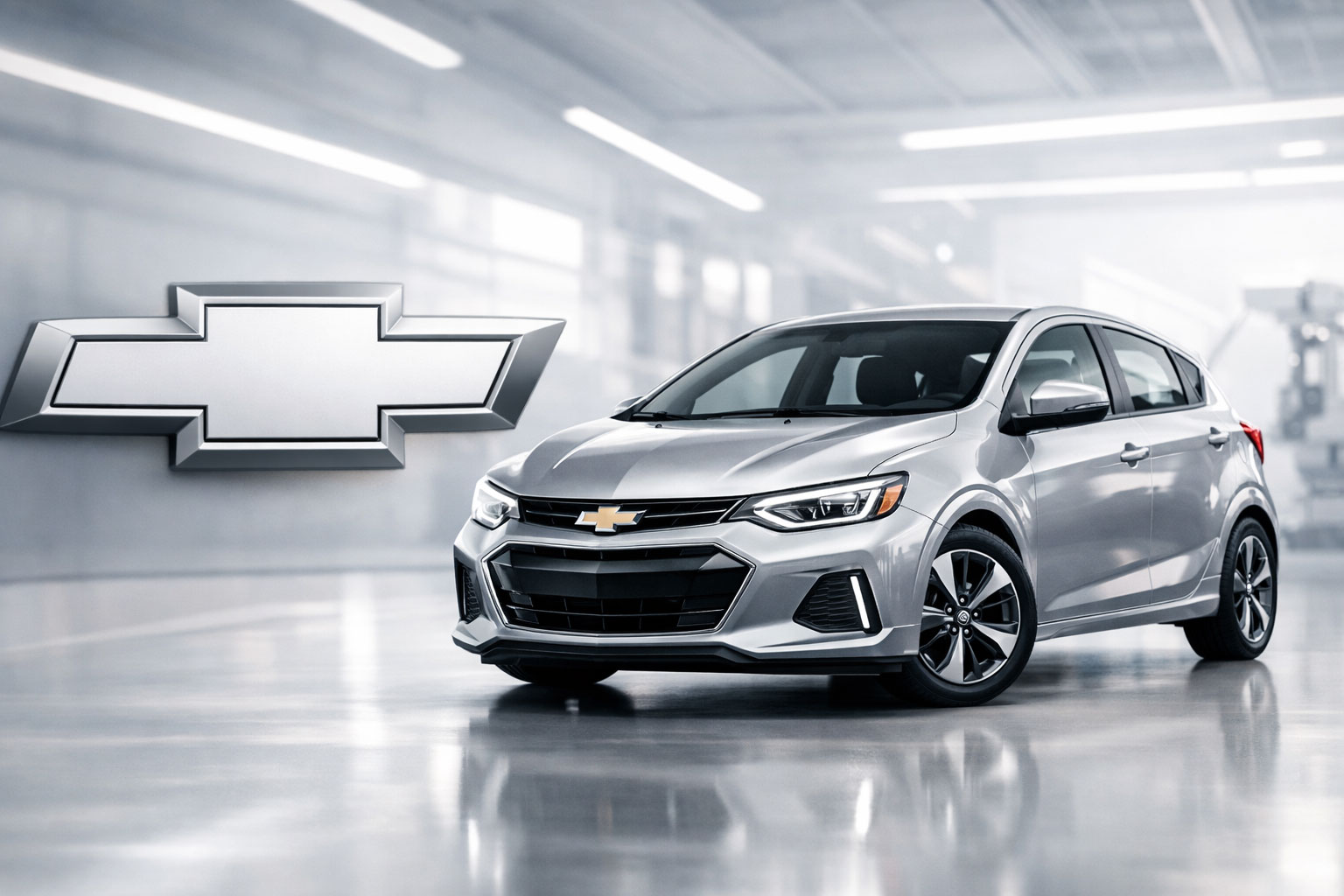
You’re not likely to see it on your local Chevrolet dealership lot, but the automotive world is buzzing with news of Chevrolet’s latest design iteration, the refreshed Bowtie logo, making its debut on the 2027 Sonic. This announcement, however, comes with a significant asterisk: the 2027 Sonic, and by extension, this new logo, will not be available in America. This strategic decision by General Motors has sparked considerable discussion within the industry and among automotive enthusiasts alike.
The iconic Chevrolet Bowtie, a symbol instantly recognizable to car buyers worldwide, is undergoing a significant transformation. This isn’t merely a minor tweak; it represents a calculated evolution of the brand’s visual identity. The move to introduce the updated logo on a specific model, the Sonic, and then exclude it from the crucial North American market, signals a deliberate strategy that warrants careful examination.
The Evolution of an Icon
The Bowtie has a storied past, gracing Chevrolet vehicles since the early 20th century. Its design has seen numerous iterations, each reflecting the prevailing aesthetic and technological trends of its time. From its initial, more ornate forms to the sleeker, more modern interpretations, the Bowtie has consistently adapted while retaining its core essence. This latest iteration continues that tradition of evolution, aiming to project a sense of forward-thinking design and a refined brand image.
Design Philosophy Behind the New Logo
Chevrolet states that the new Bowtie logo is intended to embody a more sophisticated and digitally-native aesthetic. This suggests a move away from the more traditional, perhaps even slightly dated, perception that some of its older logos might have evoked. You’ll find a cleaner, more streamlined form, with subtle shifts in its curves and proportions. The metallic finishes, where applied, are intended to be more nuanced, offering a richer, more premium appearance. The dimensionality often present in previous Bowties is toned down, leaning towards a flatter, more graphic representation that translates effectively across various platforms, digital and physical.
The Shift Towards Digital Integration
In an era where brand presence extends far beyond the physical vehicle, the design of the Bowtie is clearly influenced by its digital applications. You can see this in the crispness of the lines and the way the logo is engineered to be scalable without losing its clarity. This is crucial for everything from website banners and social media avatars to in-car infotainment displays. The brand’s ambition is to ensure the Bowtie remains a strong identifier in an increasingly screen-centric world.
Subtle Detailing and Materiality
While not overtly flamboyant, the new Bowtie exhibits a heightened attention to detail in its execution. The variations in finish, whether it’s a brushed nickel effect, a gloss black interpretation, or a chromatic silver, are designed to complement the various color palettes of the vehicles it adorns. It’s a subtle refinement, aiming to elevate the perceived quality of the entire vehicle, not just the badge itself.
In light of Chevrolet’s recent unveiling of the new Bowtie logo on the 2027 Sonic, which unfortunately will not be available to American consumers, it’s interesting to explore how automotive brands are adapting to modern technology and consumer expectations. For a deeper understanding of how real-time data and event-driven architectures are shaping various industries, including automotive, you can read this insightful article on leveraging WebSockets: Real-Time APIs: Leveraging WebSockets and Event-Driven Architectures.
The 2027 Chevrolet Sonic: A Global Platform
The 2027 Chevrolet Sonic, while not destined for American roads, serves as the inaugural canvas for this revamped Bowtie. The choice of the Sonic is noteworthy, as it represents a global model with a significant presence in many international markets. This suggests a strategic deployment, allowing Chevrolet to test and gauge the reception of its new logo on a diverse consumer base before potentially broader implementation.
International Market Focus
Chevrolet’s decision to launch the new Bowtie on a model primarily for international markets is a clear indication of its global strategy. The Sonic has historically been a strong performer in regions outside of North America, particularly in Asia and Latin America. By debuting the refreshed logo here, Chevrolet is directly targeting markets where its brand presence is robust and where it seeks to further solidify its position with an updated visual identity.
Understanding the Global Sonic
The Sonic, in its international configurations, often features design elements and powertrains tailored to the specific demands and preferences of those regions. It is frequently positioned as an affordable, reliable, and practical small car. The introduction of the new Bowtie is intended to imbue this well-established model with a renewed sense of modernity and sophistication, aiming to attract a new demographic of buyers or re-engage existing ones.
Design Refinements Beyond the Badge
It’s important to note that the 2027 Sonic isn’t just getting a new logo. Chevrolet has also implemented other design refinements to the vehicle itself, aiming to create a cohesive and updated package. These changes are likely to include subtle revisions to the front and rear fascias, updated lighting elements, and potentially new wheel designs. The goal is to present a fresh, contemporary look that aligns with the new visual identity projected by the Bowtie.
Aerodynamic Enhancements
While specific details may vary by market, it is plausible that the 2027 Sonic incorporates minor aerodynamic improvements. These could include sculpted body panels, a revised grille design, or improved underbody management. Such subtle enhancements contribute to both fuel efficiency and a more dynamic visual presence.
Interior Modernization
The interior of the 2027 Sonic is also expected to receive updates. This could involve new seat materials, revised dashboard layouts, updated infotainment systems, and enhanced connectivity features. The intention is to create a more appealing and user-friendly cabin environment that complements the exterior’s modern styling.
The American Exclusion: A Strategic Enigma

The most significant point of contention and discussion surrounding this announcement is Chevrolet’s decision to withhold the 2027 Sonic and its new Bowtie logo from the American market. This move has left many wondering about the underlying reasoning and its implications for Chevrolet’s future in the States.
Analyzing the Market Rationale
Chevrolet’s product lineup in America differs significantly from its global offerings. The subcompact segment, where the Sonic traditionally competes, has seen declining sales and a shift in consumer preference towards larger SUVs and trucks. It’s possible that Chevrolet views the Sonic as a less critical model for the American market, a segment where introducing a new logo on a potentially aging or soon-to-be-discontinued platform might not yield the desired impact or return on investment.
Shifting Consumer Preferences
You’ve likely observed the trend: American consumers have gravitated towards larger vehicles. The demand for sedans and small hatchbacks, once the backbone of many manufacturers’ sales, has diminished considerably. Chevrolet, like its competitors, has been reallocating resources and product development towards segments that are currently more popular and profitable.
Product Portfolio Prioritization
Chevrolet’s strategy in the US might prioritize showcasing its refreshed Bowtie on models that are more central to its American identity and sales volume. This could include upcoming all-electric vehicles or redesigned versions of its best-selling trucks and SUVs. Launching a new logo on a high-profile, high-volume model in America would arguably have a greater immediate impact and signaling effect.
Potential Future Rollout in the US
While the 2027 Sonic won’t feature the new Bowtie in America, it’s premature to assume it will never appear here. Chevrolet might be planning a phased rollout. The new Bowtie could be introduced on other Chevrolet models in the US at a later date, perhaps coinciding with significant redesigns or the launch of entirely new vehicles. This would allow the brand to build anticipation and ensure the logo’s debut on a platform that generates considerable consumer interest.
A Delayed Introduction for Maximum Impact
Timing can be everything in product launches. Chevrolet might be strategically delaying the introduction of the new Bowtie in America until a more opportune moment. This could be when a truly groundbreaking new model is unveiled, or when a significant portion of its product range has been refreshed, allowing the new logo to be seen across a broader spectrum of vehicles simultaneously.
The Role of Electric Vehicles
Given the industry’s accelerating shift towards electrification, it’s highly probable that Chevrolet’s new Bowtie will make its American debut on one of its upcoming electric vehicles. Electric vehicles are often positioned as forward-looking and technologically advanced, making them ideal platforms to introduce a refreshed brand identity that aims to project modernity and innovation.
Implications for Enthusiasts and Collectors

The decision to launch the new Bowtie on a non-American model naturally sparks curiosity and debate among automotive enthusiasts and collectors. The exclusivity of the 2027 Sonic for international markets raises questions about its availability outside of those regions and its potential collectability.
The Fascination with Exclusivity
There’s an undeniable allure to limited-edition or market-specific vehicles. For some collectors, acquiring a vehicle that is not readily available in their home market becomes a significant pursuit. The 2027 Sonic, with its new Bowtie, will undoubtedly fall into this category for American enthusiasts.
The Challenge of Acquisition
Obtaining a vehicle exclusive to overseas markets can be a complex and costly undertaking. It often involves navigating import regulations, shipping logistics, and potentially significant currency exchange fluctuations. This makes the 2027 Sonic a less accessible proposition for the average collector in America.
The Global Nature of Automotive Culture
Despite geographic limitations, the automotive enthusiast community is inherently global. News of new models and design changes travels quickly, and discussions about the 2027 Sonic and its new Bowtie are already circulating online. This shared interest transcends borders, even if physical ownership does not.
Online Forums and Social Media
You’ll find extensive discussions happening on international automotive forums and social media platforms. Enthusiasts from various regions will share their observations, reviews, and even photos of the 2027 Sonic, allowing others to experience it vicariously.
In light of Chevrolet’s recent unveiling of the new Bowtie logo on the 2027 Sonic, which unfortunately won’t be available in America, it’s interesting to consider how design elements can impact consumer perception. For a deeper understanding of design principles, you might find it valuable to explore this article on designing for dark mode, as it highlights the importance of adaptability in modern aesthetics. This connection underscores how effective design can resonate across various platforms and products, even in the automotive industry.
Future of the Chevrolet Brand Identity
| Aspect | Details |
|---|---|
| Model | 2027 Sonic |
| Manufacturer | Chevrolet |
| Feature | New Bowtie Logo |
| Availability | Not in America |
The unveiling of the new Bowtie logo on the 2027 Sonic, coupled with its American exclusion, is more than just a cosmetic change. It’s a strategic move that signals Chevrolet’s evolving brand identity and its approach to global market penetration. The implications of this decision will unfold over time as the brand continues to implement its long-term vision.
A Signal of Global Ambitions
Chevrolet’s actions suggest a renewed focus on its global presence. By introducing significant branding updates on international models first, the company is demonstrating its commitment to creating a unified and modern brand image across all its operating regions. This approach aims to streamline consumer perception and reinforce brand loyalty on a worldwide scale.
Harmonizing Brand Messaging
A consistent brand identity across diverse markets is crucial for building strong global recognition. The new Bowtie is intended to be a common thread, weaving together Chevrolet’s diverse product offerings and marketing campaigns into a singular, cohesive message that resonates with consumers everywhere.
The Reimagining of Chevrolet in the Electric Age
As the automotive industry transitions towards electrification, brands are actively redefining their identities to reflect this paradigm shift. The updated Bowtie, with its cleaner, more modern aesthetic, is a visual representation of Chevrolet’s commitment to innovation and its forward-looking strategy in the era of electric mobility.
Signaling a New Direction
This logo update could be interpreted as a digital handshake with the future. It signifies Chevrolet’s ambition to be seen as a contemporary, technologically advanced, and environmentally conscious automaker, aligning its visual branding with the emerging trends and values of the electric vehicle market.
The Long-Term Vision for the Bowtie
While the immediate impact of the new Bowtie on the 2027 Sonic is confined to specific international markets, its long-term trajectory remains a subject of keen observation. The success of this rebranding effort will likely influence its broader application across Chevrolet’s extensive global portfolio. You can expect continued dialogue and analysis as Chevrolet navigates this exciting phase of its brand evolution.
FAQs
What is the new Bowtie logo on the 2027 Chevrolet Sonic?
The new Bowtie logo on the 2027 Chevrolet Sonic features a simplified and modernized design with a two-dimensional gold color scheme. It is a departure from the traditional three-dimensional, metallic gold logo that has been used for decades.
Why can’t America have the 2027 Chevrolet Sonic with the new Bowtie logo?
The 2027 Chevrolet Sonic with the new Bowtie logo is not available in America due to Chevrolet’s decision to discontinue the Sonic model in the United States. The new logo is currently only being used on the Sonic model in international markets.
What is the significance of the new Bowtie logo for Chevrolet?
The new Bowtie logo represents Chevrolet’s efforts to modernize its brand image and appeal to a younger demographic. The simplified and sleek design reflects the brand’s commitment to innovation and staying relevant in the automotive industry.
Will the new Bowtie logo be used on other Chevrolet models?
It is currently unclear whether the new Bowtie logo will be used on other Chevrolet models. The introduction of the new logo on the 2027 Sonic suggests that Chevrolet may consider updating the logos on other models in the future.
How has the reception been to the new Bowtie logo on the 2027 Sonic?
The reception to the new Bowtie logo on the 2027 Sonic has been mixed. Some have praised the modernized design, while others have expressed nostalgia for the traditional logo. Chevrolet has stated that the new logo represents the brand’s evolution and commitment to innovation.
