


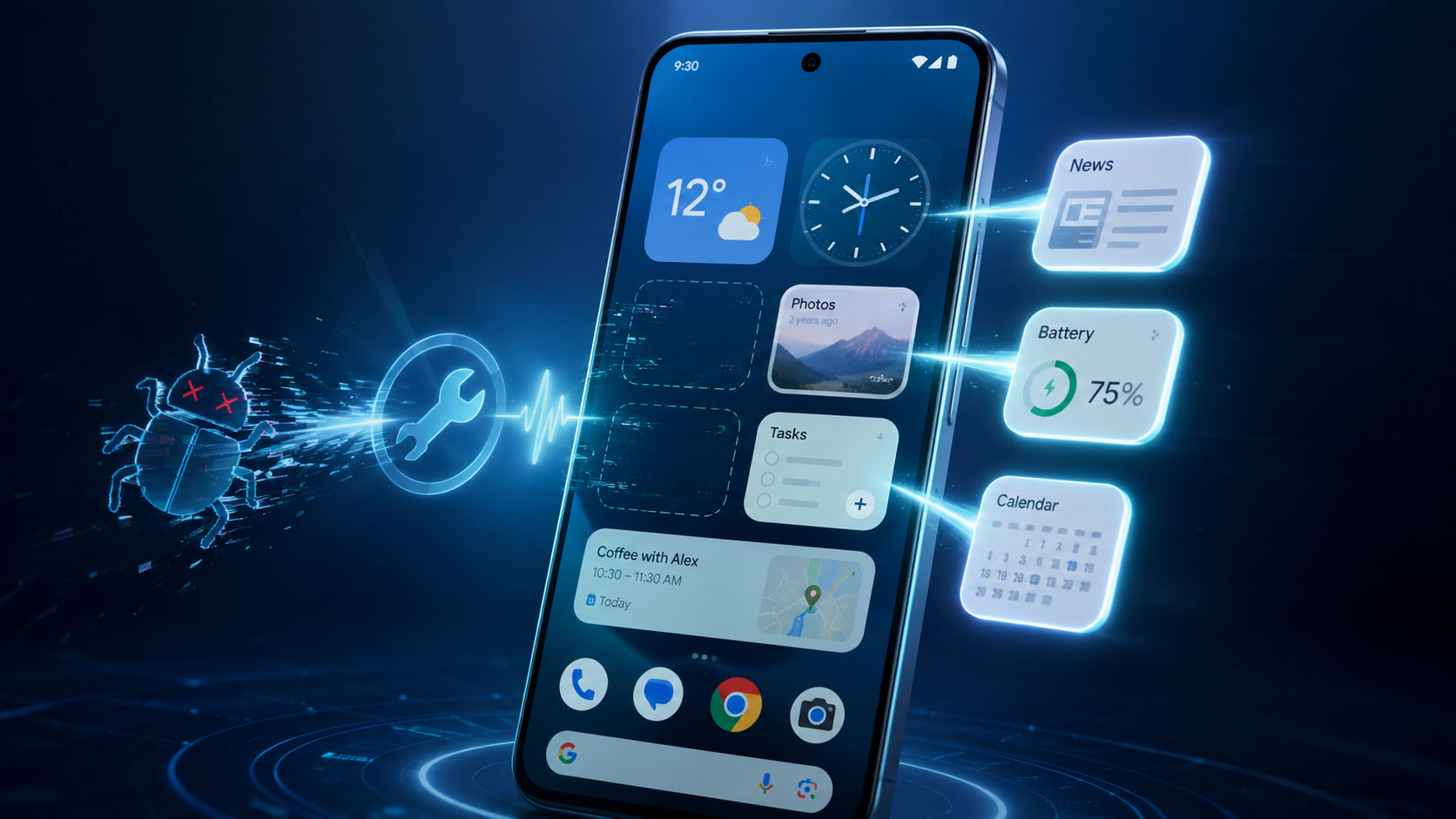
You’ve likely heard the whispers, seen the frantic posts, or perhaps even experienced it yourself: the sudden, inexplicable disappearance of your meticulously arranged Android widgets. It’s a frustrating, productivity-killing bug that has plagued users since the release of Android 17, and if you’re reading this, you’re probably looking for answers, or at least some validation that you’re not alone. Well, you’re not. Google is fully aware of the issue, and crucially, they’re working on fixing it. This isn’t just a minor annoyance; it’s a significant disruption to the user experience that Google is now prioritizing.
You might vividly recall the excitement surrounding the Android 17 update. New features, enhanced privacy controls, and a sleeker interface promised a better smartphone experience. However, for a significant portion of the user base, this excitement quickly turned into exasperation. The “widget wipeout” began to manifest, leaving many of you questioning your own actions. Did you accidentally delete them? Was it a rogue app? The answer, as it turns out, is far simpler and more frustrating: it’s a bug within the operating system itself.
Understanding the User Experience Impact
Imagine this: you’ve spent precious time customizing your home screen. Your weather widget is perfectly positioned, your music controls are within easy reach, and your calendar appointments are always visible. Then, without warning, they vanish. You unlock your phone, and it’s a barren landscape, forcing you to rebuild everything from scratch. This isn’t just inconvenient; it’s a psychological blow. You rely on these widgets for quick access to information and functionalities, and their sudden absence can disrupt your daily routine. Think of the extra taps, the moments of disorientation, and the general feeling of having your digital workspace unexpectedly rearranged without your consent. It damages your sense of control over your own device.
Initial User Reactions and Reporting
When the bug first surfaced, you probably did what most people do: you checked online forums. You searched terms like “Android 17 widgets disappearing,” “home screen widgets vanishing,” or “Google Pixel widget bug.” You found a rapidly growing community of users experiencing the exact same problem. This collective distress snowballed, leading to a deluge of bug reports on Google’s issue tracker, Reddit threads, X (formerly Twitter) discussions, and various tech news comments sections. Your voices were heard, loud and clear, and these early reports were instrumental in bringing the issue to Google’s immediate attention. Without your active participation in reporting these anomalies, it would have taken much longer for the severity of the bug to be fully understood.
In light of Google’s recent announcement to address the Android 17 bug that has been causing homescreen widgets to disappear for some Pixel owners, it’s interesting to explore how such issues can impact user experience in the broader context of technology. For a deeper understanding of the evolution of API gateways and service meshes in microservices, which play a crucial role in ensuring seamless interactions between different services, you can read more in this related article: Evolution of API Gateways and Service Mesh in Microservices.
Google’s Acknowledgment and Investigation
It took some time, as it often does with widespread software issues, but Google has now officially acknowledged the Android 17 widget deletion bug. This acknowledgment is not just a polite nod; it signifies that their engineers are actively engaged in diagnosing the root cause and formulating a solution. You might have been skeptical, wondering if your reports were just disappearing into the vast digital ether, but rest assured, your feedback has catalyzed Google’s response.
The Role of User Feedback in Bug Identification
You are the frontline in bug detection. Every time you submit a bug report, describe your experience in detail, or even just post about it on social media, you’re contributing to a larger dataset that Google’s engineers analyze. For this particular widget bug, the sheer volume and consistency of your reports, detailing similar circumstances of widget disappearance across various devices running Android 17, made it undeniable. Your anecdotal evidence, when aggregated, became compelling statistical data that couldn’t be ignored. You effectively acted as Google’s extended QA team, highlighting a critical flaw that may not have been caught during internal testing.
Google’s Internal Debugging Process Explained
Once a bug of this magnitude is acknowledged, Google employs a meticulous internal debugging process. You might envision a room full of engineers frantically typing, and while that’s not far from the truth, it’s also a highly structured approach. They start by trying to reproduce the bug reliably across different device manufacturers and configurations. This means testing on Pixel devices, Samsung, OnePlus, and other OEMs running Android 17 to see if the bug is universal or specific to certain hardware or software overlays. They analyze crash logs, system diagnostics, and even anonymized usage data to pinpoint where the system might be failing. This often involves dissecting the Android framework responsible for widget management – how they are stored, rendered, and maintained across system restarts or app updates. It’s a complex puzzle, and your initial reports provide the crucial corner pieces.
Potential Causes Behind the Widget Disappearance
As a user, you might not delve into the intricacies of system architecture, but understanding the potential causes can shed light on why such a seemingly simple feature can break down. Google hasn’t released a definitive root cause yet, but based on expert analysis and prior Android bugs, several theories are circulating. These theories often point to complex interactions within the operating system that you, as an end-user, would never typically encounter.
Memory Management and Resource Allocation Issues
One prominent theory suggests that the bug might stem from how Android 17 handles memory management and resource allocation for background processes, particularly when those processes involve constant updates to the home screen. Widgets, by their very nature, are mini-applications that often update in the background. If the system is aggressively reclaiming memory to optimize performance, or if there’s a flaw in how it prioritizes which processes to keep alive, your widgets might be among the casualties. You might notice this more acutely on devices with less RAM, or when you have many apps open simultaneously. The system might be erroneously treating widget data as temporary cache that can be purged, instead of persistent configuration.
Launcher Interaction and System Stability
Android’s open nature means various manufacturers implement their own “launchers” – the app that manages your home screen, app drawer, and widgets. While the core Android framework handles widget rendering, the launcher is responsible for their placement and persistence. It’s possible that a change in Android 17’s core APIs, or a subtle bug in how the new OS version interacts with different launcher implementations, is causing the problem. You might have noticed that some users report the issue less frequently on stock Android (like Pixel devices) compared to phones with heavily customized launchers (like Samsung’s One UI or Xiaomi’s MIUI). This indicates a potential conflict between the underlying Android 17 update and how these OEM launchers are managing widget lifecycles. System stability issues, perhaps introduced by new optimization routines in Android 17, could also be intermittently crashing the underlying service responsible for maintaining widget positions.
Data Persistence and Corruption
Another possibility revolves around data persistence. When you place a widget, its configuration and position are stored in a system database. If there’s a bug in how Android 17 writes to or reads from this database, or if the data becomes corrupted during certain operations (e.g., during an app update, a system restart, or even a sudden power off), the system might lose track of your widgets. You might even observe that recreating the widget works temporarily, only for it to disappear again later, supporting the idea that the system isn’t reliably storing its state. This kind of data integrity issue can be particularly tricky to diagnose because it’s intermittent and depends on specific trigger conditions that might not always be obvious.
The Path to a Solution: What You Can Expect
You’re probably wondering, “When will this be fixed?” While Google hasn’t provided an exact timeline, you can be assured that a fix is actively being developed. Google typically rolls out solutions through various channels, and understanding this process will help you anticipate when your widgets will finally stay put.
Upcoming Android Updates and Patches
The most common way Google addresses critical bugs like this is through an over-the-air (OTA) update. This could come in the form of a minor point release (e.g., Android 17.1), a monthly security patch that bundles additional bug fixes, or even a specific hotfix update solely dedicated to addressing this issue. You’ll receive a notification on your device when an update is available, and it’s highly recommended that you install it as soon as possible once it’s released. These updates are vital not just for bug fixes but also for maintaining your device’s security.
Beta Programs and Early Access for Enthusiasts
If you’re an enthusiastic user and want to get your hands on potential fixes even earlier, you might consider enrolling in the Android Beta Program. Google often tests major bug fixes and new features with a beta audience before a wider public rollout. If a dedicated beta build containing the widget fix becomes available, you’d be among the first to test it. However, it’s important to remember that beta software can itself introduce new bugs or instabilities, so it’s a decision you should make carefully, especially if your device is your primary phone. It’s a trade-off between getting an early fix and accepting potential new risks.
Communication from Google and Device Manufacturers
Keep an eye on official announcements from Google (via their Android Developers Blog, Pixel Community Forums, or social media channels) and your specific device manufacturer (Samsung, OnePlus, etc.). They will typically announce when a fix is ready and specify which update package will contain it. You might also see tech news outlets report on these announcements, so following your favorite tech news sources can keep you informed. You want to ensure you’re getting information from reliable sources to avoid misinformation regarding estimated fix times or workaround suggestions.
In light of the recent issues faced by some Pixel owners, Google has announced plans to address the Android 17 bug that has been deleting homescreen widgets. This development comes as part of their ongoing commitment to improve user experience and stability across devices. For those interested in optimizing their digital interactions, a related article discusses advanced strategies for recovering abandoned carts, which can be beneficial for enhancing online engagement. You can read more about these strategies in this insightful piece here.
Temporary Workarounds and Best Practices
| Issue | Resolution | Impact |
|---|---|---|
| Android 17 bug | Google will fix the bug | Deletes homescreen widgets for some Pixel owners |
While you wait for the official fix, you’re probably looking for ways to mitigate the frustration. Unfortunately, there’s no guaranteed workaround that prevents the bug entirely, as it’s a system-level issue. However, there are some best practices you can adopt that might reduce the frequency of the problem or at least make recovering from it less painful.
Rebuilding Widgets: Tips for Efficiency
If your widgets disappear, the only immediate solution is to rebuild them. To make this less tedious:
- Take Screenshots: Before the bug strikes, take screenshots of your home screens. This acts as a visual “blueprint” for when you need to re-add your widgets, saving you time trying to remember their exact positions and sizes.
- Prioritize Essential Widgets: If you have many widgets, consider which ones are truly essential and re-add those first. You can gradually rebuild the others as time permits.
- Utilize Widget Stacks (if available): Some launchers offer “widget stacks” or similar features, allowing you to combine multiple widgets into a single space. While the entire stack might disappear, rebuilding one stack might be faster than rebuilding several individual widgets.
System Updates and App Management
You should always ensure your device’s operating system and all your apps are up to date. While the Android 17 widget bug is a system issue, sometimes app updates can introduce conflicts or, conversely, include specific fixes that improve stability.
- Check for OS Updates Regularly: Go to your
Settings > System > System updateand manually check for updates. Don’t rely solely on automatic pushes. - Keep Apps Updated: Ensure your apps are set to auto-update, or check for updates manually in the Google Play Store. An outdated app could potentially exacerbate system instability.
- Avoid Over-Customization (Temporarily): While custom launchers offer great flexibility, if you’re experiencing frequent widget disappearances, consider temporarily switching to a more stable, less customized launcher (or your device’s default launcher if you’ve installed a third-party one) to see if it reduces the frequency of the bug. This isn’t a solution, but a diagnostic step.
Reporting Further Occurrences
Even with Google working on a fix, your continued feedback is valuable. If you experience the bug, especially after receiving a system update that was supposed to fix it, continue reporting it.
- Use the Official Google Issue Tracker: Provide detailed steps on how the widget disappeared, what app it was from, and any other relevant information (like if it happened after a restart, an app update, or randomly). The more data points Google has, the better they can refine their solution.
- Provide System Logs (If Prompted): If requested, providing system logs can give Google engineers crucial diagnostic information about what was happening on your device at the time the bug occurred. This is often the “smoking gun” they need to pinpoint the exact line of code causing the issue.
The Android 17 widget deletion bug is a significant headache, no doubt. Your frustration is entirely valid. However, by understanding Google’s response, the potential causes, and how you can best manage the situation in the interim, you can navigate this trying period with a bit more patience. Rest assured, Google is dedicating resources to resolving this, and soon, your home screen will be a stable, reliable canvas once again, just as you intended it to be. Until then, stay vigilant, report consistently, and remember that you’re an integral part of making the Android ecosystem better for everyone.
FAQs
What is the Android 17 bug affecting some Pixel owners?
The Android 17 bug is a software issue that causes homescreen widgets to be deleted for some Pixel owners. This bug has been reported by several users and is causing inconvenience for those affected.
How is Google addressing the Android 17 bug?
Google has acknowledged the issue and has stated that they are working on a fix to address the Android 17 bug. The company is committed to resolving the issue and ensuring that affected users can use their homescreen widgets without any problems.
Which devices are affected by the Android 17 bug?
The Android 17 bug is affecting some Pixel owners, specifically those using Pixel devices. The bug has been reported on various Pixel models, and Google is working to ensure that the fix will be applicable to all affected devices.
What can affected Pixel owners do in the meantime?
While Google is working on a fix for the Android 17 bug, affected Pixel owners can try restarting their devices or checking for software updates to see if any temporary solutions are available. It is recommended to stay updated with Google’s official announcements regarding the bug fix.
When can Pixel owners expect the bug fix to be released?
Google has not provided a specific timeline for the release of the bug fix, but the company has assured users that they are actively working on resolving the issue. Pixel owners can expect the bug fix to be included in a future software update for their devices.
