


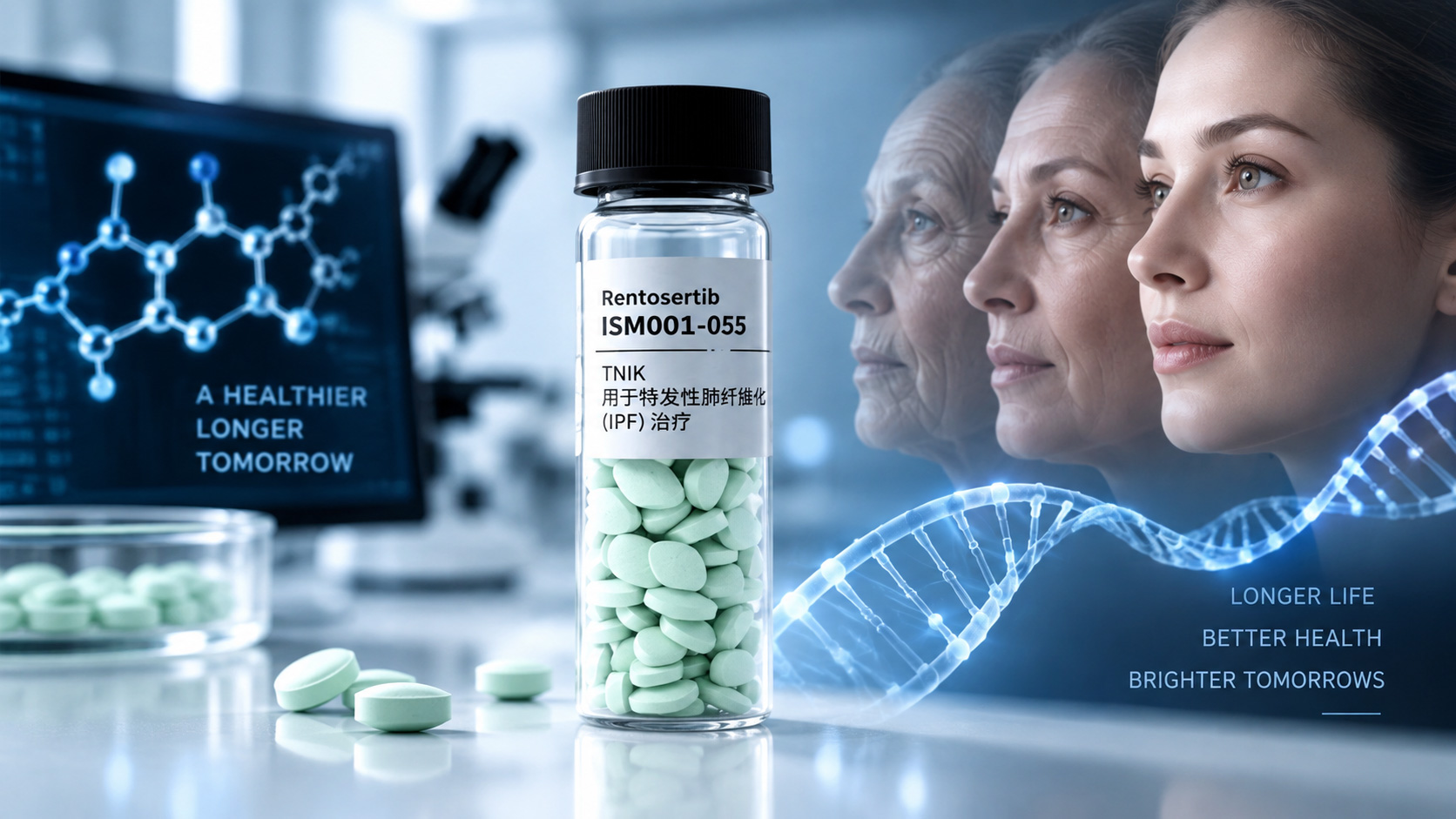
Your body is a marvel, a complex symphony of cells and processes that, for the most part, hum along with remarkable efficiency. But as you navigate life, a subtle, relentless force begins to take hold: aging. It’s a natural part of the human experience, manifesting in everything from your first wrinkle to the gradual decrease in your stamina. For centuries, humanity has grappled with this inevitability, dreaming of ways to slow its march, to reclaim vitality, and to extend the healthy, vibrant years of life. Now, a groundbreaking development is offering a tantalizing glimpse into that future, with promising early data suggesting that an artificial intelligence-generated drug is showing significant promise in slowing the aging process. This isn’t science fiction; it’s the cutting edge of biomedical research, and you’re about to dive into what it means for you.
To truly appreciate the significance of this AI-driven breakthrough, you first need to understand what aging actually is. It’s not a single event, but a cascade of interconnected biological changes that accumulate over time, impacting every facet of your cellular and systemic health. Scientists have identified numerous hallmarks of aging, each contributing to the decline in function and the increased susceptibility to disease that we associate with getting older.
The Cellular Clockwork: What Happens at the Microscopic Level?
At the most fundamental level, aging is a cellular phenomenon. Your cells, the building blocks of your entire being, are constantly working, dividing, and repairing themselves. However, this intricate machinery isn’t perfect. Over time, errors creep in, and vital components begin to degrade.
Telomeres: The Protective Caps at Risk
One of the most well-known indicators of cellular aging is the shortening of telomeres. Imagine them as the plastic tips on the end of your shoelaces, protecting the delicate threads from fraying. In your cells, telomeres are protective caps at the ends of your chromosomes. Every time a cell divides, its telomeres get a little shorter. Eventually, they become too short to protect the chromosomes, leading to cellular senescence – a state where cells stop dividing but don’t die, instead releasing inflammatory signals that can damage surrounding tissues. This accumulation of senescent cells is a significant contributor to age-related decline.
Mitochondrial Dysfunction: The Powerhouses Begin to Flicker
Your mitochondria are the powerhouses of your cells, responsible for generating the energy you need to function. As you age, these vital organelles become less efficient. Their ability to produce energy wanes, and they begin to generate more harmful reactive oxygen species (ROS), often referred to as free radicals. This oxidative stress damages cellular components, including DNA, proteins, and lipids, further accelerating the aging process and contributing to inflammation.
Accumulation of Cellular Damage: The Wear and Tear Mounts
Beyond telomere shortening and mitochondrial issues, a variety of other forms of cellular damage accumulate with age. This includes the buildup of misfolded proteins, which can impair cellular function, and the accumulation of cellular “junk” – waste products that the cell can no longer effectively clear. Think of it like a factory that’s been running for decades; eventually, the machinery starts to break down, and the waste disposal system gets overwhelmed.
Systemic Shifts: How Aging Affects Your Whole Body
While cellular changes are the root of aging, their effects ripple outwards, impacting your entire body and its interconnected systems. You’ve likely experienced these changes firsthand.
The Immune System’s Decline: A Weaker Defense
Your immune system is your body’s sophisticated defense network, protecting you from pathogens and disease. As you age, its effectiveness diminishes, a phenomenon known as immunosenescence. This makes you more vulnerable to infections and less responsive to vaccines. It also contributes to chronic low-grade inflammation, a hallmark of aging that fuels a host of age-related diseases.
Cardiovascular Changes: The Heart and Blood Vessels Age Too
Your heart and blood vessels are not immune to the ravages of time. Arteries can stiffen and narrow, increasing blood pressure and raising the risk of heart disease and stroke. The heart muscle itself can become less efficient, impacting your overall stamina and ability to perform physical activities.
Neurodegenerative Processes: The Brain’s Evolution
The brain, perhaps the most complex organ, also undergoes significant changes with age. While some cognitive decline is normal, the increased risk of neurodegenerative diseases like Alzheimer’s and Parkinson’s is a major concern. These conditions are characterized by the progressive loss of neurons and their function, leading to severe impairments in memory, cognition, and motor skills.
Recent advancements in artificial intelligence have opened new avenues in healthcare, particularly in the realm of drug development. An intriguing article titled “Early Data Indicates an A.I.-Generated Drug Could Slow Aging” highlights how AI technologies are being leveraged to create innovative solutions for age-related conditions. For those interested in the intersection of technology and commerce, a related piece can be found at The Rise of Conversational Commerce: Marketing on Messaging Platforms, which explores how AI is transforming marketing strategies and consumer interactions in various sectors.
The AI Revolution in Drug Discovery: A New Era Begins
For decades, drug discovery has been a painstaking, often serendipitous process. It involved countless hours of laboratory work, expensive trials, and a significant amount of trial and error. However, the advent of artificial intelligence is fundamentally changing this landscape, accelerating the pace of discovery and opening up possibilities that were once unimaginable.
How AI is Transforming the Pharmaceutical Industry
Artificial intelligence, with its ability to process vast amounts of data, identify complex patterns, and make predictions, is proving to be an invaluable tool in the quest for new medicines.
Identifying Novel Drug Targets: Pinpointing the Weaknesses of Aging
One of the most critical challenges in developing anti-aging therapies is identifying the precise molecular targets that drive the aging process. AI algorithms can analyze enormous datasets from genomics, proteomics, and metabolomics studies to pinpoint specific pathways and molecules that become dysregulated with age. This allows researchers to move beyond broad approaches and focus on interventions that directly address the root causes of aging.
Predicting Drug Efficacy and Safety: Avoiding Costly Mistakes
Traditional drug development involves extensive pre-clinical and clinical trials, many of which fail due to a lack of efficacy or unforeseen side effects. AI can analyze existing drug data, molecular structures, and biological interactions to predict how a potential drug candidate might perform before it even enters costly laboratory testing. This ability to predict efficacy and identify potential toxicity early on dramatically streamlines the drug development pipeline and reduces the risk of failure.
Designing Novel Molecules: The Art of Molecular Engineering
Perhaps the most exciting aspect of AI in drug discovery is its capacity to design entirely new drug molecules. By understanding the complex interplay of chemical structures and biological targets, AI can generate novel compounds with specific properties, optimized for binding to a particular target and eliciting a desired therapeutic effect. This is akin to having a master architect who can design a perfect key for a specific lock, rather than searching through millions of existing keys.
The Promising AI-Generated Drug: A Closer Look

Now, let’s turn our attention to the specific breakthrough that has generated so much excitement: an AI-generated drug showing promising early data in slowing aging. While the precise details of the drug’s mechanism are still under intense investigation and proprietary, the implications of its early success are profound.
The Genesis of the Drug: Where AI and Biology Converged
The development of this novel therapeutic began with AI algorithms analyzing vast biological datasets. These datasets likely included information on cellular aging markers, genetic predispositions to age-related diseases, and the molecular pathways involved in cellular repair and regeneration.
Machine Learning Uncovers Hidden Patterns: The AI’s Insight
Through sophisticated machine learning techniques, the AI was able to identify subtle, yet crucial, patterns within this complex biological data. These patterns likely highlighted specific molecular targets or pathways that, when modulated, could have a significant impact on the aging process. Imagine the AI as a detective sifting through mountains of evidence, identifying crucial clues that human researchers might have missed.
De Novo Drug Design: Crafting a Tailored Solution
Once the AI identified promising targets, it then leveraged its generative capabilities to design novel drug molecules. Instead of searching for existing compounds that might fit, the AI was able to create molecules specifically engineered to interact with these aging-related targets. This de novo design approach allows for the development of highly specific and potentially more effective therapies.
Recent advancements in biotechnology have sparked interest in the potential of artificial intelligence to revolutionize drug development, particularly in the realm of aging. A related article discusses the implications of compromised identities in hybrid environments, highlighting the importance of security in the rapidly evolving landscape of digital health technologies. As researchers explore AI-generated drugs that could slow aging, understanding the risks associated with identity theft becomes increasingly crucial. For more insights on this topic, you can read the full article here.
Early Data: What the Initial Studies Reveal
The excitement surrounding this AI-generated drug stems from the promising early data emerging from initial research. While these are preliminary findings, they offer a compelling glimpse into its potential.
In Vitro Studies: The First Signs of Life
In laboratory settings, using cultured cells and tissues, the AI-generated drug has demonstrated its ability to influence key markers of aging. This has included evidence of reduced cellular senescence, improved mitochondrial function, and enhanced cellular repair mechanisms. These in vitro results are crucial for validating the drug’s intended mechanism of action.
Pre-clinical Animal Models: Moving Towards Mammals
Following promising in vitro results, the drug has been tested in pre-clinical animal models, such as mice. These studies have provided even more compelling evidence. Researchers have observed that animals treated with the drug exhibit characteristics of slower aging. This can manifest in improved physical function, a longer healthy lifespan, and a reduced incidence of age-related conditions in these animal subjects.
Key Observations from Pre-clinical Trials: What Does “Slowing Aging” Look Like?
In these animal studies, “slowing aging” has been observed through various metrics. You might see improvements in mobility and endurance, a delayed onset of age-related cognitive decline, healthier organ function, and even improved fur quality or skin elasticity – subtle but significant indicators of a more youthful physiology.
The Potential Impact on Human Health: A Glimpse into a Longer, Healthier Future

The implications of an AI-generated drug that can demonstrably slow the aging process are nothing short of revolutionary. It has the potential to redefine what it means to grow old and to usher in an era of extended healthspan.
Beyond Simply Living Longer: Enhancing Healthspan
It’s crucial to distinguish between lifespan and healthspan. Lifespan refers to the total duration of your life, while healthspan refers to the period of your life spent in good health, free from debilitating age-related diseases. The ultimate goal of anti-aging research is to extend healthspan, allowing you to live a more vibrant and fulfilling life for longer.
Combating Age-Related Diseases: A Multi-pronged Approach
If this AI-generated drug proves effective in humans, it could have a profound impact on a wide range of age-related diseases. By targeting the fundamental mechanisms of aging, it could potentially delay or even prevent the onset of conditions such as:
- Cardiovascular Disease: By improving vascular health and reducing inflammation.
- Neurodegenerative Disorders: By protecting brain cells from damage and promoting their function.
- Osteoporosis: By supporting bone health and reducing bone loss.
- Type 2 Diabetes: By improving metabolic function and insulin sensitivity.
- Cancer: By strengthening the immune system and potentially reducing cellular mutations.
Enhancing Physical and Cognitive Function: Maintaining Youthful Vitality
Imagine maintaining your physical strength and agility well into your later years. Imagine your cognitive abilities remaining sharp, allowing you to continue learning, engaging, and contributing. This AI-generated drug holds the promise of enabling such a future, allowing you to enjoy a higher quality of life for a much longer period.
Ethical Considerations and Future Directions: Navigating the New Frontier
As with any groundbreaking scientific advancement, the development of an AI-generated anti-aging drug raises important ethical considerations that need careful navigation.
Accessibility and Equity: Who Will Benefit?
A key concern will be ensuring equitable access to such a transformative therapy. Will it be affordable and available to everyone, or will it create a further divide between those who can afford to slow their aging and those who cannot? This is a critical societal question that will need to be addressed proactively.
The Definition of “Aging”: Redefining Life Stages
As we potentially extend the healthy human lifespan, our societal definitions of life stages – adolescence, adulthood, and old age – may need to be re-evaluated. This could lead to significant shifts in education, career paths, and retirement.
Further Research and Clinical Trials: The Road Ahead
While the early data is incredibly promising, it’s crucial to remember that this is just the beginning. Rigorous and extensive human clinical trials will be necessary to confirm the safety and efficacy of this AI-generated drug. These trials will involve diverse populations and will need to be conducted over many years to fully understand its long-term effects.
The Future of Aging: A Paradigm Shift
The development of this AI-generated drug marks a pivotal moment in our understanding and potential manipulation of the aging process. It signifies a move from managing the symptoms of aging to potentially intervening in its fundamental biological drivers. Your journey towards a healthier, more vibrant future may have just been profoundly impacted by the power of artificial intelligence. As research progresses, you’ll want to stay informed about this exciting frontier, which promises to reshape not just how long you live, but how well you live.
FAQs
What is the A.I.-generated drug being discussed in the article?
The A.I.-generated drug being discussed in the article is a potential treatment that could slow down the aging process.
How was the A.I.-generated drug developed?
The A.I.-generated drug was developed using artificial intelligence algorithms to analyze large datasets of biological information and identify potential compounds that could target the aging process.
What does the early data indicate about the A.I.-generated drug?
The early data indicates that the A.I.-generated drug has shown promise in slowing down the aging process in laboratory experiments and animal studies.
What are the potential implications of the A.I.-generated drug for human health?
If the A.I.-generated drug proves to be effective in human trials, it could have significant implications for human health by potentially extending lifespan and improving overall health in aging populations.
What are the next steps for the A.I.-generated drug in terms of research and development?
The next steps for the A.I.-generated drug involve further research and development, including clinical trials to assess its safety and efficacy in humans, as well as potential regulatory approval for use as a pharmaceutical treatment.
