


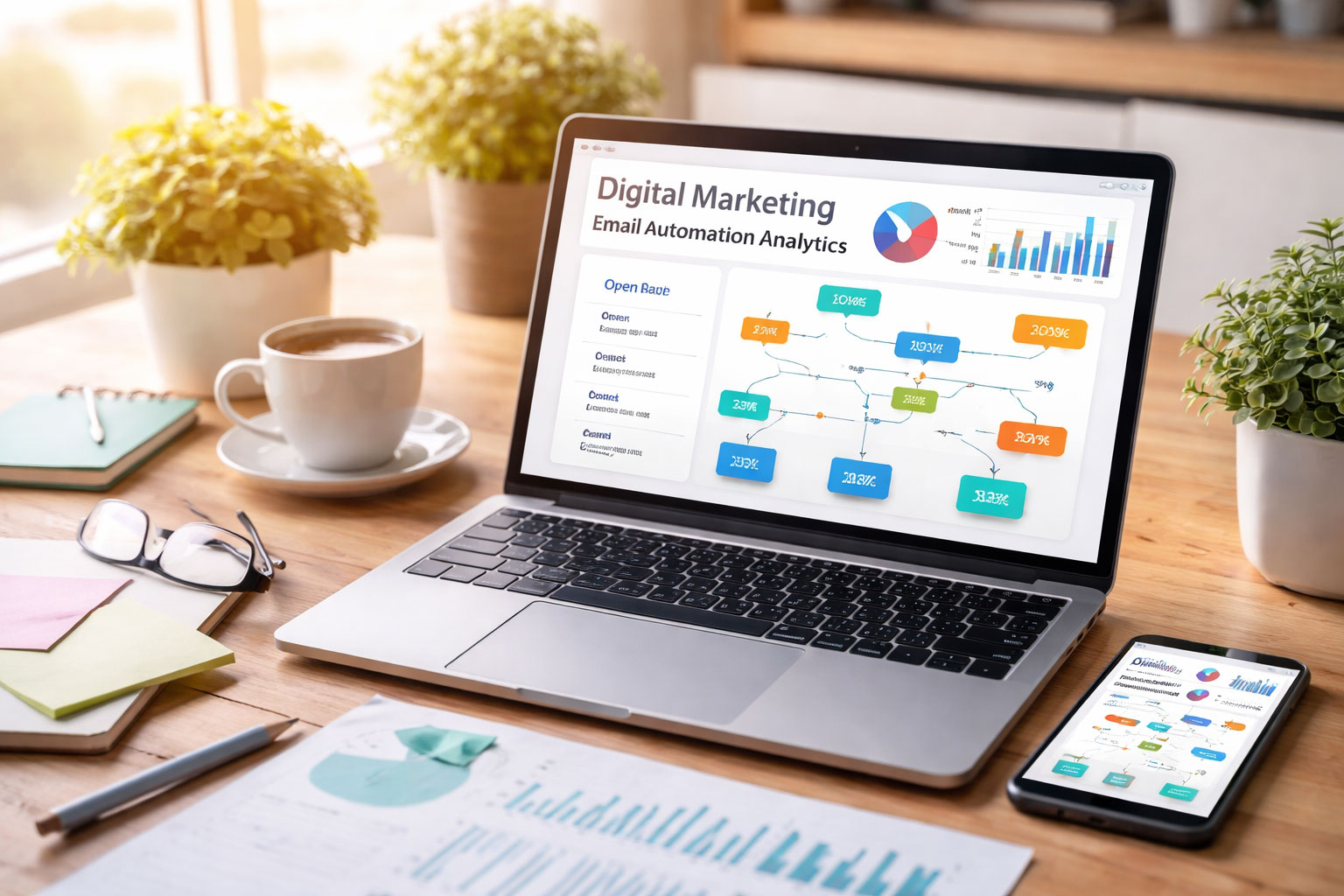
The landscape of digital marketing is in constant flux, a river flowing with ever-increasing speed. You, as a marketer, stand on its banks, attempting to navigate its currents and reach your desired destinations. By 2026, the forces shaping this river will be undeniably powered by Artificial Intelligence (AI), particularly in the realm of digital marketing and email automation. Understanding these trends is not merely about staying current; it’s about ensuring your vessel remains seaworthy and your sails catch the optimal wind.
You’re likely familiar with the concept of personalization. For years, it’s been a cornerstone of effective marketing, moving beyond simply addressing a customer by their first name. However, by 2026, AI will have elevated personalization to an entirely new echelon, transforming it from a well-intentioned nod to a deeply ingrained understanding of your audience’s individual needs, desires, and even their subconscious preferences. Think of it as moving from a generic greeting card to a handcrafted, bespoke gift, meticulously chosen based on intimate knowledge.
Predictive Personalization: Beyond Demographics
Gone are the days when personalization was primarily driven by static demographic data. AI algorithms are now capable of analyzing vast datasets – website behavior, purchase history, interactions with previous campaigns, even external data points like weather patterns or news events – to predict future customer actions and preferences. This means you won’t just be serving content based on what a customer has done, but on what AI predicts they will do.
Behavioral Propensity Modeling
You’ll be able to pinpoint with remarkable accuracy a customer’s propensity to purchase a specific product, upgrade to a premium service, or churn. AI models will continuously learn and refine these predictions, becoming more astute with every interaction. This allows for proactive engagement, enabling you to offer solutions before a customer even articulates a problem.
Contextual Content Delivery
The “when” and “where” of your message will become as critical as the “what.” AI will enable dynamic content delivery that adapts not only to the individual but also to their immediate context. Imagine a user browsing your e-commerce site on a rainy Tuesday afternoon; AI might trigger an email showcasing your new range of cozy home goods, while the same user on a sunny Saturday morning might receive an offer for outdoor adventure gear.
AI-Powered Segmentation: Granularity Beyond Measure
Traditional segmentation, while valuable, often operates on broad strokes. AI allows for a level of granular segmentation that was previously unimaginable. It can identify micro-segments within your audience based on complex behavioral patterns and psychographic profiles, allowing you to deliver highly relevant messages to incredibly specific groups.
Dynamic Customer Profiling
Your customer profiles will be living, breathing entities. AI will constantly update these profiles in real-time, reflecting every interaction and shift in behavior. This dynamic nature ensures that your marketing efforts are always aligned with the most current understanding of your audience.
Lookalike Audience Expansion and Refinement
Leveraging AI, you can identify and target audiences that exhibit similar characteristics and behaviors to your most valuable existing customers. This allows for more efficient and effective customer acquisition, ensuring you’re reaching prospects who are more likely to convert.
As businesses continue to embrace AI-driven digital marketing and email automation trends in 2026, it’s essential to explore complementary strategies that enhance customer engagement. One such approach is gamification, which leverages points and levels to motivate user interaction and loyalty. For a deeper understanding of how gamification can be integrated into your marketing strategy, check out this insightful article on the topic: Gamification Deep Dive: Using Points and Levels to Drive Engagement. This resource provides valuable insights into creating engaging experiences that can work in tandem with AI technologies to boost your marketing efforts.
The Orchestrator of Engagement: AI in Email Automation
Email marketing, once a somewhat blunt instrument, is being refined into a precision tool by AI. By 2026, email automation will have moved far beyond simple drip campaigns and schedule-based sends. AI will act as the conductor, orchestrating a symphony of personalized, timed, and contextually relevant email communications that resonate deeply with individual recipients.
Intelligent Triggering and Timing
The “batch and blast” approach to email has long been outdated. AI introduces a new era of intelligent triggering and timing, ensuring that your emails land in inboxes at the precise moment they are most likely to be opened and acted upon.
Behavioral Triggers for Real-Time Engagement
AI will monitor user behavior for specific actions and trigger automated emails in real-time. This could include abandoned cart reminders, product recommendations based on recently viewed items, or post-purchase follow-ups designed to foster loyalty.
Optimal Send Time Prediction
This is where AI truly shines. Instead of relying on generic “best times to send,” AI algorithms will analyze individual recipient engagement patterns to determine the optimal time to send each email. This significantly increases open rates and ensures your message doesn’t get lost in the daily inbox deluge.
Content Optimization Through AI
The content of your emails will also be a subject of intense AI-driven optimization. From subject lines to body copy and calls to action, AI will help you craft more effective and engaging messages.
AI-Generated Subject Line Optimization
You’ll be able to test and refine subject lines with AI-powered tools that predict which variations are most likely to elicit opens. This moves beyond A/B testing to predictive optimization, allowing for faster and more impactful results.
Dynamic Content Personalization within Emails
AI will enable personalization not just at the email level, but within the content of the email itself. This means that elements like product recommendations, offers, or even phrasing can dynamically change based on the individual recipient’s profile and past interactions.
Automated A/B/n Testing and Optimization Loops
AI systems will be able to run continuous A/B/n tests on various email elements, learning from the results and automatically implementing the most effective variations. This creates an ongoing optimization loop, ensuring your email campaigns progressively improve over time.
The Data Alchemist: AI for Enhanced Data Analysis and Insights

You are often drowning in data, yet starved for actionable insights. AI acts as your personal data alchemist, transmuting raw information into pure gold. By 2026, advanced AI capabilities will provide you with an unprecedented depth of understanding regarding your marketing performance, audience behavior, and the overall health of your customer relationships.
Advanced Predictive Analytics for Campaign Performance
While past performance is a guide, AI’s ability to predict future outcomes is revolutionary. This allows you to make more informed decisions about resource allocation and campaign strategy.
AI-Driven ROI Forecasting
You’ll be able to forecast the return on investment (ROI) of your digital marketing campaigns with greater accuracy, allowing for more strategic budget allocation and the identification of underperforming initiatives before they become significant drains.
Customer Lifetime Value (CLV) Prediction
AI will enable more sophisticated CLV prediction models, allowing you to identify your most valuable customers and tailor your retention strategies accordingly. This shift towards a CLV-centric approach ensures you’re investing in long-term relationships.
Uncovering Hidden Patterns and Opportunities
AI excels at identifying patterns that human analysts might miss, especially within massive datasets. This can uncover lucrative opportunities for personalized outreach and campaign improvement.
Anomaly Detection in Customer Behavior
AI can flag unusual patterns in customer behavior, such as a sudden drop in engagement or unexpected purchase activity, allowing you to investigate and potentially address issues before they escalate or capitalize on emerging trends.
Sentiment Analysis for Brand Perception
AI-powered sentiment analysis tools will provide you with real-time insights into how your brand and its campaigns are perceived across various online channels. This allows for proactive reputation management and the adjustment of messaging to better align with audience sentiment.
The Voice of the Brand: AI in Conversational Marketing

Conversational marketing is no longer a nascent trend; by 2026, it will be a fully integrated and AI-powered component of your digital marketing strategy. Think of it as having a perpetually available, highly knowledgeable, and exceptionally polite sales associate or customer service representative for every visitor to your digital properties.
AI-Powered Chatbots and Virtual Assistants
You’re likely already interacting with chatbots. By 2026, these will be far more sophisticated, powered by natural language processing (NLP) and machine learning (ML) to provide genuine, helpful, and personalized interactions.
Natural Language Understanding (NLU) for Seamless Conversations
AI will enable chatbots to understand nuanced language, intent, and even emotion, leading to more natural and less frustrating customer interactions. This moves beyond keyword matching to true comprehension.
Personalized Recommendations and Support via Chat
Chatbots will evolve to offer personalized product recommendations, answer complex queries, and even guide users through the entire customer journey, from initial inquiry to post-purchase support, all within a conversational interface.
Proactive Engagement Through Chat Triggers
AI can analyze user behavior on your website and proactively initiate conversations via chatbot, offering assistance or personalized information at critical junctures, preventing potential drop-offs and enhancing engagement.
Integration with Email Automation Workflows
The true power will lie in the seamless integration of conversational AI with your email automation strategies.
Chatbot-to-Email Handoffs
When a chatbot can’t resolve an issue or identifies a sales opportunity, it can seamlessly hand off the conversation to a human agent or trigger a personalized email sequence, ensuring no lead goes cold and no customer concern is left unaddressed.
Enriching Email Campaigns with Conversational Data
Insights gathered from chatbot interactions can be fed back into your AI models, further enriching customer profiles and informing more personalized and effective email campaigns. For example, if a chatbot identifies a common pain point, you can proactively address it in your next email blast.
As businesses increasingly adopt AI-driven strategies, the landscape of digital marketing is evolving rapidly, particularly in the realm of email automation. A recent article discusses how to build a privacy-first email list while maintaining quality without resorting to purchasing leads. This approach aligns perfectly with the trends expected to dominate in 2026, where consumer privacy and data protection will be paramount. For more insights on this topic, you can read the full article here.
The Ethical Compass: Navigating AI in Marketing Responsibly
| Trend | Description | Key Metric | Impact on Marketing |
|---|---|---|---|
| AI-Powered Personalization | Using AI to tailor content and offers based on user behavior and preferences. | Increase in CTR by 35% | Higher engagement and conversion rates |
| Predictive Analytics | AI models predicting customer actions to optimize campaign timing and content. | Reduction in churn rate by 20% | Improved customer retention and lifetime value |
| Automated Email Segmentation | Dynamic segmentation of email lists using AI for targeted messaging. | Open rates improved by 28% | More relevant communication leading to better engagement |
| AI-Generated Content | Automated creation of email copy and marketing content using natural language generation. | Content production time reduced by 50% | Faster campaign deployment and scalability |
| Chatbots and Conversational AI | Integration of AI chatbots for real-time customer interaction and lead qualification. | Lead conversion rate increased by 22% | Enhanced customer experience and quicker response times |
| AI-Driven A/B Testing | Automated testing and optimization of email elements using AI algorithms. | Campaign performance uplift by 18% | Data-driven improvements in marketing effectiveness |
| Voice and Visual Search Optimization | Adapting marketing content for AI-powered voice and image search queries. | Traffic from voice search increased by 15% | Expanded reach and accessibility |
As you embrace the power of AI in digital marketing and email automation, it is imperative to maintain an ethical compass. The ability to collect and analyze vast amounts of data, and to personalize communications to such a granular degree, brings with it significant responsibilities. By 2026, the spotlight on data privacy and ethical AI usage will be brighter than ever.
Transparency and Data Privacy
You must be transparent about how you collect and use customer data. This is not just a legal requirement; it’s a building block of trust, without which your marketing efforts will crumble like a sandcastle against the tide.
Clear Consent Mechanisms
Obtaining explicit and informed consent for data collection and communication is paramount. Customers need to understand what they are agreeing to, and have the ability to easily opt out or manage their preferences.
Data Minimization and Purpose Limitation
Collect only the data you truly need for specific, stated purposes, and do not retain it longer than necessary. This reduces the risk of data breaches and demonstrates respect for customer privacy.
Algorithmic Bias and Fairness
AI algorithms learn from the data they are fed. If that data reflects existing societal biases, the AI will perpetuate and even amplify them. You must be vigilant in identifying and mitigating algorithmic bias in your marketing efforts.
Auditing AI Models for Bias
Regularly audit your AI models for potential biases related to race, gender, age, or socioeconomic status. This is crucial to ensure your marketing efforts are fair and inclusive, and do not inadvertently exclude or discriminate against certain groups.
Promoting Inclusivity in AI-Driven Campaigns
Actively work to ensure your AI-driven personalization strategies promote inclusivity and avoid creating echo chambers or reinforcing stereotypes. The goal is to connect with individuals, not to pigeonhole them.
The Human Touch in an AI-Dominated World
While AI offers immense capabilities, it should augment, not replace, human judgment and empathy. Your role as a marketer will evolve to focus on strategic oversight, ethical considerations, and the creation of genuine human connections where AI falls short.
AI as a Tool for Marketers, Not a Replacement
View AI as a powerful assistant that automates repetitive tasks, provides data-driven insights, and enables hyper-personalization, freeing you up to focus on higher-level strategy, creative problem-solving, and building brand narratives.
The Importance of Empathy and Nuance
AI can analyze patterns, but it cannot replicate genuine human empathy, creativity, or the ability to understand complex emotional nuances. Your ability to inject these elements into your marketing communications will become increasingly valuable, differentiating your brand in an AI-saturated market.
By understanding and proactively preparing for these AI-driven digital marketing and email automation trends in 2026, you are not merely adapting to the future; you are actively shaping it. You are ensuring that your marketing efforts are not only effective but also ethical, relevant, and ultimately, resonate with the individuals you aim to serve. The digital marketing river will continue to flow, and with AI as your guide and a clear ethical compass, you can navigate its currents with confidence and achieve your desired shores.
FAQs
What is AI-driven digital marketing? AI-driven digital marketing refers to the use of artificial intelligence technologies to analyze data, automate tasks, and optimize marketing campaigns. It enables marketers to deliver personalized content, predict customer behavior, and improve overall campaign effectiveness.
How is email automation evolving in 2026?
In 2026, email automation is becoming more sophisticated with AI integration, allowing for hyper-personalized messaging, predictive send times, and dynamic content generation. These advancements help increase engagement rates and improve customer experience.
What are the key trends in AI-driven digital marketing for 2026?
Key trends include the use of machine learning for customer segmentation, AI-powered content creation, real-time data analytics, voice and visual search optimization, and enhanced automation tools that streamline campaign management.
How does AI improve customer targeting in digital marketing?
AI improves customer targeting by analyzing large datasets to identify patterns and preferences, enabling marketers to segment audiences more accurately and deliver personalized messages that resonate with individual customers.
What benefits can businesses expect from implementing AI-driven email automation?
Businesses can expect increased efficiency, higher open and click-through rates, better customer engagement, reduced manual workload, and improved ROI by leveraging AI-driven email automation to tailor communications and optimize campaign timing.
