


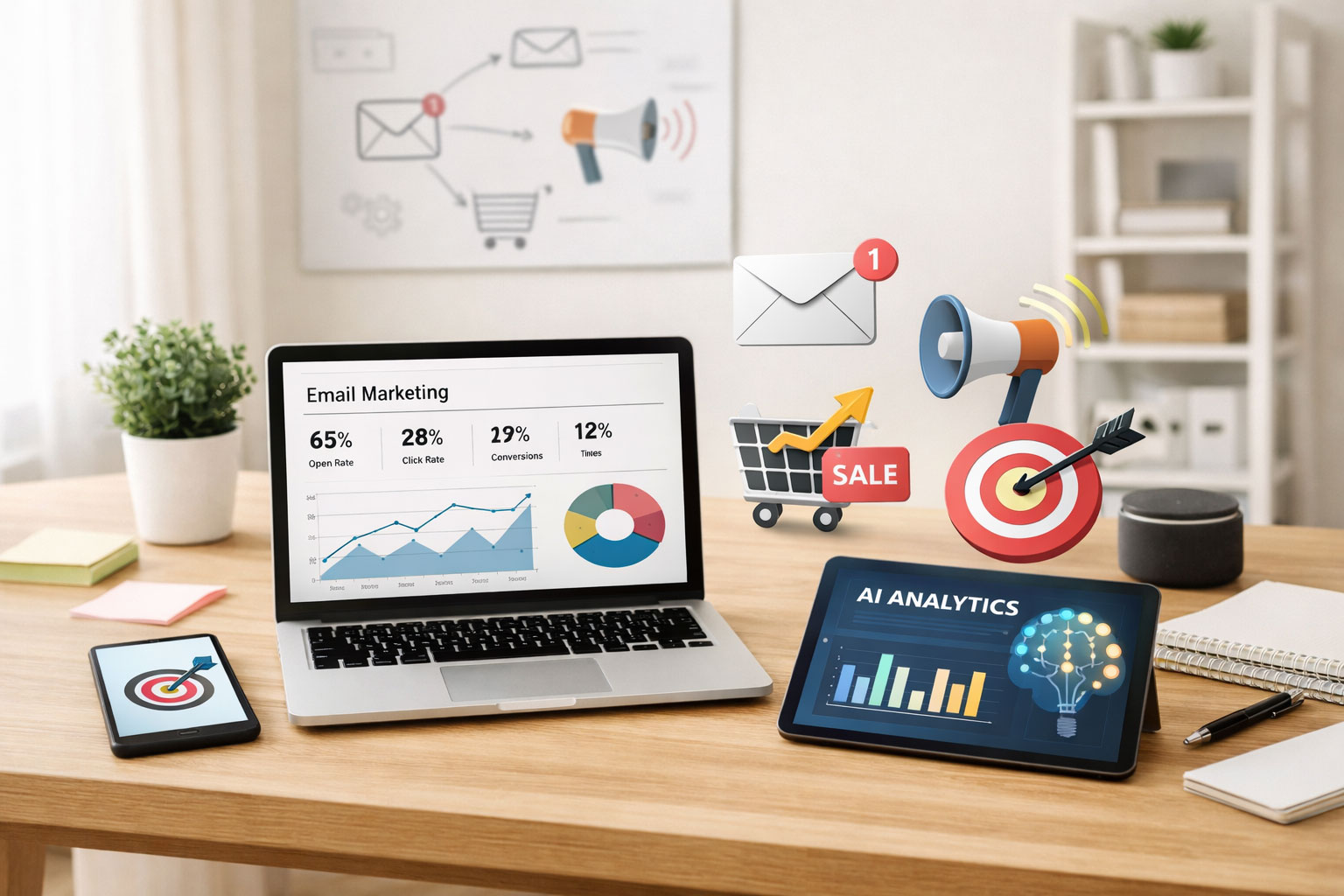
As you navigate the digital marketing landscape in 2026, you’ll find it increasingly shaped by artificial intelligence (AI) and the sophisticated automation it enables. Gone are the days of broad, untargeted email blasts; the future, and indeed the present, is about precision, personalization, and proactive engagement. You’re not just sending emails anymore; you’re orchestrating intelligent conversations. This evolution isn’t a distant dream; it’s a rapidly unfolding reality that demands your attention and adaptation.
For you, the marketer, AI represents a paradigm shift. It’s the difference between a hammer and a precision laser engraver. AI allows you to move beyond educated guesswork and into the realm of data-driven certainty. In 2026, AI is no longer a supplementary tool; it’s woven into the very fabric of digital marketing and email automation strategies, acting as the central nervous system for your customer interactions.
Predictive Analytics: Foreseeing Your Audience’s Needs
You’re already seeing the early ripples of predictive analytics, but by 2026, it will be a foundational element of your strategy. AI algorithms will analyze vast datasets of customer behavior, purchase history, browsing patterns, and even external trends to predict what your audience wants before they even realize it themselves.
Unveiling Intent: Beyond Explicit Clicks
Consider the subtle clues you miss in traditional analytics. AI can now interpret the nuanced digital footprints of your audience, identifying intent with remarkable accuracy. This means recognizing a potential customer not just by their click on a “buy now” button, but by their prolonged engagement with specific product categories, their search queries, or even their interaction with competitor content. You’re not just reacting to actions; you’re anticipating needs.
Customer Lifetime Value (CLV) Forecasting: Investing Wisely
Your marketing budget is a precious resource. AI-powered CLV forecasting allows you to allocate that resource intelligently. By predicting the long-term value of individual customers, you can prioritize engagement efforts towards those most likely to become loyal, high-spending patrons. This is like distinguishing between a casual acquaintance and a lifelong friend, and tailoring your relationship accordingly.
Natural Language Processing (NLP): Understanding Human Nuance
AI’s ability to understand and generate human language, powered by NLP, is revolutionizing how you communicate. It’s moving beyond keywords to grasp context, sentiment, and even sarcasm.
Sentiment Analysis: Gauging Emotional Resonance
You’re not just looking at what customers say; you’re understanding how they feel. NLP enables sophisticated sentiment analysis of customer feedback, social media mentions, and support interactions. This allows you to gauge the emotional resonance of your campaigns and identify areas where you might be inadvertently causing frustration or delight. Imagine a finely tuned instrument, capable of detecting the subtlest dissonance or harmony in your customer’s voice.
Personalized Content Generation: Speaking Their Language
The days of generic email copy are numbered. NLP allows AI to generate personalized email content that resonates with individual subscribers. This goes beyond simply inserting their name; it involves crafting subject lines, body copy, and calls to action that reflect their known preferences, past interactions, and even their current stage in the buyer journey. You’re not just delivering a message; you’re having a tailored conversation.
As businesses increasingly turn to AI-driven strategies to enhance their digital marketing efforts, the importance of staying updated on emerging trends cannot be overstated. A related article that explores the evolving landscape of software solutions is available at Top 5 Open Source Alternatives to Popular SaaS Apps in 2025. This piece delves into how open-source tools can complement AI technologies, providing marketers with innovative options for email automation and other digital marketing initiatives as we approach 2026.
Hyper-Personalization: The Art of Individual Connection
In 2026, personalization isn’t a nice-to-have; it’s the bedrock of effective marketing. AI enables you to move from segment-based targeting to true one-to-one personalization, making each customer feel uniquely understood and valued.
Dynamic Content Optimization: The Ever-Evolving Message
Your marketing messages shouldn’t be static. AI-powered dynamic content optimization ensures that the content within your emails and on your website adapts in real-time based on individual user data.
Real-time Engagement Tracking: Responding in the Moment
You’re not waiting for the next campaign cycle to adjust your sails. AI continuously monitors engagement metrics in real-time. If a subscriber consistently opens emails at a particular time or interacts with specific product types, your automated systems will dynamically adjust future communications to align with these observed preferences. This is akin to a skilled sailor constantly trimming their sails to catch the prevailing wind.
Behavioral Triggered Campaigns: Automated Relevance
This is where AI truly shines in email automation. You can set up intricate chains of automated emails that are triggered by specific customer behaviors. Did a customer abandon their shopping cart? An AI-powered sequence can be initiated, offering personalized incentives or addressing potential concerns. Did they just make a significant purchase? A personalized thank-you email with relevant upsell or cross-sell suggestions can be automatically dispatched.
Predictive Personalization: Anticipating the Next Best Offer
You’re not just reacting to past behavior; you’re anticipating future needs. Predictive personalization leverages AI to infer what a customer might be interested in next, even if they haven’t explicitly shown it yet.
Next Purchase Prediction: Guiding Future Decisions
AI can analyze purchase patterns of similar customers and your own customer’s history to predict their next likely purchase. This allows you to proactively present complementary products or services, positioning you as a helpful advisor rather than a pushy salesperson.
Preferred Channel & Timing Optimization: Reaching Them Where and When They’re Ready
AI will help you understand not only what to say but also when and how to say it. By analyzing when individual subscribers are most likely to engage and which channels they prefer, you can optimize the delivery of your automated messages for maximum impact. This avoids bombarding them at inconvenient times or through channels they ignore.
AI-Driven Email Automation: From Batch and Blast to Intelligent Dialogue

The capabilities of email automation in 2026 are a far cry from the rigid, rule-based systems of the past. AI imbues these systems with a level of intelligence and adaptability that transforms them into powerful engines for building customer relationships.
Intelligent Segmentation: Beyond Static Lists
You’re moving beyond broad demographic segments to highly dynamic, behaviorally driven micro-segments. AI excels at identifying these granular distinctions.
Dynamic Persona Evolution: Adapting to Customer Journeys
AI allows for the continuous evolution of customer personas based on their real-time interactions. A customer who was once a “new prospect” might swiftly transition to an “engaged lead” or even a “loyal advocate” based on their digital actions, triggering an immediate shift in the automated communication they receive.
Predictive Segmentation for Nurturing: Targeting Opportunities
AI can identify segments of users who are exhibiting behaviors that indicate a high likelihood of conversion or churn, allowing you to tailor nurturing or retention campaigns with unprecedented precision. You’re not just catching leads; you’re actively cultivating them and preventing them from slipping away.
Automated Workflow Optimization: Streamlining Engagement
AI acts as a smart conductor for your automated marketing workflows, ensuring every interaction serves a strategic purpose.
A/B/n Testing at Scale: Continuous Improvement
AI can execute and analyze complex A/B/n tests across vast subscriber bases simultaneously, rapidly identifying the most effective subject lines, content, and calls to action. You’re not just testing; you’re continuously refining your approach based on data, like a sculptor constantly chipping away to reveal the perfect form within the stone.
Journey Mapping and Optimization: Guiding the Path to Conversion
AI can analyze customer journeys across multiple touchpoints, identifying bottlenecks and recommending optimizations to automated workflows. This ensures a smoother, more intuitive path for customers from initial awareness to conversion and beyond.
Lead Scoring Refinement: Prioritizing Your Sales Efforts
AI-powered lead scoring goes beyond simple point systems to incorporate behavioral analytics and predictive insights. This allows your sales team to focus their energy on the highest-potential leads, avoiding wasted effort on those less likely to convert.
The Ethical Compass: Navigating AI Responsibly
As you wield the immense power of AI in your marketing, you also assume a profound responsibility. The ethical implications of data collection, usage, and algorithm design are paramount.
Transparency and Consent: Building Trust
Your customers are increasingly aware of their data. In 2026, transparent data collection practices and clear consent mechanisms are not optional; they are fundamental to building and maintaining trust.
Granular Consent Management: Empowering the User
You’ll need to provide users with granular control over the data they share and how it’s used. This means moving beyond blanket opt-ins to allow individuals to specify their preferences for different types of communication and data utilization.
Clear Data Usage Policies: No Hidden Agendas
Your data usage policies must be clear, concise, and easily accessible. Avoid jargon and legalese; explain in straightforward terms how you collect, store, and utilize customer data to personalize their experience. This is about building a relationship on honesty, not on carefully veiled intentions.
Algorithmic Bias Mitigation: Ensuring Fairness
AI algorithms are trained on data, and if that data contains biases, the algorithms will perpetuate them. In 2026, actively addressing and mitigating algorithmic bias is crucial for ensuring fair and equitable marketing practices.
Regular Auditing of AI Models: Identifying and Correcting Inequities
You’ll need to implement regular audits of your AI models to detect and correct any biases that may have crept in. This is a continuous process, not a one-time fix.
Diverse Data Sets for Training: Reflecting Reality
Ensure the data used to train your AI models is diverse and representative of your entire target audience, not just a particular subset. This helps to prevent the development of discriminatory outcomes.
Privacy by Design: Embedding Protection
Privacy should be baked into your marketing strategies from the outset, not an afterthought.
Data Minimization: Collecting Only What’s Necessary
Adopt a data minimization approach, collecting only the information that is absolutely essential for delivering personalized experiences and achieving your marketing objectives.
Secure Data Storage and Handling: Protecting Your Audience’s Information
Implement robust security measures to protect customer data from breaches and unauthorized access. This is a fundamental obligation to your audience.
As businesses increasingly adopt AI-driven strategies in digital marketing and email automation, staying informed about cybersecurity trends becomes essential. A recent article highlights the alarming rise of credential theft and its impact on various sectors, emphasizing the need for robust security measures in the digital landscape. Understanding these threats can help marketers better protect their campaigns and customer data. For more insights on this critical issue, you can read the article on the pipeline of stolen credentials and its implications for businesses.
The Future Integrator: AI as the Orchestrator of Your Marketing Ecosystem
| Trend | Description | Key Metrics | Impact on Marketing |
|---|---|---|---|
| AI-Powered Personalization | Using AI to tailor email content and marketing messages to individual user preferences and behaviors. | Open Rate Increase: 25% CTR Improvement: 30% | Higher engagement and conversion rates through relevant content delivery. |
| Predictive Analytics for Campaign Optimization | Leveraging AI to forecast customer behavior and optimize send times and content. | Conversion Rate Increase: 20% Reduced Unsubscribes: 15% | Improved ROI by targeting the right audience at the right time. |
| Automated Email Sequences | AI-driven automation of drip campaigns and follow-ups based on user actions. | Lead Nurturing Efficiency: +35% Response Rate: +28% | Streamlined customer journey and increased lead conversion. |
| Natural Language Generation (NLG) | AI-generated email copy that adapts tone and style to audience segments. | Content Creation Time Reduction: 50% Engagement Rate: +22% | Faster content production with consistent quality and personalization. |
| AI-Driven A/B Testing | Automated testing of subject lines, content, and CTAs to identify best performers. | Testing Speed Increase: 3x faster CTR Improvement: 18% | Data-driven decisions leading to more effective campaigns. |
| Voice and Visual Search Integration | Incorporating AI to optimize emails for voice commands and visual content recognition. | Engagement with Voice-Enabled Devices: +15% Visual Content CTR: +20% | Enhanced accessibility and interaction with emerging technologies. |
In 2026, AI will not just optimize individual channels; it will act as the central orchestrator, seamlessly integrating all your marketing efforts for a unified and intelligent customer experience.
Cross-Channel Personalization: A Seamless Journey
AI will enable you to deliver a consistent and personalized experience across all touchpoints, from email and social media to your website and mobile app.
Unified Customer Profiles: A 360-Degree View
AI will help you build and maintain unified customer profiles that consolidate data from all interactions, providing a comprehensive 360-degree view of each individual. This is like having a single, comprehensive dossier for every person you interact with.
Contextualized Messaging Across Channels: Speaking the Same Language Everywhere
Based on a customer’s recent interactions on one channel, AI can inform the messaging and offers delivered on another, ensuring a fluid and contextually relevant experience. If they browsed a product on your website, your subsequent email or social media ad can directly reference that interest.
AI-Powered Analytics and Reporting: Deeper Insights, Faster Decisions
The reporting and analytics you rely on will become far más sophisticated, driven by AI’s ability to process and interpret vast amounts of data.
Automated Anomaly Detection: Spotting Issues Before They Escalate
AI can automatically detect anomalies in your marketing performance, flagging potential issues or opportunities that might otherwise go unnoticed. This allows for proactive intervention rather than reactive damage control.
Predictive Performance Forecasting: Planning with Confidence
AI will provide you with predictive forecasts of campaign performance, allowing you to make more informed strategic decisions and allocate resources with greater confidence. You’re not just looking at what happened; you’re anticipating what will happen.
Natural Language Querying for Data: Accessible Insights for Everyone
You’ll be able to ask questions of your marketing data in plain language, and AI will provide the answers, democratizing data analysis and making insights accessible to a wider range of team members. This transforms complex data dashboards into conversational interfaces.
The year 2026 is not a distant horizon; it is the immediate future, and AI-powered digital marketing and email automation are its defining technologies. By understanding these trends, embracing the ethical considerations, and making the strategic investments in AI, you can position yourself not just to survive, but to thrive in this dynamic and exciting new era of customer engagement. You are not simply observing the future of marketing; you are actively shaping it.
FAQs
What are the key AI-driven trends in digital marketing for 2026?
AI-driven trends in digital marketing for 2026 include advanced personalization through machine learning, predictive analytics for customer behavior, AI-powered content creation, enhanced chatbots for customer engagement, and automated campaign optimization.
How is AI transforming email automation in 2026?
In 2026, AI is transforming email automation by enabling hyper-personalized email content, optimizing send times based on user behavior, segmenting audiences more precisely, and using predictive analytics to improve open and conversion rates.
What benefits can businesses expect from using AI in digital marketing and email automation?
Businesses can expect increased efficiency, improved customer targeting, higher engagement rates, better ROI on marketing campaigns, and the ability to scale personalized communication efforts through AI-driven digital marketing and email automation.
Are there any challenges associated with AI-driven digital marketing and email automation?
Yes, challenges include data privacy concerns, the need for high-quality data, potential over-reliance on automation, maintaining human creativity, and ensuring AI algorithms are transparent and unbiased.
How can companies prepare for the AI trends dominating digital marketing and email automation in 2026?
Companies can prepare by investing in AI technologies, training marketing teams on AI tools, focusing on data quality and privacy compliance, experimenting with AI-driven campaigns, and staying updated on emerging AI trends and best practices.
