


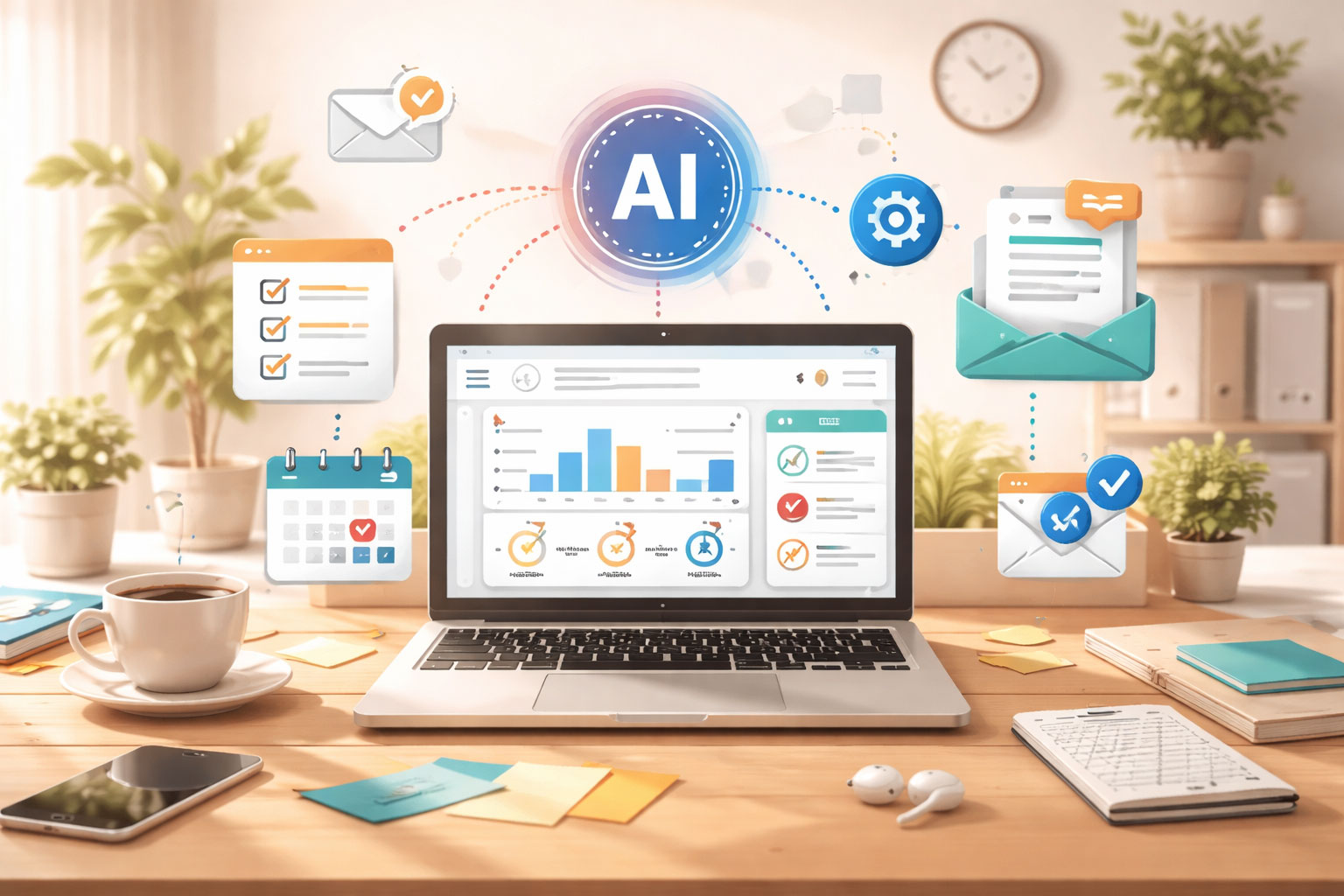
The year is 2026, and the digital landscape has been reshaped by the pervasive influence of Artificial Intelligence. For you, a professional navigating the increasingly complex currents of modern work, staying ahead means embracing the tools that amplify your capabilities. This article serves as your compass, guiding you through the top AI productivity tools and workflow automation software designed to streamline your operations and unlock new levels of efficiency. Think of yourself as an artisan, and these tools are your finely crafted chisels, sharpening your output and allowing you to sculpt your tasks with unprecedented precision.
In 2026, AI assistants are no longer nascent technologies; they are integral components of a productive workflow, acting as your digital right-hand persons. Their ability to understand context, anticipate needs, and execute complex commands has transformed how we interact with information and generate output.
Intelligent Task Management and Scheduling
- Proactive Calendar Optimization: Imagine your calendar not merely as a static record of appointments, but as a dynamic ecosystem that intelligently optimizes your schedule. AI-powered tools in 2026 go beyond simple booking; they analyze your energy levels, project deadlines, and even traffic patterns to suggest the most opportune moments for focused work, meetings, and breaks. They can identify potential conflicts before they arise and propose elegant solutions, freeing you from the mental burden of constant logistical juggling. This allows you to focus on the ‘what’ of your work, rather than the ‘when’ and ‘how’ of scheduling.
- Automated Meeting Preparation and Follow-up: The endless cycle of preparing for meetings and meticulously documenting their outcomes is significantly reduced. AI tools now analyze meeting invites, relevant documents, and past correspondence to generate pre-meeting briefs. Post-meeting, they can automatically transcribe discussions, extract action items, assign ownership, and even draft follow-up emails, ensuring that momentum is maintained and accountability is clear. This liberates your cognitive load, allowing you to engage more deeply in the substance of the conversation rather than getting bogged down in administrative minutiae.
Advanced Content Generation and Refinement
- Multimodal Content Creation Suites: The days of solely relying on human writers for all your content needs are rapidly receding. AI in 2026 offers sophisticated multimodal content generation capabilities. Beyond text, these tools can now produce high-quality images, videos, and even basic audio directly from prompts, or by analyzing existing content. This includes generating marketing copy, social media updates, technical documentation, and even creative storytelling elements. Think of it as having a tireless co-creator at your fingertips, capable of
visualizing your ideas and bringing them to life with speed and scale.
- AI-Driven Editing and Proofreading at Scale: The meticulous process of editing and proofreading is now augmented by AI that possesses a nuanced understanding of grammar, style, tone, and even brand voice. These tools can identify grammatical errors, stylistic inconsistencies, factual inaccuracies, and potential plagiarism with remarkable accuracy. Furthermore, they can suggest rephrasing for clarity, conciseness, and impact, acting as an invaluable second pair of eyes – or perhaps, a hundred pairs – ensuring your output is polished and professional. This dramatically reduces the time spent on the iterative refinement of your work, allowing for faster iteration and dissemination.
- Personalized Communication and Outreach Tools: Crafting tailored messages for individual clients, stakeholders, or even large customer bases can be a resource-intensive endeavor. AI-powered tools in 2026 can analyze recipient data and historical interactions to generate personalized email campaigns, sales pitches, and customer support responses. This ensures your communication resonates more effectively, fostering stronger relationships and improving engagement without requiring exhaustive manual customization for each interaction. This is akin to having a personal concierge for every communication, ensuring the right message reaches the right person at the right time.
As businesses increasingly rely on AI productivity tools and workflow automation software to enhance efficiency in 2026, it’s essential to understand the broader context of data management and trust. A related article that delves into this topic is “The Crucial Role of Data Observability in Building Business Trust,” which explores how data observability can significantly impact the effectiveness of these tools. You can read more about it here: The Crucial Role of Data Observability in Building Business Trust. This article highlights the importance of maintaining data integrity and transparency, which are vital for maximizing the benefits of AI-driven solutions.
Orchestrating Operations: Workflow Automation and Integration
Workflow automation is the beating heart of modern efficiency, and in 2026, AI is its sophisticated conductor. These tools move beyond simple rule-based automation to intelligent, adaptive processes that connect disparate systems and streamline complex operational chains.
Seamless Cross-Platform Integration and Data Synchronization
- Intelligent API Orchestration: The ability to connect different software applications is paramount. AI-powered integration platforms in 2026 act as intelligent orchestrators, understanding the unique APIs of various tools and facilitating seamless data flow between them. This means data entered into one system can automatically update or trigger actions in another, eliminating manual data entry and reducing errors. This eliminates the friction points that often plague cross-application workflows, allowing information to flow like water through a well-designed irrigation system.
- Real-time Data Harmonization: In a multi-cloud and multi-application environment, ensuring data consistency is a Herculean task. AI-driven solutions in 2026 excel at real-time data harmonization, automatically identifying discrepancies, resolving conflicts, and maintaining a single, accurate source of truth across all your connected platforms. This reduces the risk of decision-making based on outdated or incorrect information, providing a stable foundation for your strategic initiatives.
Automated Business Process Management (BPM)
- AI-Enhanced Process Discovery and Optimization: Understanding existing business processes is the first step to automating them. AI tools can now analyze logs, user interactions, and system data to automatically discover and map out complex workflows. Once mapped, AI can identify bottlenecks, inefficiencies, and areas for improvement, suggesting concrete steps for optimization. This provides a clear roadmap for automation, ensuring you’re targeting the most impactful areas for efficiency gains.
- Intelligent Rule Engines and Decision Automation: Beyond simple “if-then” logic, AI-powered rule engines in 2026 can learn from historical data and adapt to changing conditions. This allows for the automation of complex decision-making processes, such as loan approvals, customer service escalations, or supply chain reordering, based on dynamic criteria. This shifts the paradigm from programmed rules to emergent intelligence, allowing processes to adapt and evolve organically.
- Robotic Process Automation (RPA) with Enhanced Cognitive Abilities: While RPA has been around, its 2026 iteration is significantly more intelligent. AI-powered RPA bots can now handle unstructured data, interpret visual inputs (like reading from scanned documents), and even learn from human interactions to perform more complex tasks. This expands the scope of automation beyond repetitive, structured tasks to encompass a wider range of processes that previously required human intervention. These bots are like diligent apprentices, learning from your actions and taking on increasingly complex responsibilities.
Sharpening Your Focus: AI for Research and Insight Generation

In an era of information overload, the ability to swiftly and accurately extract meaningful insights is a superpower. AI tools in 2026 are your dedicated research assistants and data detectives.
Advanced Information Gathering and Synthesis
- Automated Literature Reviews and Market Research: Sifting through vast repositories of academic papers, industry reports, and news articles is a time-consuming process. AI tools can now perform automated literature reviews, identifying relevant studies, extracting key findings, and synthesizing information into concise summaries or detailed reports. Similarly, market research can be significantly accelerated, with AI identifying emerging trends, competitor landscapes, and consumer sentiment by analyzing diverse data sources.
- Intelligent Data Extraction and Structuring: The challenge of extracting specific data points from unstructured text, PDFs, or web pages is largely overcome. AI tools can now identify and extract relevant information – such as company names, financial figures, or product specifications – from any source and structure it in a usable format, like a spreadsheet or database. This transforms raw data into actionable intelligence, ready for analysis and interpretation.
Insight Discovery and Predictive Analytics
- AI-Powered Pattern Recognition and Anomaly Detection: Uncovering hidden patterns and identifying outliers in large datasets is crucial for informed decision-making. AI algorithms excel at this, detecting subtle correlations and anomalies that might escape human observation. This can be applied to fraud detection, risk assessment, quality control, and even identifying opportunities for innovation.
- Predictive Modeling for Trend Forecasting: The ability to anticipate future trends and outcomes is invaluable for strategic planning. AI-powered predictive models, trained on historical data, can forecast everything from sales performance and customer churn to market shifts and resource demands. This foresight allows you to proactively adjust your strategies and mitigate potential risks. Consider this as peering into a crystal ball, but one forged from data and powered by advanced algorithms.
- Sentiment Analysis and Brand Monitoring: Understanding public perception and customer sentiment is critical for reputation management and product development. AI tools can analyze social media conversations, customer reviews, and news articles to gauge sentiment towards your brand, products, or services. This real-time feedback loop allows for swift responses to potential crises and informs product enhancements.
Streamlining Collaboration and Communication

Effective collaboration and communication are the lifeblood of any successful team. In 2026, AI tools are enhancing these processes, making interactions more efficient, inclusive, and productive.
Intelligent Communication Platforms
- AI-Enhanced Meeting Summarization and Action Item Tracking: As mentioned earlier, AI’s ability to transcribe and summarize meetings is a game-changer. Beyond this, intelligent platforms can now automatically identify key decisions, assign action items to individuals, and even set reminders for follow-ups, ensuring that what’s discussed in meetings translates into tangible progress. This prevents the common pitfall of “meeting-induced amnesia.”
- Smart Communication Routing and Prioritization: In an era of constant digital noise, AI can help cut through the clutter. These tools can intelligently route incoming messages, prioritize urgent communications, and even suggest appropriate responses, ensuring that critical information reaches the right people quickly and efficiently. This acts as a smart triage system for your communication channels.
Collaborative Document Editing and Knowledge Management
- AI-Assisted Real-time Collaboration: AI is now deeply integrated into collaborative document editing tools. It can provide real-time suggestions for improvements, identify stylistic inconsistencies across multiple contributors, and even help resolve conflicting edits. This ensures that collaborative projects stay on track and maintain a high level of quality, even when multiple individuals are working simultaneously.
- Intelligent Knowledge Base Creation and Retrieval: Building and maintaining a comprehensive knowledge base can be a significant undertaking. AI can automate much of this process by indexing internal documents, identifying redundant information, and categorizing content logically. Furthermore, AI-powered search within these knowledge bases allows users to find information with natural language queries, making access to organizational knowledge faster and more intuitive. Think of it as an infinitely searchable corporate library, where every book is instantly cataloged and returned with a single query.
As we explore the best AI productivity tools and workflow automation software for 2026, it’s essential to consider effective task management strategies that can complement these technologies. One insightful approach is detailed in an article about the 3-3-3 method, which offers a simple way to prioritize your daily tasks. This method can enhance your productivity by helping you focus on what truly matters, making it a valuable companion to any automation software you choose. To learn more about this technique, you can read the full article here.
Future-Proofing Your Workflow: Emerging AI Technologies and Considerations
| Tool Name | Category | Key Features | Integration Options | Pricing Model | User Rating (out of 5) | Best For |
|---|---|---|---|---|---|---|
| AIFlow | Workflow Automation | AI-driven task automation, drag-and-drop workflow builder, real-time analytics | Slack, Google Workspace, Microsoft 365, Zapier | Subscription-based | 4.7 | Small to medium businesses |
| TaskGenie | Productivity Assistant | Natural language task creation, smart reminders, AI prioritization | Outlook, Google Calendar, Trello | Freemium with premium tiers | 4.5 | Individual professionals |
| AutoBot Pro | Robotic Process Automation (RPA) | Automated data entry, AI-powered document processing, multi-platform support | Salesforce, SAP, Oracle | Enterprise licensing | 4.6 | Large enterprises |
| SmartSync AI | Collaboration & Workflow | AI meeting summaries, task assignment, cross-team collaboration tools | Zoom, Microsoft Teams, Asana | Subscription-based | 4.4 | Remote teams |
| FlowMatic | Workflow Automation | Customizable automation templates, AI-powered decision making, API access | Zapier, Slack, Google Drive | Pay-as-you-go | 4.3 | Startups and developers |
| BrainBoost AI | Productivity & Learning | AI-generated learning plans, productivity analytics, focus mode | Evernote, Notion, Google Docs | Subscription-based | 4.5 | Students and knowledge workers |
The AI landscape is in constant flux. Understanding emerging trends and the ethical and practical implications of these tools is crucial for long-term success.
The Rise of Generative AI and AI Agents
- Sophisticated Generative Models: Beyond simple content creation, generative AI in 2026 is becoming more sophisticated, capable of generating code, complex designs, and even simulating entire environments. This opens up new avenues for innovation and rapid prototyping across various industries.
- Autonomous AI Agents: The development of more autonomous AI agents, capable of independent decision-making and task execution with minimal human oversight, is a significant frontier. These agents are being designed to manage complex projects, negotiate with other systems, and even learn and adapt to dynamically changing environments. This marks a pivotal shift towards a future where AI works alongside us, and in some cases, for us, with a greater degree of autonomy.
Ethical Considerations and Responsible AI Implementation
- Bias Detection and Mitigation: As AI systems become more integrated into our decision-making processes, ensuring fairness and mitigating algorithmic bias is paramount. Tools are evolving to detect and mitigate bias in training data and model outputs, promoting equitable outcomes.
- Explainable AI (XAI) and Transparency: The “black box” nature of some AI models is a growing concern. Explainable AI frameworks are being developed to provide insights into how AI systems arrive at their decisions, fostering trust and accountability. Understanding why an AI made a recommendation is as important as the recommendation itself.
- Data Privacy and Security in AI Systems: With the vast amounts of data processed by AI, robust data privacy and security measures are non-negotiable. You must ensure that the tools you adopt comply with stringent regulations and prioritize the protection of sensitive information.
By embracing these AI productivity tools and workflow automation software in 2026, you are not just adopting new technologies; you are fundamentally enhancing your capabilities. You are investing in a future where your time is optimized, your insights are sharpened, and your potential is fully unleashed. The journey ahead is one of continuous adaptation, but with the right AI companions, you are well-equipped to navigate its complexities and achieve unprecedented levels of professional success.
FAQs
What are AI productivity tools?
AI productivity tools are software applications that use artificial intelligence to help automate tasks, improve efficiency, and enhance workflow management. They can assist with scheduling, data analysis, communication, and other routine activities to save time and increase productivity.
How does workflow automation software improve business processes?
Workflow automation software streamlines repetitive tasks by automating them, reducing manual effort and errors. This leads to faster task completion, better resource allocation, and improved consistency in business operations, ultimately boosting overall productivity.
What features should I look for in AI productivity tools for 2026?
Key features to consider include natural language processing, integration capabilities with existing software, customizable automation workflows, real-time analytics, and user-friendly interfaces. Advanced AI tools may also offer predictive insights and adaptive learning to optimize workflows continuously.
Are AI productivity tools suitable for all types of businesses?
Yes, AI productivity tools can benefit businesses of all sizes and industries by automating routine tasks and enhancing decision-making. However, the choice of tools should align with the specific needs, scale, and technical infrastructure of the business.
How secure is workflow automation software that uses AI?
Most reputable AI workflow automation software providers implement robust security measures, including data encryption, access controls, and compliance with industry standards. It is important to review the security features and privacy policies of any software before implementation to ensure data protection.
